



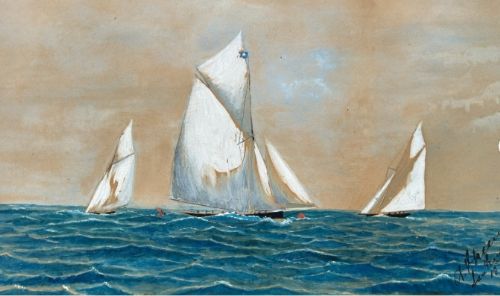


Blue Sea Watercolour
A blue sea watercolour captures the movement and light of the ocean on paper, offering a direct window into maritime history.
Understanding blue sea watercolour
A blue sea watercolour presents marine scenes, coastal views, and nautical subjects rendered through pigment on paper. These paintings range from Victorian marine art to late nineteenth-century seascapes.
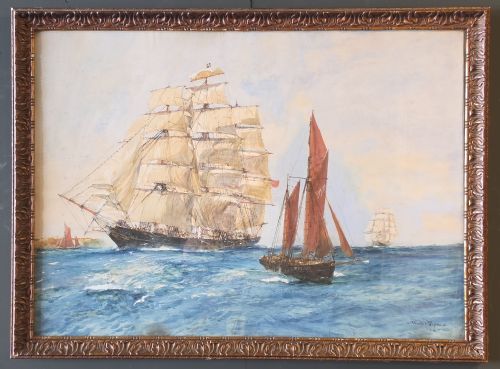
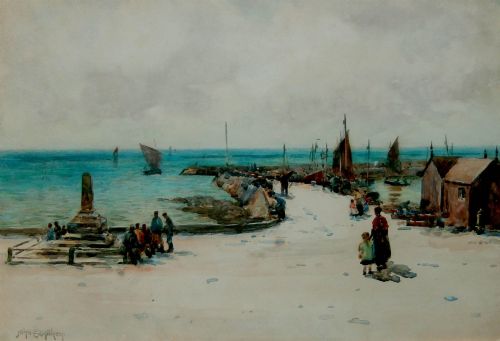
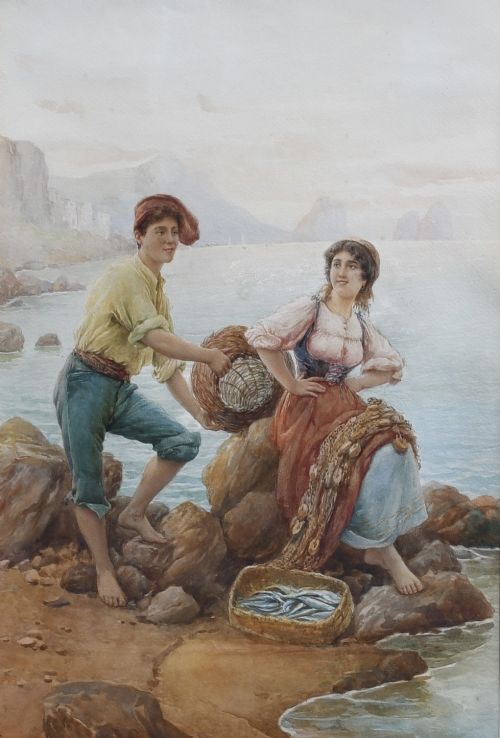
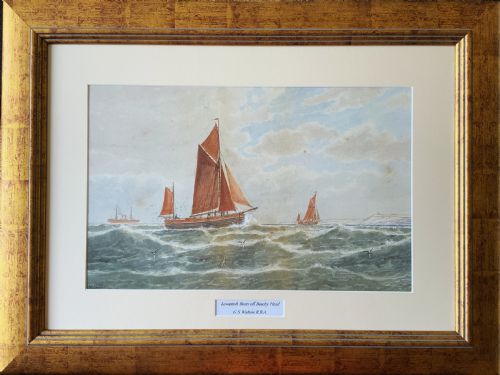
The versions most commonly met on this page belong to the Victorian period and the turn of the twentieth century. They depict subjects such as racing yachts, sailing craft, and coastal workers.
Makers and artists of this genre include figures like Samuel John Milton Brown and Edward Aubrey Hunt. Their works record maritime life and coastal environments with direct observation.
Materials and technique
These works utilise watercolour pigment and ink applied to paper surfaces. Artists built compositions through washes of colour and fine ink lines to define water, sky, and vessel details.
Framing often involves gilt wood to enclose and protect the paper works. The combination of pigment, paper, and traditional framing preserves the delicate tonal variations of the sea.
Retail Price Guide 2026
Typical UK retail prices for blue sea watercolour, calculated from the Sellingantiques database of over a million retail prices indexed since 2003. This retail price guide relies exclusively on Sellingantiques data; no external sources or auction records are used, so the figures do not describe the wider market.
This site's listings span the Victorian period and the year 1900, utilising paper, watercolour, ink, and gilt wood.
Judging quality in marine watercolours
Quality rests in the artist's command of medium and atmosphere, where fluid washes convey the weight and motion of water. Stronger examples capture the specific light of coastal environments rather than relying on formulaic repetition.
The precision of maritime detail distinguishes finer pieces, particularly in the rigging of vessels and the rendering of atmospheric conditions. Works by recognised Victorian marine artists demonstrate superior handling of perspective and scale.
Julian Drummond·Samuel John Milton Brown·Edward Aubrey Hunt·Tom Whitehead
The Blue Sea Watercolour Glossary
- Watercolour pigment
- A colourant ground in water-soluble binders, applied to paper in washes. It allows for translucent effects that suit the shifting tones of the sea.
- Victorian marine art
- Painting focused on ships, coastal views, and the sea produced during the reign of Queen Victoria. This genre reflects the maritime dominance and coastal life of the era.
- Gilt wood
- Wood coated with gold leaf or metallic paint, commonly used for traditional picture frames. It adds a decorative border that enhances the tones within the painting.
- Barque
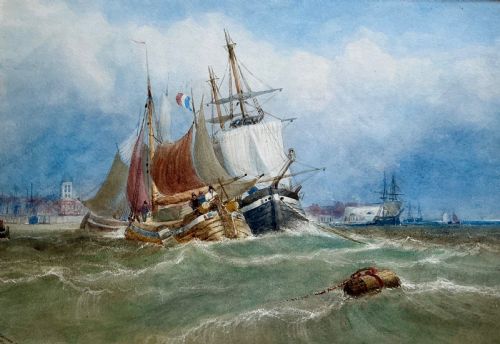
- A sailing vessel with three or more masts, square-rigged on the fore and mainmasts and fore-and-aft rigged on the mizzen. This rig appeared frequently in nineteenth-century commercial shipping.
Frequently Asked Questions
What periods do these watercolours cover?
The available works span the Victorian era up to the early twentieth century, reflecting nineteenth-century maritime traditions.
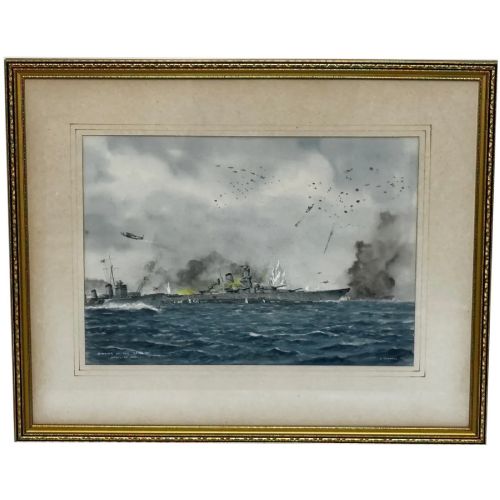
Specific dates on these pieces include the 1890s and the year 1900, alongside one mid-twentieth-century example.
How should I frame these paintings?
These works on paper require conservation framing to protect the pigment and paper from environmental damage. Acid-free mounts and UV-protective glass help preserve the delicate watercolours over time.
Original gilt wood frames often accompany these pieces, adding period character when structurally sound.
Where were these maritime scenes painted?
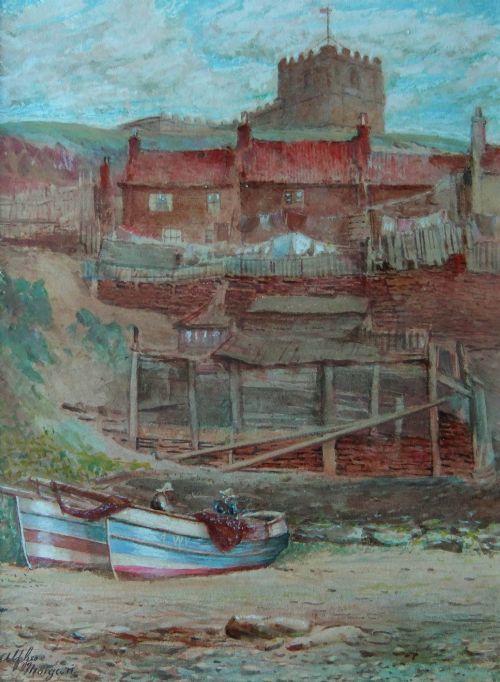
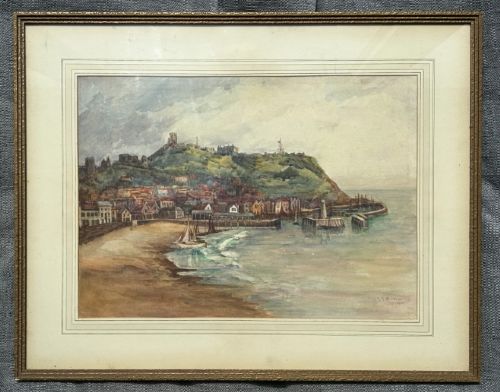
The locations range from British coastal sites like Whitby to American settings such as San Francisco. Artists travelled to active ports and shorelines to observe marine traffic directly.
Local industries, including seaweed gathering and yacht racing, provided authentic subjects for these artists.
What subjects appear in these works?
Common subjects include racing yachts, barque ships, and sailing craft navigating choppy water. Coastal workers and still life compositions also appear across the selection.
Each subject records the human interaction with the sea and coastal environment during the period.