
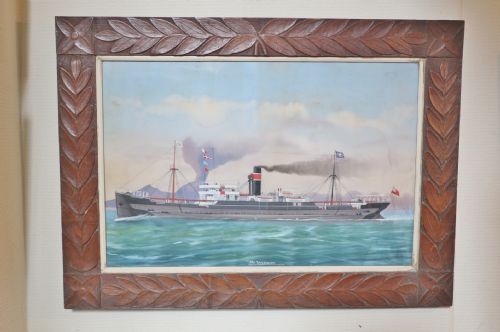
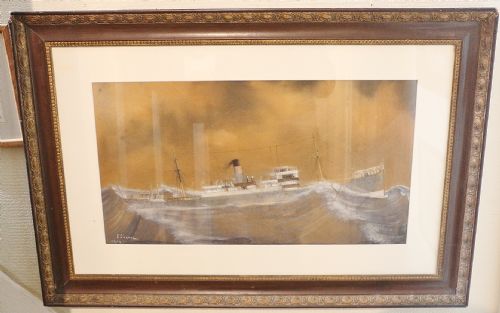
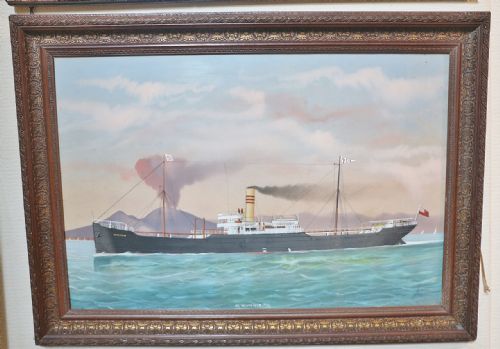
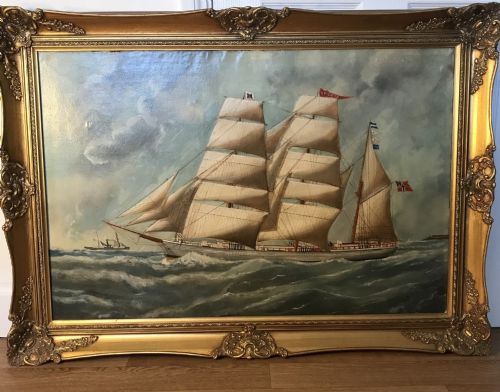
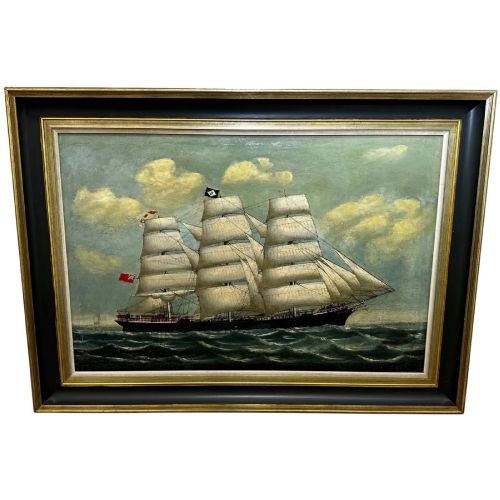
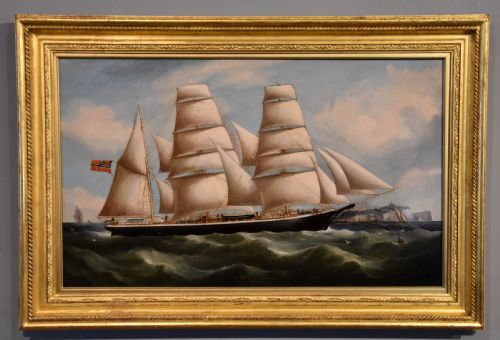
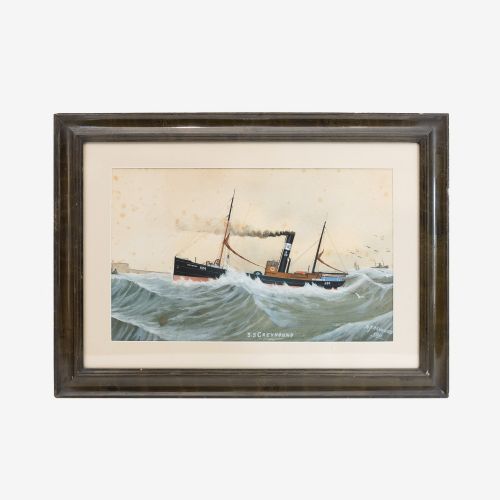


Antique Ship Portrait Artwork
Antique ship portrait artwork captures the distinct character of named vessels through traditional maritime painting.
Antique Ship Portrait Artwork
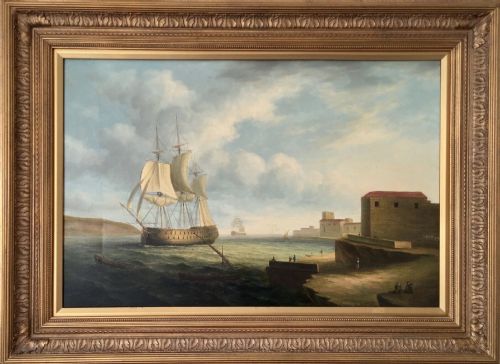
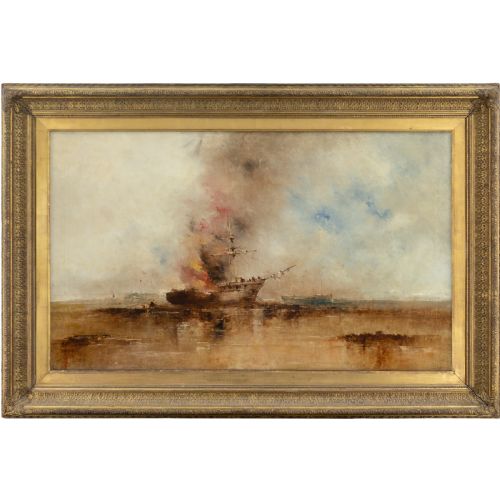
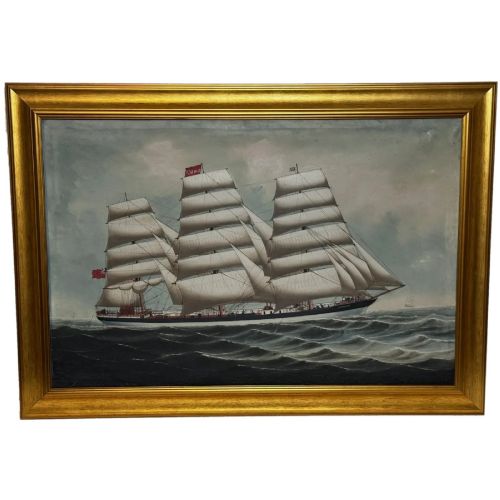
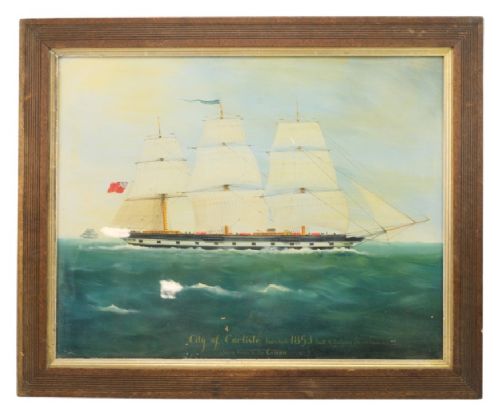
When you search for antique ship portrait artwork, you encounter painted records of specific vessels rendered with precise attention to rigging, hull design and maritime setting. These works document named merchantmen, warships, barques and steamships operating in coastal waters, heavy seas or harbour anchorages.
The pieces on this page span the Victorian and Edwardian eras alongside early twentieth-century examples, reflecting the transition from sailing clippers to ironclads and steamships. Works range from detailed pierhead portraits created for captains and owners to dramatic scenes of vessels navigating specific coastal landmarks or enduring rough weather.
Materials and methods
Artists relied primarily on oil paint applied to canvas or wood panels, alongside watercolours and gouache finished on paper. These pigments capture the play of light on water, smoke from steam vessels and the intricate details of masts and sails.
Framing often complements the maritime subject matter, utilising traditional materials such as wood, glass, giltwood and gold leaf to protect the paper and canvas surfaces while establishing a formal presentation.
Listings feature works executed in oil paint, watercolour, gouache and charcoal across canvas, wood, paper and glass.
Assessing quality and execution
Quality rests upon the artist's command of maritime architecture and scale, where superior works render hull lines, rigging and nautical positioning with documentary accuracy. The handling of water, weather conditions and atmospheric light further separates accomplished compositions from more formulaic pierhead records.
The significance of the named vessel and the clarity of its provenance add depth to a piece. Works attributed to documented marine painters or specific regional schools often display a surer grasp of movement and maritime context.
Reginald Arthur Borstel·Lai Fong·Richard B. Spencer·Alexander Harwood·Vincenzo D’Esposito·Joseph Heard·Samuel John Milton Brown·Johan Jens Neumann
The Antique Ship Portrait Artwork Glossary
- Pierhead painting
- A genre of ship portrait created specifically for sailors, captains or shipowners, usually depicting a named vessel arriving at or departing from a recognisable port.
- Barque
- A sailing vessel with three or more masts having the fore and mainmasts square-rigged and the mizzenmast fore-and-aft rigged.
- Gouache
- An opaque water-based paint that dries to a matte finish, frequently utilised alongside watercolour on paper for enhanced opacity in maritime illustrations.
- Giltwood
- Wood carved and treated with a thin layer of gold leaf, commonly found on traditional frames enclosing 19th-century paintings.
- Rigging
- The system of ropes, cords and chains supporting a ship's masts and sails, rendered with precise technical knowledge in superior marine artwork.
Antique Ship Portrait Artwork: Frequently Asked Questions
What is a ship portrait?
A ship portrait is a specialised painting commissioned to record the exact appearance of a named vessel. These works prioritise the accurate depiction of rigging, hull shape and flag display over abstract artistic expression.
Historically, owners or captains ordered these pieces to celebrate a specific vessel, often showing the ship outside a familiar harbour or under full sail.
How do I date a maritime painting?
Dating relies on identifying the type of vessel depicted, as steamships, ironclads and clipper ships correspond to specific technological eras. Clothing styles of any figures on deck and the framing materials also provide chronological clues.
Signatures, inscriptions on the reverse, or archival records of the named ship help narrow down the exact period of creation.
Where should I hang these artworks?
These paintings suit spaces with controlled lighting away from direct sunlight, which protects vulnerable watercolours, paper and oil pigments. Pairing them with traditional wooden furniture complements their historical maritime aesthetic.
Ensure pieces under glass are hung on secure walls where fluctuating moisture levels are kept to a minimum.
Why are some ships named on the canvas?
Naming the vessel was standard practice for pierhead artists who catered directly to crew members and owners wanting an exact record of their ship. Inscriptions typically appear along the lower margin of the canvas or paper.
This identification serves as a direct link to maritime history, allowing researchers to trace the operational records of specific vessels.