


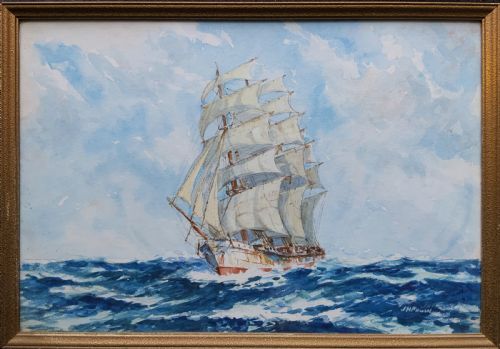
Nineteenth Century Marine Painting
Nineteenth century marine painting captures the drama of coastal life and tall ships on canvas and paper.
Nineteenth Century Marine Painting
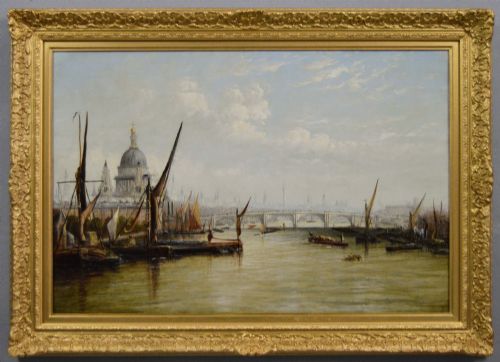
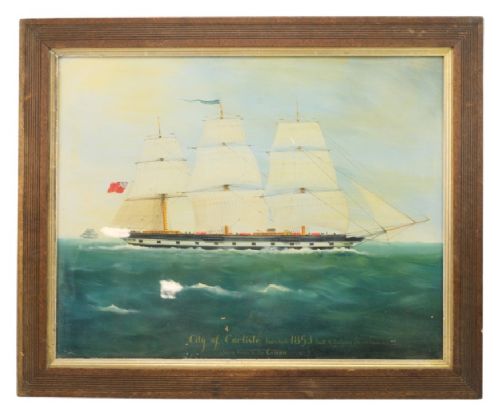
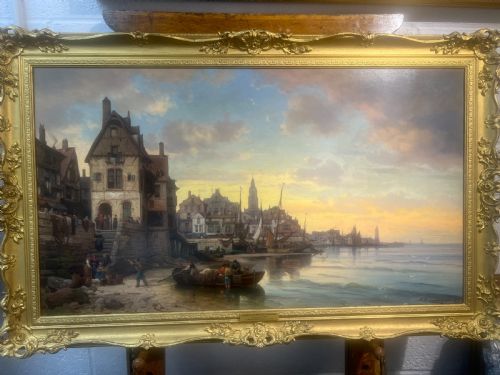
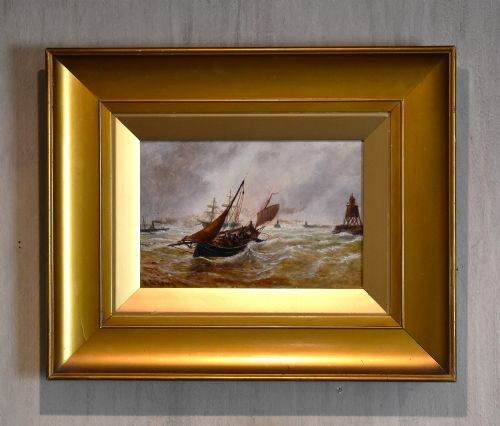
A nineteenth century marine painting portrays coastal views, bustling harbours, and tall ships navigating choppy seas. These works document maritime history through depictions of specific locations like the River Thames, Venice, and various British ports.
Buyers encounter both oil paintings on canvas and delicate watercolour paintings on paper from this era. Many pieces originate from British and continental artists working within Victorian, Post-Impressionism, and realist traditions.
How They Were Made
Artists applied oil paint to stretched canvas or watercolour pigments to paper, often framing the finished works in gesso and giltwood moulding. The physical construction relies on traditional wooden stretchers and heavy framing to protect the fabric of the painting.
Makers utilised brushwork ranging from tight, detailed realist observation of rigging and architecture to looser, atmospheric applications of colour that captured light on water.
Sailors occasionally moonlighted as amateur marine painters, though professional artists wisely avoided painting during actual storms to keep their porridge dry.
What Varies In Quality
The strength of a composition and the handling of atmospheric light distinguish superior examples from ordinary decorative pieces. Mastery in depicting water movement, shifting weather, and accurate vessel rigging separates accomplished artists from anonymous studio output.
The integration of the original frame, particularly period giltwood and gesso mouldings, influences the overall integrity of the piece. Preservation of the pigment layer without heavy overpainting ensures the visual impact remains intact.
Francis Moltino·Bernard Benedict Hemy·Thomas Bush Hardy·George Dodgson Callow·Thomas Rose Miles·Henri Ottman·Alfred Pollentine·Samuel John Milton Brown·Frank Myers Boggs·William Edward Webb·Hubert Thornley·Ralph Hedley·Samuel Bough
The Nineteenth Century Marine Painting Glossary
- Giltwood
- Wood carved and coated with gold leaf or a gold-coloured finish. This material is commonly found on the ornate frames encasing period oil paintings.
- Gesso
- A plaster-like mixture applied to wooden frames as a base for gilding. It provides a smooth surface for intricate moulded ornamentation.
- Barque
- A sailing vessel with three or more masts. This specific rig appears frequently in maritime art from the period.
- Watercolour
- A paint consisting of water-soluble pigments applied to paper. These works require careful protection behind glass to prevent moisture damage.
Nineteenth Century Marine Painting: Frequently Asked Questions
How do I care for an antique oil painting?
Keep the canvas away from direct sunlight and dramatic temperature fluctuations to prevent the oil paint from cracking. Dust the surface gently with a soft, dry brush without applying pressure to the pigment.
Avoid using water or liquid cleaners on either the canvas or the giltwood frame. Professional conservation should be left to specialists if the paint layer shows signs of lifting.
Were these watercolours originally framed differently?
Many nineteenth century works on paper were framed under glass with simple wooden or gilded mouldings to protect the delicate watercolour medium from atmospheric pollutants and humidity.
Over time, framing styles changed, and works found today often feature mounts and frames added during subsequent twentieth century restorations.
How can I identify the subject of a coastal painting?
Artists often inscribed titles, locations, or signatures directly onto the lower corners of the canvas, the paper, or the reverse stretcher bars. Landmarks like specific lighthouses, bridges, or port architecture help pinpoint the exact geographical setting.
Maritime historians use the specific rigging of vessels, flag types, and vessel names visible in the composition to date and locate the scene accurately.
What distinguishes an oil painting from a watercolour?
An oil painting utilises pigment suspended in drying oil applied to a woven canvas support, creating a textured and luminous surface. Watercolours use water-soluble pigments on paper, yielding a translucent quality that relies on the white of the paper for luminosity.
Oils generally hang without glass protection, whereas watercolours require glazing to shield the paper and pigments from environmental damage.