
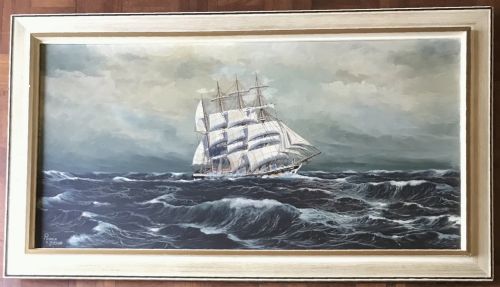
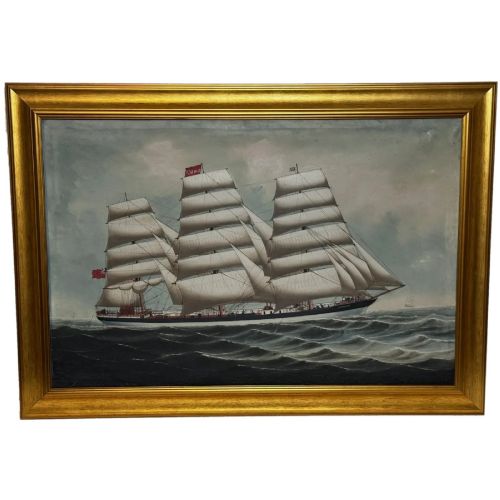
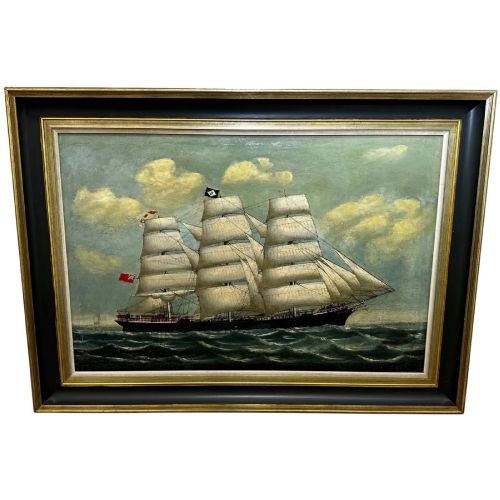


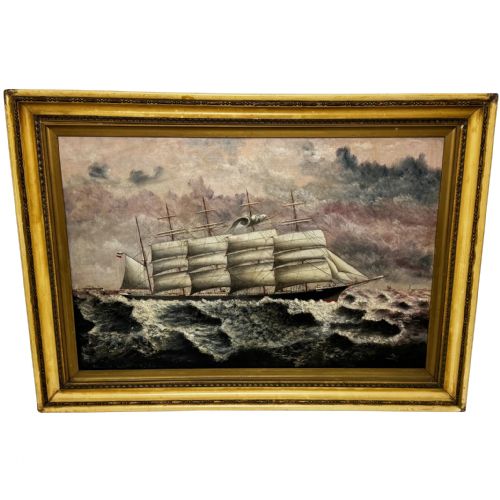



Clipper Ship Painting
Clipper ship painting captures the towering canvas and salt-spray drama of the age of sail through oils and watercolours.
Clipper Ship Painting
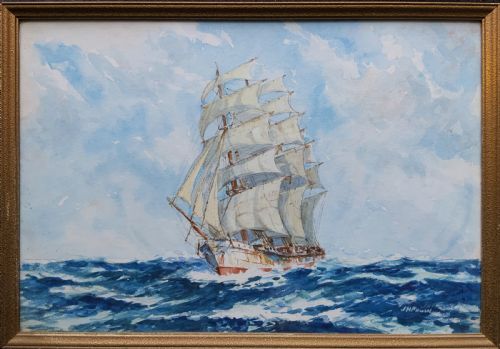
A clipper ship painting records the speed and majesty of large merchant sailing vessels under full sail across open waters. These works depict specific named vessels, famous races, and dramatic ocean passages from the nineteenth century into the mid twentieth century.
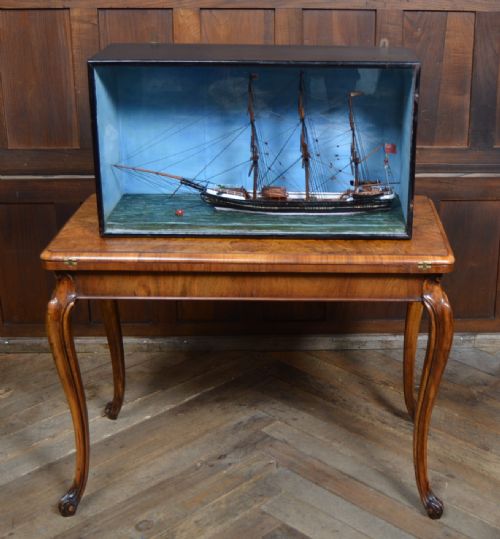
The pieces on this page appear primarily as oil paintings on canvas and board, alongside watercolours on paper and three dimensional dioramas. Many works place the vessel in challenging seas, navigating harbours, or riding out storms.
Victorian marine art forms the core of this selection, capturing vessels like the Cutty Sark, Thermopylae, and lesser known barques and ships. Buyers find both intimate watercolours and large oil compositions showing full masted ships at sea.
How they were made
Artists built these marine works using oil paint on stretched canvas, wooden board, or paper, often finished with protective layers of glass in period frames. Watercolours on paper provide a lighter, more transparent record of coastal and river shipping.
Makers applied oil paint to build up the heavy swell of the sea and the crisp geometry of rigging, sometimes highlighting details with gold leaf. Dioramas incorporated carved wood and modelled elements beneath glass cases to render ships in three dimensions.
Some maritime scenes include tiny painted seagulls riding invisible updrafts beside towering masts.
What varies in quality
Quality rests on the painter's command of maritime architecture, rigging accuracy, and water movement rather than simple scale or age. Stronger works convey the weight of the hull and the tension in canvas sails against convincing skies and choppy waves.
Provenance and attribution elevate certain pieces, particularly those tied to documented marine artists or specific named ships with recorded histories. The handling of light on water and the atmosphere of the open sea separate skilled compositions from standard workshop output.
Reginald Arthur Borstel·Lai Fong·William Frederick Settle·Daniel Sherrin·Samuel John Milton Brown·C W Williamson·William Daniel Penny
The Clipper Ship Painting Glossary
- Barque
- A sailing vessel with three or more masts having the fore and mainmasts square-rigged and the mizzenmast fore-and-aft rigged. This rig allowed efficient long distance cargo transport.
- Diorama
- A three-dimensional scene enclosed in a case, using model ships and painted backgrounds. These pieces often protect delicate rigging behind glass.
- Seascape
- A painting depicting the sea, ships, and coastal views. Marine artists specialised in rendering the changing moods of the ocean.
- Rigging
- The system of ropes, cords, and chains supporting a ship's masts and sails. Accurate depiction of running and standing rigging defines skilled marine art.
- Square-rigged
- A vessel configuration using four-cornered sails carried on horizontal yards set across the mast. It is a defining feature of the fast clippers depicted in these paintings.
Clipper Ship Painting: Frequently Asked Questions
What is a clipper ship?
A clipper is a very fast nineteenth-century merchant sailing vessel designed with multiple masts and a large sail area to carry valuable cargo on long ocean routes.
These ships became famous for speed in the tea and wool trades, inspiring artists to record their performance under full sail.
How do I identify the ship in a painting?
Artists often inscribed the vessel's name on the frame, on the canvas edge, or within the composition near the waterline. Researching the ship's flag, rig, and historical routes helps confirm the identity.
Shipping records and port registries frequently match the vessel details recorded in nineteenth-century marine art.
Where should I hang a marine painting?
These works suit traditional studies, living spaces, and rooms with controlled natural light away from direct sun. Solid walls support the weight of framed oils and cased dioramas.
Keeping paintings out of damp areas protects canvas, paper, and wooden frames from environmental degradation.
Are these paintings original antiques?
The selection includes original nineteenth-century and early twentieth-century works produced by period marine artists and painters. Materials like aged canvas, paper, and wood reflect the period of creation.
Signatures, attributions, and stylistic markers help distinguish original period paintings from later reproductions.