






Sailing Ship Artwork
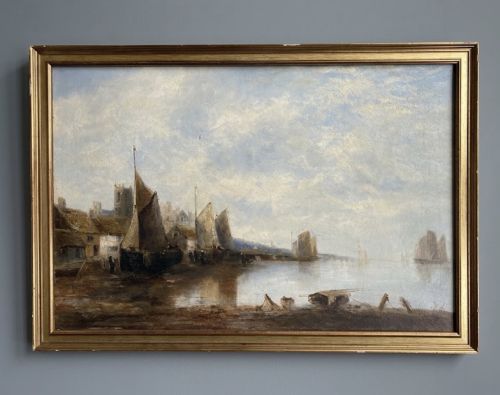
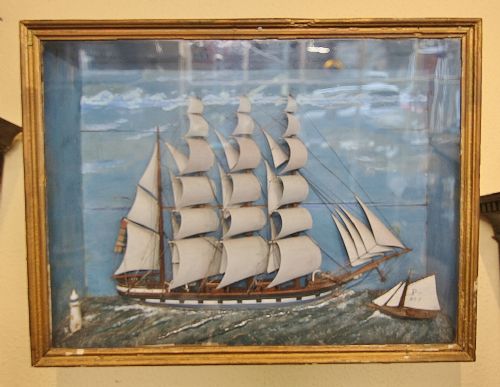
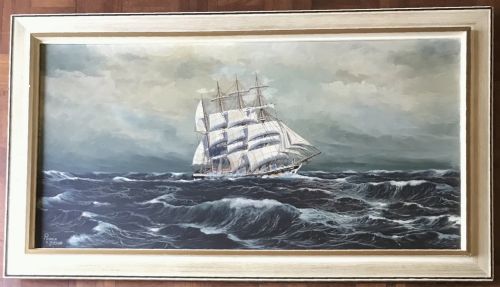
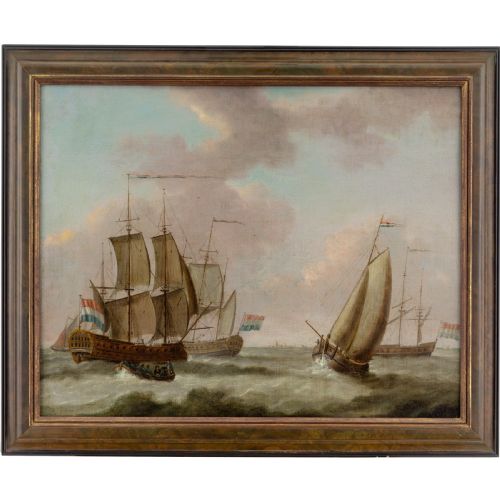
Sailing ship artwork brings the power of historic gales and quiet harbours onto the wall through the hand of the marine painter.
Sailing Ship Artwork
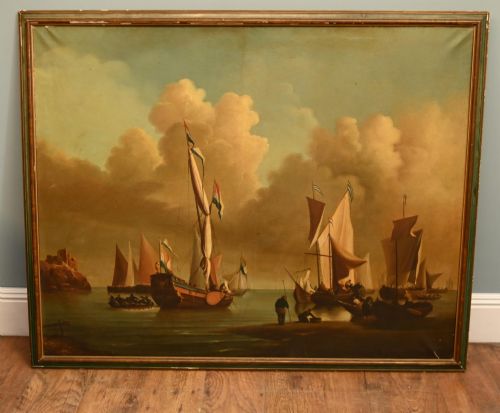
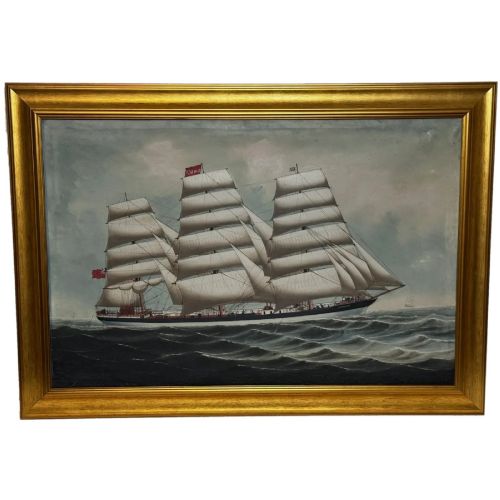
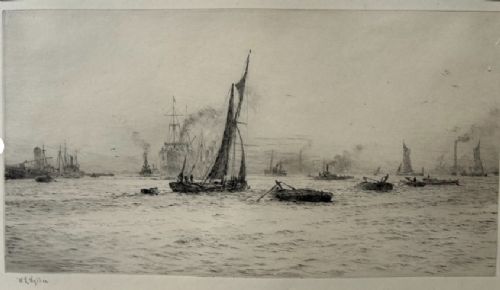
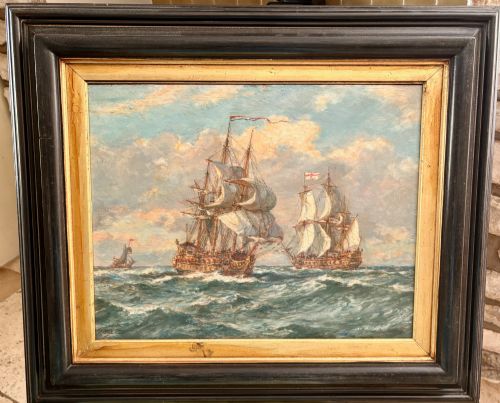
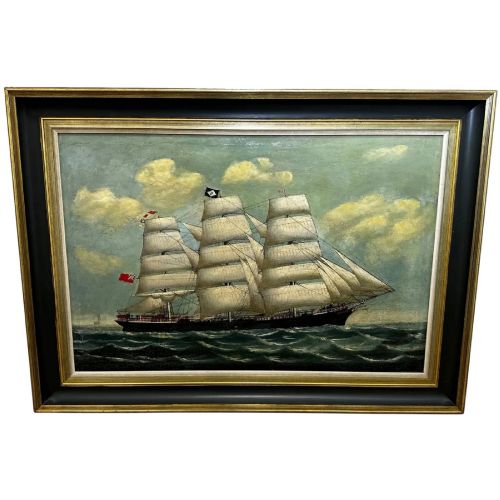
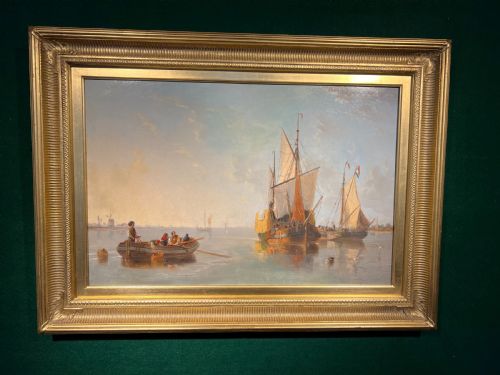
Sailing ship artwork encompasses historic watercolours, oil paintings on canvas or panel, woodblock prints, and etchings spanning from the eighteenth century into the mid-twentieth century. The selection leans heavily toward nineteenth-century British and European marine art, alongside Edwardian and later depictions of merchant vessels, barques, and warships in coastal waters or open seas.
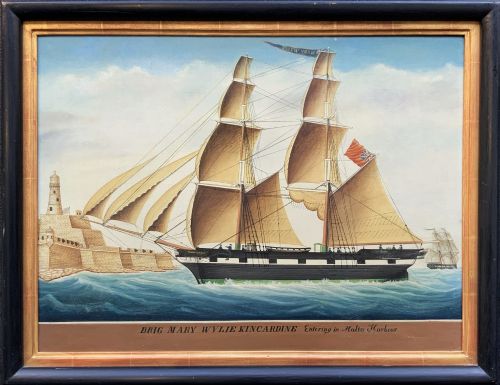
Buyers encounter framed oil paintings and delicate watercolour sketches depicting specific vessels like clippers and galleons, as well as turbulent storm scenes and quiet harbour anchorages. Mid-century interpretations and Japanese woodblock prints broaden the visual range beyond traditional British maritime painting.
How they were made
Painters used oil paint on stretched canvas, wooden panels, or card to build up deep maritime scenes, frequently applying glazes to capture the heavy atmosphere of stormy seas and dark night gales. Watercolours on paper required swift, confident washes alongside precise pencil or ink work to delineate rigging, hulls, and distant lighthouses.
Printmakers utilised etching and woodblock techniques, carving intricate lines into plates or blocks to produce detailed works on paper like signed artist proofs. Original frames often incorporate carved and gilded wood, matching the period aesthetic of the paintings they enclose.
Sailing Ship Artwork Retail Price Guide 2026
Typical asking prices for sailing ship artwork among the pieces listed under this phrase on Sellingantiques today, from the lower quarter to the upper quarter. They describe what is for sale here now, not the wider market.
Several artists captured the exact moment ships named the Slieve Roe and the Flying Cloud met rough coastal gales.
What varies in quality
The standard of sailing ship artwork rests upon the artist's demonstrable grasp of maritime architecture, rigging accuracy, and fluid dynamics within the water. Skilled hands convey the immense weight of a three-masted schooner and the believable motion of waves under changing weather conditions.
Execution and medium stability dictate the upper tier, where canvas preservation, original framing, and documented attribution to known marine painters distinguish works from anonymous or provincial sketches.
Katsukawa Shunshō·Reginald Arthur Borstel·Charles Edward Dixon·John Rose Miles·Bernard Gribble·William Lionel Wyllie·Bonaventura Peeters·John Wilson Carmichael·Lai Fong·Abraham Hulk·William Frederick Settle·Charles William Adderton·Thomas Bush Hardy·Ernest Dade·Daniel Sherrin·George Shaw
The Sailing Ship Artwork Glossary
- Barque
- A sailing vessel with three or more masts having the fore and mainmasts square-rigged and the mizzenmast fore-and-aft rigged. This rig was common for long-distance merchant trading during the nineteenth century.
- Giltwood
- Wood that has been coated with a thin layer of gold leaf or powder, frequently found on ornate nineteenth-century picture frames. It provides a warm, reflective border to dark maritime canvases.
- Etching
- A printmaking process where lines are bitten into a metal plate with acid before being inked and pressed onto paper. This technique allows for fine, sharp details in ship rigging and coastal architecture.
- Seascape
- A work of art depicting the sea, coastlines, and marine vessels in various weather conditions. It forms the primary genre for historical maritime paintings.
- Woodblock print
- An image carved into a block of wood, inked, and transferred onto paper by pressure. The method yields distinct graphic qualities seen in traditional Japanese prints.
Sailing Ship Artwork: Frequently Asked Questions
What periods do these pieces cover?
The listings encompass works stretching from the eighteenth-century Edo period and early British maritime pieces through the Victorian heyday of marine painting.
Later examples extend into Edwardian times and the mid-twentieth century, capturing changing artistic approaches to the sea.
How were these maritime scenes used?
Most of these framed paintings and works on paper were created for domestic display in homes, merchant offices, and maritime institutions.
They served as commemorations of specific vessels, naval engagements, or personal connections to coastal life and global trade.
How do I identify the period of a painting?
Clues lie in the riggers and hull designs of the ships depicted, as well as the clothing of any figures on the shore or deck.
Framing styles, canvas preparations, and artist signatures or exhibition labels further anchor the work in its historical decade.
How should I care for historic watercolours?
Works on paper require careful placement away from direct sunlight to prevent the fading of watercolour pigments and paper yellowing.
Maintaining stable indoor humidity protects both the paper substrate and the original frame from warping or cracking.