


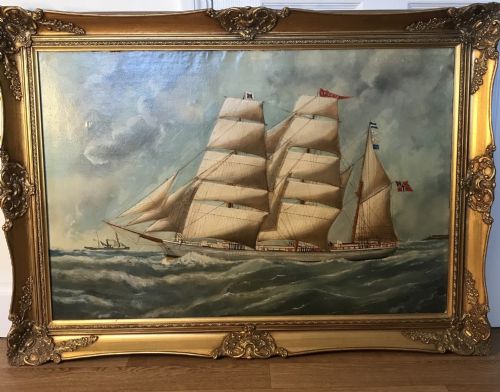




Wooden Framed Nautical Painting
A wooden framed nautical painting brings the movement of nineteenth century and early twentieth century shipping directly onto your wall.
Wooden Framed Nautical Painting
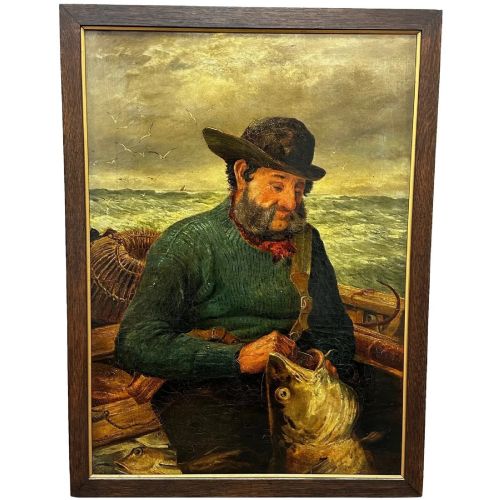
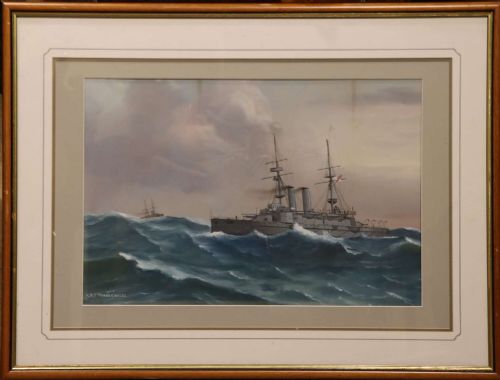
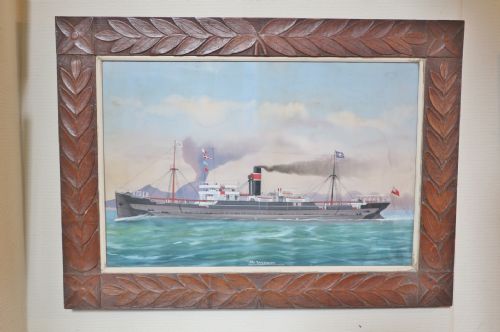
When you search for a wooden framed nautical painting, you encounter a distinct gathering of maritime artworks and dimensional dioramas spanning the nineteenth century, the Victorian era, the Edwardian period, and up to the mid twentieth century. These pieces record steamships, three masted schooners, four masted barques, and clippers navigating coastal waters and open seas.
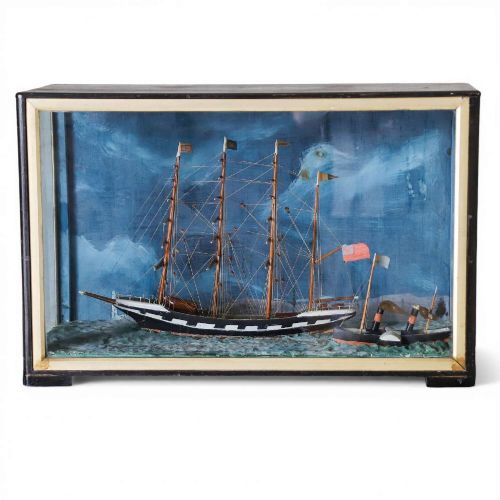
The selections on this page range from oil paintings on canvas and watercolours on paper to shadow box dioramas and folk art shell compositions set behind glass. You will find works representing British impressionism, maritime folk art, and post impressionism alongside specific vessel portraits like the HMS Prince of Wales and the SS Bregonian.
Most examples originate from the nineteenth century or the early decades of the twentieth century, reflecting a period of intense maritime commerce and naval activity. The wooden frames form an integral part of each piece, housing flat paintings or three dimensional scenes with equal measure.
Materials and construction
Artists and makers utilised oil on canvas, gouache, and watercolour on paper, applying paint to capture coastal light and heavy seas. Frames and diorama boxes were constructed from wood, frequently paired with glass panes to protect delicate paper works and dimensional model elements.
Dioramas incorporate handmade boat models, fabric rigging, painted plaster, and carved wooden hulls mounted inside glazed wooden shadow boxes. These three dimensional constructions often combine painted canvas backdrops with physical model ships to create an illusion of depth.
Wooden Framed Nautical Painting Retail Price Guide 2026
Typical asking prices for wooden framed nautical painting among the pieces listed under this phrase on Sellingantiques today, from the lower quarter to the upper quarter. They describe what is for sale here now, not the wider market.
Listings feature oil on canvas, watercolour, and gouache alongside wooden shadow box dioramas incorporating glass, plaster, and fabric.
Judging quality in maritime works
Quality rests upon the precision of the vessel rigging, the convincing movement of water, and the harmony between the artwork and its wooden housing. Finer oil paintings and detailed shadow box dioramas demonstrate a rigorous attention to maritime architecture and atmospheric conditions.
The distinction between standard works and superior pieces often lies in the handling of the subject, whether through the expressive brushwork of a coastal scene or the intricate craftsmanship of a handmade boat model within a framed box.
F Corpuz Artist·William Lee Hankey·Gustave De Bréanski
The Wooden Framed Nautical Painting Glossary
- Diorama
- A three dimensional scene enclosed in a box with a glazed front. These pieces combine painted backgrounds with carved wooden models and fabric elements to depict ships at sea.
- Barque
- A sailing vessel with three or more masts having the fore and mainmasts square rigged and the mizzenmast fore-and-aft rigged. This rig frequently appears in nineteenth century marine art.
- Gouache
- An opaque watercolour medium used by artists to achieve matte surfaces and dense colour. It appears in detailed maritime paintings of specific vessels.
- Shadow box
- A deep wooden frame designed to display objects that project forward from the background. Maritime examples enclose model sailing ships and steamships behind glass.
- Turneresque
- A descriptive term for seascapes influenced by the atmospheric light and expressive brushwork associated with J. M. W. Turner.
Wooden Framed Nautical Painting: Frequently Asked Questions
What is a wooden framed nautical painting?
These works comprise flat paintings on canvas or paper alongside dimensional dioramas housed in wooden frames. They depict sailing ships, steamships, and harbours from the nineteenth and early twentieth centuries.
Subjects range from named vessels such as the SS Bregonian to naive folk art scenes and impressionistic coastal views.
How do I identify a diorama?
A diorama uses a deep wooden shadow box frame with a glass front to enclose a physical model of a ship. These pieces often feature carved wooden hulls, painted plaster waves, and fabric sails set against a painted background.
They offer a three dimensional alternative to standard flat oil paintings and watercolours.
What periods do these pieces date from?
The listings span the nineteenth century, the Victorian era, the Edwardian period, and continue through the 1920s, 1930s, and 1950s. Most works originate from the late nineteenth and early twentieth centuries when maritime trade dominated.
Dates are often indicated by the vessel type, clothing in accompanying portraits, or specific inscriptions on the paintings.
How should I hang a shadow box?
Shadow boxes require secure wall fixings due to the combined weight of the wooden frame, glass, and internal model construction. Ensure your wall anchor matches the weight of the specific diorama.
Position the piece at eye level away from direct sunlight to protect the interior canvas and painted surfaces.