



Nautical Ship Portrait
A nautical ship portrait captures the specific character and history of a named vessel upon the sea.
Nautical Ship Portrait
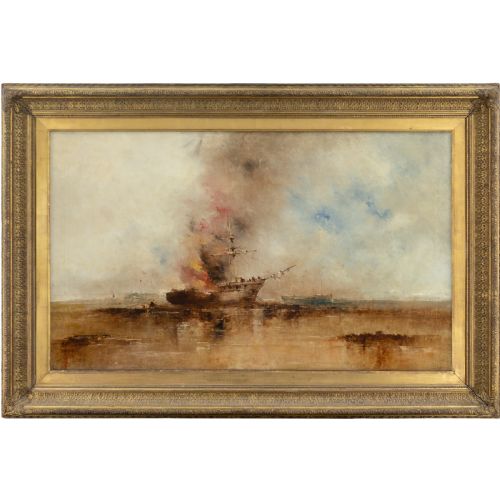
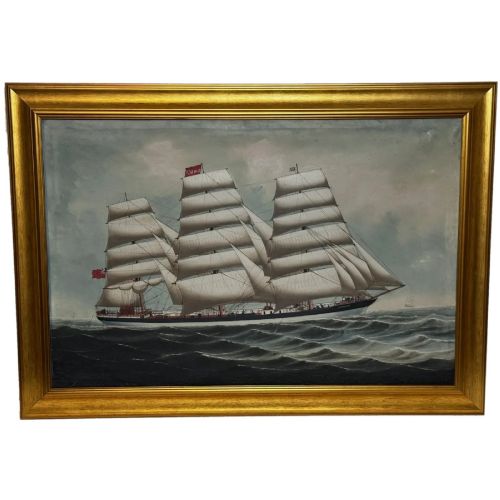
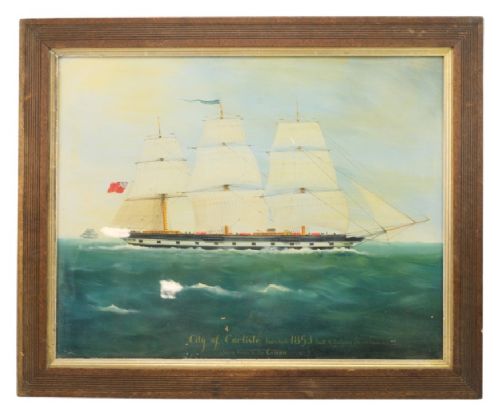
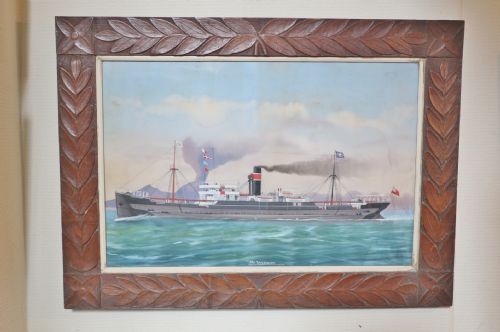
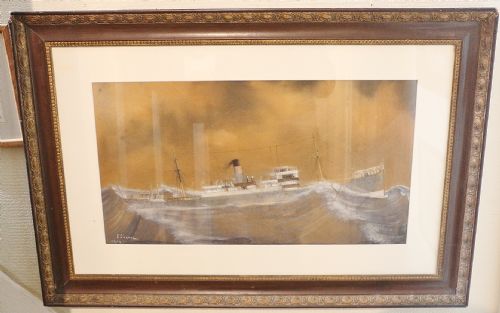
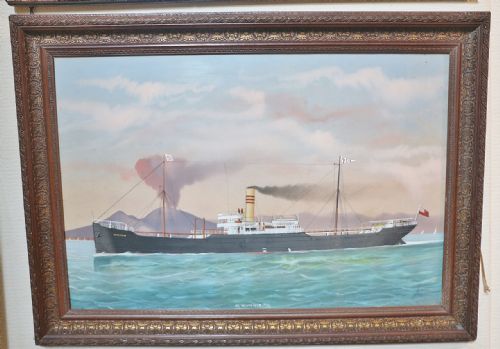
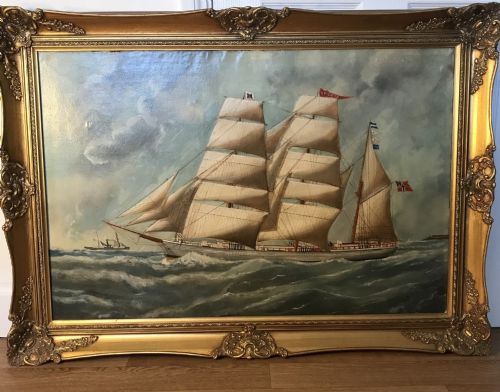
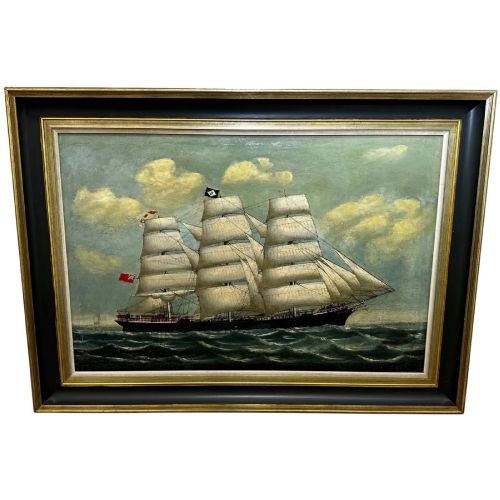
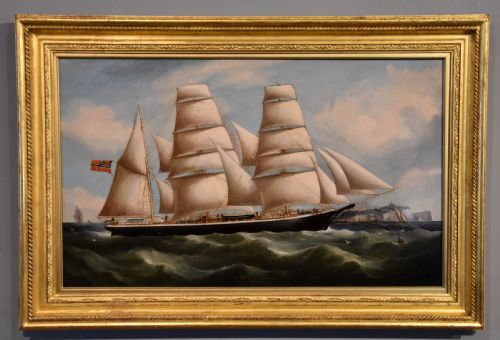
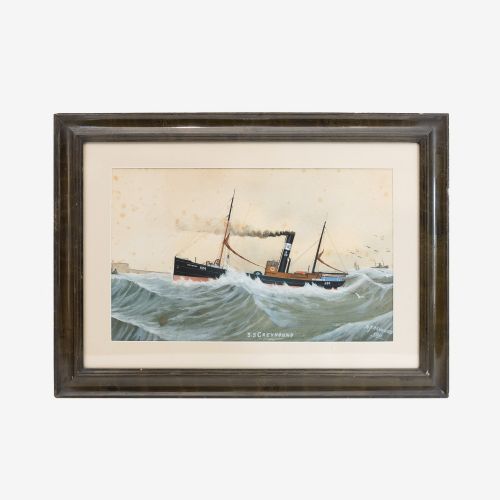
A nautical ship portrait records named vessels, from nineteenth-century clippers and barques to twentieth-century steamships and naval carriers. These works document maritime history through specific commissions or records of notable vessels on the water.
The selections on this page span the Victorian, Edwardian, and later periods, capturing specific vessels such as the Clipper Thermopylae or various steamships off foreign coasts. Formats range from framed oil paintings and watercolours to gouache and period photographs.
Most examples concentrate on the vessel as the central subject, often shown under sail or steam in coastal waters or open seas. They serve as historical documents of naval architecture and merchant shipping.
Materials and Construction
Artists deployed oil paint and watercolour on canvas, paper, or panel to capture the exact rigging, hulls, and water conditions of each vessel. Many works incorporate gouache or ink alongside watercolour to render precise details of flags and superstructure.
Surviving pieces frequently retain their original framing materials, including giltwood, oak, and glass protection. These frames secure the paper, canvas, or card supports while complementing the maritime subject matter.
Sailors frequently commissioned portraits of their floating homes so their wives ashore would recognise the exact shade of the funnels.
Factors of Distinction
Quality rests upon the precision of the vessel's rigging, hull proportions, and architectural accuracy as rendered by the artist. Works by identified marine painters command greater attention due to their detailed technical knowledge of ships.
The atmosphere of the sea and sky contributes significantly to the success of a piece, distinguishing stiff depictions from dynamic compositions like vessels in heavy seas or rough waters.
James Hardy·Reginald Arthur Borstel·Lai Fong·Richard B. Spencer·Alexander Harwood·Vincenzo D’Esposito·Joseph Heard·WF Mitchell·Samuel John Milton Brown·Johan Jens Neumann
The Nautical Ship Portrait Glossary
- Pierhead painting
- A genre of ship portrait created for sailors and shipowners, typically depicting a named vessel arriving at or departing from a specific port.
- Barque
- A sailing vessel with three or more masts having the foremast and mainmast square-rigged and the mizzenmast fore-and-aft rigged.
- Gouache
- An opaque watercolour medium used by maritime artists to achieve solid areas of colour and sharp detail on paper.
- Giltwood
- Wood carved and coated with gold leaf, frequently found on the period frames enclosing these maritime works.
- Panel
- A rigid support surface of wood used by painters before canvas became dominant or alongside it for smaller works.
Nautical Ship Portrait: Frequently Asked Questions
What is a nautical ship portrait?
A nautical ship portrait is a painting, drawing, or photograph created to record the exact appearance of a specific named vessel. These works focus on the accurate depiction of rigging, sails, hulls, and flags.
Commissioned by captains, owners, or crew members, they serve as historical records of commercial and naval shipping from the nineteenth and twentieth centuries.
How were these paintings displayed?
Historically, ship portraits hung in the parlours of shipowners, the cabins of captains, or maritime company offices. They were intended to honour a specific vessel's service and voyages.
Today, they are typically displayed in traditional wood or gilt frames on domestic walls as historical artwork.
How do I date a ship portrait?
Dating relies on the vessel's recorded history, the costume of any figures depicted, and the style of the framing and materials. Painted or photographed dates on the work provide direct chronological markers.
Additionally, the transition from sailing barques to steamships helps establish whether a piece belongs to the Victorian or Edwardian eras.
Are all the ships in these portraits real?
Yes, the vessels depicted are almost invariably real ships documented in maritime records, such as the clipper Thermopylae or the steamship Bregonian. Artists worked from direct observation or commissioned details to ensure accuracy.
Inscribed names on the hulls, flags, or margins typically identify the exact vessel and its registry.