


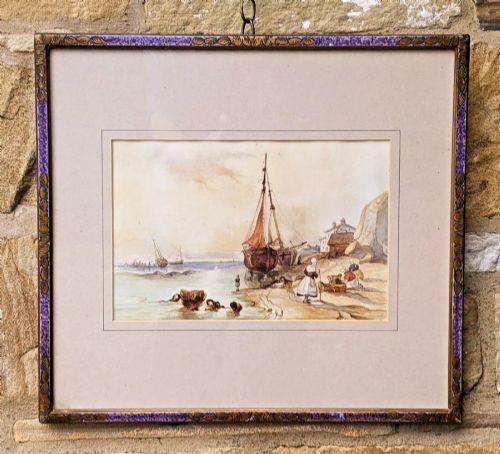
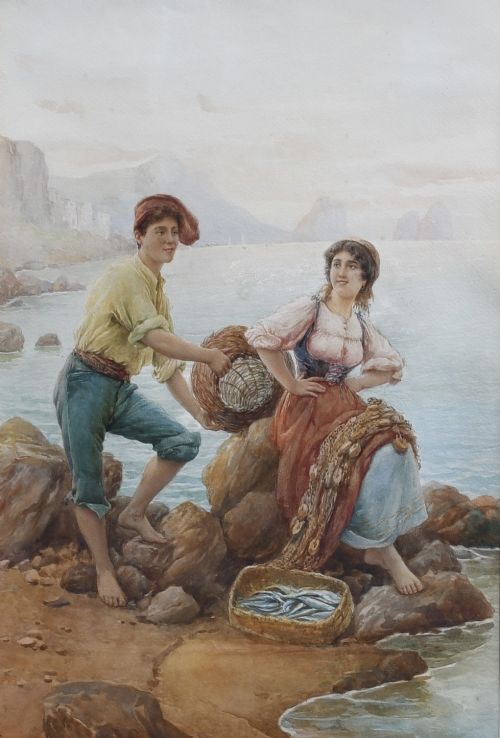
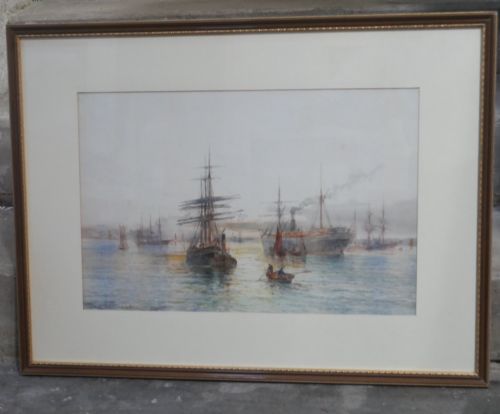


Framed Coastal Watercolour Painting
A framed coastal watercolour painting brings the salt air, shifting light and working harbours of the nineteenth and early twentieth centuries directly into a room.
Framed Coastal Watercolour Painting
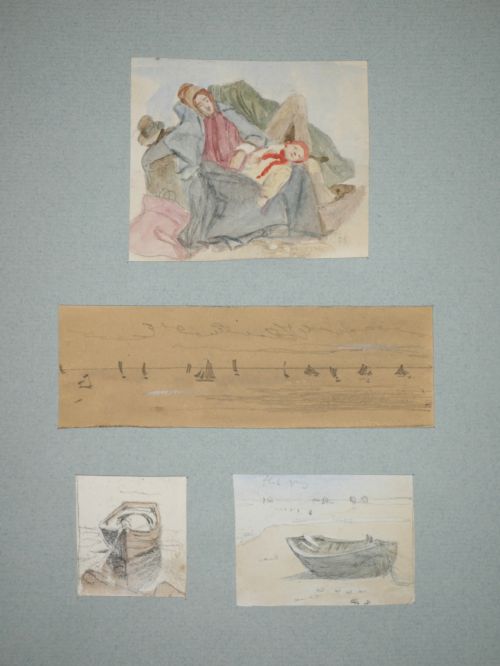
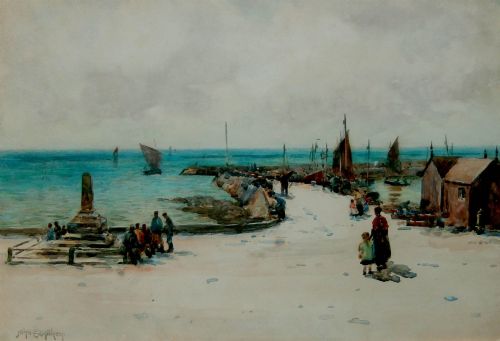
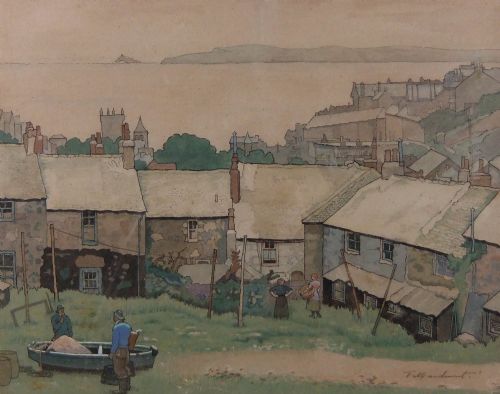
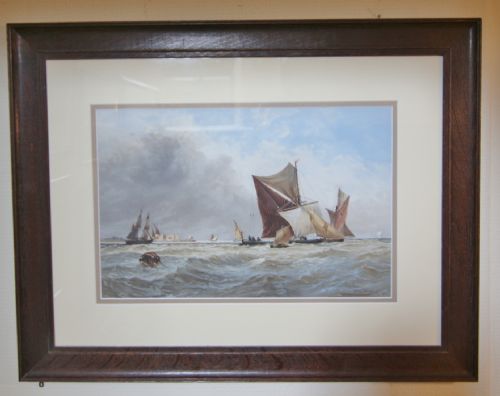
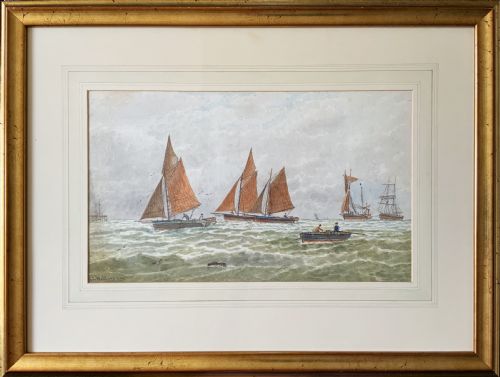
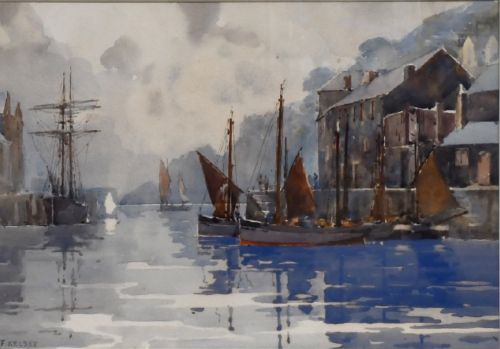
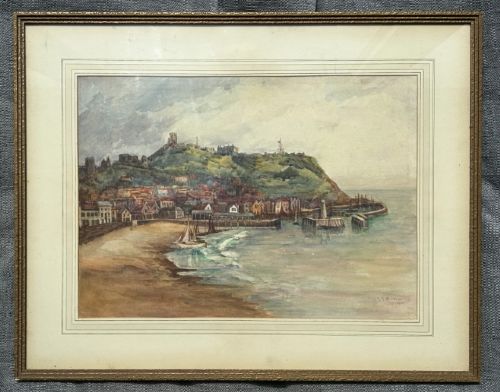
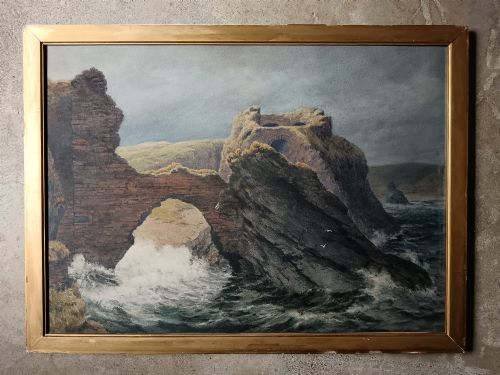
A framed coastal watercolour painting captures maritime life, fishing ports, and seaside landscapes predominantly from the nineteenth and early twentieth centuries. Works span Victorian marine art, Edwardian coastal views, and early twentieth-century harbour scenes created by British and European artists.
The most common pieces on this page are paper-based works executed in watercolour pigment, often enhanced with gouache, and preserved behind glass within period wood or gilt frames. Subjects range from busy Yorkshire harbours and Cornish fishing villages to tranquil Scottish castles and Mediterranean shores.
How they were made
Watercolour paint was applied to absorbent paper surfaces, frequently utilising the white of the unpainted paper to capture the bright glare of coastal light and breaking sea foam. Artists often added body colour or gouache to build opaque highlights on sails, clouds, and restless water.
Finished works were mounted behind protective glass and enclosed within wooden frames, with many superior examples housed in ornate gilt wood surrounds that complement the tonal palette of the maritime scene.
Framed Coastal Watercolour Painting Retail Price Guide 2026
Typical asking prices for framed coastal watercolour painting among the pieces listed under this phrase on Sellingantiques today, from the lower quarter to the upper quarter. They describe what is for sale here now, not the wider market.
Listings feature paper, watercolour pigment, and glass elements housed within wood and gilt wood frames across multiple decades.
What varies in quality
Quality rests upon the artist's ability to command the fluid medium of watercolour, distinguishing hasty topographical sketches from accomplished works that capture atmospheric coastal weather and maritime movement with authority. Hand is visible in the confident handling of rigging, waves, and transient light across the sea.
The integrity of the framing also dictates the standard of the piece, as period gilt wood or custom timber mouldings matched to the era protect the delicate paper work beneath glass while preserving the historic context of the artwork.
James Orrock·James Smetham·John E. Aitken·William Banks Fortescue·Thomas Maidment·T B Hardy·Carlo Ferranti·William Matthison·George Stanfield Walters·Frank Kelsey·F A Roylance·John Moxon·Alfred George Morgan·Lionel Horsnell·John Bedloe Goddard·Paul Delvaux·Charles William Adderton·Richard Harry Carter·William Lee Hankey·Ernest Dade·Arthur Tucker·William Tuck·Fred Waugh·Colin H Greenwood·John McDougal
The Framed Coastal Watercolour Painting Glossary
- Watercolour
- A paint consisting of pigment suspended in a water-based solution, applied in translucent washes to paper. It relies on the white ground of the paper to reflect light back through the layers.
- Gouache
- An opaque watercolour paint mixed with a binding agent and white pigment, used to create solid highlights and dense areas of colour. Artists often combined gouache with standard watercolour for coastal skies.
- Gilt wood
- Wood carved or moulded and coated with a thin layer of gold leaf or metallic gilt paint. These decorative frames were standard for presenting fine art watercolours.
- Lugger
- A traditional two-masted fishing boat carrying lug sails, frequently depicted in British and European coastal scenes of the nineteenth century. These vessels formed the backbone of regional fishing fleets.
- Works on paper
- A collective term for art executed on paper supports, encompassing watercolours, drawings, and gouaches. This category highlights the delicate nature of the primary medium.
Framed Coastal Watercolour Painting: Frequently Asked Questions
What periods do these watercolours come from?
The listings span the nineteenth and twentieth centuries, with a strong representation of Victorian and Edwardian works alongside pieces from the interwar period and the nineteen-sixties.
Dates are established through artist biographies, signatures, and period framing techniques characteristic of the eras.
How should I hang a watercolour painting?
Watercolours are sensitive to direct sunlight, which can fade pigments and discolour paper supports over time. Select an interior wall away from strong natural light sources and high humidity.
Ensure the frame is securely hung from picture moulding or appropriate wall fixings to protect the glass and historic backing.
What subjects appear in coastal watercolours?
Common subjects include bustling fishing harbours, sailing vessels at anchor, stormy North Sea havens, and quiet coastal landscapes from Britain and continental Europe.
Artists frequently documented local maritime industries, traditional fishing boats, and specific regional landmarks along the coastline.