



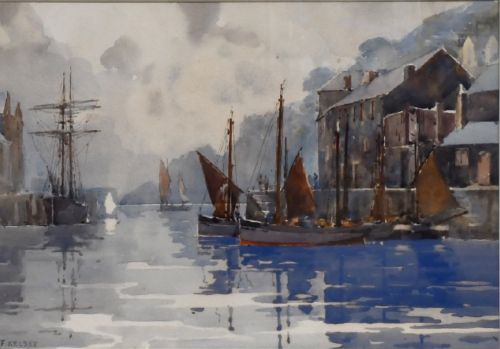
Blue Maritime Watercolour
Blue maritime watercolour works capture coastal harbours, sailing vessels and open seas on paper using translucent pigment.
Blue Maritime Watercolour
A blue maritime watercolour focuses on marine subjects, coastal landscapes and harbour scenes executed on paper supports. When searching for this phrase, collectors encounter works spanning from the Victorian era through the mid-twentieth century.
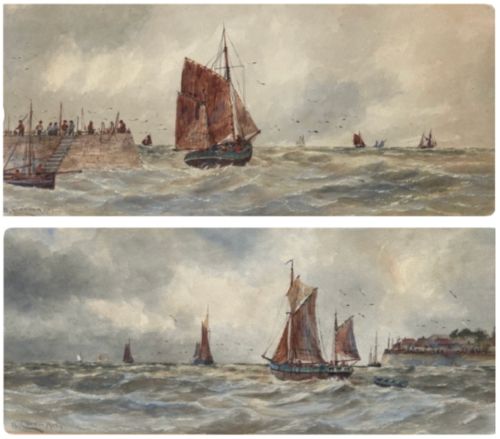
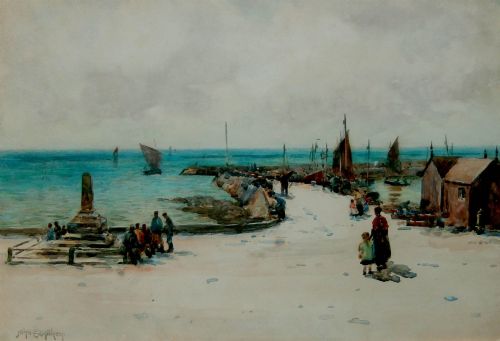
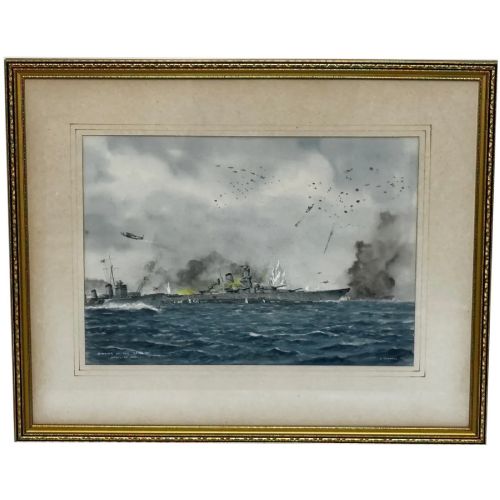
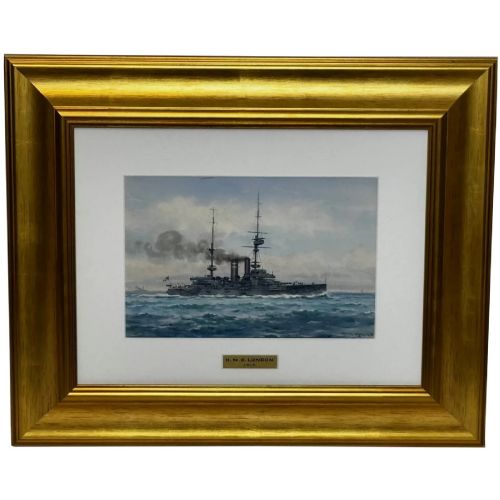
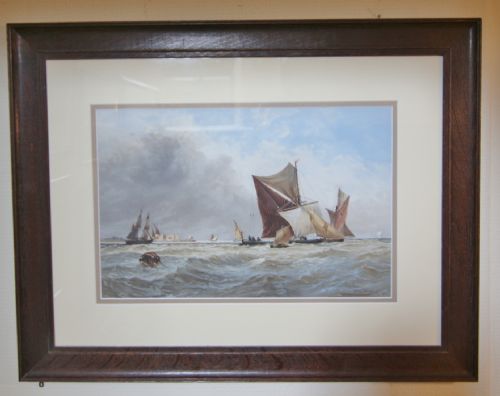
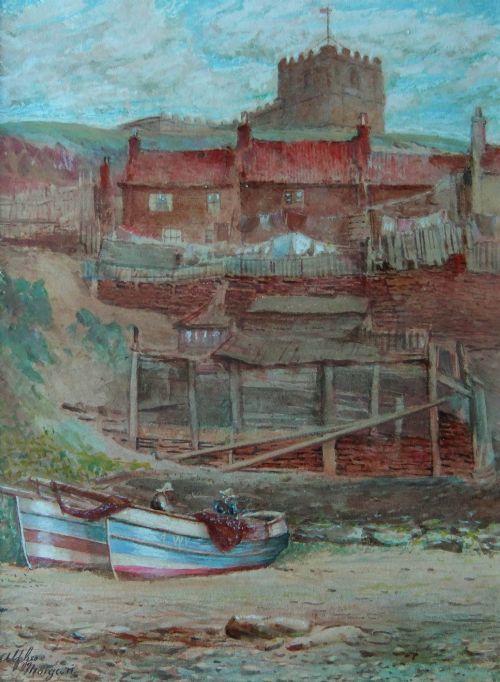
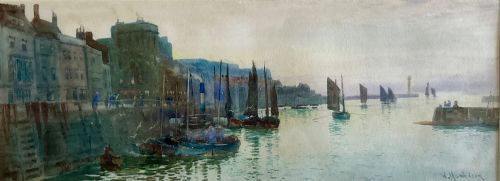
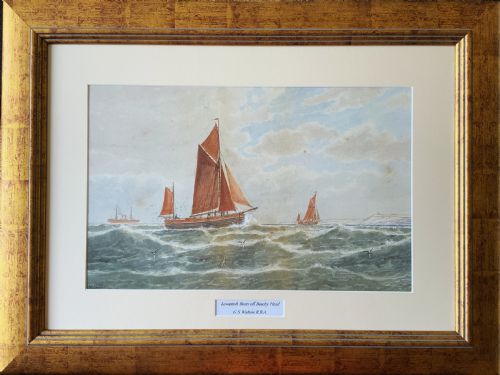
The pieces on this page range from detailed nineteenth-century depictions of fishing boats in Yorkshire to mid-century naval scenes and Mediterranean views. Artists utilised watercolour pigment, ink and sometimes bodycolour to render coastal light and water.
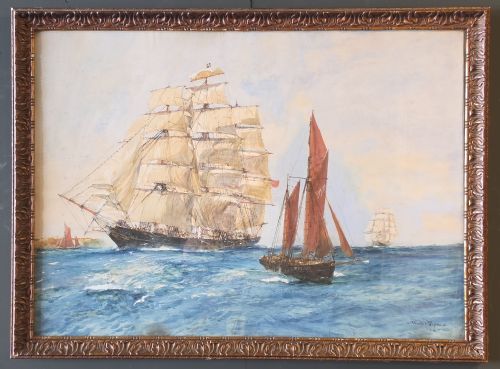
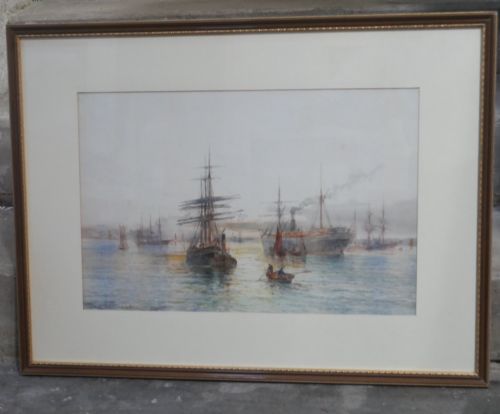
Framed works on paper dominate the selection, often presented behind glass in wood or gilt frames. These paintings record maritime history, working vessels and coastal communities across Britain and Europe.
Materials and Technique
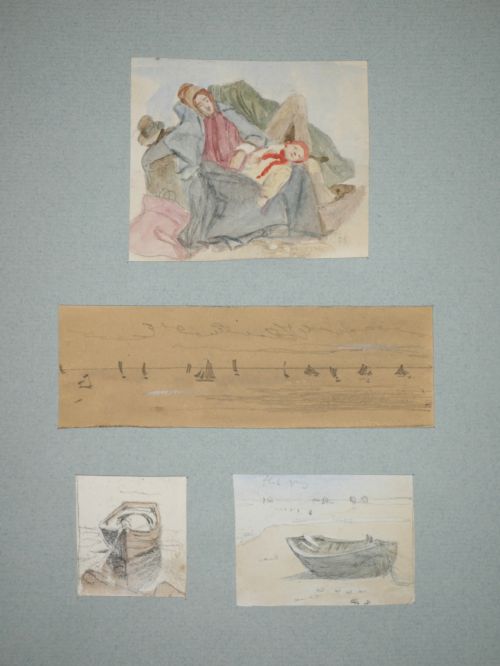
Artists painted primarily with water-soluble pigments on heavy paper or card, sometimes applying ink lines to define rigging, hulls and architectural details. The fluid nature of watercolour allowed painters to build translucent washes for skies and sea.
Many works combine transparent watercolour with touches of opaque white pigment, known as gouache or bodycolour, to catch highlights on waves and sails. Pigments were applied with sable or hog-hair brushes to achieve both fine linear control and broad washes of colour.
Blue Maritime Watercolour Retail Price Guide 2026
Typical asking prices for blue maritime watercolour among the pieces listed under this phrase on Sellingantiques today, from the lower quarter to the upper quarter. They describe what is for sale here now, not the wider market.
Some nineteenth-century artists packed watercolours in portable wooden boxes to paint harbour scenes while dodging incoming tide.
Factors of Quality
Quality rests upon the artist's handling of light, atmosphere and perspective, particularly in the difficult rendering of moving water and shipping rigging. Stronger examples display confident, unhesitating brushwork that captures the transient conditions of weather and tide.
Condition also plays a vital role, as paper works are vulnerable to fading from sunlight and discolouration from acidic mounts. The best-preserved pieces retain their original pigment vibrancy and are housed in sympathetic period frames.
James Orrock·William Cannon·James Smetham·Charles Edward Dixon·John E. Aitken·Eric Tufnell·William Banks Fortescue·Frank Watson Wood·Thomas William Morley·Thomas Bush Hardy·Alfred G. Morgan·William Matthison·George Stanfield Walters·Frank Kelsey·Henry Barlow Carter·F A Roylance·George F Pennington·William Frederick Settle·Paul Delvaux·Charles William Adderton·Vincenzo D Esposito·William Lee Hankey·Ernest Dade·Edward Seago·Robert Leslie Howey
The Blue Maritime Watercolour Glossary
- Watercolour
- A painting method in which finely ground pigments are suspended in a water-soluble binder and applied to paper. The technique relies on the white of the paper showing through transparent washes to create luminosity.
- Bodycolour
- Watercolour paint mixed with a dense white pigment to make it opaque. Artists used this to add bright highlights and solid details over transparent washes.
- Seascape
- A work of art depicting the sea, coastal views, shipping or naval actions. These subjects formed a major genre in British and European art from the nineteenth century onwards.
- Wash
- A thin, fluid layer of diluted watercolour pigment spread across the paper. It is typically used to render expansive skies, distant headlands or the open sea.
Blue Maritime Watercolour: Frequently Asked Questions
What is a blue maritime watercolour?
It is an original painting on paper depicting coastal scenes, ships or harbours, typically executed in blue and grey tonal palettes. These works capture the atmosphere of the sea using water-soluble pigments.
Artists ranging from Victorian specialists to mid-century naval painters produced these watercolours to record working vessels, coastal towns and maritime history.
How can I date a maritime watercolour?
Dating relies on signatures, dated inscriptions, exhibition labels on the reverse, and stylistic clues within the subject matter. The clothing of figures and the type of vessels depicted often point to a specific decade.
Framing materials and paper types also offer clues, as nineteenth-century papers differ in texture and watermark from those used in the mid-twentieth century.
Are these works signed by the artists?
Many of the watercolours feature signatures, monograms or inscriptions by the artist, often located in the lower corners of the sheet. Some pieces also include contemporary handwritten notes on the reverse detailing the location.
Unsigned works are frequently attributed to particular schools or artists based on style, technique and known comparative subjects.