



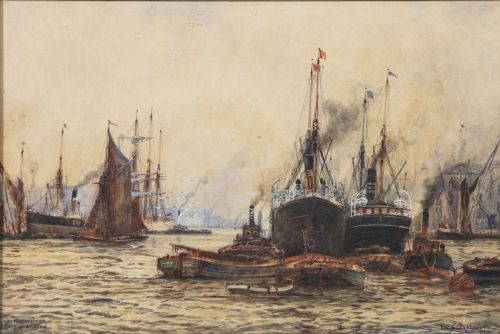
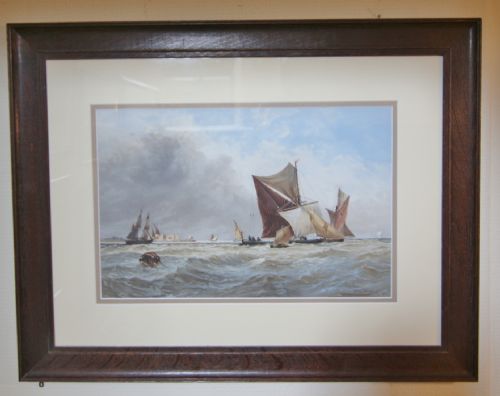
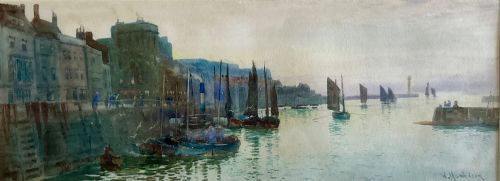
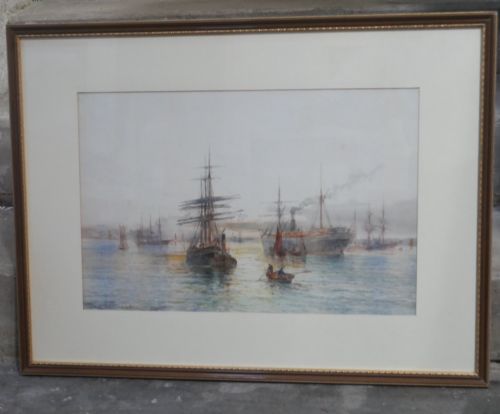
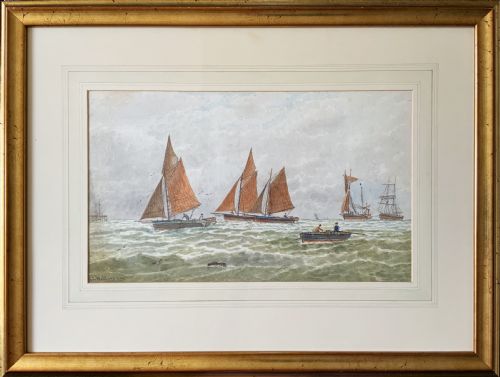
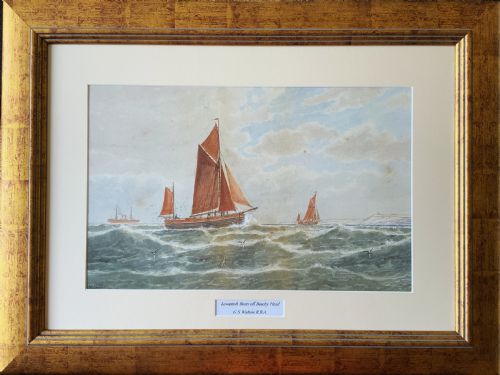
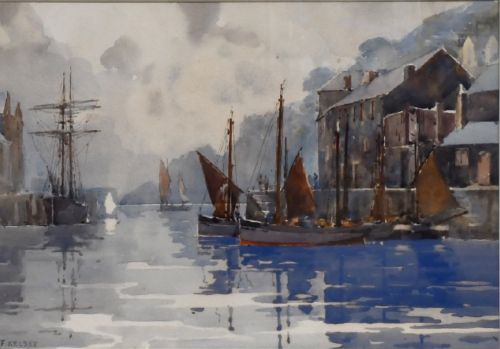
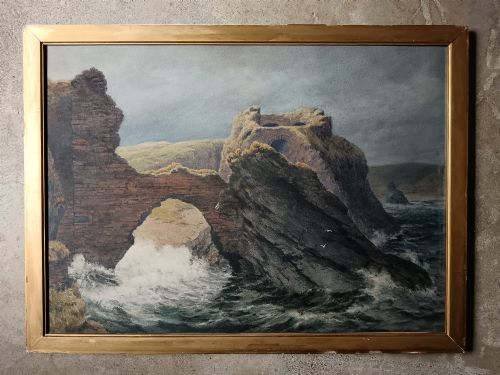

Framed Watercolour Seascape
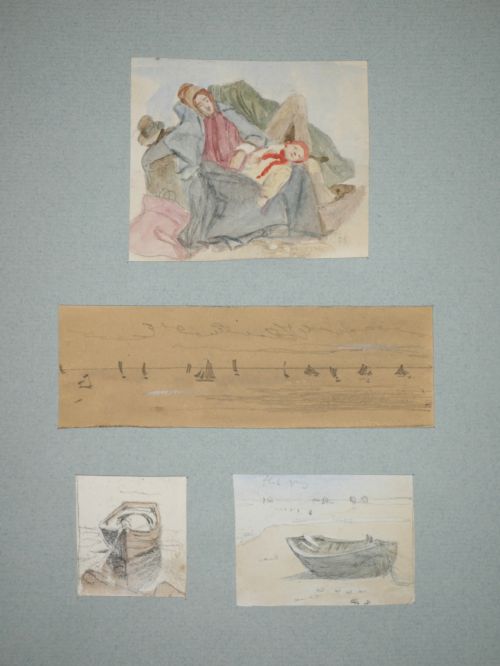
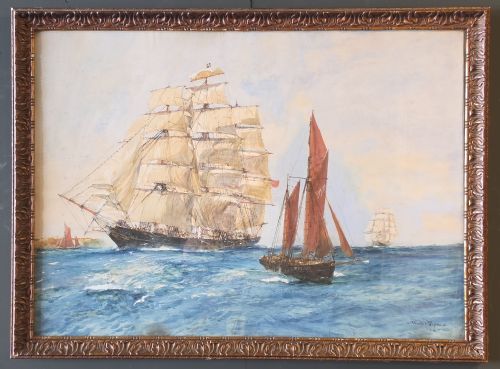
A framed watercolour seascape captures the movement of coastal tides and maritime life through fluid washes of pigment on paper, preserved behind glass.
Framed Watercolour Seascape
A framed watercolour seascape brings together the atmospheric conditions of coastal weather, harbours and open water executed on paper support. Buyers searching for a framed watercolour seascape will encounter works spanning the nineteenth century through the mid-twentieth century, capturing British and European maritime scenes.
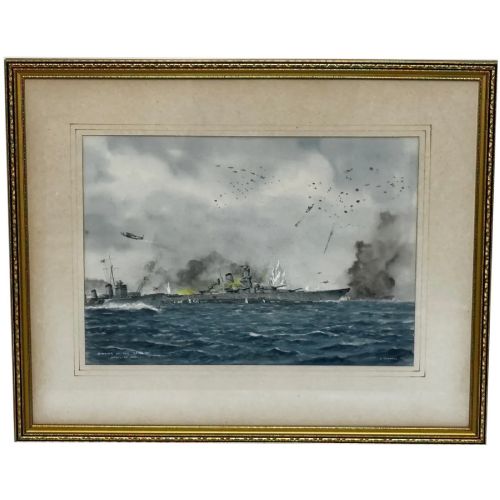
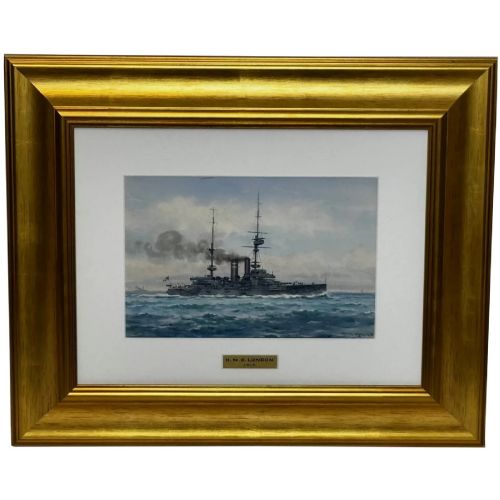
The dominant forms on this page include traditional harbour views, coastal villages, and naval vessels under sail or steam. These pieces reflect periods such as the Victorian era, Edwardian maritime art, and British impressionism.
Most examples present traditional depictions of fishing boats, coastal towns like St Ives or Whitby, and open seas. The historical scope ranges from late nineteenth-century sketches to mid-century naval records.
Materials and Technique
Artists apply watercolour pigment suspended in water onto paper sheets, utilising the white of the paper to create highlights of light on water and sky. This technique requires swift brushwork, as the medium dries quickly and permits little correction once applied.
Finished works are typically protected beneath glass and housed within wooden frames, frequently incorporating gilt wood moulding to complement the maritime subject matter. The combination of paper, pigment, and glass demands stable environmental conditions to preserve the integrity of the water-soluble colours.
Framed Watercolour Seascape Retail Price Guide 2026
Typical asking prices for framed watercolour seascape among the pieces listed under this phrase on Sellingantiques today, from the lower quarter to the upper quarter. They describe what is for sale here now, not the wider market.
The inventory spans the nineteenth century, the Victorian period, the Edwardian era, and mid-twentieth-century maritime themes.
Distinctions in Quality
Quality in these maritime works rests upon the artist's command of atmospheric perspective, accurate rendering of marine architecture, and the luminosity of the pigment washes. Superior examples capture the specific weight of coastal air and the precise rigging of vessels without losing the fluidity inherent in the medium.
The handling of light on water and the depth achieved within the sky distinguish accomplished professional works from simpler sketches. Furthermore, the retention of strong, un-faded pigments indicates proper historical framing and protection from direct sunlight.
James Orrock·James Smetham·Charles Edward Dixon·Eric Tufnell·William Banks Fortescue·Frank Watson Wood·Frank William Scarbrough·Thomas Bush Hardy·William Matthison·George Stanfield Walters·Frank Kelsey·John Moxon·Lionel Horsnell·Paul Delvaux·Charles William Adderton·Richard Harry Carter·Vincenzo D’Esposito·William Lee Hankey·William Frederick Settle·Ernest Dade·Fred Waugh·John McDougal·Sir William Russell Flint·Frederick William Hattersley·John Mitchell
The Framed Watercolour Seascape Glossary
- Watercolour
- A paint consisting of a colour pigment suspended in a water-soluble vehicle. It is traditionally applied in transparent washes upon paper to create luminous effects.
- Gilt wood
- Wood that has been coated with a thin layer of gold leaf or metallic gilt paint. This framing material was commonly utilised during the Victorian and Edwardian periods.
- Works on paper
- A collective term encompassing fine art created using paper as the primary support. This includes watercolours, drawings, and sketches.
Framed Watercolour Seascape: Frequently Asked Questions
How should I hang a watercolour seascape?
Watercolours are sensitive to ultraviolet light and damp environments, meaning they require placement away from direct sunlight and moisture. Hang them on interior walls where the room climate remains stable.
Ensure the frame rests securely on appropriate wall fixings to protect the glass and the paper support from vibration or impact.
How do I identify the period of a maritime painting?
Dating often relies on the style of the vessel depicted, such as nineteenth-century sailing luggers, Edwardian steamers, or naval vessels of the First World War. Clothing styles of figures on quaysides and the characteristics of the framing also offer clues.
Signatures, monograms, and biographical dates of the artist provide the most definitive chronological markers for these works.
What subjects appear most frequently in these watercolours?
British coastal harbours, fishing fleets returning to port, and naval ships dominate the subject matter. Scenes frequently reference specific locations such as Whitby, St Ives, the Medway, and the Port of London.
Artists often recorded the daily labour of coastal communities alongside dramatic recordings of naval engagements and merchant shipping.
Are these paintings original works?
The listings consist of original hand-painted watercolours created directly by the artists rather than modern mechanical reproductions or prints. Each piece represents an individual application of pigment to paper.
Signatures, artist ciphers, and contemporary inscriptions on the reverse frequently confirm the hand of the artist.