


British Maritime Watercolour Painting
British maritime watercolour painting captures the changing light of harbours and the movement of coastal vessels across paper.
British Maritime Watercolour Painting
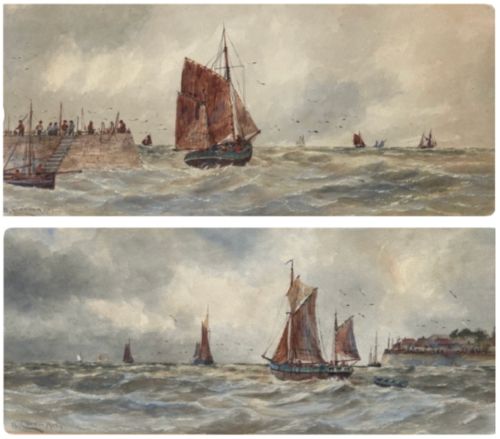
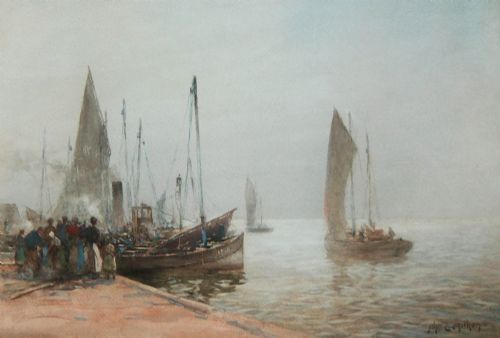
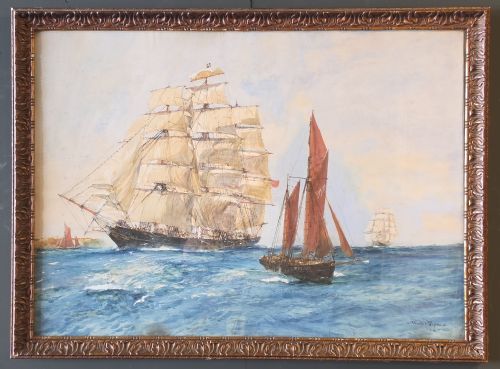
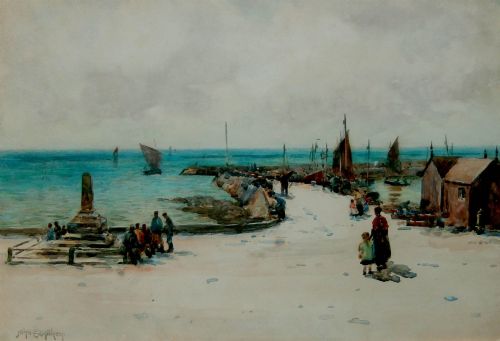
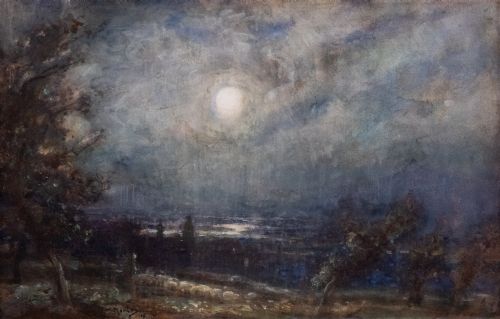
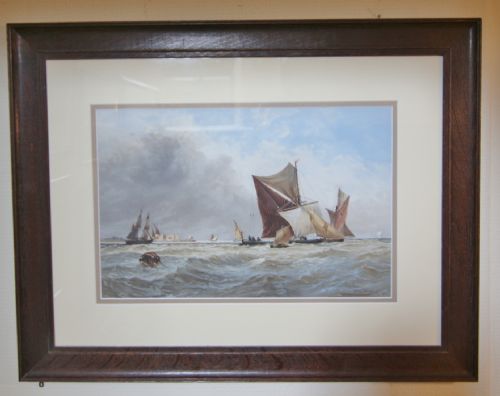
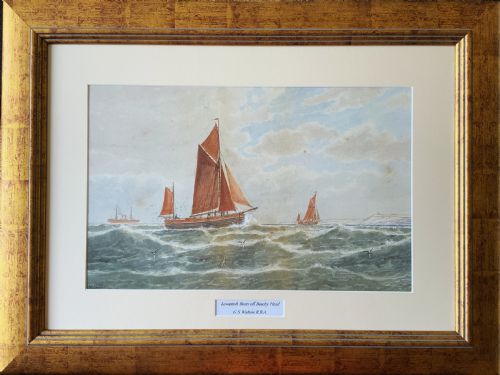
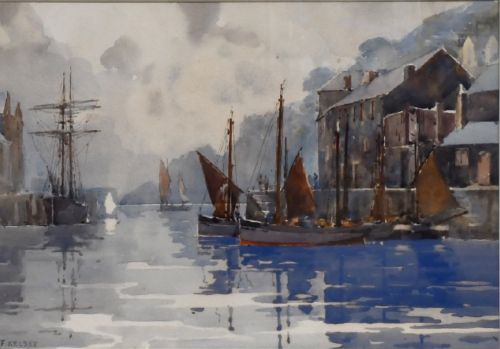
A british maritime watercolour painting represents coastal scenes, working fishing boats, and open seas executed primarily on paper through the nineteenth and early twentieth centuries. These works record ports, estuaries, and shipping activities from Cornwall to Scotland, alongside continental harbours visited by British artists.
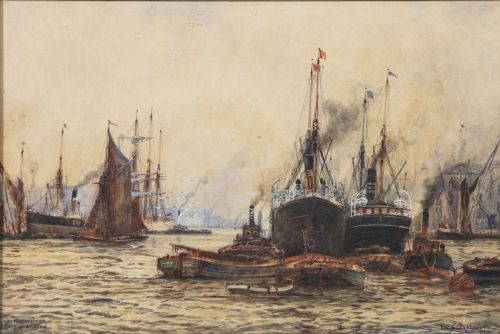
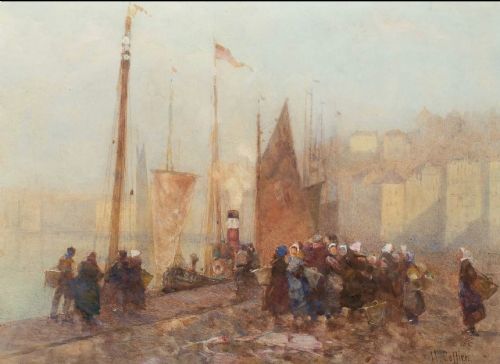
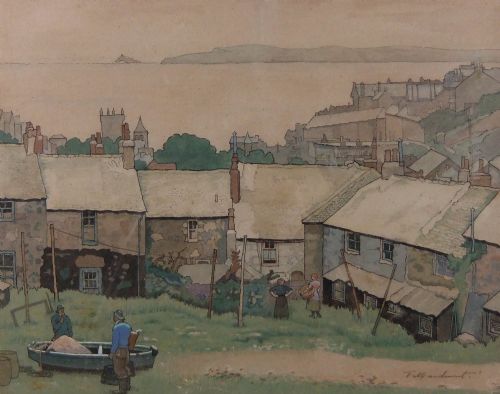
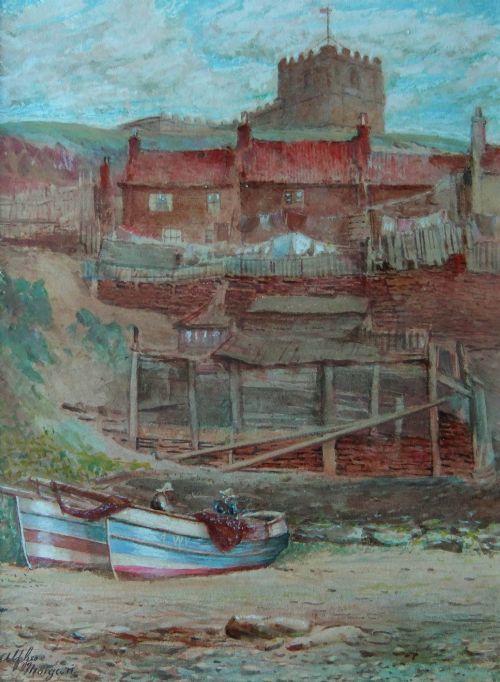
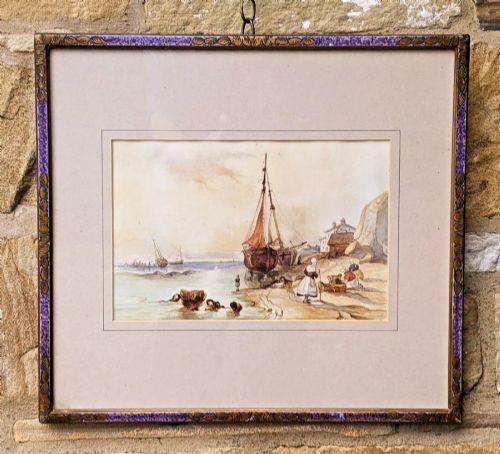
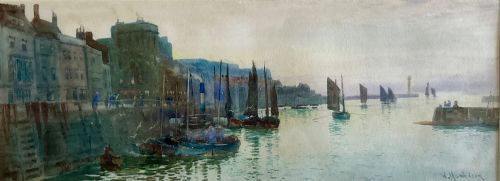
The pieces on this page range from Victorian depictions of bustling harbours to Edwardian coastal landscapes and later marine scenes up to the mid-twentieth century. Works frequently focus on specific locations such as Whitby, St Ives, and Scarborough, capturing local craft like cobles and herring drifters at low tide or departing for the catch.
Materials and technique
Watercolour pigment applied to paper forms the core of these works, often supported by glass and wood framing to protect the delicate surface from moisture and light damage. Artists used washes of varying transparency to build skies and open water, reserving the white of the paper for highlights on sails and breaking waves.
Draftsmanship underpinned the composition, with pencil or ink lines frequently visible beneath the pigment to define rigging, hull structures, and architectural details of harbour walls. Gilt wood frames were regularly employed to finish the presentation of Victorian and Edwardian marine paintings.
The listings span from 1870 through the 1950s, documenting shifting styles from Victorian academic marine art to British Impressionism.
What separates the finest works
Quality rests in the handling of atmospheric light and the confidence of the brushwork, particularly in how an artist renders moving water and turbulent skies. A stronger piece demonstrates economy of line and fluid pigment control, capturing the weight of vessels and the dampness of coastal air without overworking the paper.
Provenance and precise topographical identification also elevate certain works, especially when signed by established marine painters of the period. The relationship between the scale of the shipping and the breadth of the coastal expanse determines the visual balance of the composition.
James Orrock·William Cannon·Charles Edward Dixon·Thomas William Morley·Frank William Scarbrough·Hector Caffieri·Thomas Maidment·Thomas Bush Hardy·Alfred G. Morgan·George Stanfield Walters·Frank Kelsey·Henry Barlow Carter·William Frederick Settle·Charles William Adderton·William Lee Hankey·Edward Seago·Robert Leslie Howey·Tom Clough·F J Aldridge·James Watson·Frank H. Mason·George Hamilton Constantine·Frederick William Hattersley·James Thomas Watts·Leslie Rackham
The British Maritime Watercolour Painting Glossary
- Coble
- An open traditional fishing boat with a high bow and flat stern, commonly found along the northeast coast of England in these paintings.
- Drifter
- A commercial fishing vessel designed to catch pelagic fish like herring using drift nets set vertically in the water.
- Seascape
- A painting depicting the sea, coastal views, or maritime activity, distinct from inland terrestrial landscapes.
- Gilt wood
- Wood coated with a thin layer of gold leaf or gold paint, frequently used for traditional picture frames.
- Wash
- A fluid layer of diluted watercolour pigment spread evenly across the paper to create translucent areas of sky or water.
British Maritime Watercolour Painting: Frequently Asked Questions
How do I date an unsigned maritime watercolour?
Dating relies on the style of the vessels depicted, the clothing of any figures on the shore, and the type of paper or framing used. Coastal architecture and the evolution of harbour walls also provide clues to the era.
Comparison with documented works by known nineteenth or twentieth-century marine artists helps narrow the decade of production. Inscription styles and framer labels on the reverse offer further chronological evidence.
Where were these coastal scenes usually painted?
Artists worked both en plein air along British fishing ports and in studios using preliminary pencil sketches made on the spot. Popular locations included Yorkshire harbours, Cornish pilchard ports, and East Anglian estuaries.
Many painters travelled regular circuits along the coast, recording the daily routines of local fishermen and the changing conditions of the North Sea and English Channel.
How should I care for a antique watercolour?
Watercolours are sensitive to direct sunlight and ultraviolet rays, which cause fading in both the pigments and the paper support. Framing under conservation glass with acid-free mounts prevents long-term chemical damage.
Display the paintings away from damp walls and sources of direct heat to maintain the stability of both the paper and the wooden frames.
What is the difference between a marine painting and a landscape?
Marine paintings focus primarily on the sea, ships, harbours, and coastal activities where water plays a central role in the composition. Landscapes centre on terrestrial views, fields, and inland topography.
Many maritime works bridge both categories by including coastal cliffs, quaysides, and towns adjacent to the water.