


Folding Leaf Accent Table
A folding leaf accent table brings adaptable timber surface space to a room, offering drop leaves or folding flaps that open when needed and tuck away cleanly.
Folding Leaf Accent Table
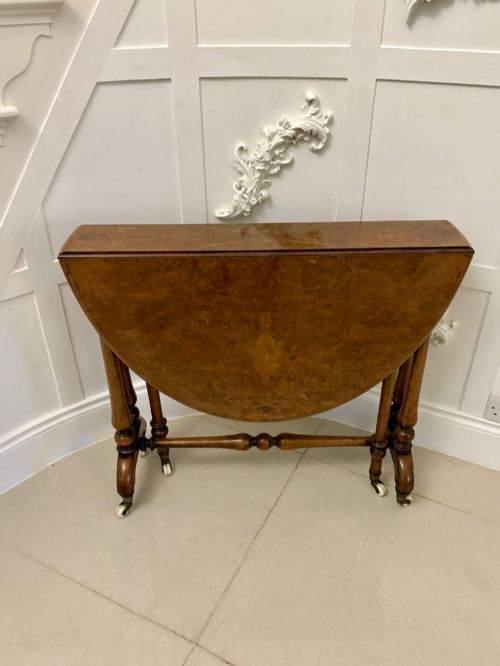
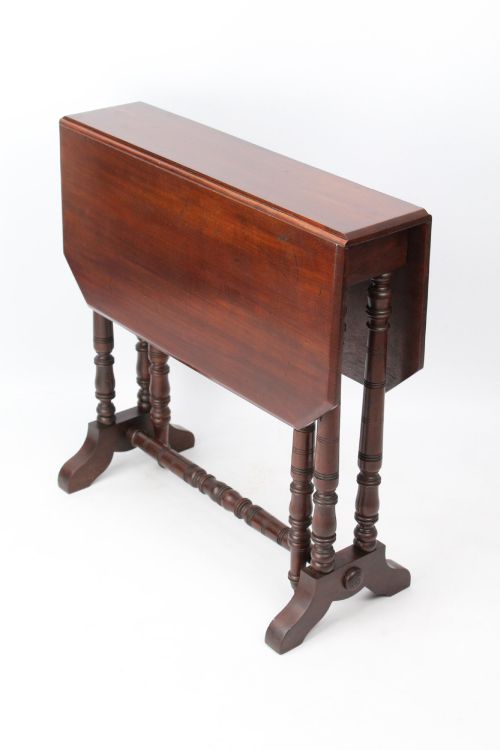
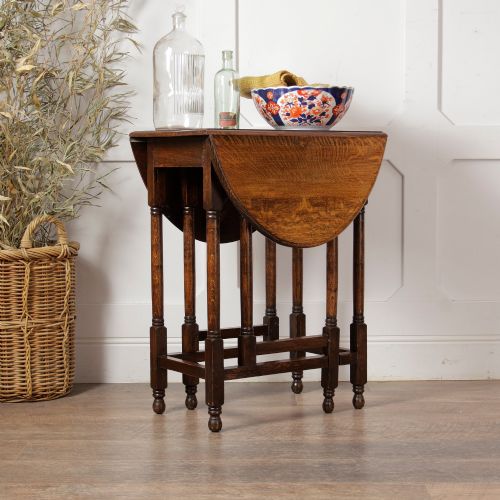
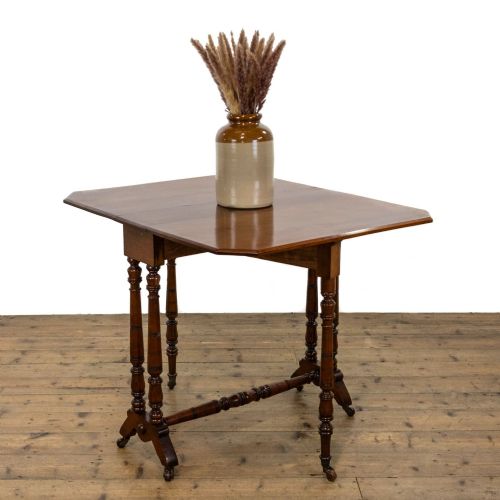
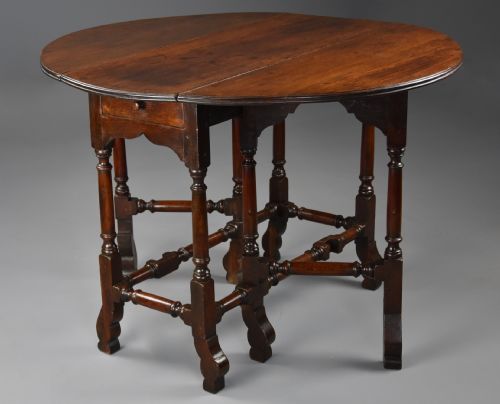
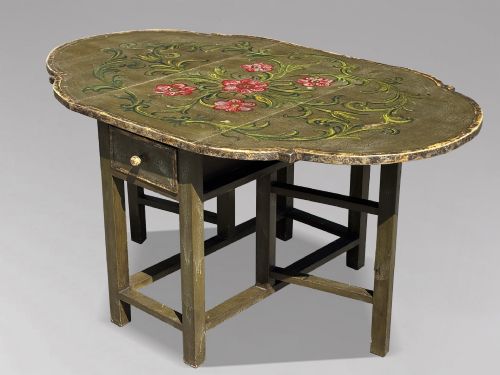
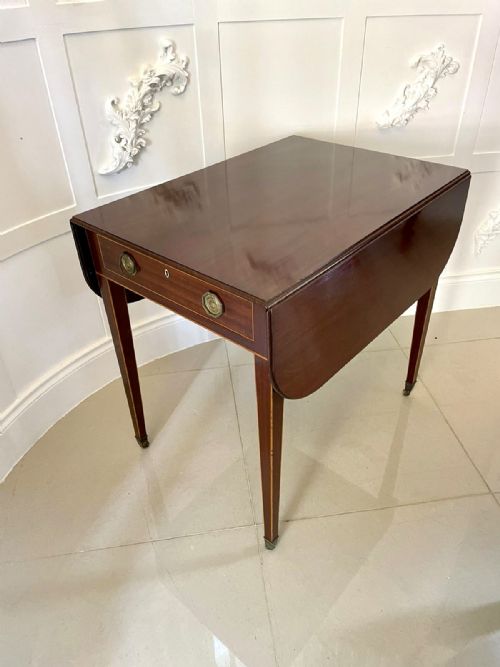
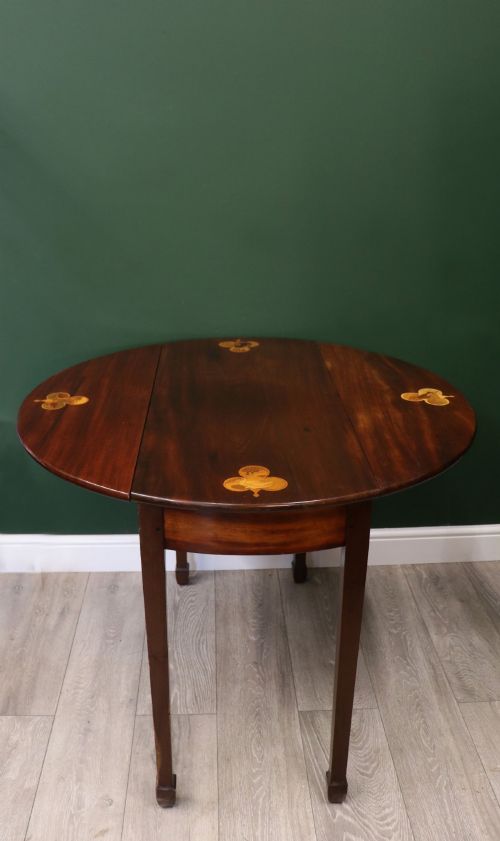
When you search for a folding leaf accent table, you encounter diverse forms spanning centuries of British and international cabinetmaking, from compact occasional pieces to larger dining furniture. The selection comprises distinct varieties such as Pembroke tables with hinged side flaps, Sutherland tables with narrow frames and drooping leaves, and sturdy gateleg designs supported by swinging legs.
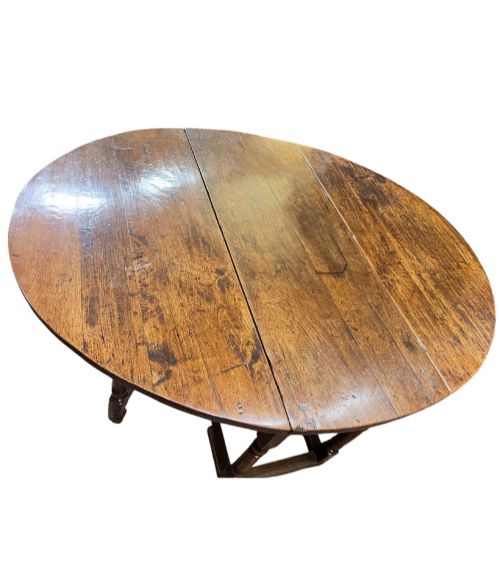
Victorian and Georgian periods dominate the evidence, alongside earlier seventeenth-century oak examples and twentieth-century interpretations. These tables served various functions historically, operating as tea tables, supper tables, or side tables in refined interiors.
Woods such as mahogany, walnut, burr walnut, and oak appear frequently across these listings. Cabinetmakers utilised boxwood inlay, floral marquetry, and painted satinwood finishes to elevate the visual appeal of specific forms.
Materials and construction
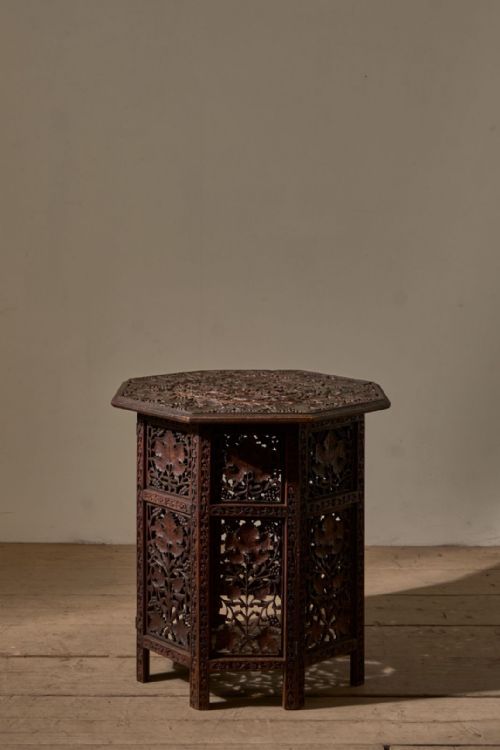
Cabinetmakers constructed these folding leaf accent tables using solid timbers and carefully selected veneers, applying mahogany, walnut, oak, padauk, and rosewood depending on the period. Secondary structural elements often incorporate boxwood for stringing and inlay work.
Hinged mechanisms, drop flaps, and pivoting gatelegs require precise joinery to ensure the folding sections operate smoothly while bearing weight. Brass fittings and hardware frequently support the structural movement of leaves and drawers.
Some Edwardian tables feature four separate flaps, ensuring the surface expands into unexpected geometric shapes when fully opened.
Judging construction and finish
The standard of timber selection and veneer matching defines the upper tier of these pieces, particularly in burr walnut and figured mahogany examples. Elaborate details like marquetry inlay, carved mahogany borders, and painted satinwood decoration indicate higher workshop ambition.
Structural integrity rests on the precision of the folding mechanism and the stability of the leg supports when extended. Subtle proportions and fine patination separate exceptional examples from standard utilitarian furniture.
Jenks & Woods·Liberty & Co.
The Folding Leaf Accent Table Glossary
- Pembroke table
- A small table with hinged flaps on two opposing sides, frequently fitted with one or more drawers. These pieces originated in the eighteenth century and function well as occasional or writing tables.
- Sutherland table
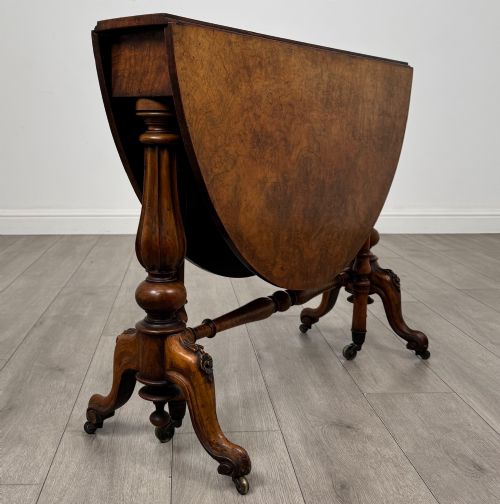
- A narrow-pivoted table featuring exceptionally deep drop leaves that hang almost vertically when folded. They save substantial floor space while providing a larger surface when opened.
- Gateleg table
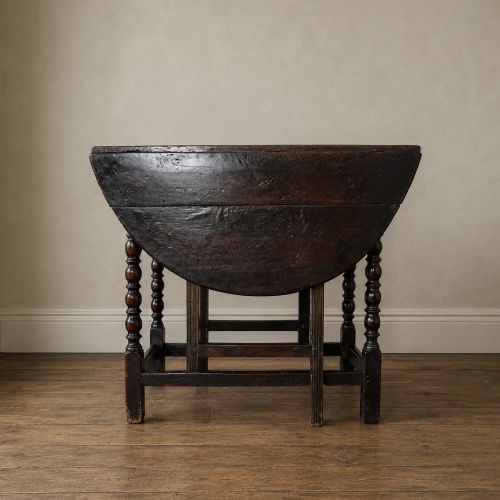
- A table with hinged leaves supported by one or more legs that swing outward like a gate. This construction provides sturdy support for drop leaves across dining and side table formats.
- Spider leg table
- A delicate table design utilising exceptionally thin turned legs joined by slender stretchers. These pieces usually feature drop leaves and light frames suited to occasional use.
- Marquetry
- The decorative art of applying pieces of veneer to a structure to form ornamental patterns or pictures. Craftsmen often employed floral marquetry on Victorian walnut surfaces.
Folding Leaf Accent Table: Frequently Asked Questions
What is a Sutherland table?
A Sutherland table is a specific form of drop-leaf table featuring an exceptionally narrow central framework and deep leaves that hang almost vertically when lowered. This design allows the piece to occupy minimal floor space against a wall until expanded for use.
First appearing in the Victorian era, these tables often utilise burr walnut or mahogany and run on small castors for easy repositioning.
How do Pembroke tables function?
Pembroke tables operate through two hinged flaps on opposing sides of a rectangular top, supported by pivoted wooden brackets or rule joints when raised. They frequently include a single drawer or dummy drawer at one end.
Cabinetmakers designed these versatile pieces during the Georgian period to serve as breakfast, tea, or occasional work tables in domestic interiors.
What timber was used most?
Mahogany and walnut serve as the predominant timbers across these folding tables, spanning Georgian, Victorian, and Edwardian periods. Burr walnut appears frequently on mid-nineteenth-century examples for its distinctive grain patterns.
Earlier pieces rely on solid oak, while specialised decorative items incorporate satinwood, padauk, or rosewood alongside boxwood stringing.
How do I date a gateleg table?
Dating a gateleg table involves examining the turning of the legs, the thickness of the timber, and the construction of the hinge mechanisms. Seventeenth-century and Queen Anne examples typically feature heavy oak frames with distinct baluster or bobbin turnings.
Later Victorian and Edwardian revivals employ lighter proportions, standardised fixings, and different secondary woods that distinguish them from earlier centuries.