




Antique Danish Furniture
Antique danish furniture brings architectural poise and honest craftsmanship into a room, offering practical storage through beautifully figured timbers and painted finishes.
Antique Danish Furniture
When you search for antique danish furniture, you are looking at domestic storage and display pieces created in Denmark across the eighteenth and nineteenth centuries. These items range from formal revival cabinets to provincial painted dressers and kitchen cupboards.
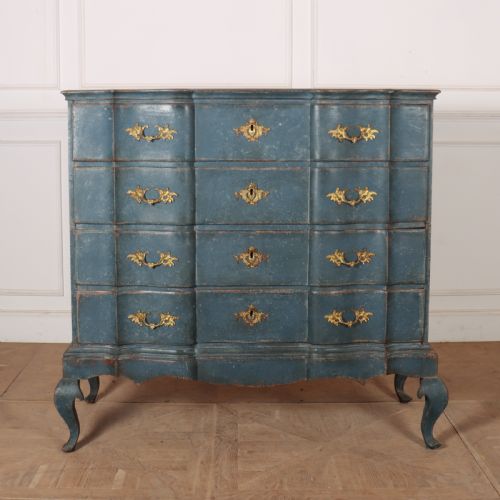
The pieces you are most likely to meet on this page include mahogany commodes with serpentine fronts, bureau cabinets, and tall chests of drawers dating from the nineteenth century. Provincial painted softwood furniture and tea tables also appear regularly alongside these formal walnut and mahogany forms.
How they were made
Cabinetmakers constructed these pieces using solid pine and softwood carcases, often applying rich veneers of flame mahogany, burr walnut, or layered paintwork to the exterior surfaces. Brass hardware and clear glass panels complete the structural composition of the formal desks and display cabinets.
Joinery techniques relied on sturdy pegged construction for domestic cupboards and finely fitted drawer boxes for commodes. Painted finishes were frequently layered over softwood, incorporating traditional pigments that have aged to patinated surfaces.
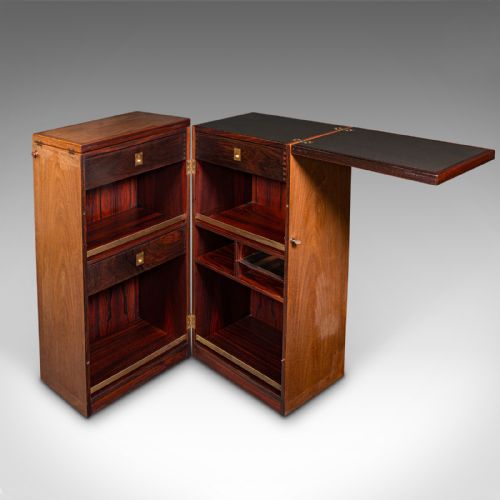
Secret drawers hidden within nineteenth-century mahogany cabinets reveal how clever joiners catered to private correspondence.
What varies in quality
Quality in these pieces rests primarily on the selection of timber veneers and the handling of proportions. Mahogany and burr walnut examples show superior visual depth when the grain patterns are symmetrically matched across drawer fronts and cabinet doors.
The crispness of carved mouldings and the architectural integration of mirrors and pediments distinguish standard workshop production from finer urban cabinet work. Painted pieces vary according to the integrity of the surviving surface layer and the subtlety of the underlying brushwork.
The Antique Danish Furniture Glossary
- Commode
- A low chest of drawers or cabinet designed for domestic storage. These pieces often feature serpentine fronts and rich mahogany veneers in Scandinavian interpretations.
- Serpentine front
- A furniture facade curving outward at the centre and inward at the sides. This shape requires advanced woodworking skill to execute cleanly in solid timber.
- Pedestal cabinet
- A freestanding storage unit supported on a central base or feet. Pairs of these cabinets were frequently produced during the Biedermeier period.
- Softwood
- Timber derived from conifers, such as pine, used widely for the internal carcases and painted provincial furniture of northern Europe.
Antique Danish Furniture: Frequently Asked Questions
What defines danish biedermeier furniture?
Danish Biedermeier pieces focus on clean lines, minimal ornamentation, and the natural beauty of veneers like mahogany and birch. They date primarily from the mid-nineteenth century and prioritise domestic comfort.
These items discard heavy historical revival details in favour of restrained geometric forms that suit modern domestic spaces.
How do I identify a painted danish dresser?
A painted Danish dresser typically combines an open plate rack top with a lower cupboard base, constructed from pine or softwood. The painted finish is often original or period-applied, showing gentle wear across high-use areas.
Such pieces originate from Scandinavian country workshops and serve as practical kitchen or dining room storage.
Where were these cabinets made?
These items were produced in domestic workshops and urban cabinet-making centres across Denmark. Provincial towns contributed painted softwood furniture, while Copenhagen supported makers working in formal mahogany and walnut.
Regional preferences influenced whether a piece received a polished wood veneer or a protective painted coat.
How do I care for antique mahogany surfaces?
Protect antique mahogany and walnut surfaces by keeping them away from direct sunlight and sudden temperature changes. Regular dusting with a dry, soft cloth maintains the finish without needing heavy waxes.
Avoid placing damp items directly onto the wood to preserve the integrity of the historic polish and veneer.