

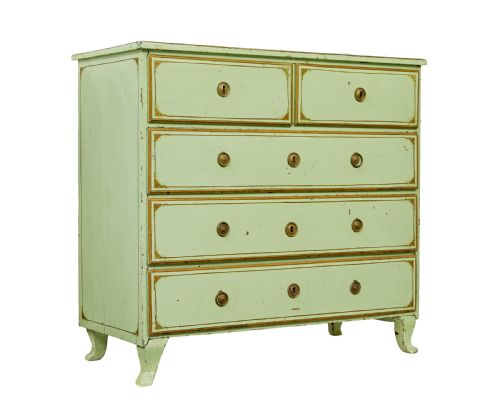
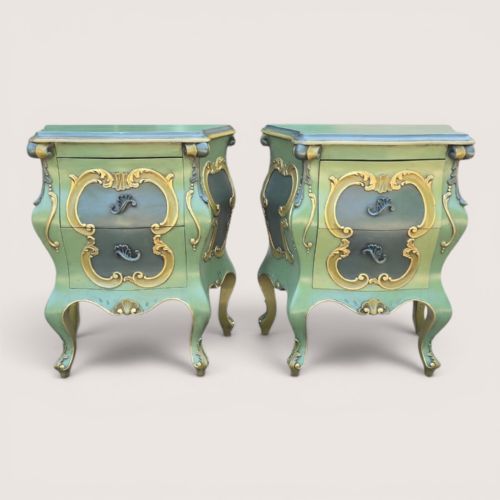
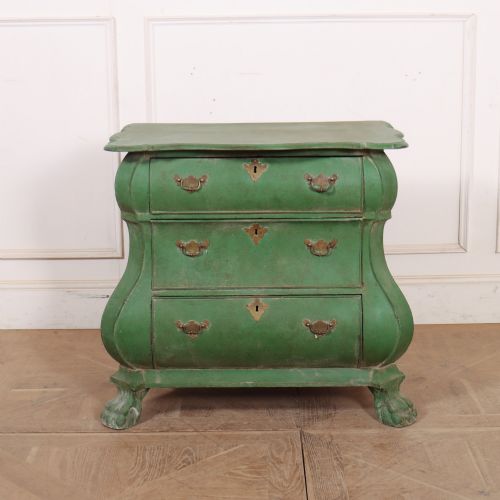
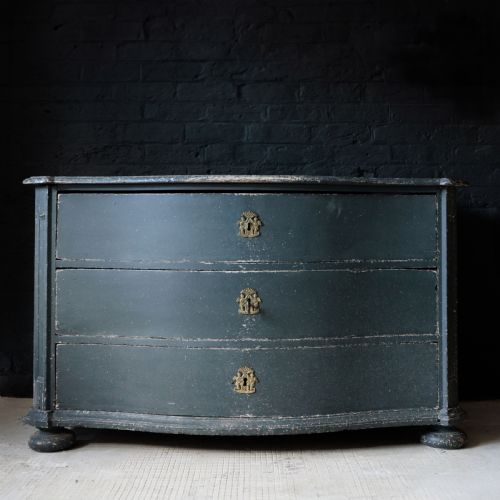
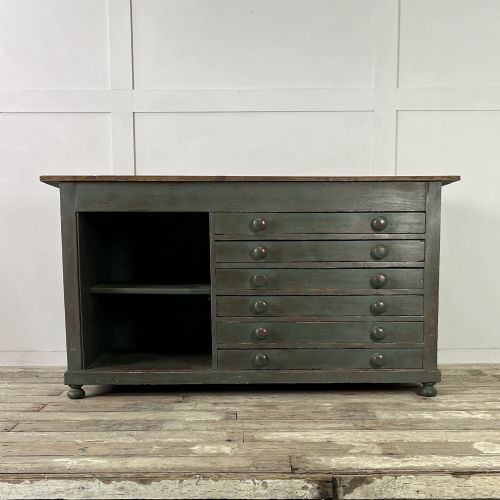
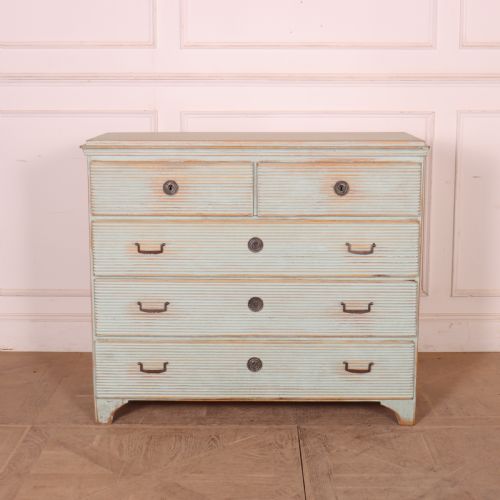
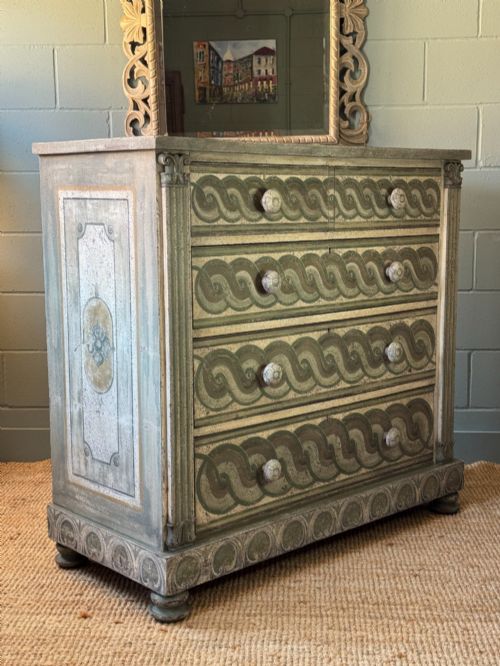


Green Painted Chest Drawers
Green painted chest drawers offer charm and character, bringing colour and practical storage to any room.
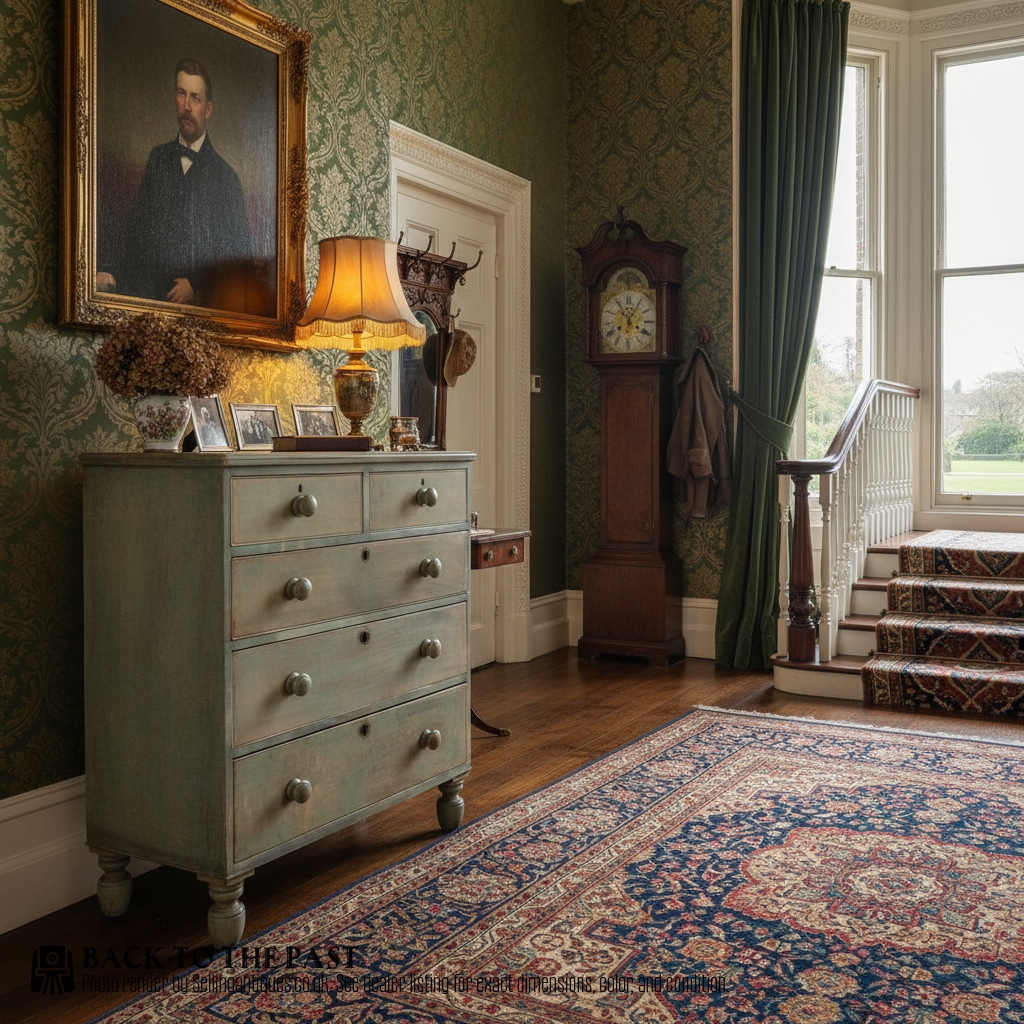
What Green Painted Chest Drawers Are
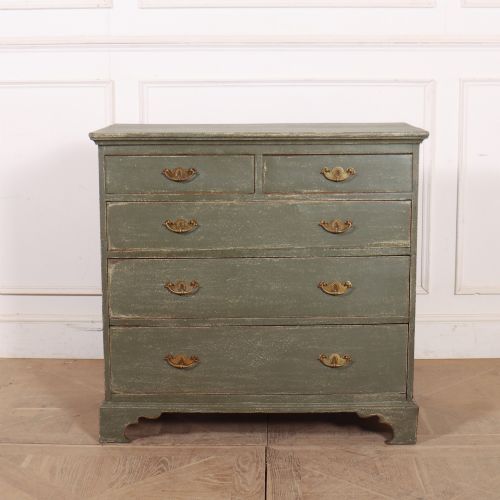
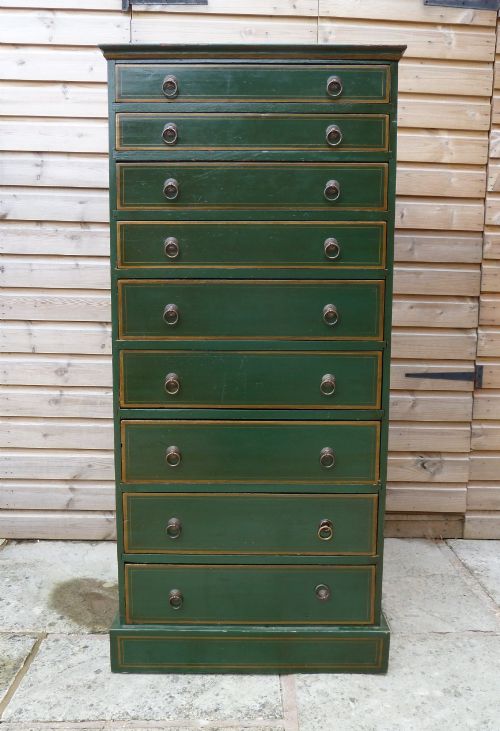
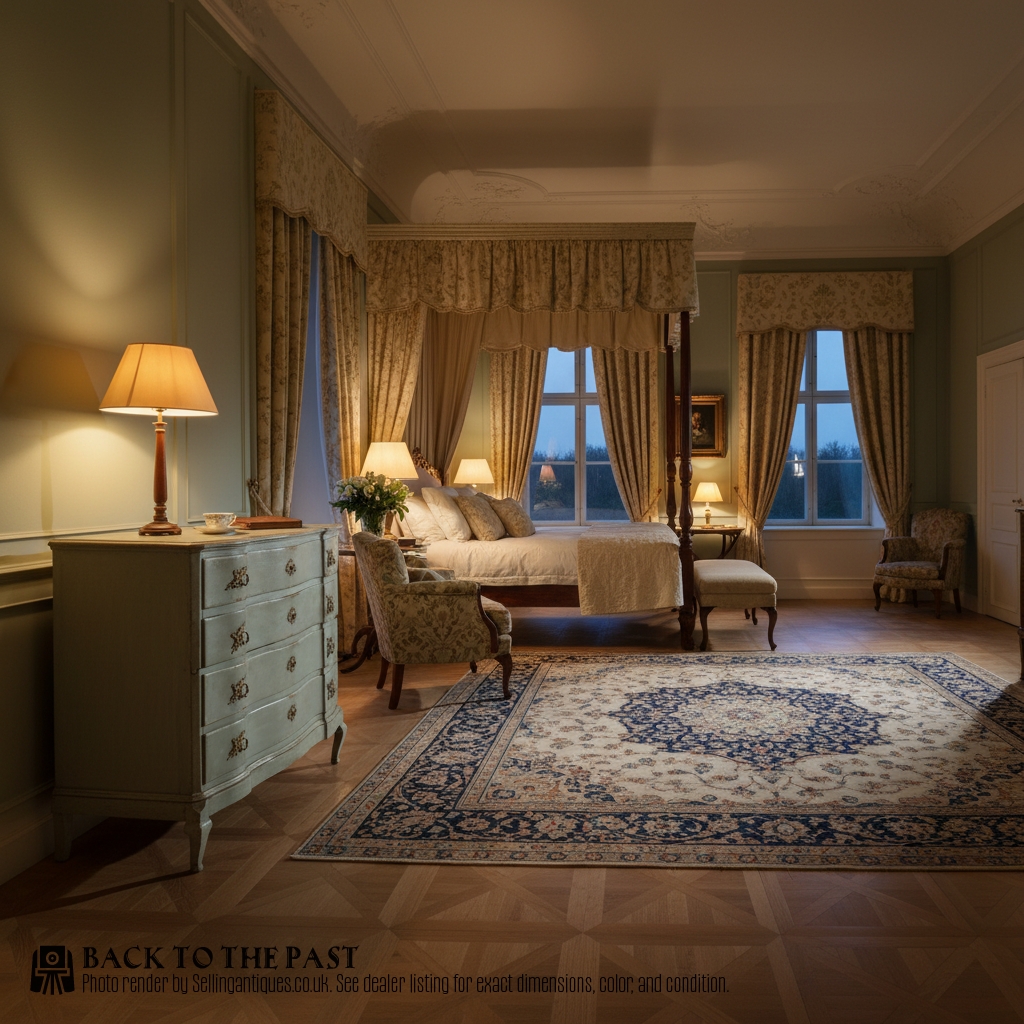
When you search for green painted chest drawers, you encounter practical storage furniture treated with various shades of green paint. These items serve as functional bedroom or living space storage while providing a distinct decorative presence.
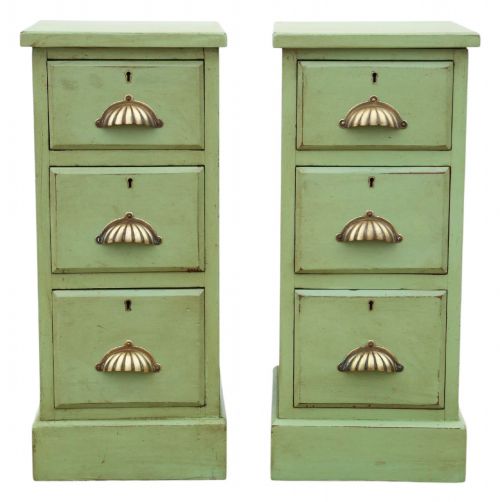
The pieces on this page span several eras and origins, including Georgian, Victorian, and Edwardian periods alongside continental styles. You find forms ranging from bedside tables to serpentine front commodes and traditional two over three drawer arrangements.
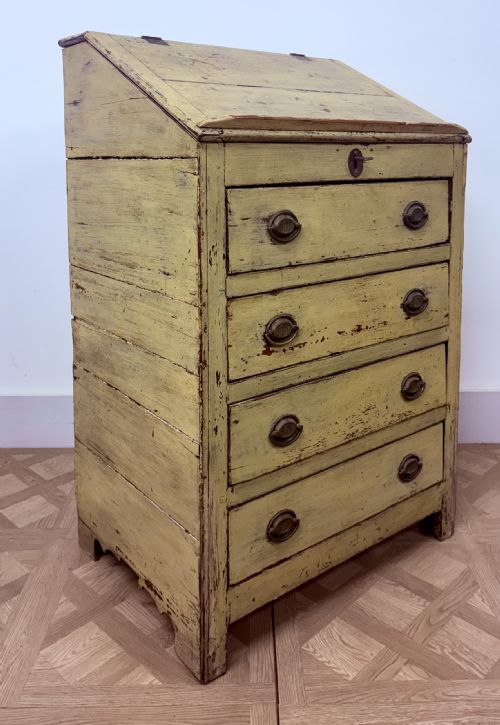
Pine and general timber form the underlying structure of these items, finished with paintwork that ranges from early distressed surfaces to later layered colours. Their designs reflect both British cabinet making and continental European traditions.
How They Were Made
Construction relies on traditional timber framing, utilising pine and other woods shaped into drawers, carcases, and decorative fronts. Cabinet makers employed techniques such as fluting, serpentine shaping, and bow fronts to give the furniture structural elegance.
Surfaces are finished with paint, sometimes applied in historic layers or later decorative schemes using specific tones like sage and mottled green. Iron and brass hardware, including handles and key escutcheons, complete the construction of each piece.
Retail Price Guide 2026
Typical UK retail prices for green painted chest drawers, calculated from the Sellingantiques database of over a million retail prices indexed since 2003. This retail price guide relies exclusively on Sellingantiques data; no external sources or auction records are used, so the figures do not describe the wider market.
The listings feature pine and timber construction painted in various shades of green, spanning Georgian, Victorian, and Edwardian periods.
What Varies in Quality
Quality rests in the harmony between the original timber construction and the character of the painted surface. Pieces with well proportioned serpentine or bow fronts display greater cabinet making skill than simpler rectilinear forms.
The integrity of the painted finish dictates much of the visual appeal, distinguishing between thoughtfully aged surfaces and heavier later interventions. Finer examples maintain structural soundness in the drawers while showing an authentic integration of paint and wood.

The Green Painted Chest Drawers Glossary
- Serpentine front
- A furniture front characterised by a double convex curve flanked by concave curves, creating a gentle undulating shape. This sophisticated profile requires specialist woodworking skill.
- Bow front
- A convex curved cabinet or drawer front that swells outward in the centre. It provides a softer silhouette than a flat front.
- Fluted
- Decorated with shallow parallel grooves cut vertically into the wood. This classical detail adds texture and vertical emphasis to drawer fronts or columns.
Frequently Asked Questions
What periods do these chests come from?
The pieces span the Georgian, Victorian, and Edwardian eras, alongside continental examples from the nineteenth century.
Crafting styles reflect these diverse periods, ranging from formal British designs to Scandinavian and French regional traditions.
How do I care for painted wood?
Keep painted furniture away from direct sunlight and extreme temperature changes to protect the finish. Dust gently with a soft dry cloth and avoid harsh chemical cleaners.
Maintaining stable indoor humidity helps prevent the underlying timber from moving and cracking the paint.
Are the paint finishes original?
Finish histories vary, with some items retaining earlier paint layers while others feature later decorative applications. Descriptions often note whether a surface is later painted or distressed.
Examining the wear patterns helps reveal how long the paint has lived on the timber.
What woods are typically used?
Pine and general timber form the primary structure for these painted items. Cabinet makers selected these woods for their stability and suitability for receiving paint.
Brass and iron hardware frequently complement the wooden frames.