
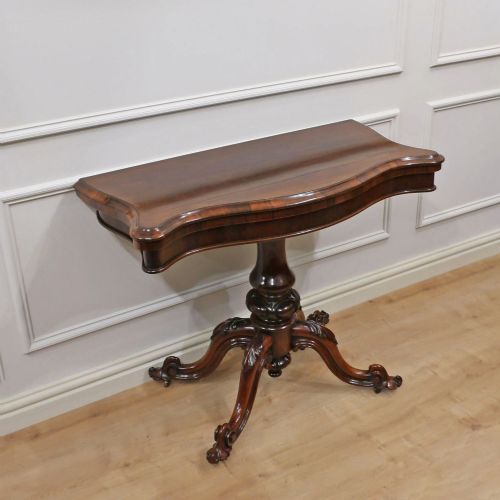
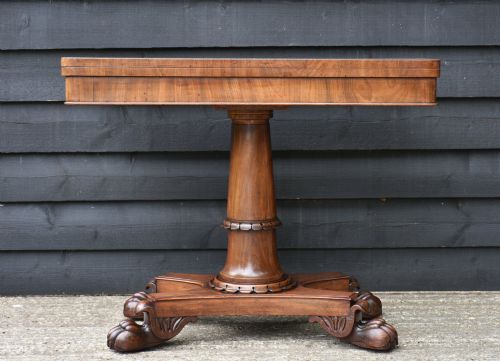
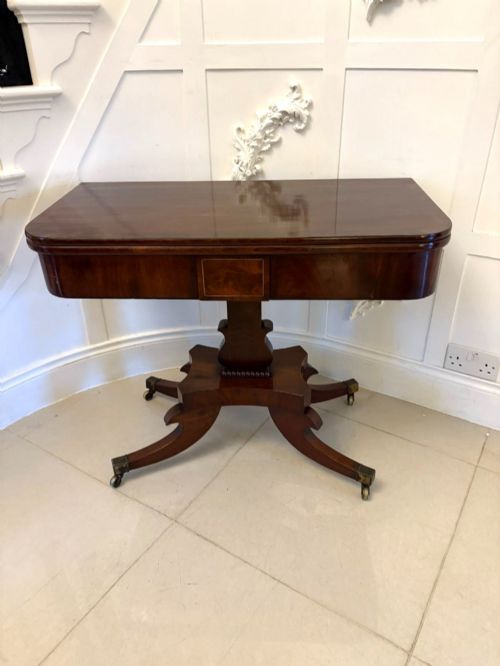
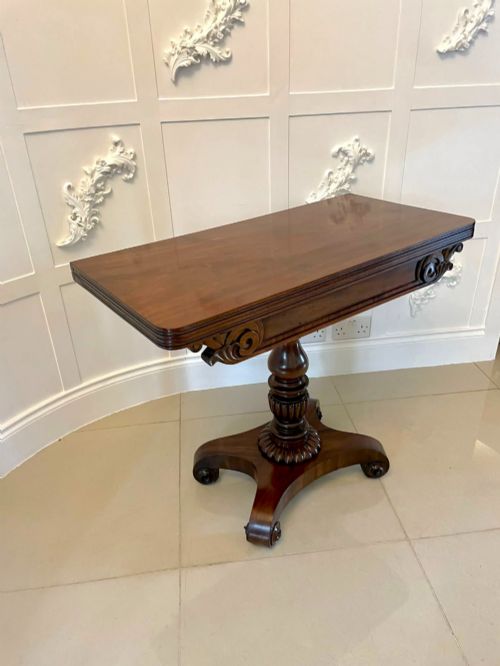
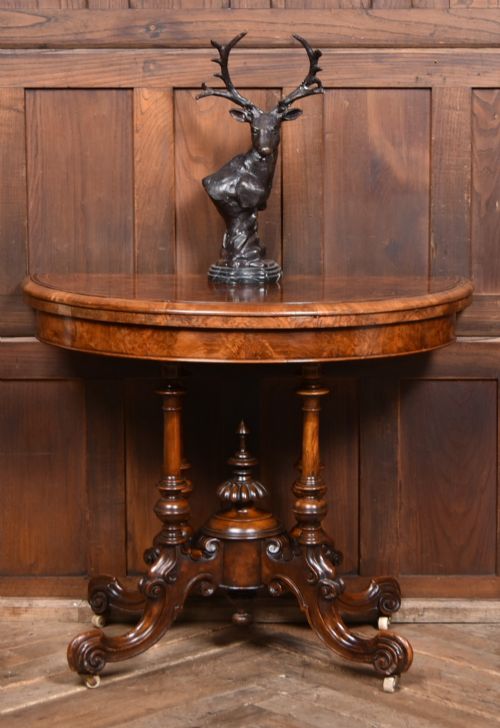
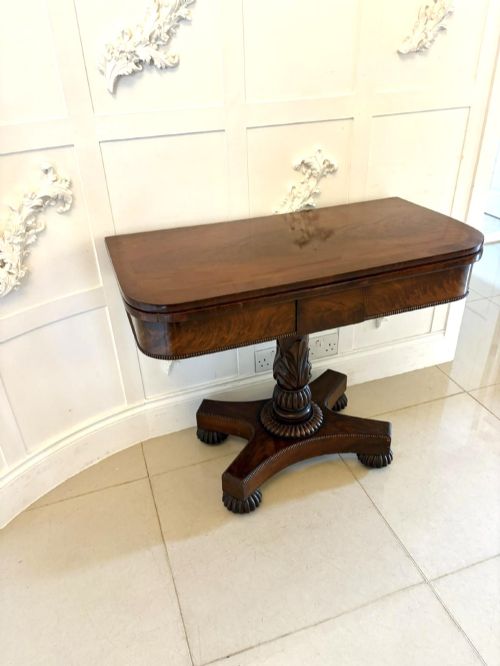
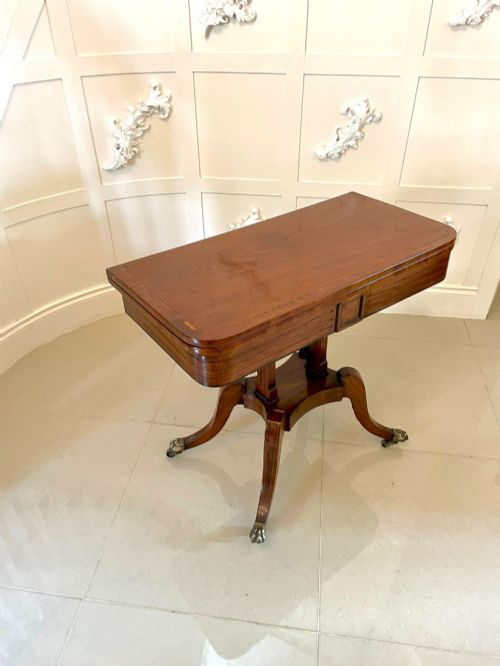
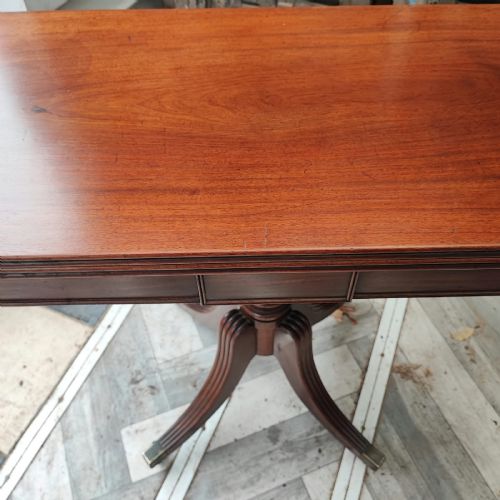
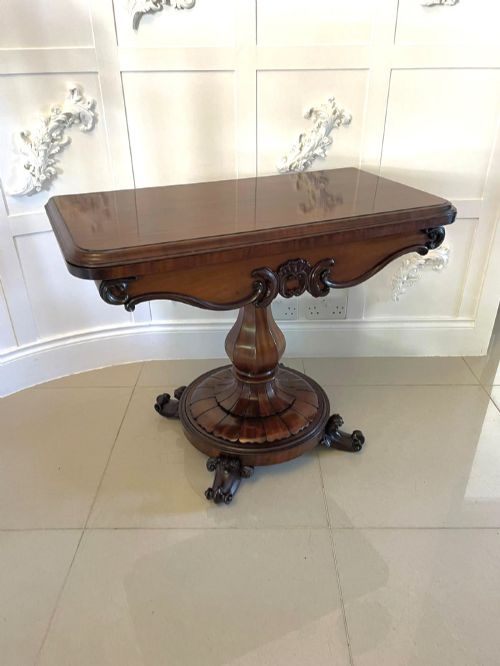

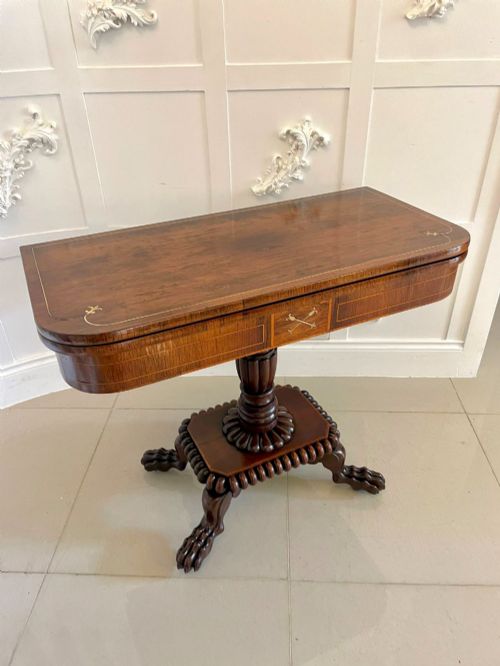
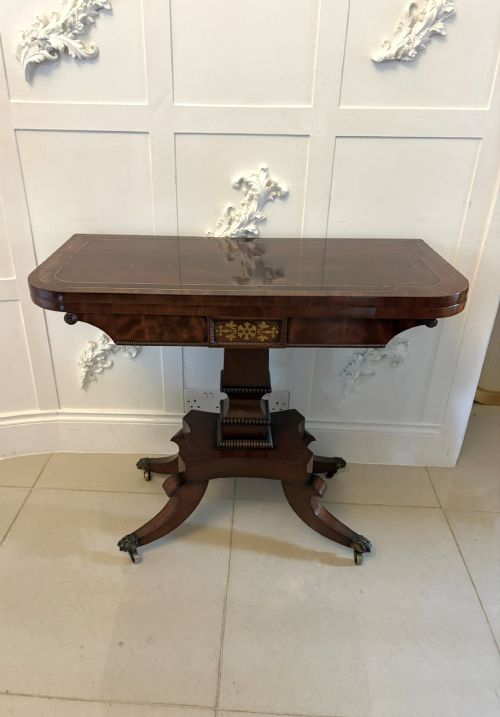
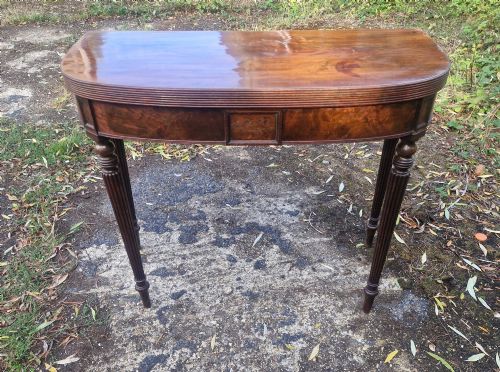
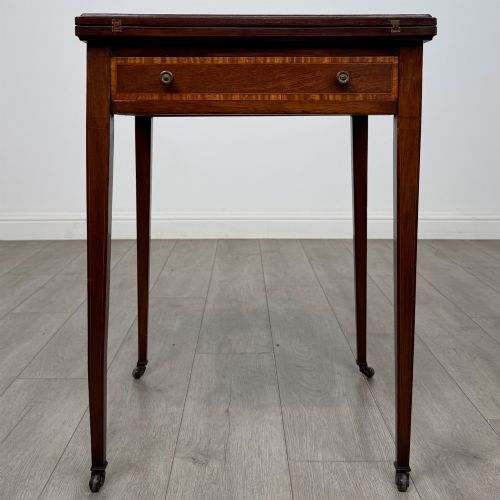
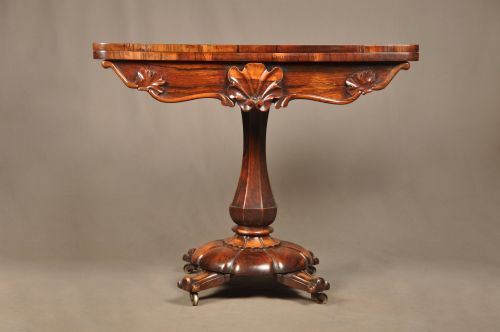
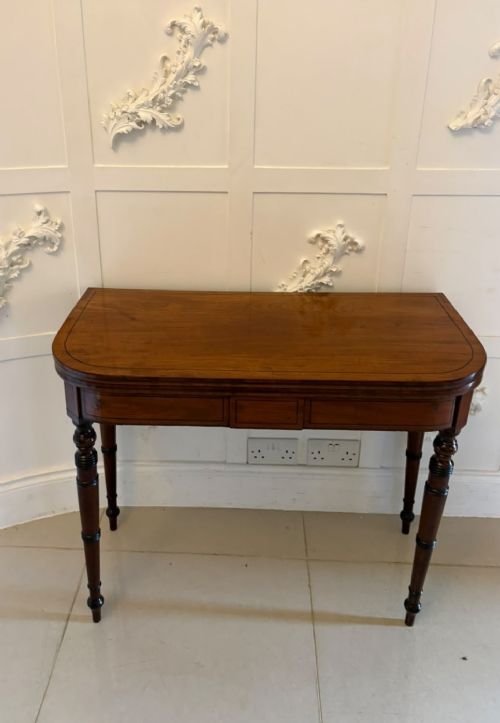
Fold Top Tea Table
A fold top tea table offers a clever surface that expands when guests arrive, combining Georgian proportion with practical ingenuity.
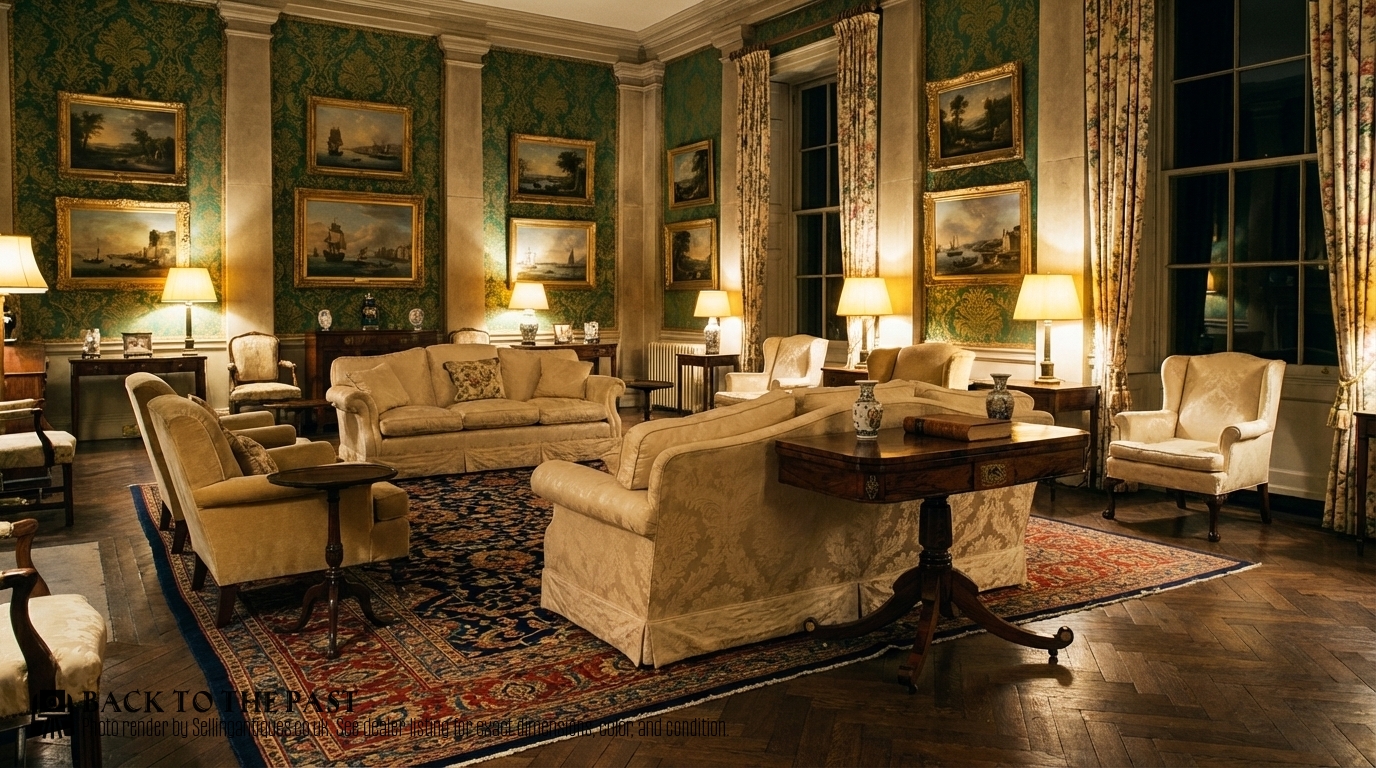
Understanding the Fold Top Tea Table
A fold top tea table functions primarily as a versatile surface designed to transform from a compact console or side table into a larger top for social gatherings. These pieces appear frequently across eighteenth-century and nineteenth-century periods, spanning Georgian, Regency, and William IV styles.
The evidence shows forms that serve multiple domestic uses, including card tables and occasional tables alongside standard tea tables. Mahogany and rosewood dominate the material record, often enhanced by boxwood inlay or supported by brass castors and lyre ends.
Materials and Construction
Cabinet makers utilised dense hardwoods such as mahogany, walnut, and rosewood to build these folding surfaces, ensuring structural stability for the pivoting or hinged top. Secondary detailing frequently incorporates boxwood inlay to delineate edges and add subtle visual contrast.
Support mechanisms range from simple gateleg frames and pedestal bases to specialised lyre end supports and brass castors that facilitated movement around panelled rooms.
Retail Price Guide 2026
Typical UK retail prices for fold top tea table, calculated from the Sellingantiques database of over a million retail prices indexed since 2003. This retail price guide relies exclusively on Sellingantiques data; no external sources or auction records are used, so the figures do not describe the wider market.
Listings feature mahogany and rosewood predominantly, spanning Georgian, Regency, and William IV periods across card and tea table forms.
Judging Quality and Execution
Quality rests on the precision of the hinge mechanism and how seamlessly the folding top aligns with its base when closed. Superior examples display careful timber selection, where grain patterns match harmoniously across the expanse of the opened surface.
Refinement in carving, such as crisp serpentine moulding or delicate boxwood stringing, distinguishes standard workshop production from exceptional cabinet work.
The Fold Top Tea Table Glossary
- Fold-over top
- A hinged surface that doubles the available table area when unfolded and rested upon a pivoting leg or gateleg frame.
- Gateleg
- A hinged leg that swings outward from the table frame to support the opened leaf of a folding top.
- Lyre end
- A pair of vertical supports carved in the shape of a classical musical instrument, commonly seen on Regency period tables.
- Serpentine
- A gently undulating curved line characteristic of finer eighteenth-century cabinet fronts and table edges.
Frequently Asked Questions
What is a fold top tea table?
A fold top tea table is a domestic piece featuring a hinged surface that opens out to provide a larger area for social use. When closed, it sits compactly against a wall as a console or side table.
Historically designed for the ritual of tea drinking or card playing, these tables maximise space in smaller rooms while offering formal elegance.
How do I date a fold top table?
Dating relies on observing timber choices, hardware, and structural styling such as Regency lyre supports or Georgian serpentine shaping. Eighteenth-century pieces often favour solid mahogany or walnut.
Later nineteenth-century examples introduce rosewood veneers and different pedestal configurations. Examining the hinges and interior construction also aids identification.
Where were these tables placed?
These tables typically stood against parlour or drawing room walls when closed. Their narrow profile suited perimeter placement until needed for hosting.
Opening the leaf allowed the table to move closer to the centre of the room for tea service or evening games.
Can I use it daily?
These tables accommodate regular daily use provided the folding mechanism and supporting legs receive careful handling. Modern living adapts well to their dual-purpose nature as side tables and expanded surfaces.
Protecting the polished hardwood surface from excessive moisture preserves the original finish.