
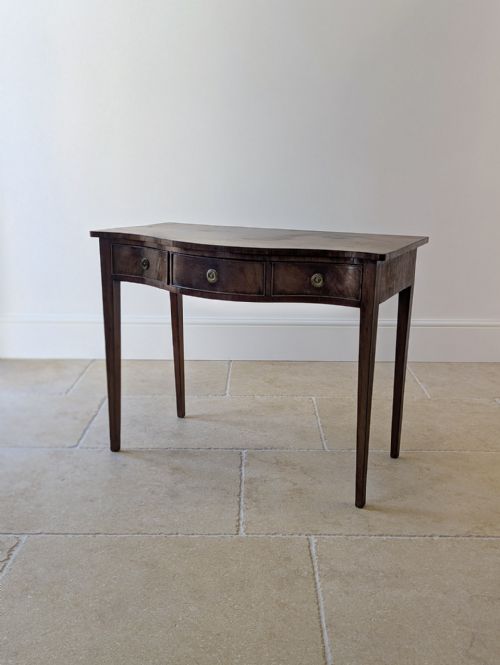
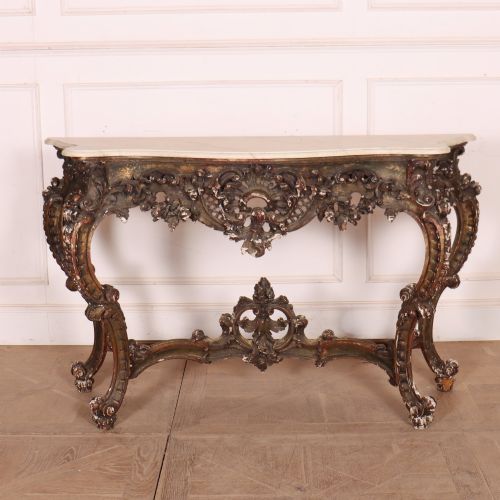
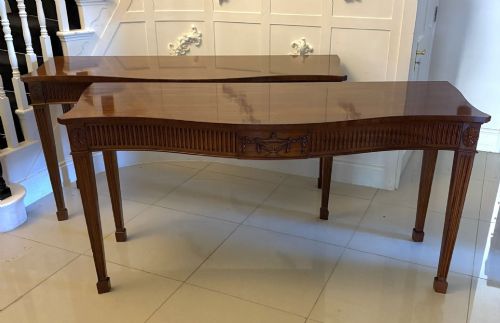
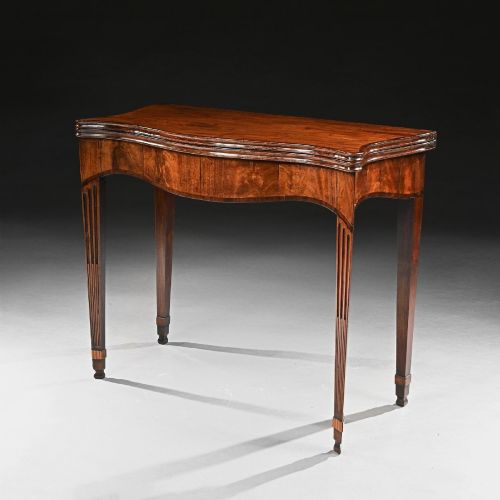

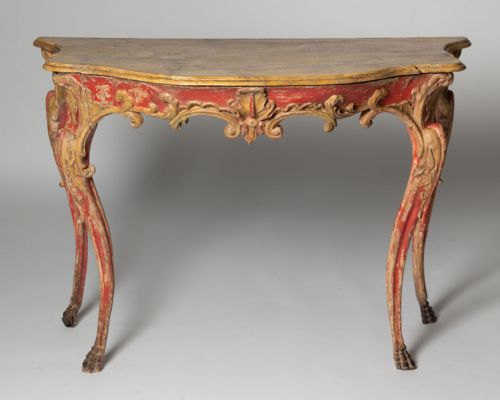
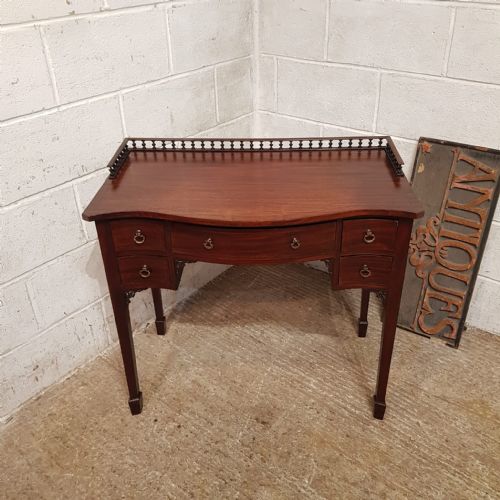
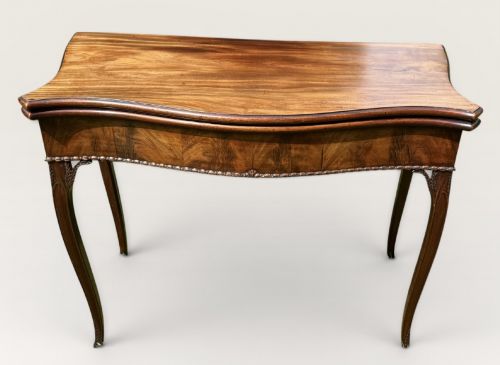
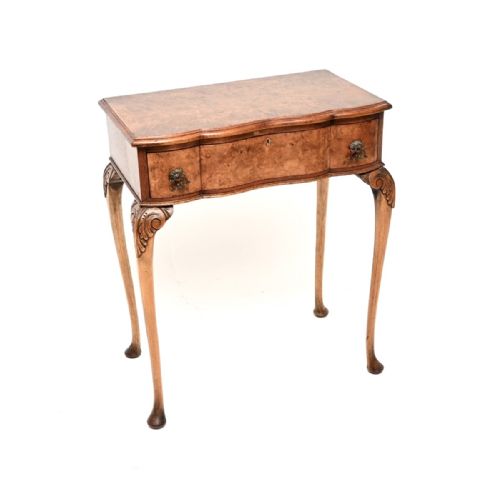

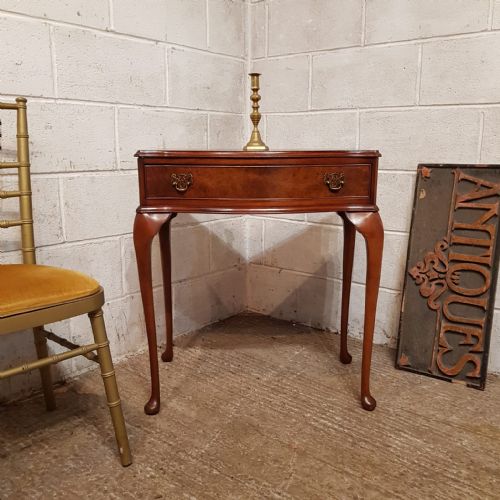

Serpentine Front Console
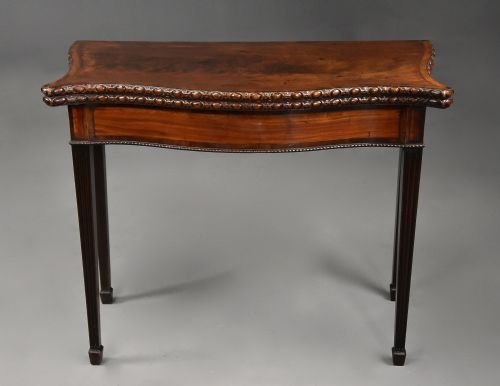
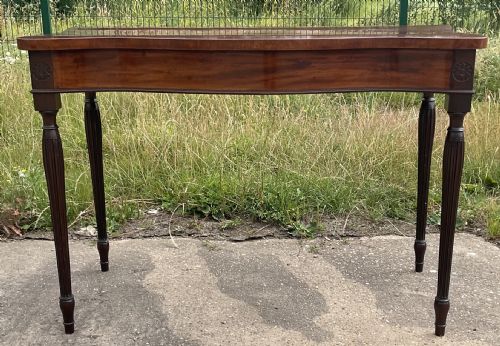
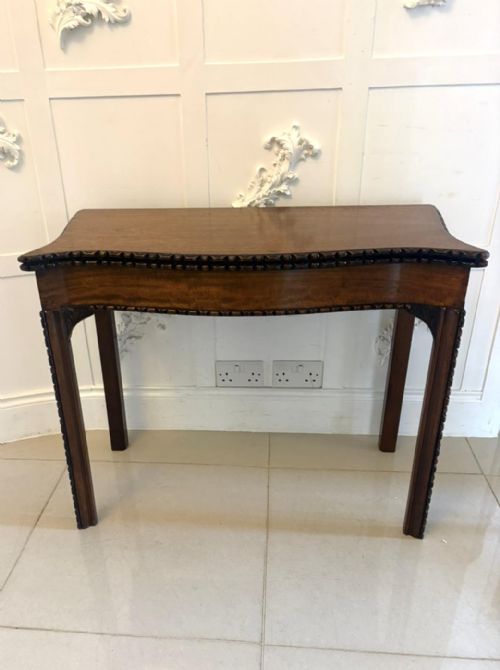
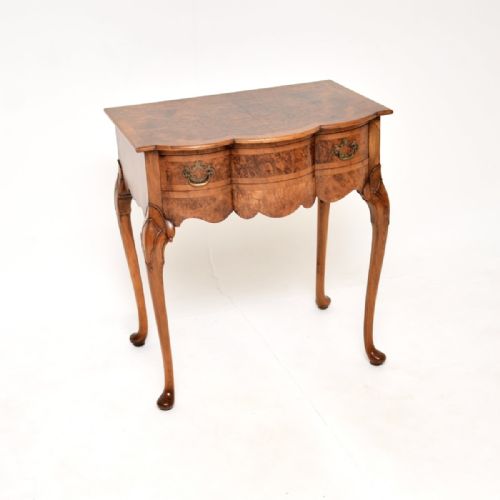
These serpentine front console tables curve with confident grace, offering a sculpted profile that elevates any hallway or reception room.
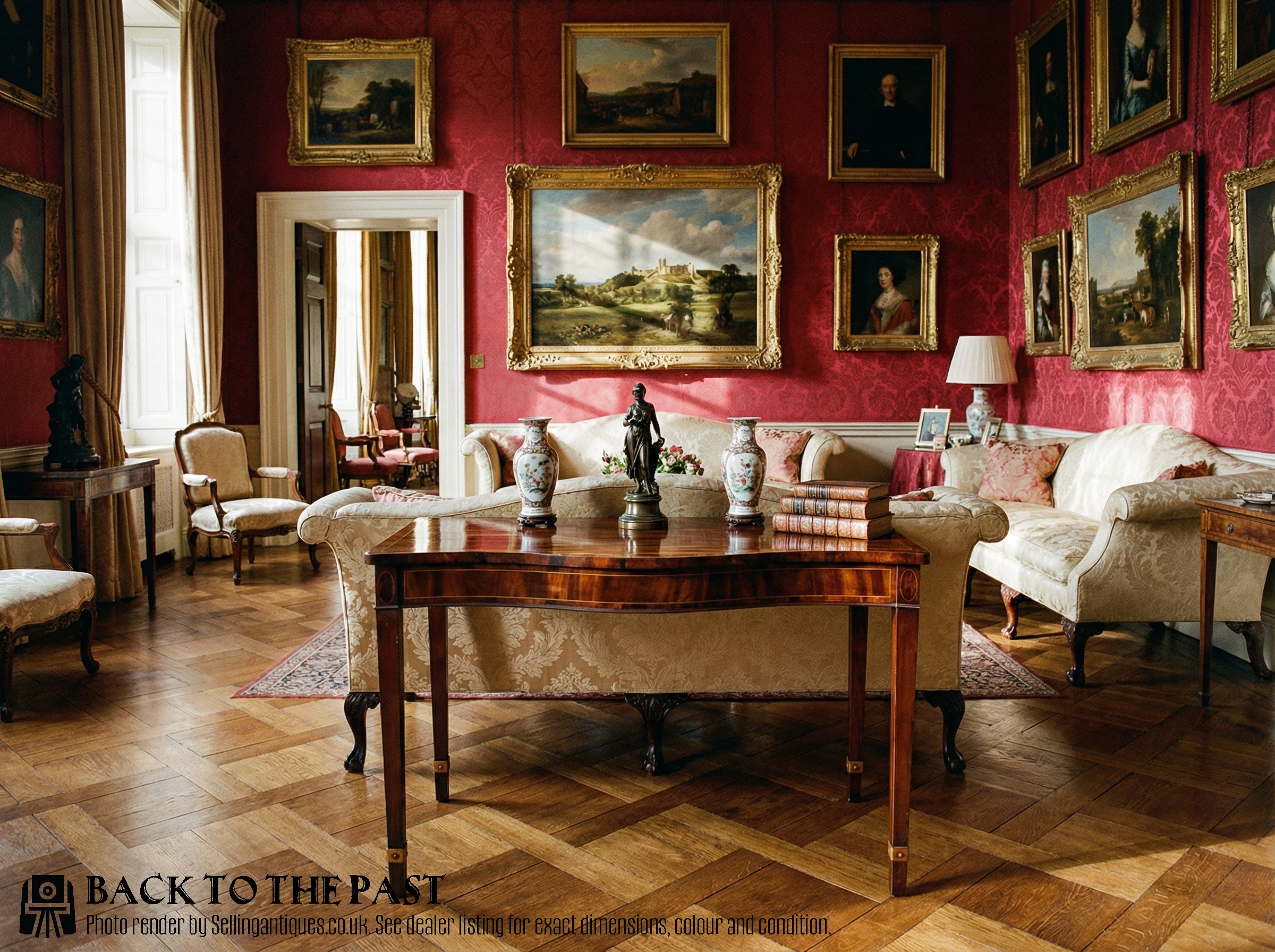
What these pieces are
A serpentine front console is a table defined by its undulating, wave-like front edge that sweeps outward at the centre and recedes at the sides. These elegant furnishings function as side tables, serving tables, and card tables against a wall.
The versions most commonly met here stem from the Georgian period, executed in rich timbers with subtle curves. Makers also produced later revival interpretations alongside walnut and oak examples featuring marble tops.
Object forms span side tables, console tables, card tables with folding leaves, and serving tables. Each variation retains that signature rhythmic sweep along the front elevation.

How they were made
Cabinetmakers constructed these tables using solid timbers such as mahogany, walnut, oak, and fruitwood, often applying flame mahogany or burr walnut veneers to the primary surfaces. Inlaid details in satinwood and fruitwood add contrasting geometric and floral decoration.
Some examples incorporate heavy marble tops, particularly those originating from French or later nineteenth-century workshops. Brass mounts and hardware occasionally finish the construction, appearing on hinges, handles, and swing legs for card tables.
Retail Price Guide 2026
Typical UK retail prices for serpentine front console, calculated from the Sellingantiques database of over a million retail prices indexed since 2003. This retail price guide relies exclusively on Sellingantiques data; no external sources or auction records are used, so the figures do not describe the wider market.
Card tables among these pieces hide folding leaves that open up to reveal green baize surfaces for long-forgotten parlour games.
What varies in quality
The sophistication of the timber grain dictates much of the visual merit, with highly figured flame mahogany and richly patterned burr walnut sitting at the upper end. The crispness of the curved moulding along the serpentine edge reveals the cabinetmaker's precision.
Inlaid decoration ranges from simple line stringing to elaborate marquetry panels depicting floral or architectural motifs. Tables featuring integrated marble slabs or well-executed folding mechanisms for games demonstrate superior workshop capability.
The Serpentine Front Console Glossary
- Serpentine
- A furniture front shaped in a double curve, concave at the flanks and convex in the middle. This undulating profile requires expert carpentry to shape and fit.
- Console
- A table designed to stand against a wall, frequently supported by wall brackets or front legs. These tables traditionally served a decorative purpose in formal rooms.
- Marquetry
- Decorative veneer work forming pictures or patterns from different woods and materials. Craftsmen assemble these thin pieces meticulously onto the carcase.
- Flame mahogany
- Mahogany timber showing a distinctive flickering flame-like grain pattern. Cabinetmakers reserve this prized veneer for prominent drawer fronts and tabletops.
- Burr walnut
- Wood harvested from walnut tree growths, producing swirling, intricate grain patterns. It commands attention through its rich, mottled texture.
Frequently Asked Questions
What is a serpentine front console?
A serpentine front console is a decorative wall table featuring an undulating front edge that curves outward and inward in a wave-like pattern. These tables provide a sculptural surface for hallways and principal rooms.
They appear across various periods in forms ranging from simple side tables to games tables with folding tops and serving tables.
How were these tables used originally?
These tables served primarily as ornamental furniture placed against walls to display decorative objects or candles. Versions configured as card tables opened up for evening games.
Serving tables functioned in dining spaces to hold dishes during meals, utilising their substantial frames to support heavy items.
What timbers are most common?
Mahogany and walnut form the primary timber choice across most examples, often highlighted with figured veneers like flame mahogany or burr walnut. Secondary woods include oak and fruitwood.
Some iterations incorporate contrasting satinwood inlay or feature heavy marble tops set directly into the wooden frame.
How can I date a console table?
Dating relies on observing construction methods, timber choice, and prevailing style characteristics associated with periods like the Georgian era or later nineteenth-century revivals. Eighteenth-century pieces typically display traditional hand-cut joinery and native cabinet woods.
Later Victorian and twentieth-century examples introduce alternative veneers, marble inserts, and hardware consistent with their respective decades of manufacture.