





Floral Painted Porcelain Urns
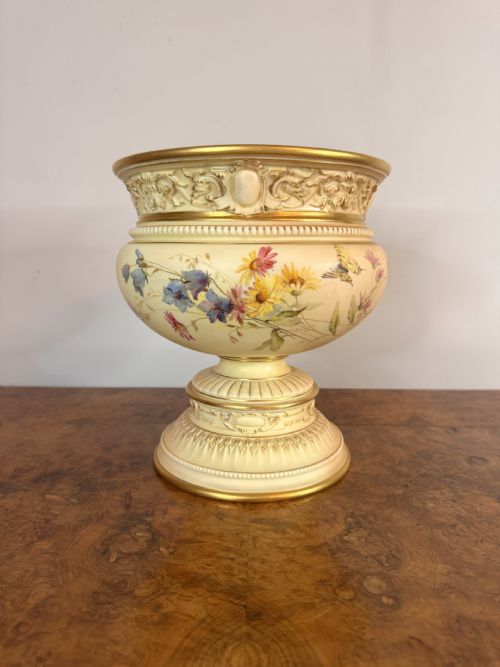
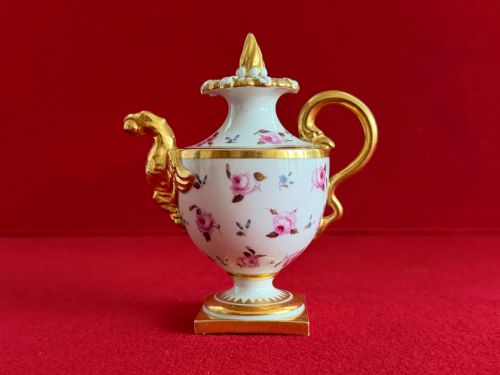
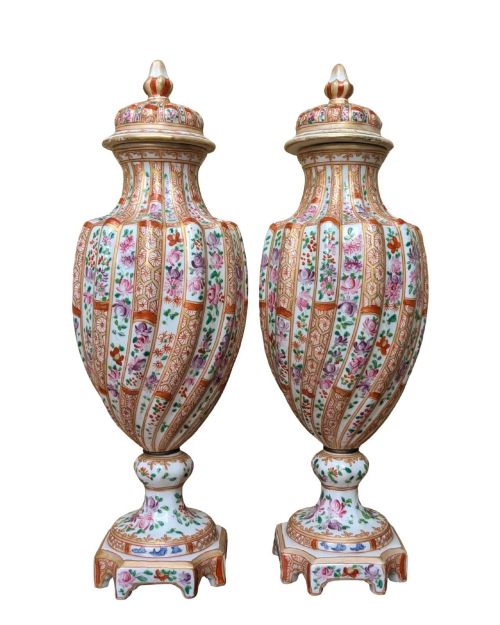
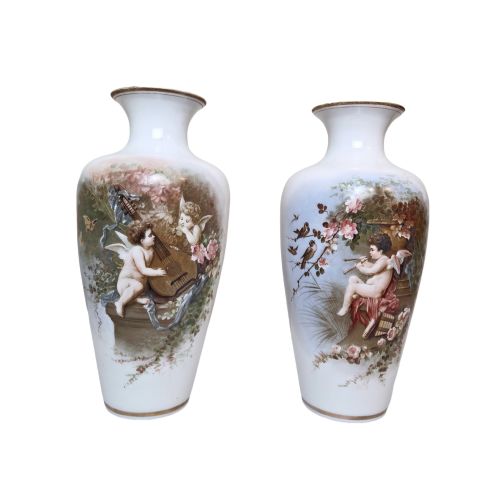
Floral painted porcelain urns bring hand-painted botanical artistry into interior spaces, offering classical vessel forms decorated with natural flora.
Floral Painted Porcelain Urns
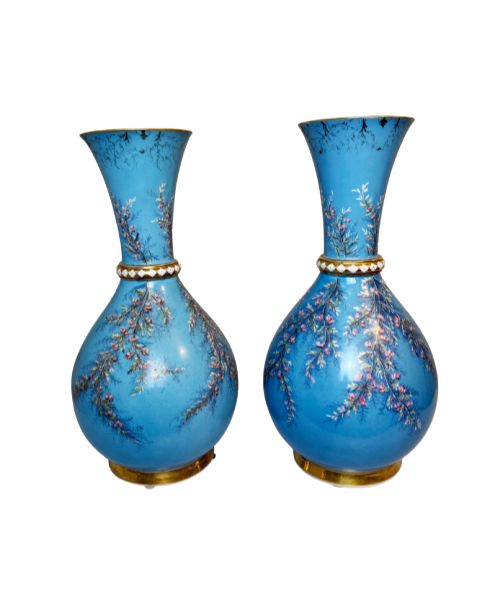
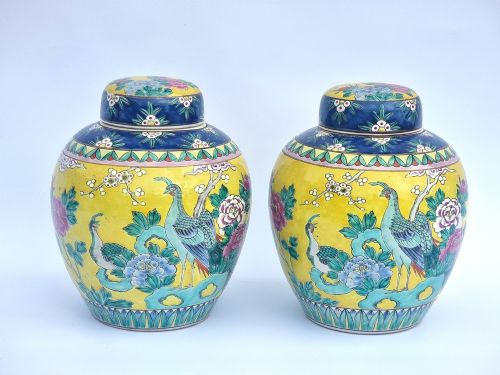
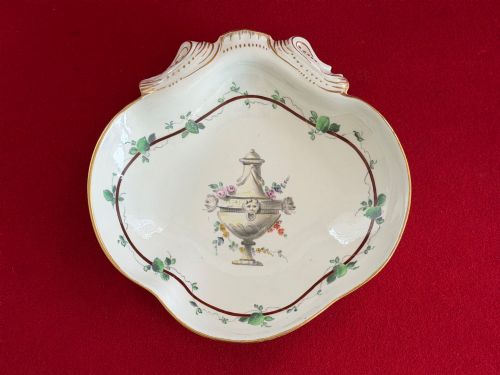
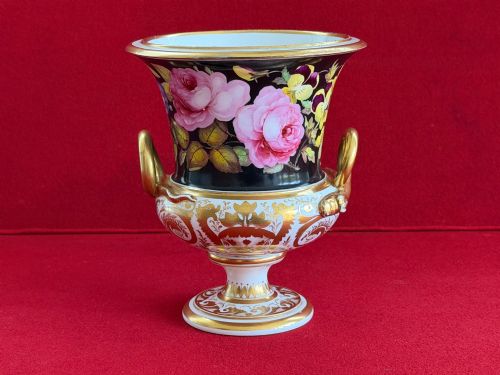
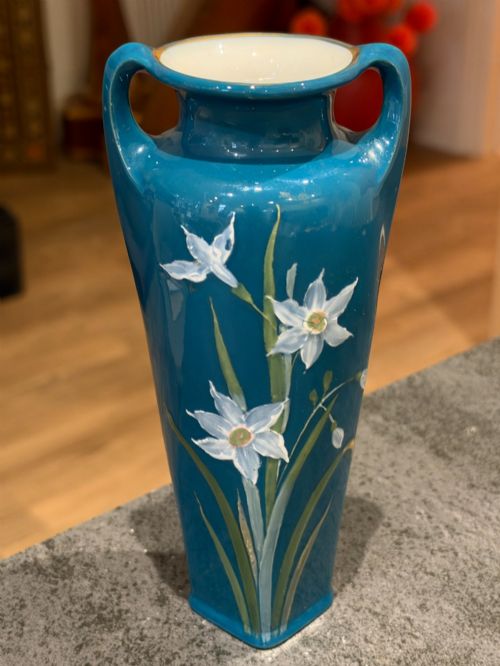
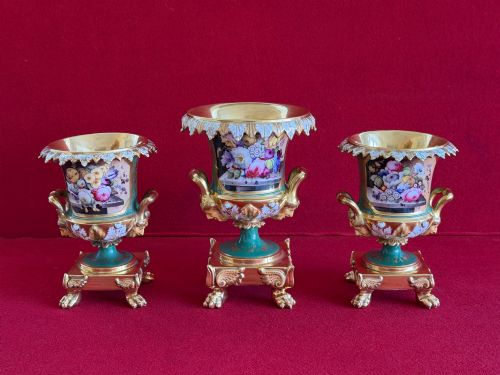
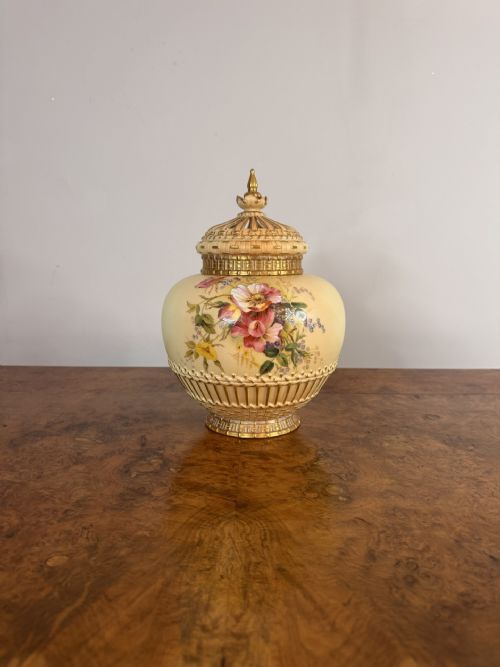
Floral painted porcelain urns span multiple centuries and international traditions, appearing primarily as decorative vases, lidded potpourri jars, and mantle clocks. Buyers encountering this selection will discover pieces ranging from English Georgian and Victorian porcelain to continental European works and Japanese export ceramics.
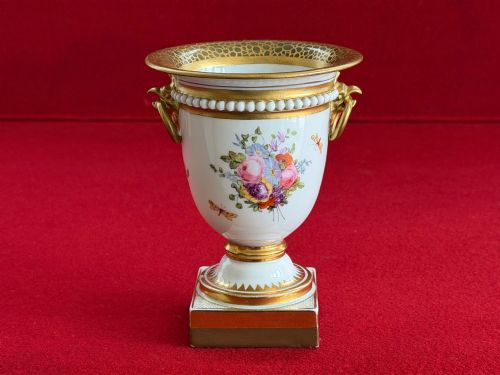
The forms encompass bulbous vessels, campagna shapes, twin-handled centrepieces, and covered ginger jars. Production dates stretch from the eighteenth century through the Edwardian era and into the early twentieth century, showing diverse regional interpretations of floral ornamentation.
Materials and Techniques
Potters shaped these vessels using fine ceramic pastes, porcelain, and earthenware, often applying a smooth white glaze as a canvas for hand-painted botanical motifs. Artisans utilised enamels to achieve vibrant floral coloration across the surface of each piece.
Many examples incorporate raised gilding, gold leaf, and gilt bronze mounts to accentuate the contours of the vessels. Kiln-fired glazes seal the pigments, while specialised moulding techniques create sculptural elements such as dolphin handles and bulbous bodies.
Floral Painted Porcelain Urns Retail Price Guide 2026
Typical asking prices for floral painted porcelain urns among the pieces listed under this phrase on Sellingantiques today, from the lower quarter to the upper quarter. They describe what is for sale here now, not the wider market.
Dolphin handles occasionally swim across the shoulders of Victorian porcelain, proving that nineteenth-century decorators wanted marine life guarding their roses.
Evaluating Quality and Execution
The standard of execution depends heavily on the precision of the hand-painted botanical detailing and the finesse of the brushwork. Superior pieces display delicate shading, botanical accuracy, and well-integrated floral compositions that complement the underlying ceramic form.
Material richness also dictates quality, particularly the skillful application of gold leaf and the crispness of moulded handles and covers. The balance between the porcelain body, the glaze, and the decorative enamel work separates standard production pieces from exceptional examples.
Flight Barr and Barr·Royal Worcester·Sitzendorf·Royal Vienna·Spode·Samson of Paris·Royal Doulton·H and R Daniel·Coalport·Meissen·Manpei
The Floral Painted Porcelain Urns Glossary
- Gilt
- Covered with a thin layer of gold leaf or gold paint to highlight specific decorative areas. This treatment adds reflective contrast to the painted porcelain surfaces.
- Imari
- A traditional Japanese style of ceramic decoration characterised by cobalt blue, iron red, and gold pigments. Pieces utilising this palette display intricate patterned and floral motifs.
- Porcelaneous
- A ceramic material sharing qualities of both pottery and true porcelain, offering a dense and durable body. It was frequently utilised for large nineteenth-century display vessels.
- Potpourri jar
- A lidded vessel perforated to allow dried botanical scents to diffuse into a room. These containers often feature elaborate hand-painted floral decoration matching their functional purpose.
Floral Painted Porcelain Urns: Frequently Asked Questions
How do I identify the period of a floral urn?
Dating relies on examining the ceramic body, glaze characteristics, and any makers marks stamped or painted on the base. Stylistic cues such as Victorian moulding or Regency shapes also provide reliable chronological markers.
Comparing the hand-painted floral palette to known historical periods helps narrow down the decade of manufacture. Consultation with documented manufacturer patterns further clarifies the precise era.
Were these urns used for actual flowers?
Many vessel forms served primarily as decorative garnitures or architectural ornaments rather than functional vases for water and fresh stems. Lidded variants like potpourri jars were designed specifically to hold scented dried plant materials.
Certain open-topped variations accommodated cut flowers, but the presence of delicate gilding and painted enamels often restricted them to purely ornamental display. Their primary historical role was enhancing interior table settings and mantelpieces.
How should I display porcelain urns safely?
Position these vessels on stable, level surfaces away from heavy foot traffic or vibration to prevent accidental tipping. Adequate clearance from direct sunlight preserves the vibrancy of the hand-painted enamels over time.
Avoid placing them near heat sources that might stress the historic ceramic body or dry out old glazes. Simple, uncluttered surroundings allow the intricate floral details and gilt mounts to remain the visual focus.
What is the difference between an urn and a ginger jar?
Urns generally feature footed bases, tapering stems, and distinct handles intended for formal display or classical symmetry. Ginger jars possess a broad, bulbous body with a flat base and a tightly fitting domed lid, originating from Chinese storage vessels.
While both forms accommodate floral painted decoration, their structural silhouettes and handle configurations differ significantly. Urns lean toward classical European architectural revival styles, whereas ginger jars maintain an oriental vessel profile.