





Gilded Ceramic Temple Jars
These gilded ceramic temple jars bring striking form and rich metallic detailing to an interior, making them enduring focal points for collectors.
Gilded Ceramic Temple Jars
When you search for gilded ceramic temple jars, you encounter substantial lidded vessels drawing on Asian and European decorative traditions. The selection spans 18th century styles alongside Victorian pieces, featuring robust forms intended for display.
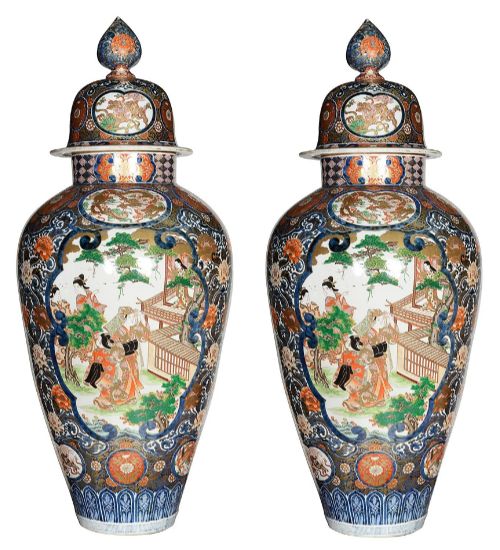
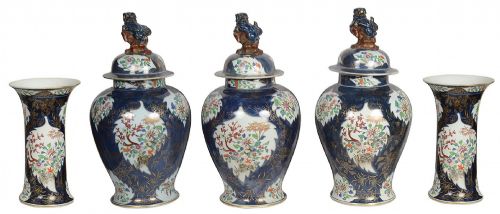
You meet Japanese Imari and Satsuma styles frequently on this page, often rendered as lidded vases or garniture sets. These pieces reflect long-standing manufacturing traditions from the Edo and Meiji periods, alongside European interpretations in the Chinese Export and Chinoiserie taste.
The objects take various shapes, including decorative vases, urns and large pots with fitted covers. Their presence commands attention in a room, combining ceramic bodywork with prominent surface decoration.
Distinguishing quality
Quality rests upon the precision of the hand-painted enamel work and the crispness of the gilding applied across the ceramic surface. Superior examples demonstrate controlled brushwork and harmonious integration of the gold leaf with the underlying palette.
The fidelity of the form and the preservation of the original lids further differentiate the pieces. Stronger examples maintain balanced proportions and sharp definition in the decorative motifs across both body and cover.
Gilded Ceramic Temple Jars Retail Price Guide 2026
Typical asking prices for gilded ceramic temple jars among the pieces listed under this phrase on Sellingantiques today, from the lower quarter to the upper quarter. They describe what is for sale here now, not the wider market.
Listings incorporate pieces spanning from the 18th century through the Edwardian era, predominantly featuring porcelain and earthenware.
Yamashu·Samson
The Gilded Ceramic Temple Jars Glossary
- Imari palette
- A traditional decorative scheme utilising iron red, underglaze blue and gold on a white ceramic ground. This style originated in Japan and heavily influenced later European production.
- Satsuma
- A type of Japanese earthenware featuring a crackled ivory glaze decorated with polychrome enamels and gilding. Pieces often display intricate landscape or figural scenes.
- Garniture
- A set of matching vases or jars designed to be displayed together on a mantelpiece or cabinet. These groupings typically consist of three or more vessels in graduated sizes.
- Chinoiserie
- A European artistic style reflecting Chinese motifs and decorative techniques. Artisans applied these interpretations to various ceramic forms during the 18th and 19th centuries.
- Famille rose
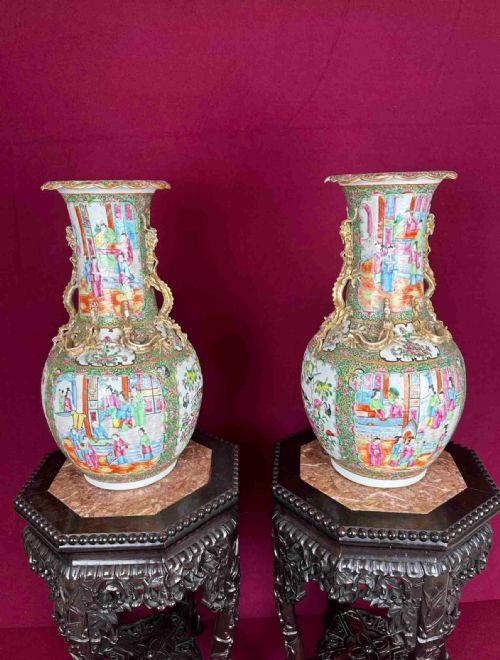
- A palette of opaque enamel colours dominated by pink or rose hues, introduced to Chinese ceramics during the Qing dynasty. The style gained wide popularity in later European imitations.
Gilded Ceramic Temple Jars: Frequently Asked Questions
What were temple jars used for?
These large covered vessels originally served to store spices, herbs or precious objects in East Asian settings. Over time, European collectors repurposed them purely as decorative focal points for mantelpieces and large rooms.
Their substantial lidded forms made them practical containers while offering a grand architectural silhouette for interior display.
How do I care for gilded ceramics?
Dust these vessels gently with a soft, dry brush to protect the delicate gold leaf and enamel surface. Avoid using water, chemical cleaners or abrasive cloths that can lift the gilding or damage the ceramic glaze.
Keep them positioned away from direct sunlight and areas prone to heavy temperature fluctuations to preserve the paintwork.
How do I distinguish Imari from Satsuma?
Imari pieces use porcelain bodies decorated with a strong palette of underglaze blue, iron red and generous gilding. They present a smooth, vitreous surface with crisp, repeating motifs.
Satsuma items utilise earthenware bodies covered in a fine, crackled ivory glaze that absorbs pigments differently, creating softer backgrounds for detailed pictorial scenes.
Are original lids important?
The presence of a matching, period-correct lid significantly affects the integrity and visual balance of a temple jar. Because these covers were easily separated or broken over centuries, finding a jar with its original lid remains desirable.
Replacements or married covers alter the uniformity of the piece and the flow of the decorative scheme.