

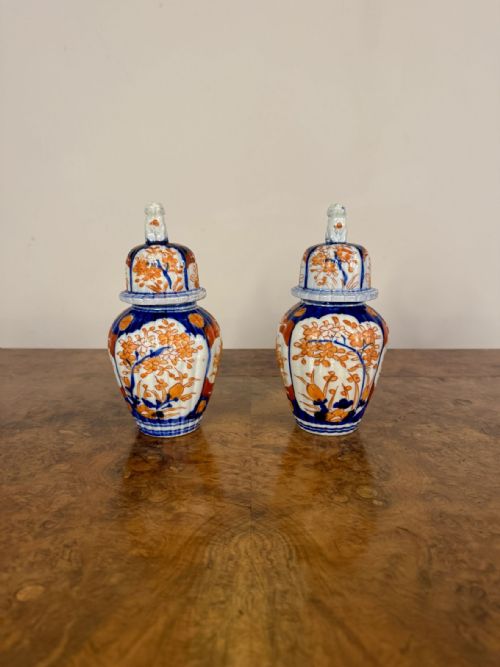
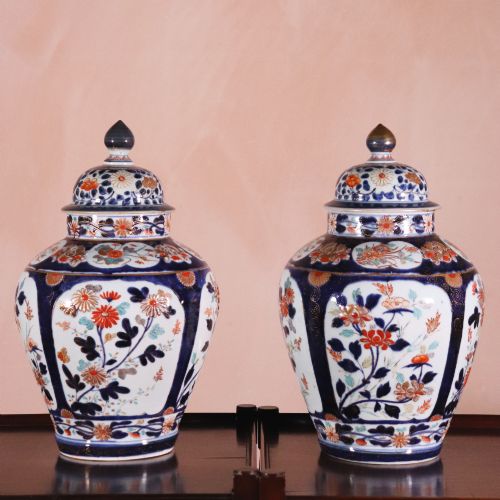
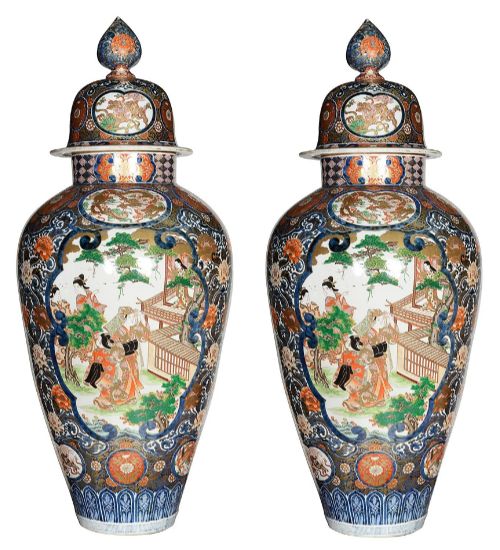
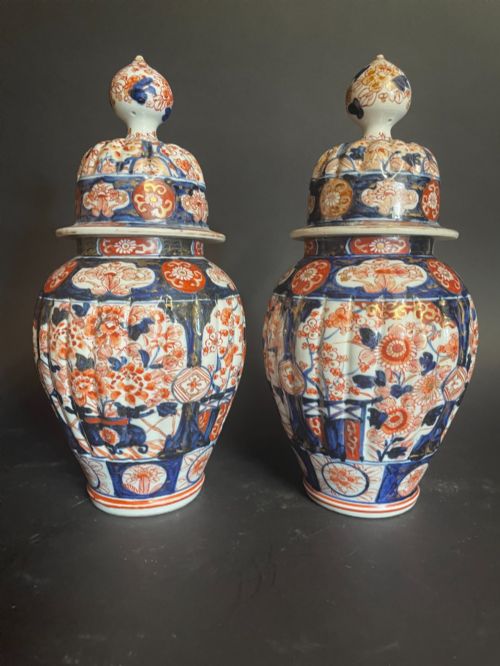


Imari Lid Vase Pair
These imari lid vase pair pieces bring together rich cobalt blue underglaze and enamel pigments to anchor any room.
Imari Lid Vase Pair
When searching for an imari lid vase pair, a buyer encounters lidded vessels spanning the seventeenth century through to the Victorian era. These pieces appear in forms such as jars, urns, and decorative vases.
The nineteenth century yields the highest volume of available examples on this page. Japanese Imari style and Arita pieces dominate the selection alongside European interpretations.
The matched nature of the pair remains central to the appeal. Lidded jars and pots function as decorative focal points when displayed together.
How they were made
Potters shaped the vessels from porcelain and ironstone before applying cobalt blue underglaze. Enamel colours and gold leaf or gilding were then added to the surface.
Gilt and ormolu mounts occasionally complete the construction. Glaze seals the pigment and body of the ceramic.
Imari Lid Vase Pair Retail Price Guide 2026
Typical asking prices for imari lid vase pair among the pieces listed under this phrase on Sellingantiques today, from the lower quarter to the upper quarter. They describe what is for sale here now, not the wider market.
Styles represented include Japanese Imari, Edo period, Chinoiserie, and Victorian interpretations.
What varies in quality
The precision of the cobalt blue underglaze work separates superior examples from ordinary production. Enamel depth and the controlled application of gilding determine the visual hierarchy.
Fidelity to Japanese Imari style motifs dictates the artistic success of the piece. The crispness of the porcelain body and lid fit completes the assessment.
Mason s
The Imari Lid Vase Pair Glossary
- Imari
- A style of Japanese porcelain originating from the port of Arita, traditionally decorated in cobalt blue, iron red, and gold. This palette defines the visual character of the objects.
- Cobalt blue underglaze
- A blue pigment applied directly to the raw ceramic body before firing and glazing. It provides the deep blue foundation beneath the enamel details.
- Ironstone
- A type of durable heavy pottery developed in nineteenth century Britain as a sturdy alternative to porcelain. Mason's notably produced wares in this material.
- Ormolu
- Gilded bronze mounts applied to decorative objects. This technique adds metallic luxury to the ceramic body.
Imari Lid Vase Pair: Frequently Asked Questions
What is an imari lid vase pair?
These matching ceramic vessels feature traditional cobalt blue underglaze and enamel decoration with fitted lids. They were produced in both Japanese kilns and European factories.
Collectors prize the balanced pair for display on mantelpieces and side tables.
How were they used historically?
Owners placed these lidded jars in principal rooms as decorative status symbols. The lids helped protect dried flowers or aromatics held inside.
They served primarily to showcase wealth and taste through imported or exotic styles.
How do I date an imari pair?
The paste, painting style, and secondary materials indicate the period of manufacture. Seventeenth century Arita pieces differ noticeably from nineteenth century Victorian or Samson productions.
Examining the foot ring and glaze characteristics also assists in dating.
How do I care for my vases?
Dust the porcelain gently with a soft dry cloth. Avoid harsh chemical cleaners that might damage the surface gilding and enamel pigments.
Keep them away from direct sunlight and areas subject to sudden temperature shifts.