





Pair Covered Ginger Jars
Pair covered ginger jars bring balanced symmetry and vibrant pattern to a room, offering matching ceramic vessels with matching lids.
Pair Covered Ginger Jars
When you search for pair covered ginger jars, you are looking at matched sets of lidded ceramic vessels originating from various periods and traditions. These objects span centuries of production, from seventeenth-century Japanese porcelain to nineteenth-century European earthenware.
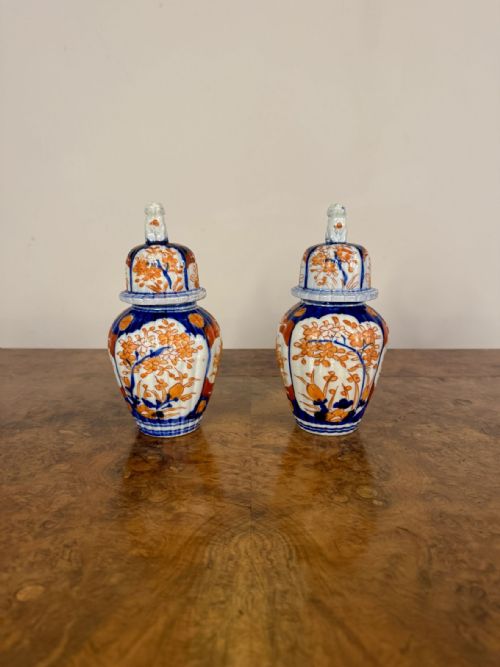
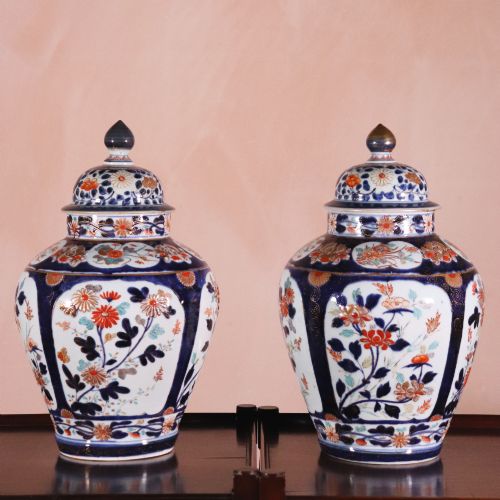
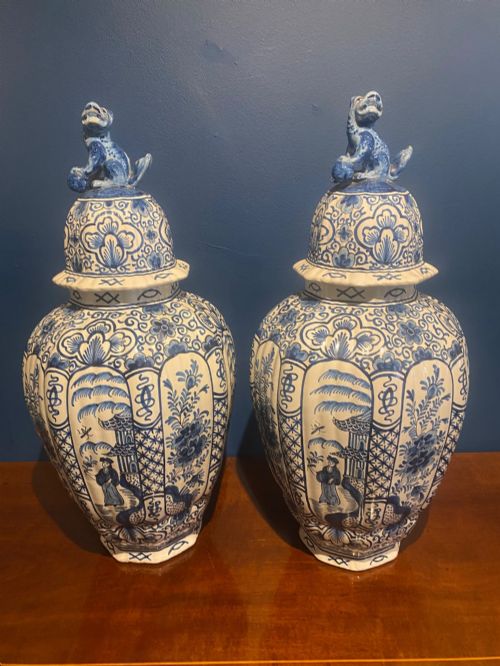
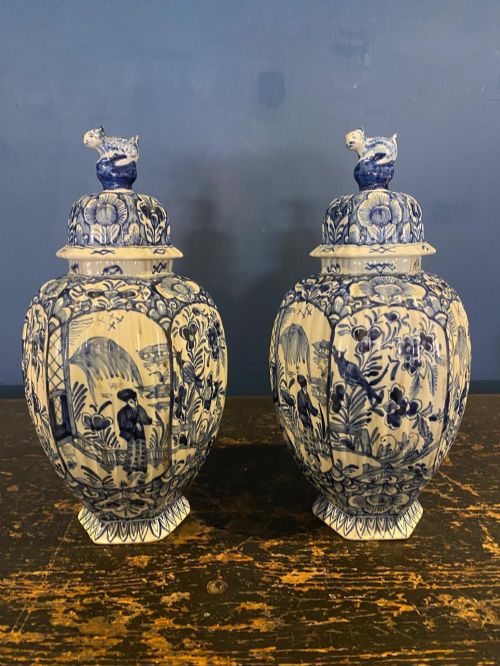
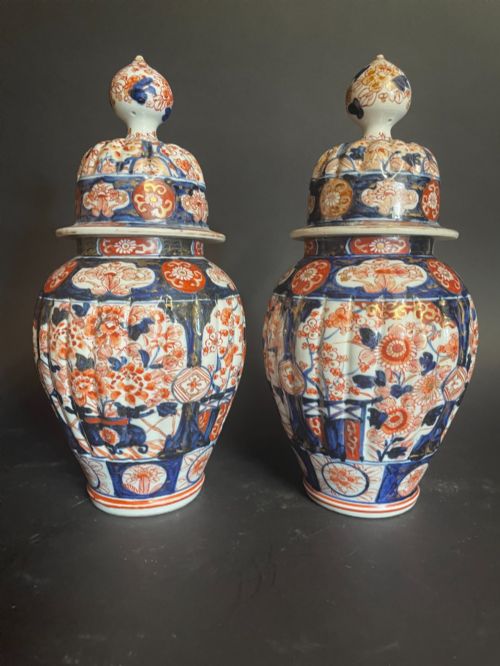
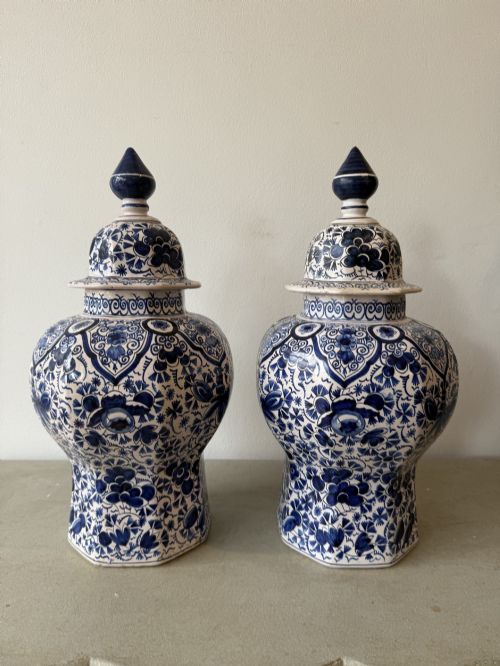
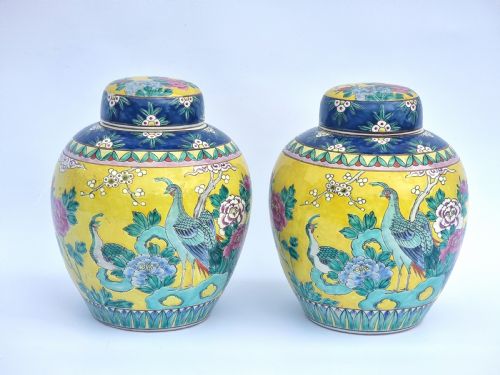
The pieces on this page appear in styles such as Japanese Imari, Dutch Delftware, and Chinoiserie. You will encounter forms ranging from traditional ovid jars to decorative vases fitted with custom lids.
Originating in domestic and export markets, these vessels reflect diverse decorative idioms including blue and white painting and polychrome enamel work. Each matched pair provides identical visual weight for placement on surfaces throughout the home.
How they were made
Makers utilised porcelain and earthenware as the primary base materials, shaping the bodies on the wheel or moulding them in sections. Artisans applied glazes and hand-painted pigments directly onto the ceramic surface before firing.
Some examples incorporate metal components such as copper and brass, including applied ormolu mounts to secure the bases or rims. Gold leaf and intricate gilding provide metallic highlights across the painted decorative schemes.
Cloisonne variants rely on soldered wire boundaries filled with coloured enamel pastes, fired repeatedly to achieve a smooth vitreous finish.
Pair Covered Ginger Jars Retail Price Guide 2026
Typical asking prices for pair covered ginger jars among the pieces listed under this phrase on Sellingantiques today, from the lower quarter to the upper quarter. They describe what is for sale here now, not the wider market.
Some jars started life carrying preserved ginger before retiring to the drawing room as permanent ornaments.
What varies in quality
The finesse of the hand-painting dictates much of the distinction between ordinary and superior examples, with precise brushwork and balanced compositions showing greater artistic mastery. The clarity and vibrancy of the glaze or enamel colours also play a central role in visual impact.
Matching symmetry between the two vessels determines the success of the pair, as kiln firing often causes slight variations in scale and distortion. Well-preserved original lids that fit securely and match the decorative programme of the body elevate the integrity of the set.
Mason·Royal Vienna·Samson
The Pair Covered Ginger Jars Glossary
- Imari
- A style of Japanese porcelain featuring a distinctive palette of underglaze blue, iron red, and gilt highlights. The designs typically incorporate intricate floral and brocade motifs.
- Delftware
- Tin-glazed earthenware produced in the Netherlands, known for its absorbent white surface and blue painted decoration. It often emulates imported East Asian porcelain aesthetics.
- Cloisonne
- Enamelling technique where thin metal wires form compartments on a metal base, which are then filled with coloured paste and fired. The resulting surface is polished flat.
- Ovid
- An egg-shaped vessel form common in ginger jars and storage vases. This curved profile provides maximum volume in the centre of the body.
- Ormolu
- Gilded bronze or brass mounts applied to decorative objects and furniture. They serve both a structural and ornamental function.
Pair Covered Ginger Jars: Frequently Asked Questions
What were pair covered ginger jars used for?
Originally manufactured to store and transport spices, herbs, or preserved ginger, these vessels later served primarily as decorative interior ornaments.
During the seventeenth and eighteenth centuries, wealthy households displayed matching pairs on mantelpieces, sideboards, and architectural cabinetry to demonstrate refined taste and global trade connections.
How should I clean my jars?
Dust these ceramic and enamel surfaces gently with a soft, dry brush to prevent the accumulation of particles in recessed areas.
Avoid using water, chemical solvents, or abrasive cloths, particularly on pieces with exposed gilding, delicate enamel work, or unsealed metal mounts.
Can I use them as lamps?
Certain ceramic vessels are adapted for electrical wiring to function as table lamps, often utilising metal collars or mounts.
When evaluating converted pieces, consider whether the mounting process altered or drilled into the original ceramic body, as this impacts historical integrity.
How do I identify Japanese Imari?
Look for a tripartite colour scheme dominated by cobalt blue underglaze, iron red enamel, and supplementary gold leaf or gilding.
The decorative motifs frequently combine naturalistic floral arrangements with geometric brocade patterns across the porcelain surface.