





Famille Rose Porcelain Vases
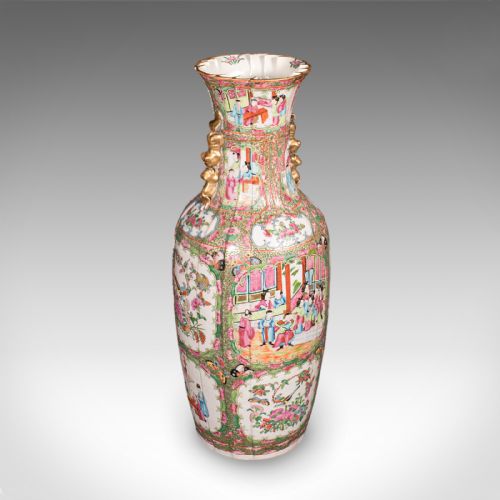
Famille rose porcelain vases bring vibrant enamelled palettes into a room, spanning Qing Dynasty origins, Cantonese export workshops, and European revival pieces.
Famille Rose Porcelain Vases
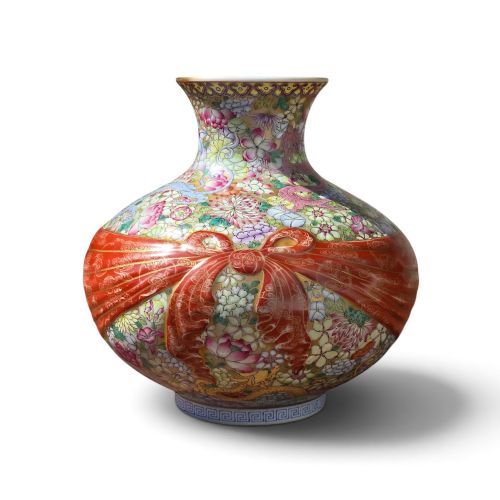
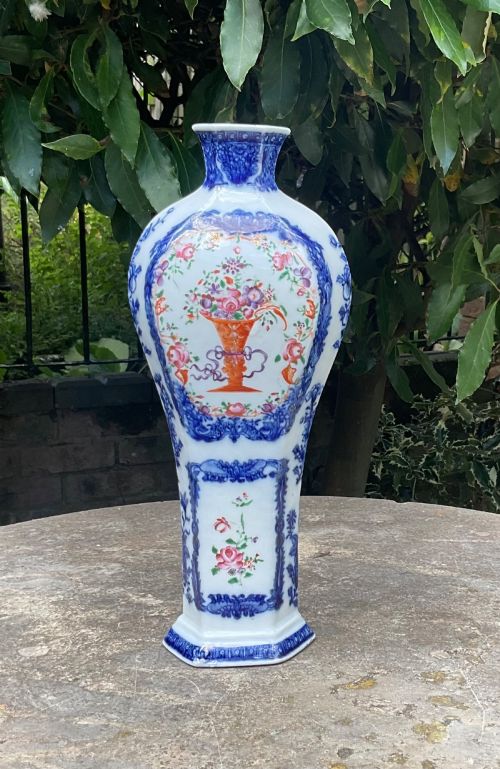
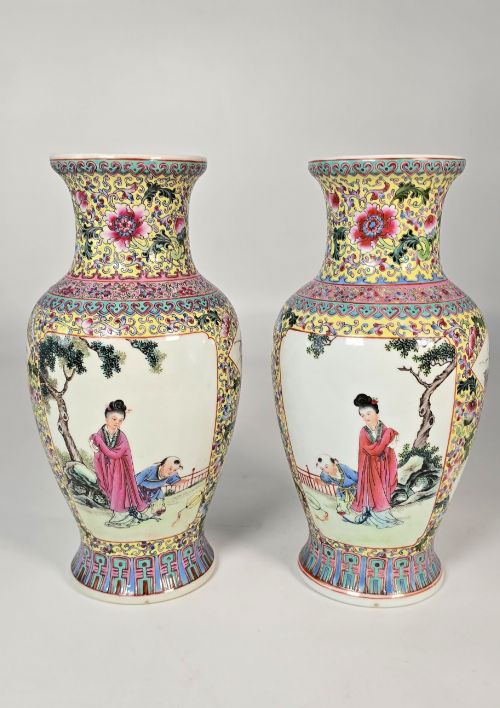
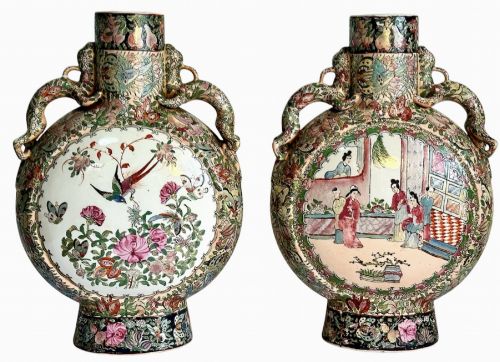
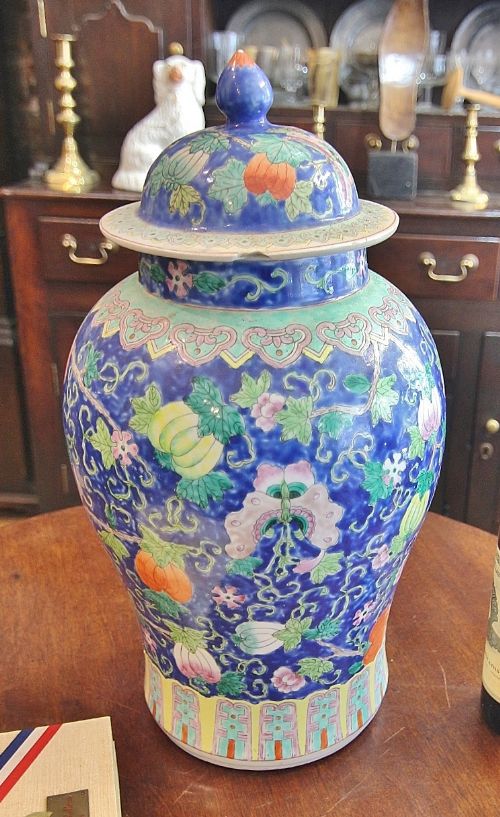
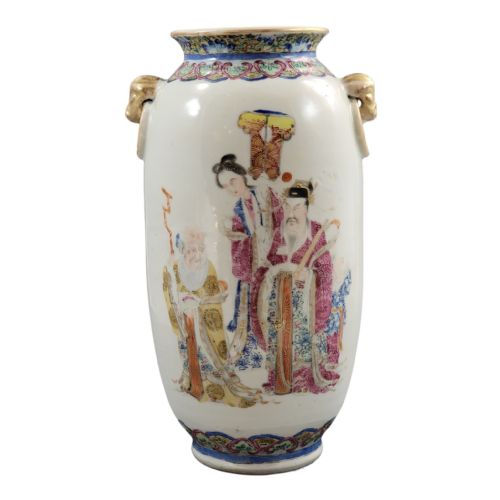
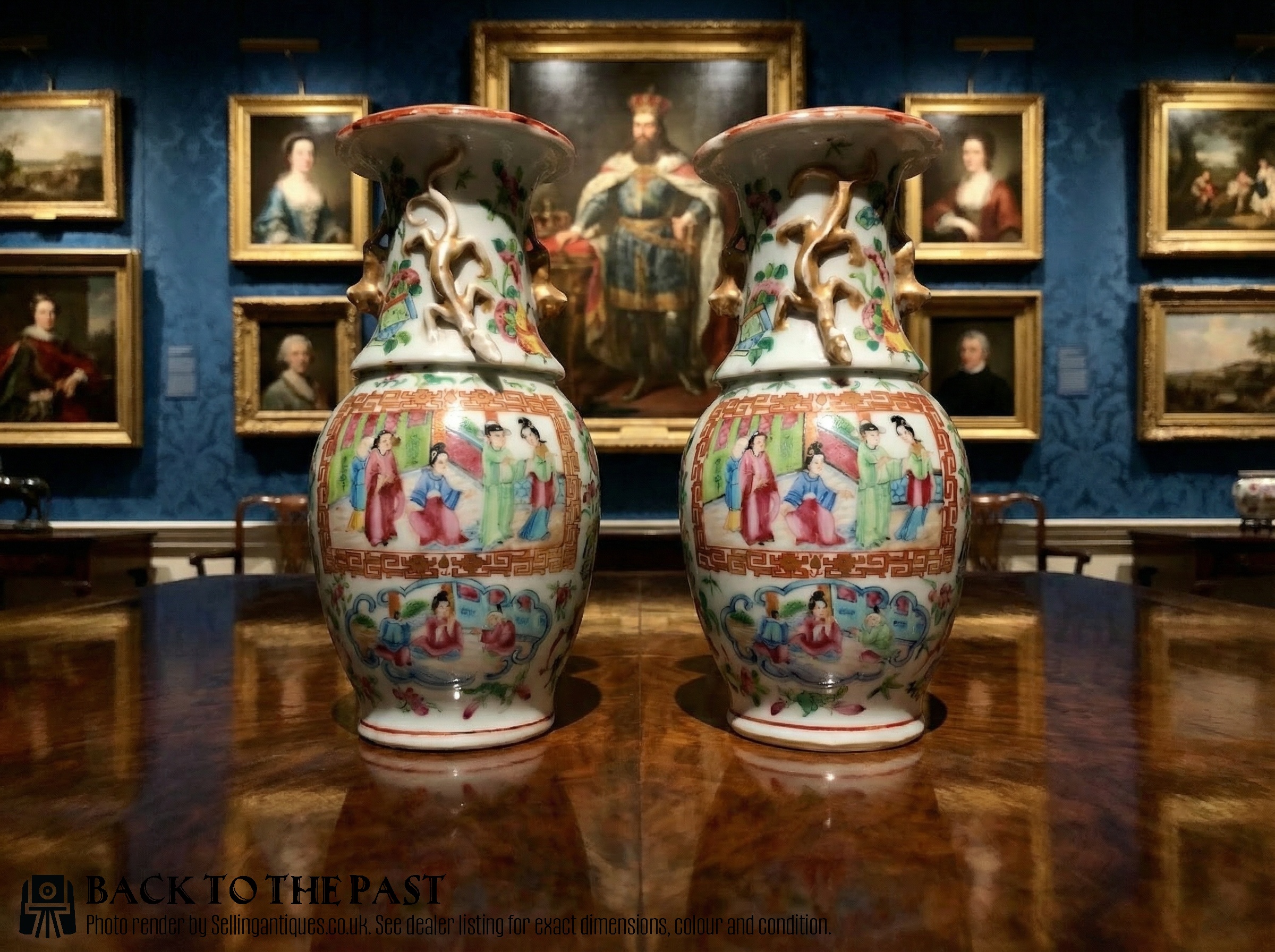
Famille rose porcelain vases cover a broad span of forms, ranging from monumental floor vessels and baluster shapes to moon flasks, ginger jars, and brush pots. You will frequently encounter nineteenth-century Cantonese and Qing Dynasty examples, alongside Chinese Republican period pieces and European interpretations.
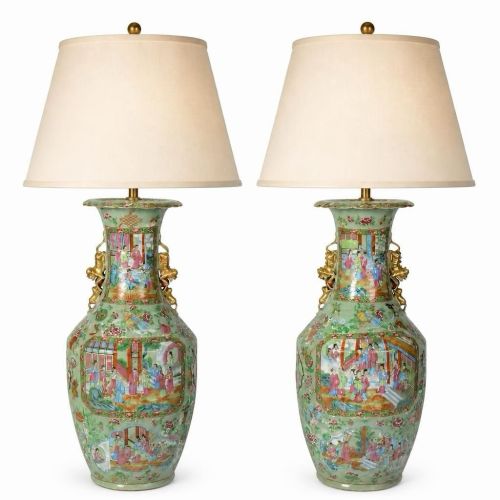
The decorative schemes on these vessels vary considerably, depicting court figures, immortals such as Magu and Shoulao, armorial motifs, and intricate birds and flowers. Many surviving items have been adapted into table lamps or fitted with brass, silk, and fabric shades.
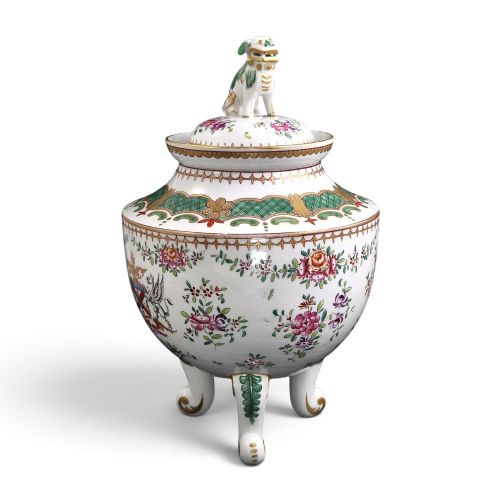
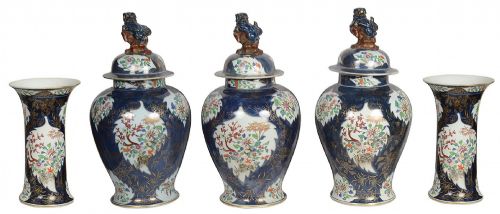
Makers and origins stretch from Jingdezhen kilns to French houses like Samson of Paris, which produced armorial and revival pieces during the nineteenth century. These objects function equally as traditional display centrepieces and functional nineteenth-century lighting.
How they were made
Potters shaped high-fired porcelain into vessels, ginger jars, and baluster forms before applying delicate overglaze enamels. The palette relied heavily on an opaque pink or rose enamel, introduced during the eighteenth century.
Workshops combined hand-painted enamel pigments with gilding, gold leaf, and sometimes iron-red accents. Certain pieces incorporated bronze or ormolu mounts, wood bases, and structural brass hardware for subsequent lamp conversions.
Famille Rose Porcelain Vases Retail Price Guide 2026
Typical asking prices for famille rose porcelain vases among the pieces listed under this phrase on Sellingantiques today, from the lower quarter to the upper quarter. They describe what is for sale here now, not the wider market.
Monumental floor vases stand ready to anchor a hallway, occasionally hiding generations of household umbrellas inside their grand ceramic cylinders.
What varies in quality
Painting execution separates standard production ware from exceptional pieces, visible in the precision of facial expressions, bird plumage, and foliage. Superior examples display dense, meticulously rendered scenes rather than hurried brushwork.
The depth and brilliance of the enamel palette dictate overall refinement, with finer items retaining crisp gilt detailing and unrubbed surfaces. Retaining original covers, matched pairs, or documented studio signatures adds considerable weight to an object's status.
Samson of Paris·Gao Hengsheng
The Famille Rose Porcelain Vases Glossary
- Famille rose
- A palette of overglaze ceramic enamels dominated by opaque pink, derived from gold, developed during the Qing dynasty. It allowed for nuanced shading and detailed pictorial scenes.
- Canton
- A major trading port in southern China where porcelain blanks from Jingdezhen were decorated for export. These pieces often feature crowded panels of figures, birds, and flowers.
- Rose medallion
- A specific style of Canton decoration characterised by alternating panels of figures and natural motifs, heavily filled with gilt and pink enamels. It appears frequently on nineteenth-century table items and lamps.
- Moon flask
- A flattened circular flask with a short neck and two loop handles, sometimes called a bianhu. This traditional shape offers a broad flat canvas for painted enamel decoration.
- Samson
- A nineteenth-century French ceramic workshop in Paris known for producing high-quality copies and interpretations of earlier styles, including Chinese export porcelain.
Famille Rose Porcelain Vases: Frequently Asked Questions
What is a famille rose vase?
These are ceramic vessels decorated with an opaque pink enamel palette introduced in China during the eighteenth century. They display scenes of figures, birds, and flowers.
Production continued through the nineteenth and twentieth centuries, with wares created for both domestic use and international export markets.
How can I date a Chinese vase?
Dating relies on stylistic markers, potting characteristics, and reign marks found on the base. Nineteenth-century examples often show denser enamel work and specific Cantonese border patterns.
Earlier pieces from the eighteenth century reflect different potting weights and softer enamel tones. European revival items mimic these historic periods.
Were these vases made as lamps?
Many nineteenth-century examples were converted into table lamps later in their lifespan, often paired with fabric shades and brass fittings. This practice preserved decorative vessels by giving them a functional purpose.
Original handles and covers were occasionally altered or removed during electrification.
What is the difference between rose medallion and standard famille rose?
Rose medallion is a distinct sub-category of Canton export porcelain featuring segmented panels filled with figures and flowers. Standard famille rose encompasses a wider variety of continuous or single-scene compositions.
Both utilise the characteristic pink enamel palette.