
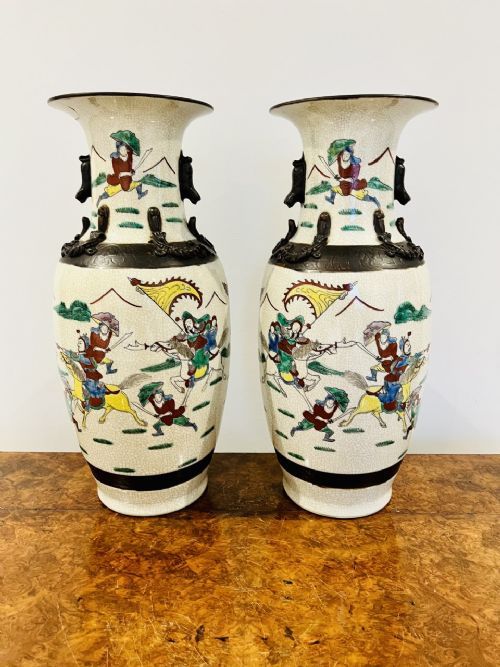


Pair Chinese Porcelain Vases
When you search for pair chinese porcelain vases, you find symmetrical decorative works spanning the Qing Dynasty, the Republican period, and later export productions.
Pair Chinese Porcelain Vases
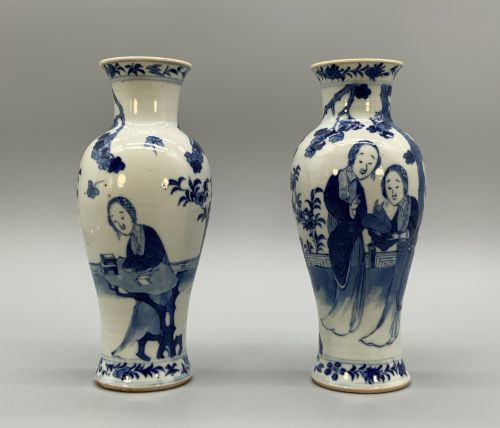
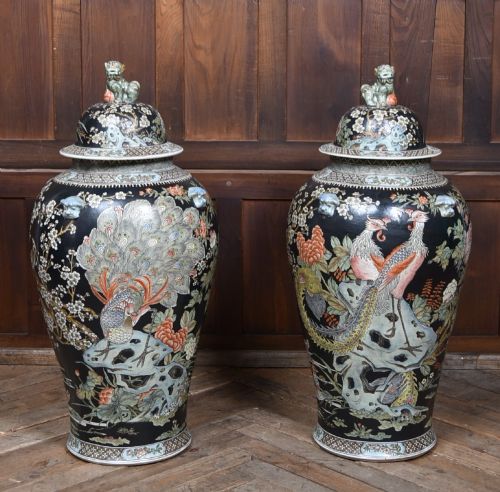
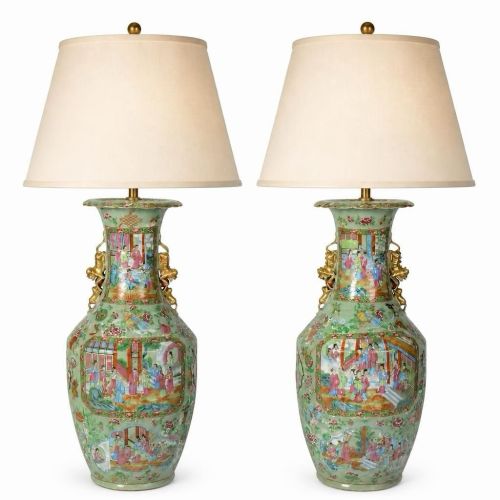
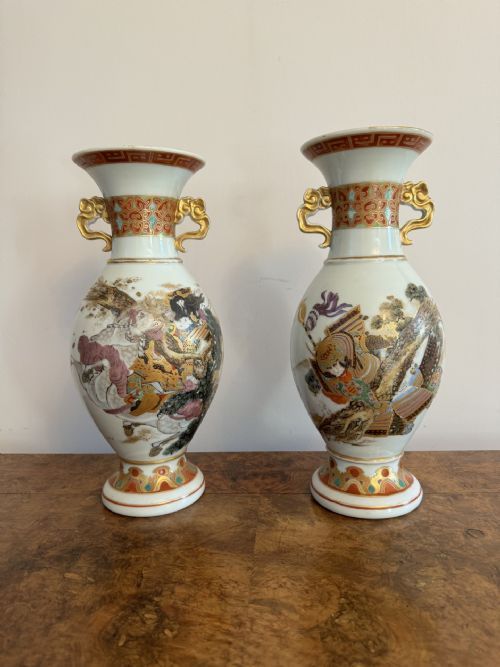
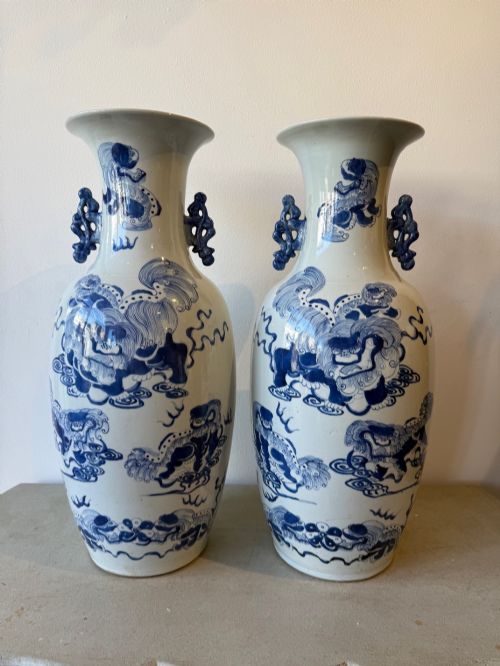
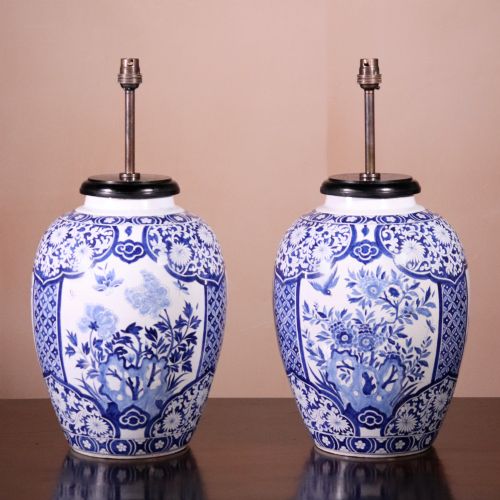
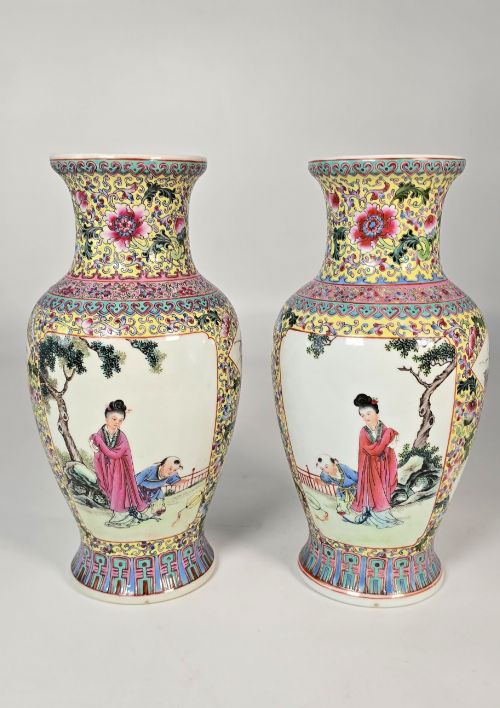
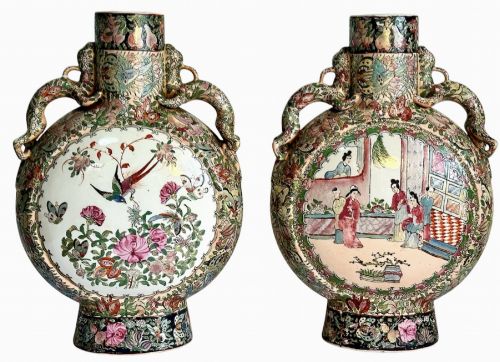
Pair Chinese porcelain vases encompass symmetrical vessels created for export and domestic use, frequently surfacing in nineteenth-century interpretations of earlier Kangxi styles. Collectors encounter baluster shapes, ginger jars, moon flasks, and palace floor jars alongside examples adapted as table lamps and candelabras.
The selection ranges from blue and white figural scenes to heavily enamelled Canton and Rose Medallion pieces. Many vessels integrate foreign brass and ormolu mounts added by European and British houses during subsequent centuries of display.
Materials and Techniques
Potters shaped high-fired ceramic bodies using refined clay before applying mineral pigments and glazes such as celadon, crackleware, and tea dust. Cobalt underglaze was painted directly onto the clay body before the clear glaze application and firing.
Enamelled pieces received subsequent low-temperature firings to bond opaque palette colours like rose, green, and noir onto the glazed surface. Metalworkers then secured decorative ormolu, brass, and gilt bronze mounts to the rims and bases of selected export vessels.
Pair Chinese Porcelain Vases Retail Price Guide 2026
Typical asking prices for pair chinese porcelain vases among the pieces listed under this phrase on Sellingantiques today, from the lower quarter to the upper quarter. They describe what is for sale here now, not the wider market.
Scholar's retreat baluster vases bring quiet academic contemplation straight to the nineteenth-century mantelpiece.
Evaluating Quality
Distinction across the range rests on the precision of the hand-painted brushwork and the depth of the translucent glaze. Superior examples display disciplined control in figural detailing and floral borders rather than hasty mass-produced application.
The integration of metal hardware also dictates standing, where original cast ormolu mounts fitted specifically to the ceramic contours outrank later generic adaptations.
Samson of Paris
The Pair Chinese Porcelain Vases Glossary
- Famille Rose
- A palette characterised by opaque pink enamel introduced during the Qing Dynasty. This colour scheme often dominates nineteenth-century Canton and Rose Medallion export pieces.
- Canton
- A style of export porcelain decorated in southern China featuring crowded panels of figures, birds, and butterflies. These vessels were frequently mounted as lamps in European interiors.
- Ormolu
- Gilded bronze used for decorative mounts on nineteenth-century vases. It provides structural support and aesthetic enrichment to the ceramic body.
- Moon Flask
- A flattened circular flask with a short neck and two handles. This traditional ceramic form derives from ancient metalwork prototypes.
Pair Chinese Porcelain Vases: Frequently Asked Questions
How were pair chinese porcelain vases used?
These vessels originally served as decorative focal points within interior spaces, often placed on mantelpieces or tables in balanced pairs. Many examples were later converted into functional oil lamps and electric table lights during the nineteenth and twentieth centuries.
Such conversions involved securing brass or ormolu hardware directly to the ceramic structure to accommodate wiring while retaining the display value of the hand-painted body.
Are these vases always symmetrical?
Pairs are matched by height, decorative motif, and palette, though individual hand-painted details naturally show subtle variations due to the artisan's brush. Export workshops produced corresponding pairs specifically for Western domestic display.
Minor differences in glaze pooling or iron-spotted underglaze blue typically confirm manual production rather than industrial uniformity.
What periods do these pieces date from?
The selection spans from seventeenth-century productions bearing Kangxi period characteristics to nineteenth-century Qing Dynasty pieces and early twentieth-century Republican era works. Many nineteenth-century items deliberately emulate earlier imperial styles.
Stylistic markers such as cracked glazes, powder blue grounds, and specific enamel palettes assist in assigning approximate dates to unmarked vessels.
How should I care for mounted vases?
Gentle dusting with a soft, dry cloth protects both the delicate enamel surfaces and the metal ormolu mounts. Avoid chemical cleaners or moisture, which can damage exposed ceramic bodies and historic lacquer work.
Positioning the vessels away from direct sunlight preserves the vibrancy of the hand-painted pigments over time.