





19th Century Canton Porcelain
19th century canton porcelain brings vibrant hand-painted enamel palettes and rich export history directly into the modern interior.
19th Century Canton Porcelain
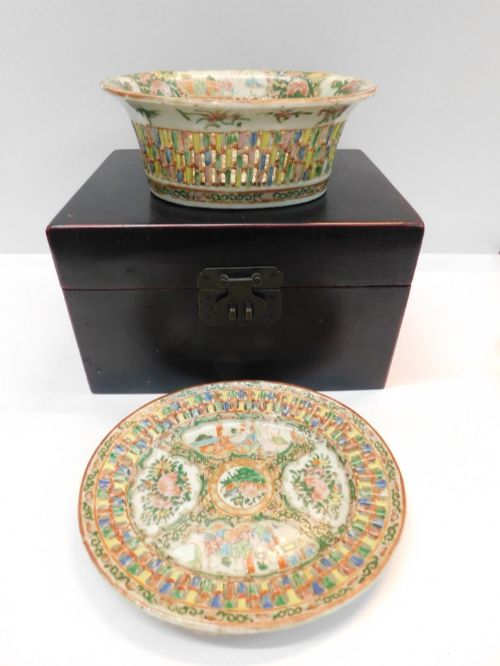
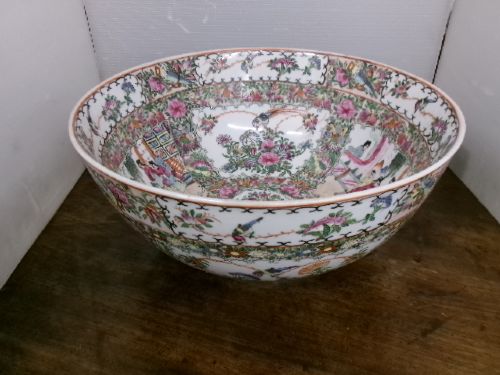
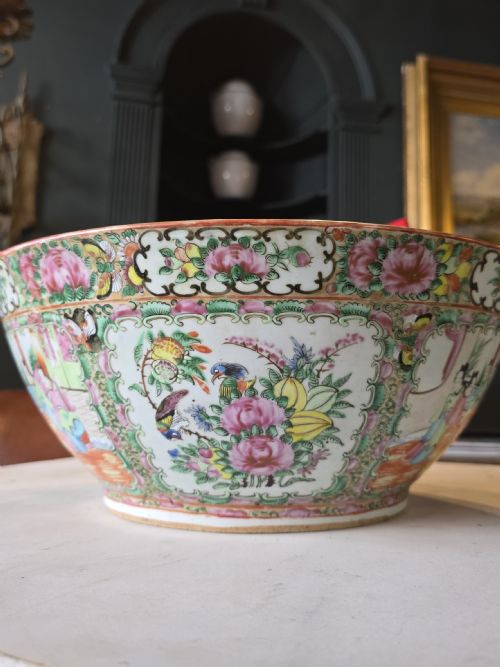
When searching for 19th century canton porcelain, buyers encounter a rich array of decorative wares produced in southern China primarily for Western export markets during the Qing Dynasty. The selection on this page centres on substantial household and decorative objects, including large punch bowls, elaborate vases, garden seats, and pedestal dishes.
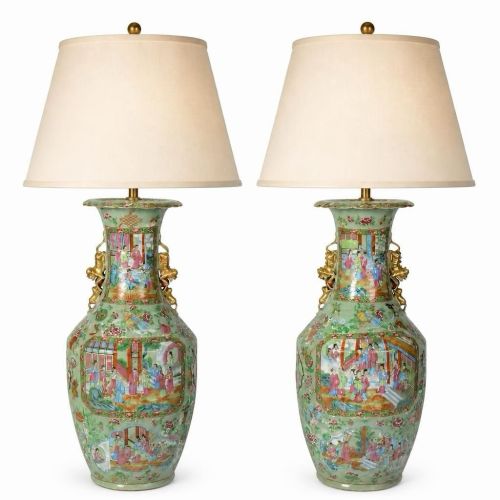
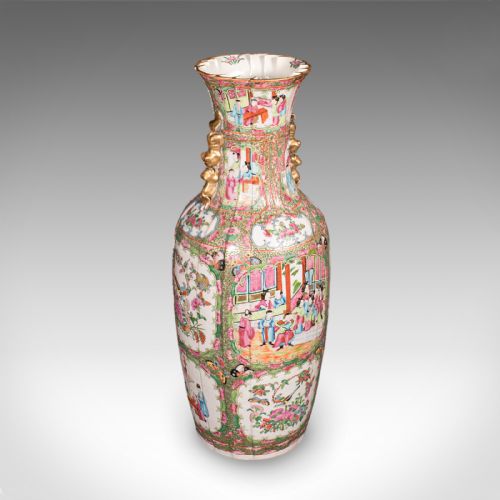
Vessels divide broadly into recognisable decorative schemes such as Rose Medallion, Rose Mandarin, and Famille Rose palettes. These pieces range from compact reticulated chestnut baskets to monumental floor vases and converted table lamps fitted with ormolu mounts.
How these ceramics were constructed and decorated
Production relied upon hard-paste porcelain bodies thrown or moulded into specific forms like baluster vases, moon flasks, and circular basins. Artisans applied vibrant polychrome enamels by hand, frequently incorporating rich gold leaf and gilding to accentuate panel borders and floral motifs.
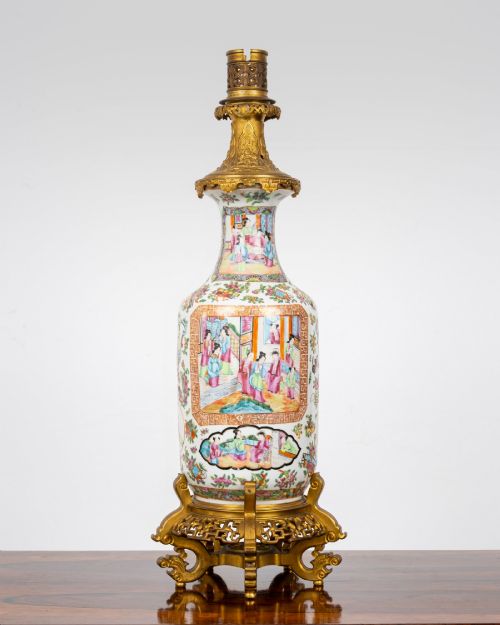
Many items underwent subsequent adaptation in Europe, where workshops added brass, gilt bronze, and ormolu mounts to transform decorative jars and vases into functional table lamps and oil lanterns.
Current listings feature porcelain, enamel, gold leaf, and gilt bronze across forms including garden seats, punch bowls, and umbrella stands.
What separates examples within this range
Differentiation across these wares rests upon the precision and complexity of the hand-painted enamel work. Superior examples display densely populated figural scenes rendered with fine brushwork, alongside meticulously executed butterfly and floral borders that cover the porcelain surface.
Structural scale and overall preservation of the original gilding also determine standing. Monumental forms, matched pairs, and items retaining their original covers or stands command greater attention than smaller, solitary vessels with worn enamel.
The 19th Century Canton Porcelain Glossary
- Famille Rose
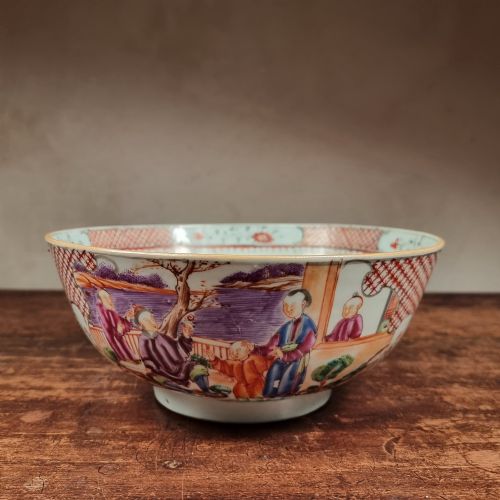
- A major palette of Chinese ceramic glazes introduced in the Qing Dynasty, distinguished by opaque pink or rose enamels derived from colloidal gold. This palette dominates the floral and figural decoration found across export wares.
- Rose Medallion
- A distinct style of Canton porcelain featuring segmented panels filled with alternating scenes of court figures, birds, and butterflies, all arrayed around a central medallion. The surrounding areas teem with dense green foliage and floral motifs.
- Rose Mandarin
- A decorative subset of Cantonese porcelain focused heavily on narrative scenes depicting groups of court figures and officials within interior or garden settings. These compositions typically avoid the formal panel divisions seen in medallion patterns.
- Famille Verte
- An earlier green-dominated enamel palette that continues into later periods, using vibrant transparent greens alongside iron red, yellow, and blue. Pieces in this group rely less on the pink tones characteristic of later rose wares.
- Reticulated
- Describes an openwork or pierced lattice design executed in the ceramic body, often seen on fruit baskets and stands allowing air circulation. This technique demands exceptional skill from the potter to prevent warping during firing.
19th Century Canton Porcelain: Frequently Asked Questions
What is canton porcelain?
Canton porcelain refers to ceramic wares decorated in the factories and studios of Canton during the Qing Dynasty, specifically produced for export to Western markets.
These pieces arrived via international trade routes, bringing distinctive hand-painted enamel designs into European and American homes.
How do I identify rose medallion?
Rose medallion pieces feature segmented panels of figures and birds arranged symmetrically around a central circular motif.
The background fills entirely with green foliage, gilt accents, and additional flowers, leaving almost no white porcelain exposed.
Were these pieces used daily?
Large punch bowls and dishes served practical functions during grand dining occasions, holding punch or presenting fruit at the table.
Other forms, such as garden seats and umbrella stands, fulfilled structural decorative roles within nineteenth-century interiors.
Why do some lamps have ormolu mounts?
European buyers frequently converted large Chinese vases into table lamps and oil lanterns by adding decorative bronze and ormolu mounts.
These metal fittings protected the ceramic edges while adapting export porcelain to suit contemporary Victorian lighting requirements.