




Canton Enamel Porcelain Dish
These canton enamel porcelain dish examples are vibrant Chinese Export works from the Qing Dynasty, prized for their rich hand-painted palettes.
Canton Enamel Porcelain Dish
When you search for a canton enamel porcelain dish, you encounter items shaped as bowls, saucers, trays, and plates. Most examples belong to the nineteenth century and the Victorian era, spanning specific decades like 1860, 1870, 1880, and 1900.
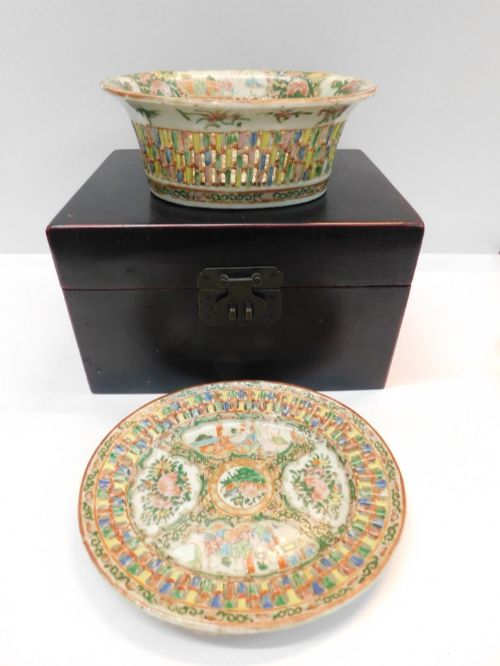
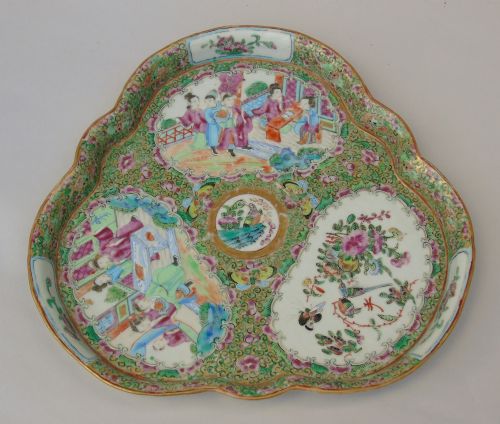
The selections on this page draw heavily from Chinese Export and Qing Dynasty traditions. You find decorative bowls, baskets, pedestal dishes, and shamrock or trefoil trays that reflect nineteenth-century craftsmanship.
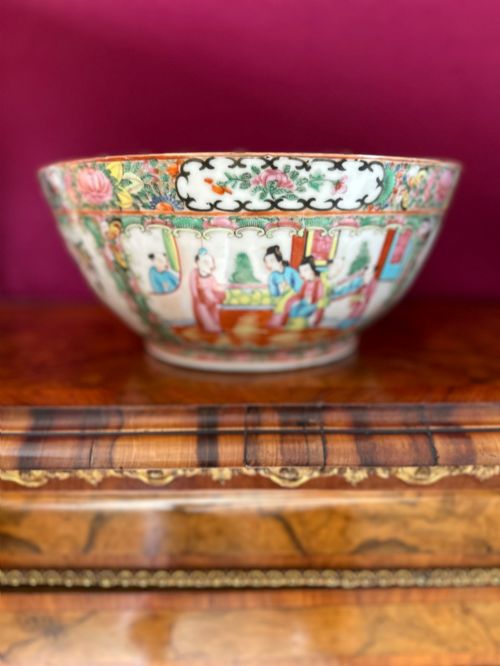
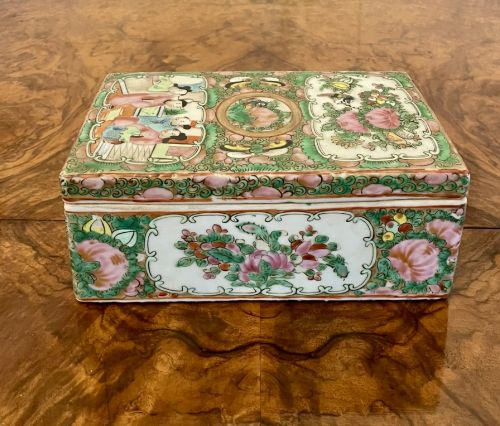
Earlier eighteenth-century pieces, including Qianlong saucers between 1736 and 1795, occasionally appear alongside the dominant nineteenth-century items. The forms range from simple lobbed rectangular bowls to lidded pen boxes and large famille rose bowls.
How they were made
These items utilise hard-paste porcelain as a base, shaped into plates, trays, and bowls before decoration begins. Artisans apply overglaze enamel and gilt or gold leaf details by hand.
The painting relies on famille rose and famille verte palettes, covering the porcelain surface with detailed colours. Gilding highlights rims and motifs, completing the traditional Chinese Export finish.
Some nineteenth-century artisans even painted lidded pen boxes, proving that nineteenth-century desks deserved as much colour as the dining table.
What varies in quality
The fineness of the hand-painted brushwork dictates the distinction between standard and superior pieces. Skilled execution in the famille rose or famille verte enamels creates depth and clarity in the designs.
The preservation of the original gilding and gold leaf also influences the standing of a dish or bowl. Complete enamel coverage and crisp moulding on shapes like trefoil trays or reticulated chestnut baskets mark out the better examples.
The Canton Enamel Porcelain Dish Glossary
- Canton
- A major port in southern China historically associated with export wares destined for Western markets. Many nineteenth-century bowls and dishes originate from workshops in this region.
- Famille Rose
- A palette of opaque enamels dominated by pink or rose colours, introduced during the Qing Dynasty. It appears frequently on nineteenth-century plates and saucers.
- Famille Verte
- A contrasting green-dominated palette used in Chinese porcelain decoration. It defines several nineteenth-century dishes on this page.
- Qing Dynasty
- The final imperial dynasty of China, lasting from 1644 until 1912. Pieces from this era often feature traditional hand-painted motifs and export styling.
- Hard-paste porcelain
- A dense, vitrified ceramic material fired at high temperatures. It forms the durable body of these Chinese export items.
Canton Enamel Porcelain Dish: Frequently Asked Questions
What is a canton enamel porcelain dish?
It is a hand-painted ceramic piece made in China for export during the Qing Dynasty, featuring colourful overglaze enamel decoration.
Most surviving examples date from the nineteenth century and take forms such as plates, saucers, and decorative trays.
How do I care for these dishes?
Wash them gently by hand using lukewarm water and mild soap, avoiding abrasive sponges that might damage the overglaze enamel.
Keep them away from direct sunlight and avoid displaying them in areas with extreme temperature shifts to protect the gilding.
Are these pieces purely decorative?
While many serve as display items, smaller bowls and saucers were originally made for functional dining or serving uses.
Modern collectors generally exhibit them on stands or within cabinets to preserve their hand-painted surfaces.
How are different periods identified?
Makers relied on specific colour palettes, painting styles, and porcelain bodies that evolved from the eighteenth century into the Victorian era.
Examining the depth of the famille rose enamels and the application of gold leaf helps separate earlier pieces from later nineteenth-century items.