
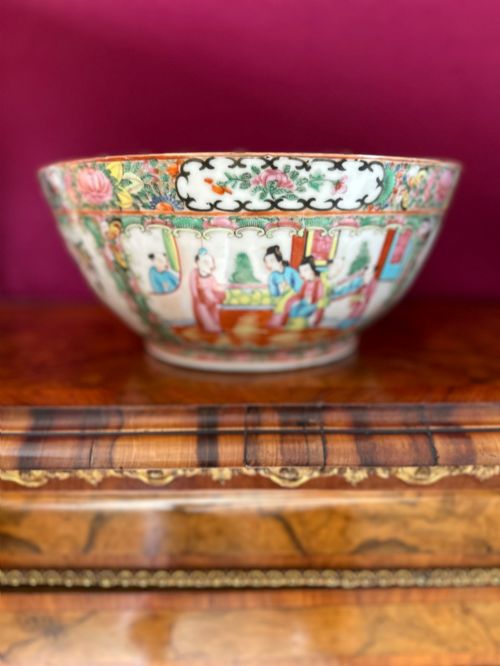


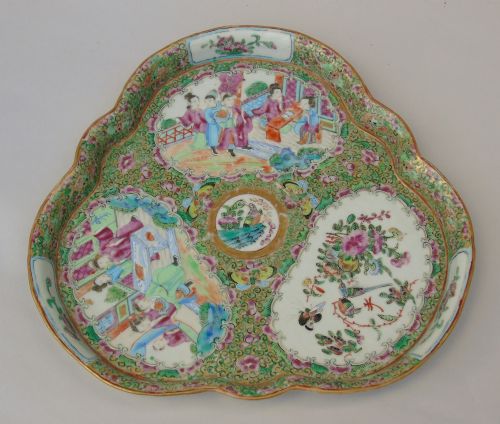


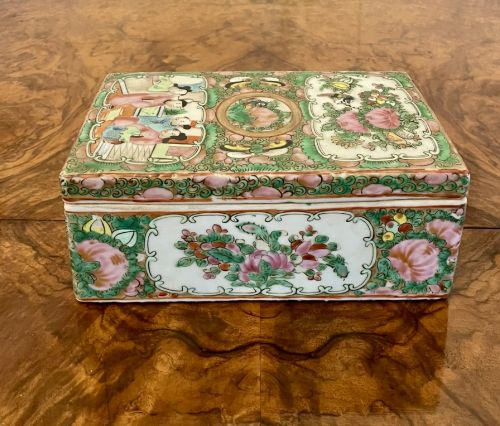
Hand Painted Canton Dish
These hand painted canton dish pieces bring vibrant palette work and intricate export craftsmanship directly into your interior.
Hand Painted Canton Dish
When you search for hand painted canton dish, you are looking at Chinese export ceramics created for Western markets during the nineteenth and eighteenth centuries. These items arrive in various forms including decorative plates, bowls, trays, and pedestal dishes.
You are most likely to meet nineteenth-century examples on this page, often associated with Victorian tastes and Qing dynasty production. The selection encompasses distinctive shapes such as shamrock, trefoil, and lobbed rectangular forms alongside standard circular dishes.
How they were made
Makers utilised hard-paste porcelain as the primary base body, shaping it into bowls, dishes, and saucers before applying initial firing techniques. Artisans then decorated the surfaces by hand using overglaze enamel colours.
Some nineteenth-century artisans painted tiny buzzing insects into empty corners, ensuring every square millimetre of porcelain stayed busy.
What varies in quality
The precision and density of the hand painting distinguish superior examples from standard production. Finer pieces display meticulously rendered figures, birds, and butterflies without crowding or misalignment.
The application of gilding and the richness of the enamel palette also separate the top of the range. Better quality items retain crisp, bright overglaze colours and well-defined gold leaf highlights across the porcelain surface.
The Hand Painted Canton Dish Glossary
- Famille Rose
- A palette of opaque enamels dominated by pink or rose colours, introduced in Chinese porcelain during the Qing dynasty. This palette defines many Canton plates and bowls.
- Famille Verte
- A ceramic classification relying on green overglaze enamels, accompanied by other bright colours. It appears on nineteenth-century export dishes.
- Qianlong
- The sixth emperor of the Qing dynasty, whose long reign spans the eighteenth century. Pieces from this era represent early export porcelain.
- Overglaze Enamel
- Mineral colours painted onto fired and glazed porcelain before undergoing a lower temperature second firing. This technique produces the raised, colourful motifs seen on Canton ware.
- Gilding
- The application of gold leaf or powdered gold to the surface of porcelain or metal. It frames panels of figures and floral scenes.
Hand Painted Canton Dish: Frequently Asked Questions
What is a hand painted canton dish?
A hand painted canton dish is an export ceramic piece manufactured in Guangdong province, China, for Western export during the Qing dynasty and Victorian periods. These pieces are characterised by colourful overglaze enamel painting depicting figures, birds, and flowers.
They served as decorative items for affluent Western homes, often displayed on sideboards or used in entertaining. Their distinct palette makes them prominent focal points in traditional and eclectic interiors alike.
How do I distinguish nineteenth-century pieces?
Nineteenth-century pieces often reflect Victorian collecting habits and typically feature dense Rose Medallion or Famille Rose enamel work. The paste and glaze characteristics differ from earlier eighteenth-century Qianlong productions.
Examine the weight of the porcelain and the style of the hand-painted motifs for clues to the period. Retail listings usually provide the estimated decade based on stylistic evidence.
Were these dishes used for food?
While many export pieces were originally ordered for dining and service, surviving examples are largely treated as decorative objects today. The presence of delicate gold leaf and overglaze enamel makes careful handling advisable.
Using them for display preserves the painted surfaces from cutlery marks and modern dishwasher detergents. They function effectively as table centrepieces or cabinet displays.