




Pink Enamel Porcelain Dish
A pink enamel porcelain dish brings vibrant floral palettes and delicate hand-painted detail straight from Qing Dynasty export workshops and Victorian parlours.
Pink Enamel Porcelain Dish
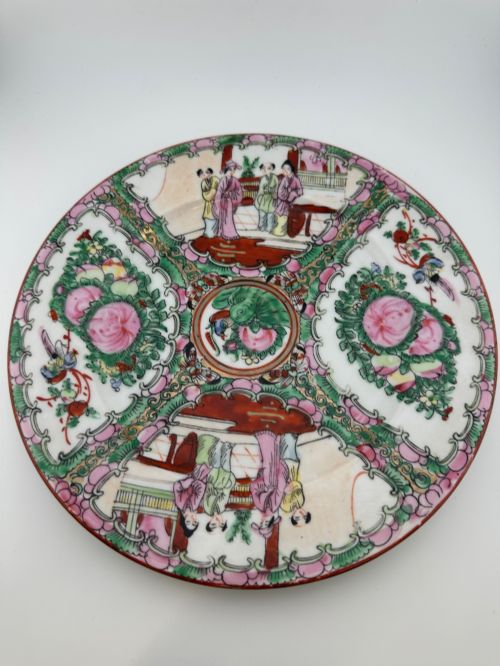
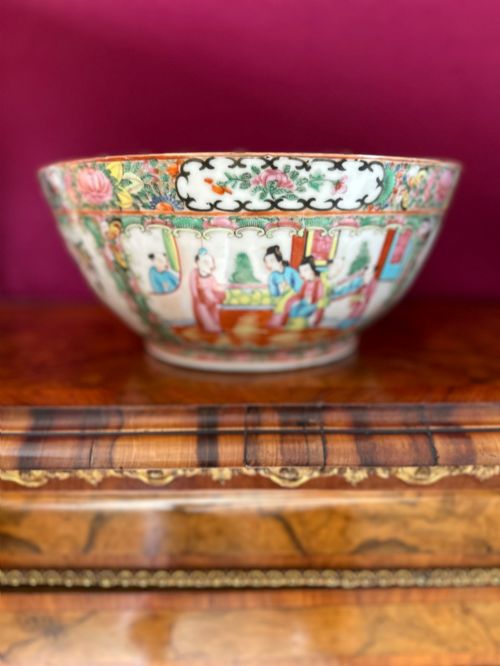
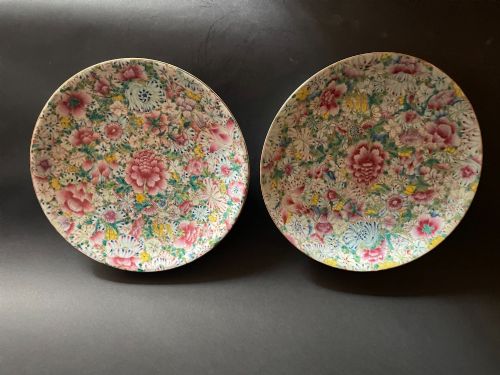
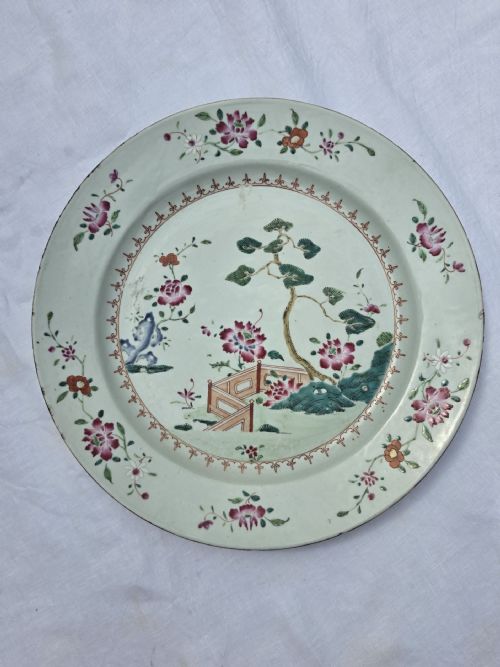
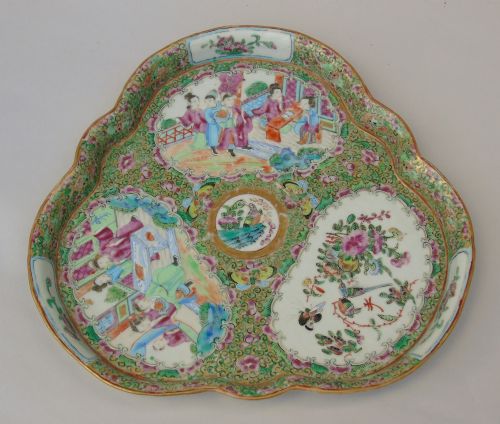
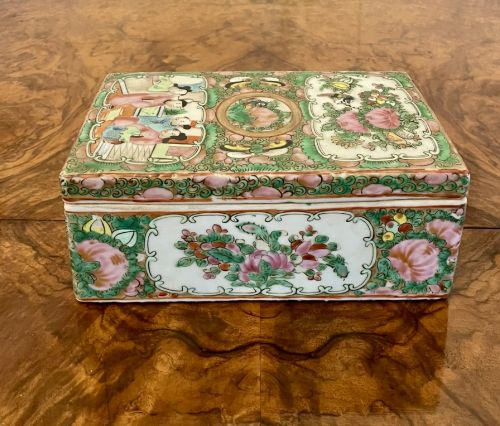
A pink enamel porcelain dish unites hard-paste ceramic forms with bright overglaze colours, originating predominantly from Chinese export kilns and 19th-century British makers. Buyers searching this phrase will find a diverse selection of decorative plates, bowls, chargers, and serving dishes spanning the 18th, 19th, and early 20th centuries. These pieces encompass Chinese Canton wares, Qianlong period famille rose designs, Japanese Kutani charger styles, and Victorian English porcelain plates with pink ground decoration.
The objects take various functional and decorative shapes, including standard circular plates, large chargers, shamrock-shaped dishes, trefoil trays, pedestal dishes, and lidded boxes. Most examples trace back to Chinese export production intended for Western markets, featuring traditional Mandarin palettes, bird motifs, floral scenes, and auspicious imagery. Alongside these sit occasional English Victorian interpretations, such as Minton pearl-jewelled landscape dessert plates with pink ground highlights, and Japanese Meiji period examples.
Distinctions in quality
Quality in a pink enamel porcelain dish rests primarily on the crispness and precision of the hand-painted brushwork. Finer examples display meticulously rendered bird and floral designs, expressive figures in Mandarin palettes, and carefully controlled enamel application that avoids muddy blending.
The sophistication of the porcelain body and the richness of supplementary gilding also separate standard utility wares from superior collector pieces. Well-preserved overglaze enamels with minimal rubbing and balanced composition denote a higher standard of craftsmanship across both Chinese export and Victorian European pieces.
Current listings feature porcelain and enamel pieces spanning the 18th century through the Victorian era, encompassing both Chinese export production and British Minton works.
The Pink Enamel Porcelain Dish Glossary
- Famille rose
- A major palette of Chinese ceramic enamels introduced during the Qing Dynasty, distinguished by an opaque pink colour derived from colloidal gold. This palette allowed artists to achieve subtle gradations of tone in floral and figurative scenes.
- Overglaze enamel
- A decorative technique where coloured glass fluxes and pigments are painted onto a previously fired and glazed ceramic surface, then fixed with a lower temperature second firing. It permits bright, varied hues that sit slightly proud of the glaze.
- Hard-paste porcelain
- A dense, vitrified ceramic composed of kaolin and petuntse fired at very high temperatures. It produces a ringing, non-porous body resistant to scratching.
- Canton
- A major trading port in southern China from where vast quantities of export porcelain were shipped to the West during the 18th and 19th centuries. Wares decorated here often feature crowded floral borders and narrative figure scenes.
- Gilding
- The application of gold leaf or powdered gold to ceramic surfaces, typically along rims and highlights. It is often fixed by a final firing or applied with a medium.
Pink Enamel Porcelain Dish: Frequently Asked Questions
How do I date an 18th-century piece?
Dating relies on stylistic markers such as the specific shades of famille rose enamel, the weight and potting of the hard-paste porcelain body, and traditional Chinese reign marks where present. Comparing the handling of floral and avian motifs against documented export periods helps narrow the decade.
Eighty-century pieces often exhibit thinner, more resonant bodies and softer, hand-mixed enamel tones compared to later 19th-century mass-produced variations.
What is the difference between Canton and Qianlong wares?
Qianlong period pieces, produced during the 18th century, typically feature disciplined composition, refined potting, and meticulous brushwork associated directly with imperial export standards. Canton wares, spanning into the 19th century, frequently showcase more exuberant, densely packed panel designs with prominent greens and pinks.
While both utilise famille rose enamels, Canton pieces often display a heavier ceramic body and more commercial export production methods.
Can I use these antique dishes for food?
Using antique porcelain for dining is generally discouraged due to the fragility of overglaze enamels and historic gilding that can wear away with modern detergents and cutlery. Lead or other heavy metals present in early overglaze enamels also make them unsuitable for regular food service.
Displaying them on stands or mounting them securely protects the delicate painted surfaces from accidental damage.