




Antique Canton Porcelain Dish
These antique canton porcelain dish examples bring vibrant Qing Dynasty palette work and intricate hand-painted detail straight to a table setting.
Antique Canton Porcelain Dish
An antique canton porcelain dish is a piece of Chinese export ceramic decorated in the southern trading port and imported to Western markets during the nineteenth century. Buyers searching this phrase look for vibrant hand-painted enamels, floral motifs, and figurative scenes that define the export style of the Qing Dynasty.
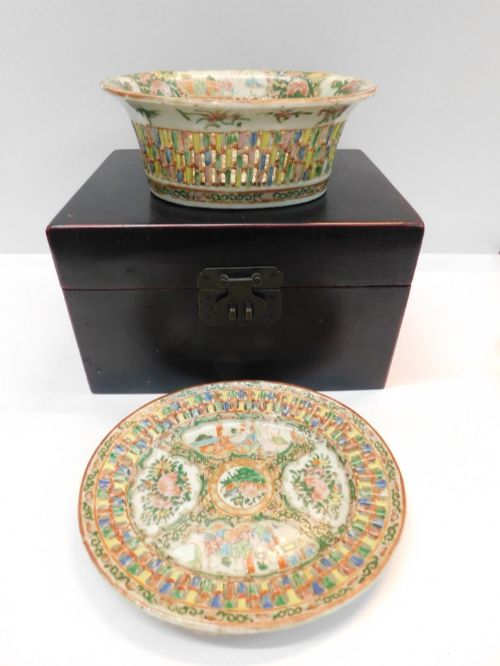
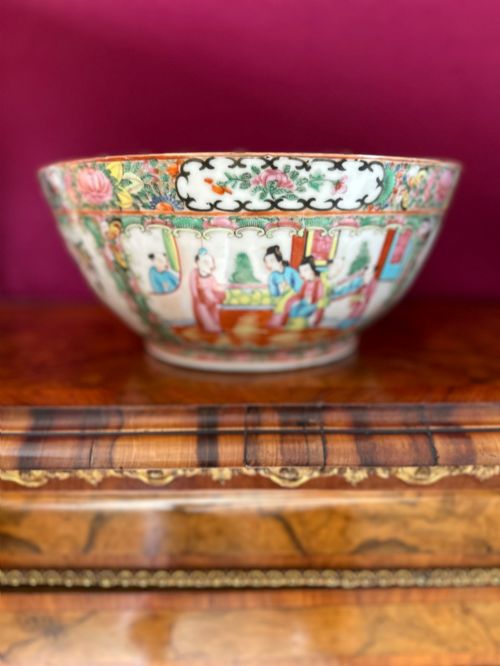
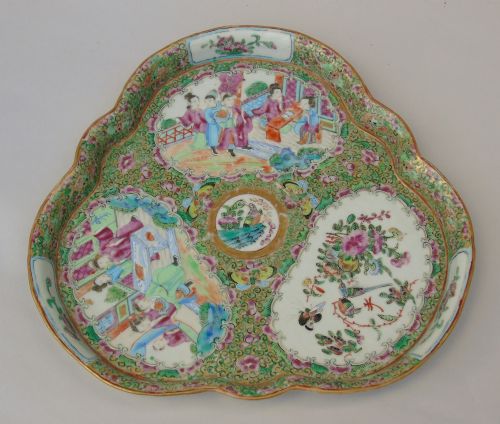
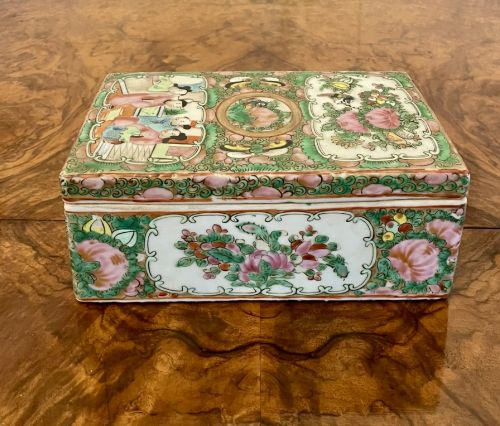
The versions most commonly met on this page date from the nineteenth century, including the Victorian era, spanning forms such as lobbed rectangular bowls, trefoil trays, pedestal dishes, and shamrock shapes. Alongside standard plates, collectors encounter larger bowls, lidded boxes, and reticulated chestnut baskets with matching stands.
Production reached Western homes through robust trade networks, leaving a legacy of hard-paste ceramic wares decorated with famille rose and famille verte palettes. Each item reflects the bustling export workshops of Canton, tailored specifically for European and British interiors.
Materials and methods
Makers utilised hard-paste porcelain as the durable white base for these wares, shaping them into plates, bowls, and specialised trays before firing. This dense ceramic body provided a smooth canvas capable of withstanding high kiln temperatures and repeated handling.
Decoration relied heavily on overglaze enamels combined with cobalt underglaze details and generous applications of gilding or gold leaf. Artisans hand-painted complex figural scenes, birds, and flowers directly onto the glazed surface, fixing the rich colours during a subsequent lower-temperature firing.
Current listings demonstrate a strong presence of nineteenth-century pieces alongside eighteenth-century Qing Dynasty examples.
Judging quality in Canton porcelain
Quality rests upon the precision of the hand-painted brushwork and the complexity of the composition across the surface. Pieces featuring tightly controlled figural work, intricate medallion borders, and thick application of gold leaf sit firmly above simpler, more loosely decorated wares.
The refinement of the porcelain body and the crispness of moulded shapes, such as lobbed edges, trefoil curves, or reticulated basketwork, also distinguish finer examples. Superior specimens maintain vibrant, well-preserved enamels with minimal rubbing to the gilding from centuries of use.
The Antique Canton Porcelain Dish Glossary
- Famille Rose
- A palette of opaque overglaze enamels dominated by pink or rose colours, introduced in Chinese ceramics during the Qing Dynasty. It allowed artists to render soft tonal gradations on export porcelain.
- Famille Verte
- A porcelain decoration scheme utilising a dominant green enamel alongside iron red, yellow, and blue. This palette flourished before the rise of pink enamels and appears on earlier export items.
- Hard-paste porcelain
- A dense, vitrified ceramic composed of kaolin and petuntse fired at very high temperatures. It forms a durable, non-porous body that resists scratching and absorbs no moisture.
- Overglaze enamel
- Pigments applied on top of a previously fired and glazed ceramic surface, requiring a secondary muffle kiln firing to bond the colours. This technique permits a wide spectrum of bright hues.
- Reticulated
- Describes ceramic or basketwork featuring an openwork lattice pattern formed by cutting through the clay before firing. It adds an ornate, decorative texture to trays and chestnut stands.
Antique Canton Porcelain Dish: Frequently Asked Questions
What is canton porcelain?
Canton porcelain refers to Chinese ceramics decorated in the port of Canton specifically for export to Western markets during the Qing Dynasty.
These items typically feature colourful hand-painted enamels, gilding, and distinct floral or figural motifs designed to appeal to European and British tastes.
How were these dishes used?
In period interiors, these ceramics served both decorative display purposes and practical functions during dining and social calls.
Smaller trays and plates held sweetmeats or visiting cards, while larger bowls and baskets formed centrepieces for formal tables.
How do I date a piece?
Dating relies on stylistic clues, palette characteristics, and manufacturing traits recorded across nineteenth-century Victorian production eras.
Comparing the complexity of the hand-painted enamel work and the form of the porcelain body helps narrow down the period of origin.
How should I care for them?
These antique porcelain items require gentle hand washing in lukewarm water using mild soap, avoiding abrasive sponges or modern dishwashers.
Careful handling protects the delicate overglaze enamels and fragile gold leaf gilding from premature wear.