
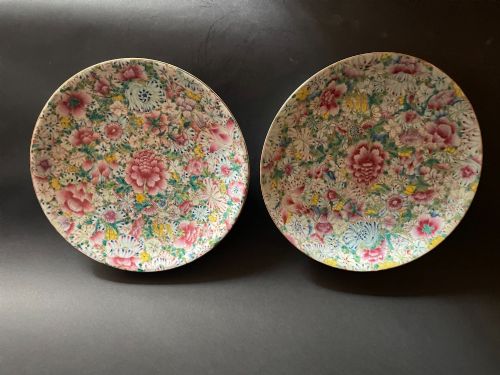
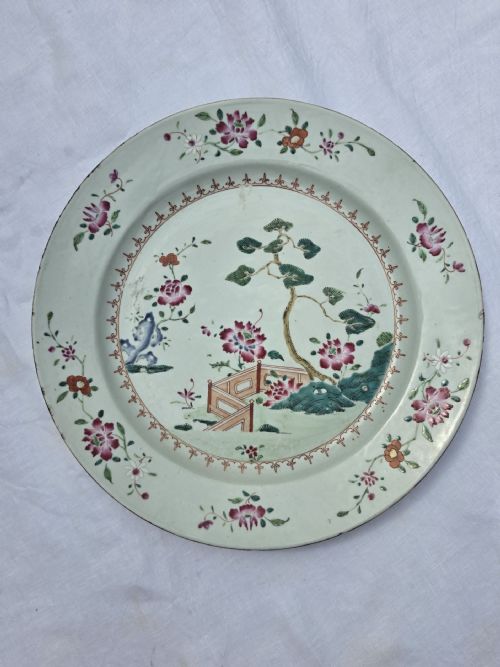


Chinese Famille Rose Dish
A Chinese famille rose dish brings vibrant painted enamel palettes and intricate historical porcelain directly into your home.
Chinese Famille Rose Dish
When you search for a Chinese famille rose dish, you encounter a specialised category of ceramic tableware and decorative plates spanning multiple centuries. The evidence shows these pieces appear predominantly in forms such as decorative dishes, plates, bowls, and chargers.
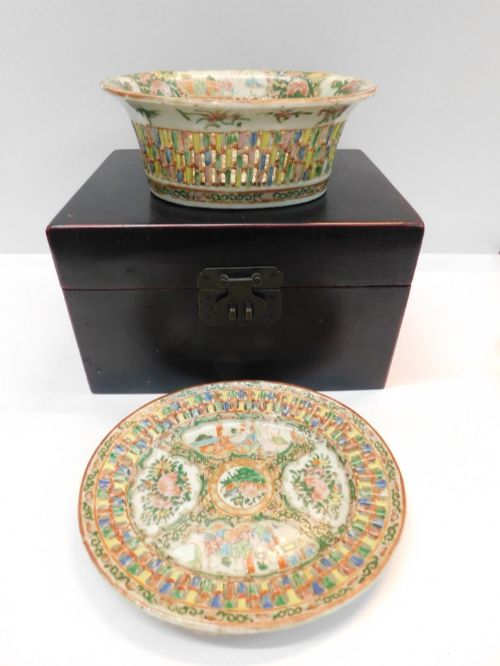
The selections on this page bridge several eras, most notably the 18th Century Qianlong period and the 19th Century Victorian and Canton production eras. Buyers will regularly find variations ranging from small saucers and trefoil trays to large ceremonial platters and reticulated chestnut baskets.
How they were made
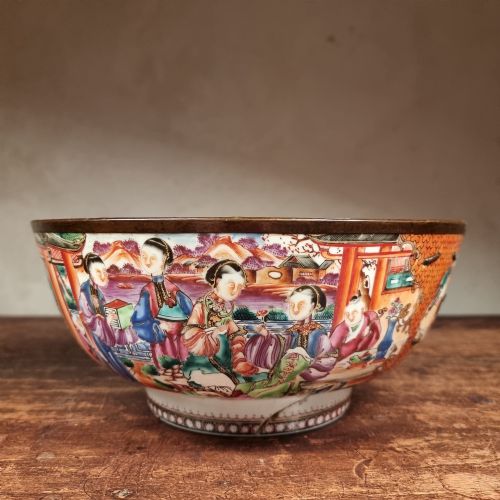
Makers utilised hard-paste porcelain as the primary body, shaping vessels by hand or mould before applying intricate decoration. Artisans then built up designs using overglaze enamel colours, frequently incorporating gold leaf, gilding, and gilt highlights to accentuate floral and figurative scenes.
Production techniques recorded in the evidence span traditional Chinese export methods and specialised Canton workshops where hand-painted motifs were meticulously executed. Some examples integrate brass mounts or structural elements alongside the porcelain body.
Certain dishes cleverly imitate sea shells and trefoils, proving that historic porcelain makers loved a playful shape just as much as we do.
What varies in quality
The refinement of the hand-painted enamel work separates standard decorative items from superior examples. Precision in the brushwork, the depth of the palette, and the crispness of the gilt detailing dictate the overall visual hierarchy.
Form complexity also influences distinction, where pierced reticulation, unusual shapes like trefoil or shell outlines, and well-preserved armorial or Jesuit designs indicate higher execution standards among period pieces.
The Chinese Famille Rose Dish Glossary
- Famille Rose
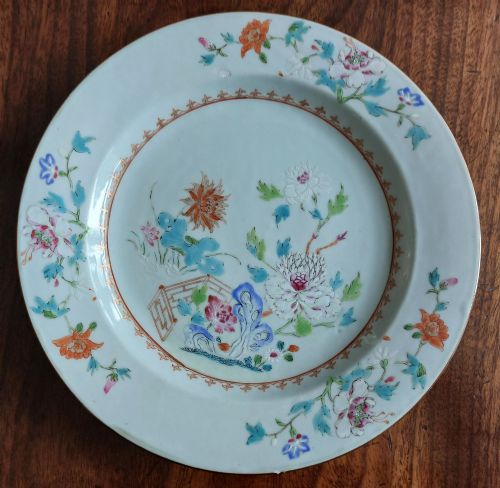
- A palette of opaque overglaze enamels introduced in the Qing Dynasty, dominated by pink and rose colours derived from colloidal gold. This technique allowed for nuanced shading and detailed floral rendering.
- Qing Dynasty
- The final imperial dynasty of China, lasting from 1644 until 1912. Much of the porcelain traded globally and preserved today dates from its prosperous middle and later reigns.
- Chinese Export
- Porcelain manufactured in China specifically for Western markets, often featuring commissioned European coats of arms or adapted decorative motifs. These pieces reflect the active maritime trade between East and West.
- Canton
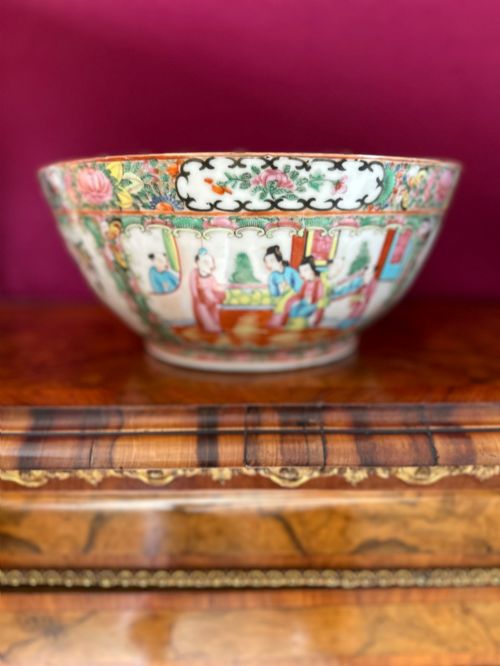
- A major southern Chinese port city associated with prolific nineteenth-century porcelain production. Wares from this region typically display dense, colourful pictorial compositions featuring figures, birds, and floral panels.
- Overglaze Enamel
- Mineral colours applied on top of a previously fired and glazed porcelain surface, requiring a secondary, lower-temperature firing to fix the pigments. This method creates the raised, tactile quality found on decorated dishes.
Chinese Famille Rose Dish: Frequently Asked Questions
What is a famille rose dish?
A Chinese famille rose dish is a piece of porcelain decorated with a distinctive palette of opaque enamels featuring prominent pink and rose shades. These items were produced for domestic use and export across the eighteenth and nineteenth centuries.
They serve as decorative objects and historical examples of international trade, showcasing intricate hand-painted floral, animal, and figural scenes.
How do I date a Chinese dish?
Dating involves examining the stylistic traits, reign marks, and enamel types present on the porcelain body. Eighteenth-century pieces often display fine Qianlong export characteristics, while nineteenth-century items frequently feature denser Canton styling.
Material composition and manufacturing techniques recorded in the evidence further help distinguish between early export wares and later Victorian-era imports.
Were these dishes used for dining?
Many items functioned as practical tableware, including saucers, chargers, and serving bowls used during formal meals. Others were designed primarily as decorative display plates or specialised vessels like chestnut baskets and pen boxes.
Over centuries of handling, their roles shifted from utilitarian dining implements to collected historical artefacts displayed in cabinets or on walls.
How should I care for antique porcelain?
Antique porcelain requires gentle handling and placement away from areas prone to accidental knocks or heavy vibrations. Cleaning should be done manually using lukewarm water and mild soap, avoiding abrasive scrubbers that might harm the overglaze enamels.
Keeping pieces out of direct sunlight helps protect the stability of the painted pigments and any applied gold leaf or gilding.