


Chinese Painted Porcelain Saucer
A chinese painted porcelain saucer is a small, hand-decorated ceramic dish intended for tea service or display, prized for its delicate glaze and intricate historic motifs.
Chinese Painted Porcelain Saucer
When you search for a chinese painted porcelain saucer, you encounter small ceramic vessels originating from the eighteenth and nineteenth centuries, alongside later twentieth-century examples. The selection includes individual saucers, matching sets with tea bowls, and related dishes bearing traditional motifs.
Most pieces date to the Qing Dynasty, particularly the Qianlong period, while others reflect later nineteenth-century production or specific export styles. Forms range from simple circular saucers to more decorative plates and dishes designed for both utility and display.
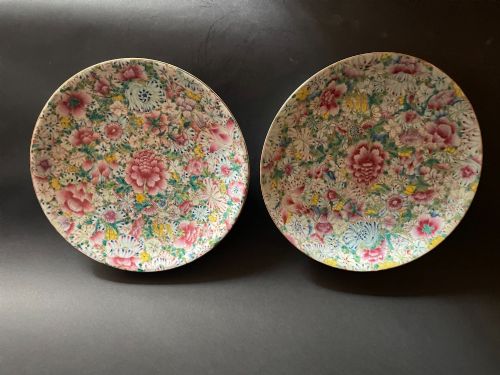
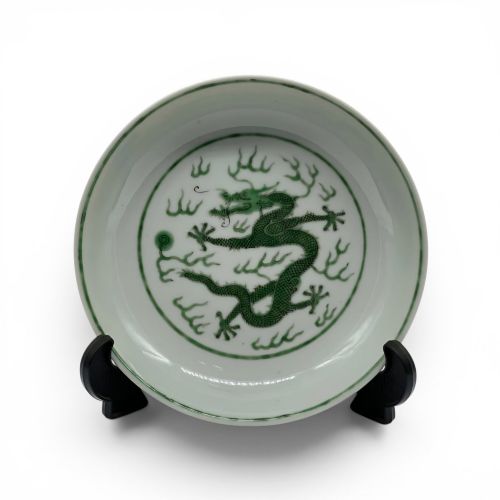
The aesthetic draws heavily on historic Chinese dynasties and export aesthetics, occasionally crossing paths with Georgian chinoiserie or European interpretations like Worcester blue and white. Buyers meet everything from finely painted Mandarin palette scenes to bold green dragon designs and underglaze cobalt compositions.
Materials and Techniques
These items are shaped from porcelain or soft-paste porcelain, providing a hard, white ceramic body that accepts detailed painting and smooth glazes. Artisans applied cobalt blue underglaze before the initial firing to create durable blue-and-white designs.
Overglaze enamels, gold leaf, and gilt details were subsequently added by hand, introducing vibrant multi-coloured palettes such as famille rose and the Mandarin palette. A final firing fixed these enamels to the glossy glazed surface, often complemented by rich cobalt glazes.
Listings span the eighteenth century, nineteenth century, and nineteen-thirties, utilising porcelain, soft-paste porcelain, enamel, gold leaf, and cobalt blue underglaze.
Variations in Quality
Quality rests in the precision of the hand-painted brushwork and the complexity of the subject matter, such as multi-figure auspicious scenes or finely drawn acrobatics. Crispness in the cobalt blue underglaze and the careful application of enamel and gold leaf distinguish finer examples.
The refinement of the porcelain body itself, along with the consistency of the glaze and the historical fidelity of Qing dynasty or imperial-style motifs, separates standard production pieces from exceptional works.
The Chinese Painted Porcelain Saucer Glossary
- Mandarin palette
- A style of Chinese export porcelain featuring detailed figure scenes set within elaborate floral borders, popular during the eighteenth century. This palette is noted for its vibrant enamel colours.
- Famille rose
- A major palette of Chinese ceramic glazes introduced in the eighteenth century, distinguished by its predominant opaque pink or rose enamel. Artisans used this to render delicate florals and robes.
- Qianlong period
- The era of the Qing Dynasty spanning from seventeen thirty-six to seventeen ninety-five, renowned for technical excellence and prolific export porcelain production. Pieces from this time often bear specific imperial characteristics.
- Soft-paste porcelain
- A ceramic material composed of white clay mixed with ground glass and other ingredients, fired at lower temperatures than hard-paste porcelain. It yields a warm, creamy texture often found in earlier wares.
- Cobalt blue underglaze
- A blue pigment applied directly to the raw porcelain body beneath a transparent glaze before the high-temperature kiln firing. This technique ensures the cobalt decoration remains protected and permanent.
Chinese Painted Porcelain Saucer: Frequently Asked Questions
How are these saucers dated?
Dating relies on stylistic markers, reign periods such as Qianlong, and the specific characteristics of the porcelain body and enamel colours. Eighteenth-century examples often feature distinct Mandarin palette scenes, whereas nineteenth-century pieces display different stylistic conventions.
Examination of the foot ring, glaze texture, and underglaze cobalt further helps place pieces within the broader Qing dynasty timeline or later periods.
Were these made for export?
Many surviving pieces were created specifically for trade markets in the West, blending traditional Chinese techniques with shapes and subjects favoured by European buyers. These Chinese export wares often travelled alongside matching tea bowls.
At the same time, domestic imperial styles, such as the green dragon design, also circulated, reflecting the high standards of court workshops.
How should I display them?
Displaying these saucers involves using stable plate stands or shadow boxes that protect the hand-painted enamel and gold leaf from physical abrasion. Keeping them away from direct, harsh sunlight preserves the vibrancy of the overglaze colours over time.
Grouping pieces by period or palette, such as pairing blue and white with famille rose, creates a cohesive historical display.
What is the Mandarin palette?
The Mandarin palette refers to a distinct style of hand-painted enamel decoration depicting court figures, scholars, and daily activities within intricate borders. It became prominent on eighteenth-century export porcelain.
These scenes often incorporate auspicious symbols and rich pink, green, and yellow enamels applied over the glazed porcelain surface.