

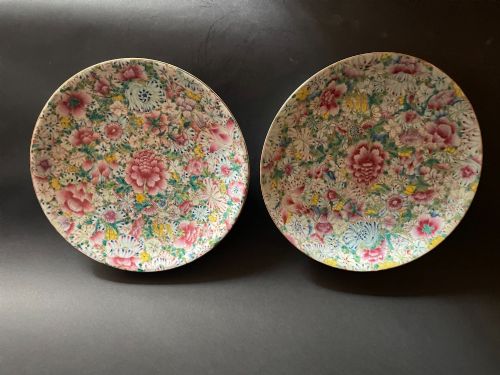
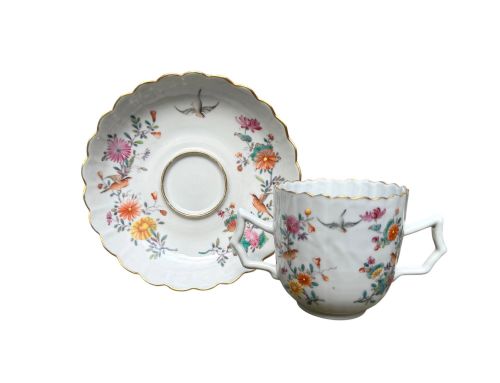
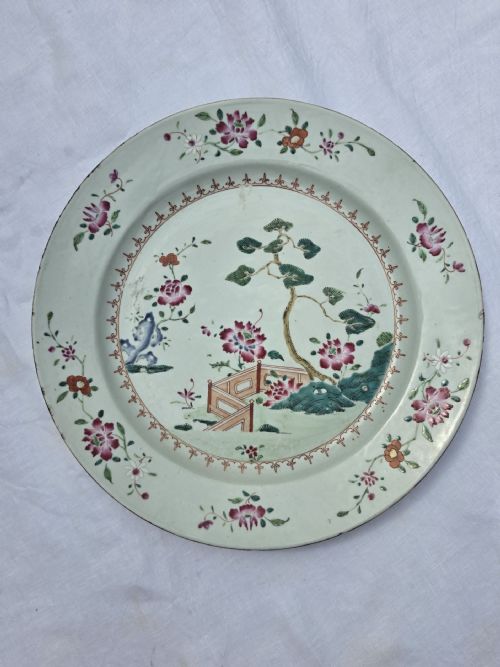
Chinese Famille Rose Porcelain
Chinese famille rose porcelain brings together delicate overglaze enamels and white ceramic bodies to create vessels and figures prized for vibrant floral palettes.
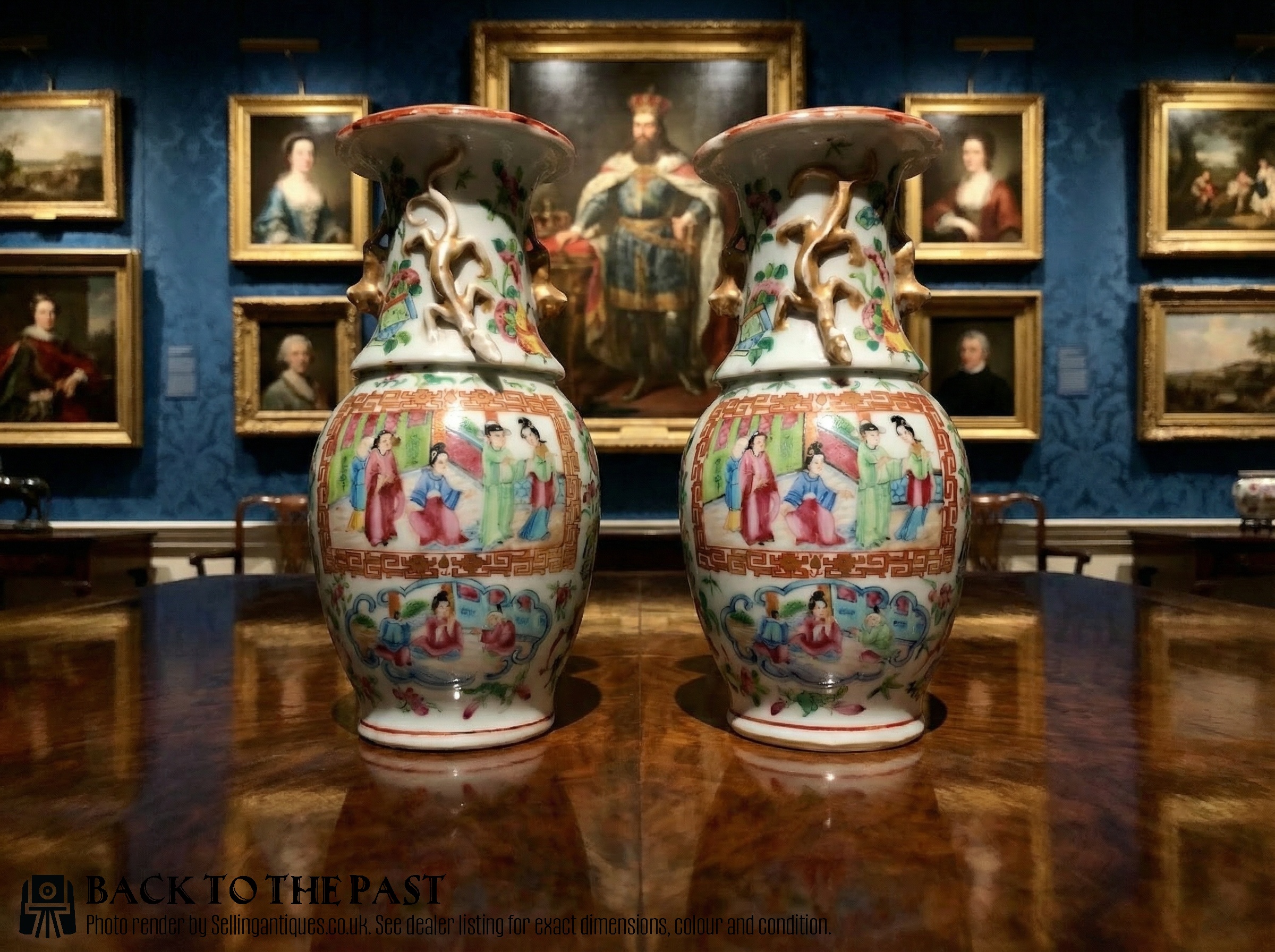
Chinese Famille Rose Porcelain
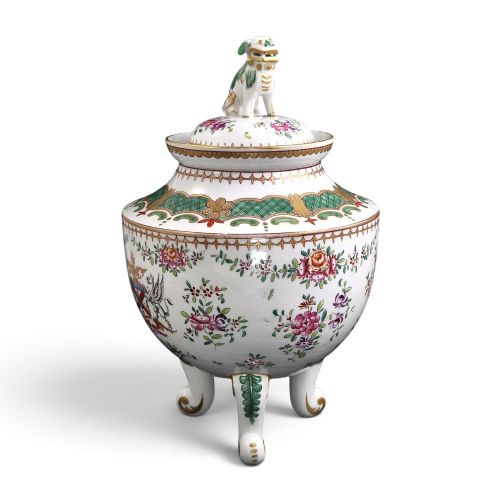
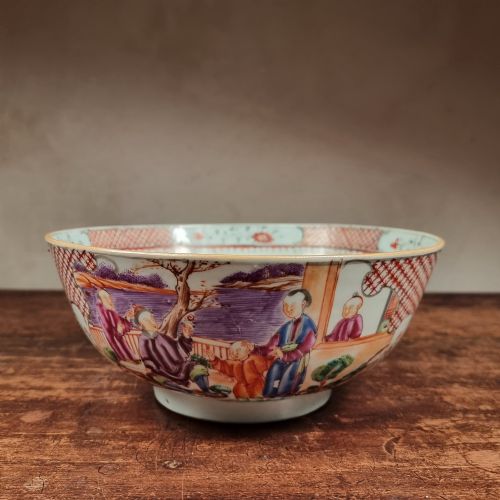
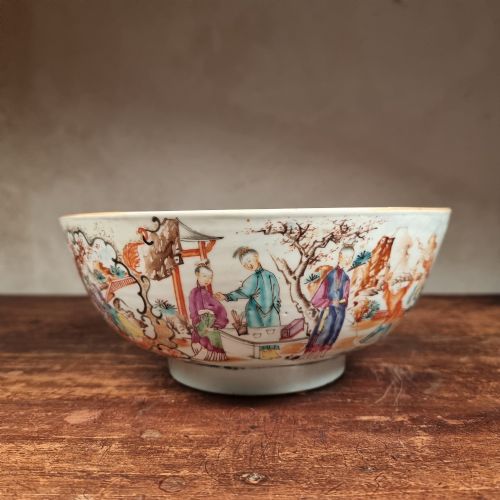
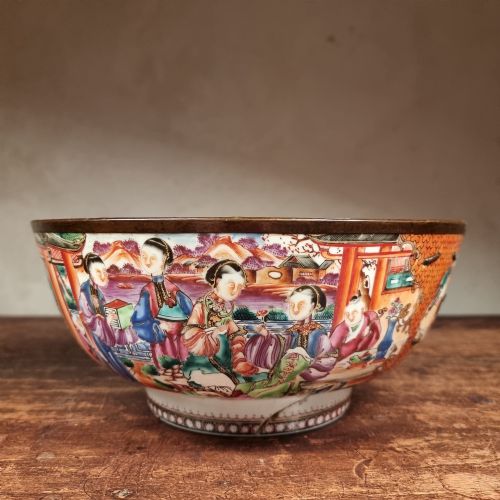
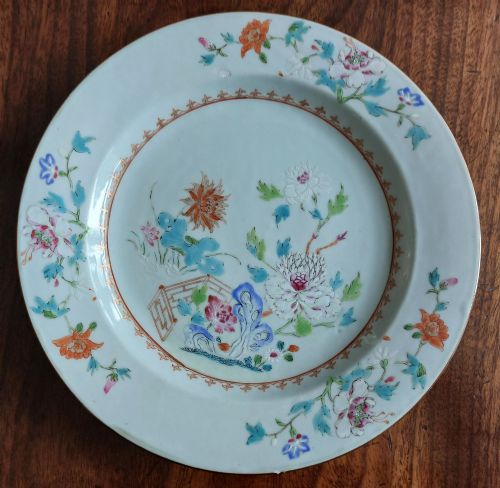
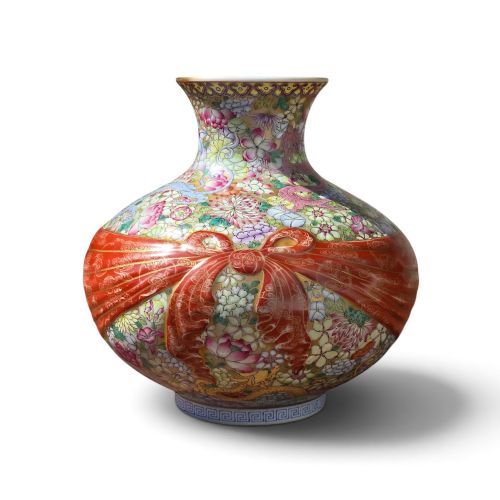
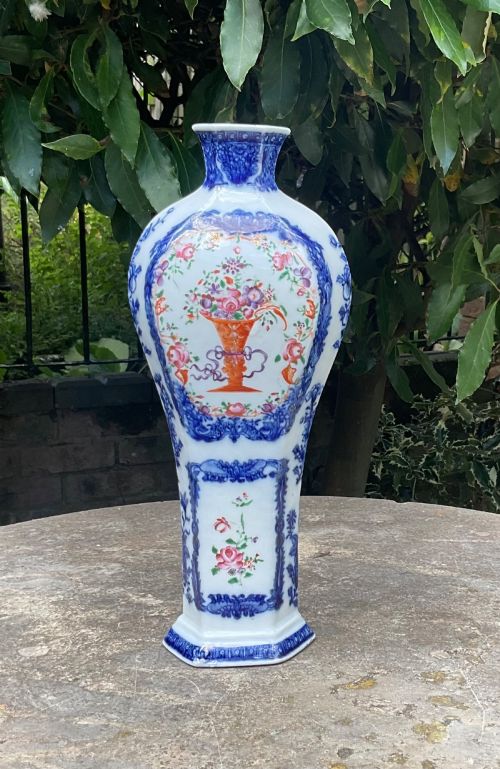
Chinese famille rose porcelain encompasses a wide array of domestic and export wares, featuring plates, large punch bowls, ginger jars, and monumental vases. Buyers encountering these pieces will find objects spanning the eighteenth-century Qing dynasty through to the twentieth-century Republic period.
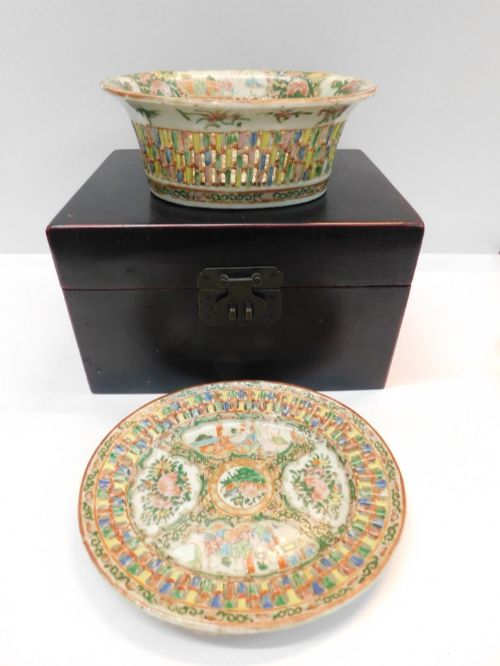
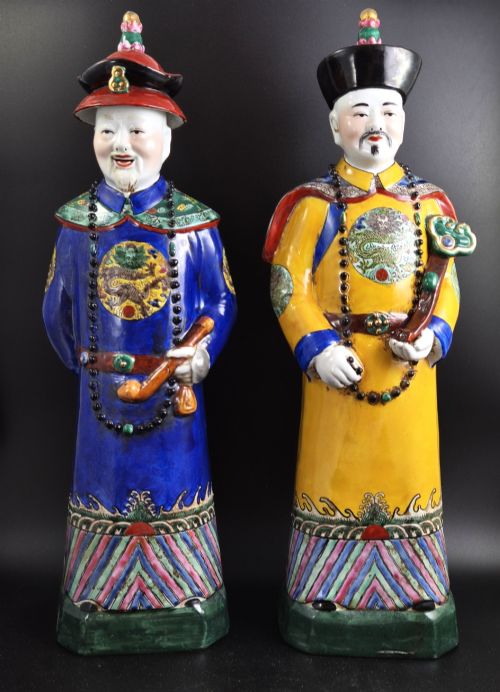
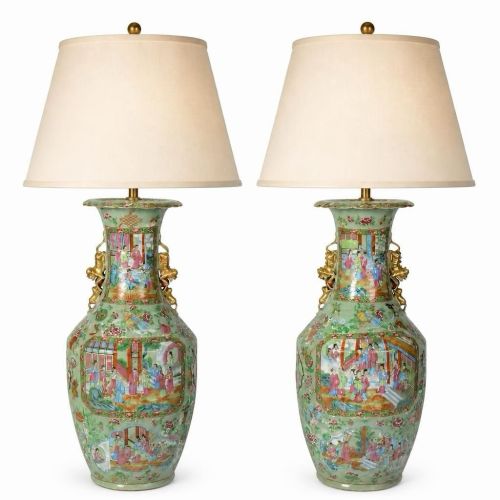
The inventory includes specialised forms such as moon flasks, chestnut baskets, and figures of deities alongside everyday tableware like teacots, cups, and ladles. Canton and export variants dominate the later nineteenth-century groupings, often displaying crowded panels of figures and botanicals.
Materials and Construction
Potters shaped fine white ceramic bodies before applying translucent glazes and firing the foundational pieces at high temperatures. Artisans then hand-painted intricate designs utilising opaque overglaze enamels, notable for introducing an opaque pink derived from colloidal gold.
Many items incorporate additional embellishments such as gold leaf, gilding, and gilt bronze or ormolu mounts added during later European adaptations. Firing techniques evolved across centuries, shifting from eighteenth-century imperial workshops to commercial kilns in Jingdezhen and Canton.
The listings span the eighteenth century to the mid-twentieth century, featuring porcelain, enamel, and ormolu.
Factors That Determine Quality
The precision and brushwork of the hand-painted enamel decoration separate masterwork items from standard commercial output. Superior pieces exhibit fine control in delicate bird and flower motifs, facial expressions on figures, and neatly executed geometric borders.
The condition of the porcelain body and the stability of the overglaze enamels dictate overall desirability. Early imperial marks, balanced proportions, and crisp relief moulding elevate specific chargers, vases, and figures above standard production pieces.
Samson Paris·Zhu Mao Ji·Fujian Huiguan Mark
The Chinese Famille Rose Porcelain Glossary
- Famille Rose
- A palette of ceramic overglaze enamels characterised by opaque pinks, introduced during the Qing dynasty. The name derives from the dominant pink rose colour used in floral and figural motifs.
- Qing Dynasty
- The final imperial dynasty of China, lasting from 1644 until 1912. Much of the finest porcelain production occurred under emperors such as Qianlong and Guangxu.
- Canton
- A major trading port in southern China responsible for producing vibrant export porcelain. Wares from this region often feature crowded panels of figures and dense floral borders.
- Chinese Export
- Porcelain manufactured in China specifically for Western markets. These objects frequently combine traditional Eastern forms with European armorial or decorative preferences.
- Overglaze Enamel
- Low-firing coloured glass fused onto a previously fired and glazed ceramic surface. This technique permits rich, varied palettes including pinks, greens, and iron reds.
Chinese Famille Rose Porcelain: Frequently Asked Questions
How do I date chinese famille rose porcelain?
Dating relies on stylistic clues, reign marks, and the characteristics of the ceramic body and enamels. Eighteenth-century pieces typically display thinner potting and refined palettes, whereas late nineteenth-century Canton items feature denser decoration and heavier porcelain.
Examining the foot ring and wear on the overglaze enamels also helps establish the age. Comparing pieces against documented imperial marks provides further chronological reference.
What is rose medallion porcelain?
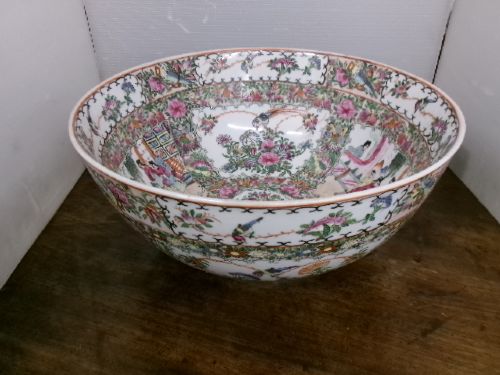
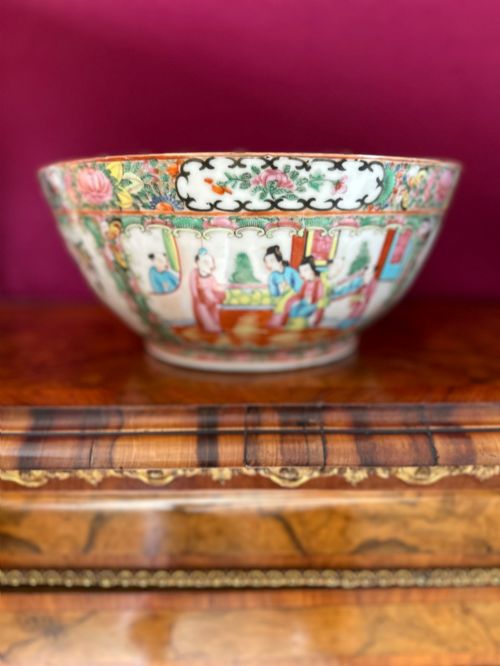
Rose medallion is a specific style of Cantonese export porcelain decorated with alternating panels of figures, birds, and butterflies. These panels are set against dense backgrounds filled with green foliage, flowers, and gold detailing.
This style gained immense popularity during the nineteenth century for export to Western markets. Punch bowls, vases, and dinner services frequently utilised this compartmented layout.
How should I care for antique porcelain?
Antique porcelain requires gentle handling to protect fragile overglaze enamels and applied gold leaf. Dust pieces softly with a dry cloth and avoid harsh chemical cleaners or abrasive scrubbing.
Display items away from direct sunlight to prevent fading of the delicate pink and iron-red enamels. Ensure heavy vases or bowls rest on stable, level surfaces.
Why are some pieces marked with qianlong?
Qianlong reign marks indicate pieces produced during the eighteenth-century reign of the Qianlong Emperor or later items created in tribute to that era's high artistic standards. Imperial workshops produced marked items for court use, while export kilns frequently added reign marks as a sign of respect.
Distinguishing between period pieces and later revivals requires careful assessment of the paste, enamel maturity, and overall craftsmanship. Markings alone do not confirm an eighteenth-century date.