




Nineteenth Century Chinese Vase
A nineteenth century chinese vase brings the weight of Qing dynasty craft and export artistry directly into a room.
Nineteenth Century Chinese Vase
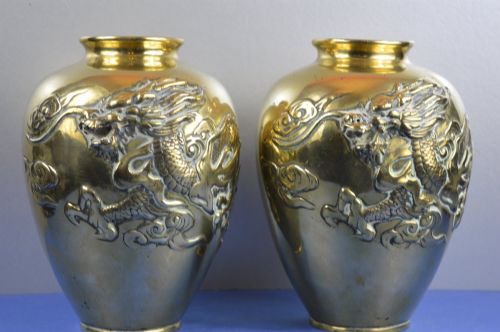
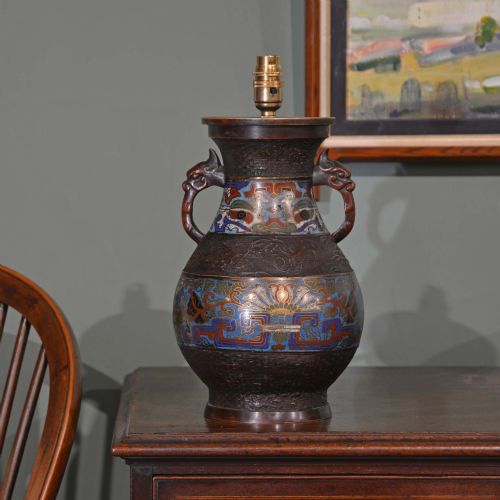
A nineteenth century chinese vase encompasses a broad range of forms, from large Canton famille rose pairs and yellow-glazed vessels to bronze dragon pieces and monochrome jars. Buyers searching for a nineteenth century chinese vase encounter objects spanning the Qing dynasty, late Qing period, and Victorian eras, often showing the cross-cultural exchange of Chinese export and French chinoiserie styles.
The selection on this page leans heavily toward decorative household objects, frequently featuring pairs of vases, brush pots, and vessels that have been adapted as table lamps. These items reflect both traditional East Asian ceramic traditions and later European mountings in ormolu, brass, and gilt bronze.
Originating across distinct periods including 1890, 1900, and the broader nineteenth century, these objects range from delicate porcelain with prunus blossom motifs to heavy bronze and champleve enamel creations.
Materials and construction
Porcelain serves as a primary foundation, shaped into vessels, brush pots, and jars decorated with enamel, glaze, and gold leaf. Potters utilised specialised techniques to produce famille rose, famille verte, and monochrome surfaces.
Bronze and gilt bronze provide structural weight and decorative detail, appearing in heavy dragon vases and champleve enamel pieces. Artisans combined metalwork with intricate hand-carved elements, as seen in bamboo brush pots and cast ormolu mounts.
The listings on this page span porcelain, bronze, gilt bronze, champleve enamel, bamboo, and fabric materials.
Assessing quality and execution
Quality rests upon the precision of the hand-painting, the richness of the enamel and glaze colours, and the crispness of the casting in bronze and gilt bronze elements. Superior examples display control in intricate floral and figural motifs, such as those found on Canton and rose medallion pieces.
The physical substance of the object contributes to its standing, evidenced by substantial weights in bronze pairs and well-balanced proportions in porcelain vessels. Alterations, such as subsequent lamp conversions, influence the integrity of the original form.
The Nineteenth Century Chinese Vase Glossary
- Famille Rose
- A palette of opaque enamels dominated by pink or rose colours, widely used on Chinese porcelain during the Qing dynasty. This technique allowed for subtle shading and detailed floral or figural compositions.
- Champleve Enamel
- A technique where troughs or cells are sunk into a metal surface and filled with enamel before firing. It frequently appears on nineteenth century bronze and brass vessels.
- Ormolu
- Gilded bronze mounts applied to decorative objects and ceramic vessels, common in European adaptations of Asian porcelain. It adds architectural structure and decorative sheen to lamps and vases.
- Brush Pot
- A cylindrical vessel traditionally used in Chinese literati culture for holding writing brushes. Examples in the evidence include porcelain, bamboo, and carved materials.
- Rose Medallion
- A specific style of Cantonese porcelain decoration featuring panels filled with figures, birds, and flowers, bordered by intricate gilt and green ground patterns.
Nineteenth Century Chinese Vase: Frequently Asked Questions
What is a nineteenth century chinese vase?
A nineteenth century chinese vase is a ceramic or bronze vessel produced during the Qing dynasty, late Qing period, or associated Victorian era. These pieces include famille rose, monochrome, and blue and white wares.
Many of these vessels were created for export markets, later finding use in European interiors as decorative centerpieces or table lamps.
How were these vases used?
Originally created as decorative objects, display pieces, or functional vessels within Qing dynasty households, many were subsequently exported to Western markets. Their scale and visual impact made them suitable for prominent placement in reception rooms.
In later decades, a significant portion of these vases were adapted to function as table lamps, incorporating electrical fittings and gilt bronze or ormolu mounts while retaining their historic ceramic bodies.
How do I tell different periods apart?
Differentiating periods relies on observing stylistic markers, material combinations, and specific production dates recorded on the pieces, such as circa 1890 or 1900. Late Qing and Victorian pieces often show specific integration with European mounting styles.
Porcelain glazes, enamel palettes like famille verte versus famille rose, and the execution of bronze casting provide further physical evidence for dating within the nineteenth century.
How do I live with these vases?
Living with these pieces involves placing them in stable environments away from heavy foot traffic, particularly when dealing with large or heavy bronze pairs and porcelain lamp conversions. Their scale requires secure placement on sturdy tables or pedestals.
Routine care involves gentle dusting of ceramic surfaces and metal mounts, respecting the historic glazes, enamels, and patinas built up over the course of the nineteenth century.