
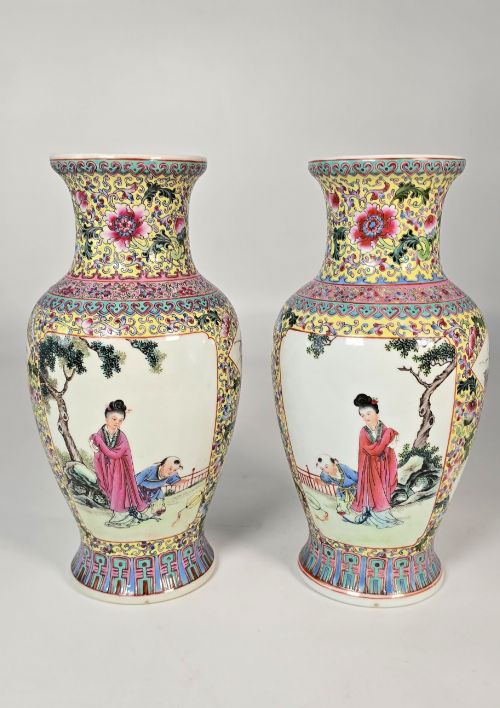


Yellow Chinese Vase
A yellow chinese vase brings vibrant colour and imperial presence into a room, spanning periods from the seventeenth century onwards.
Yellow Chinese Vase
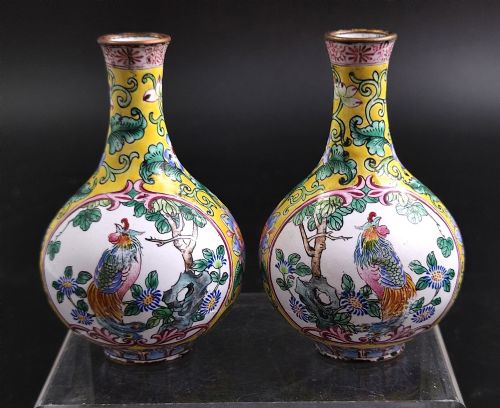
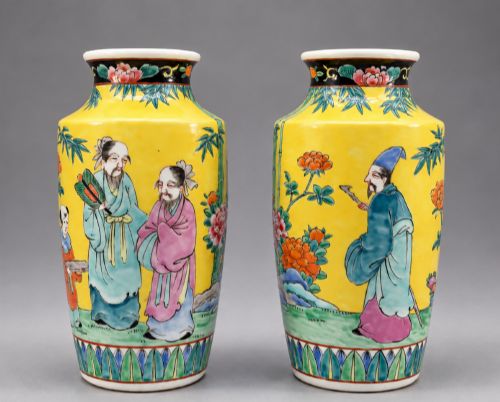
A yellow chinese vase encompasses ceramic, porcelain, and cloisonne vessels rendered in striking yellow tones, often accented with green, red, or blue enamels. These pieces frequently appear in forms such as baluster vases, bottle vases, and moon flasks, occasionally adapted as table lamps.
The yellow chinese vase tradition extends from transitional mid-seventeenth century pieces through Qing dynasty and nineteenth century examples up to the Chinese Republican period. Buyers encounter both monochromatic yellow glazes and elaborate polychrome designs featuring dragons, figures, and floral motifs.
How they were made
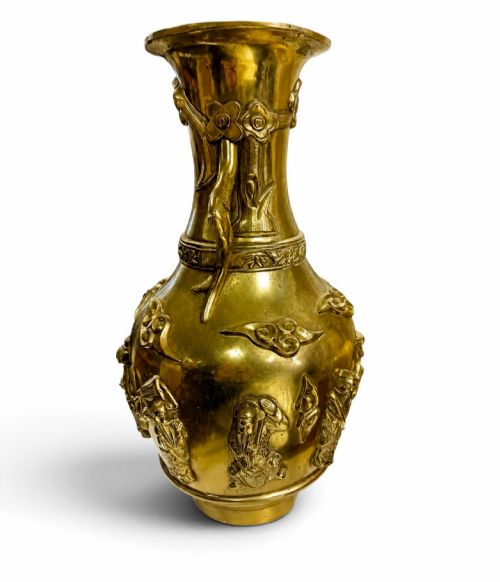
Potters utilised fine porcelain and ceramic bodies, applying coloured glazes and enamel painting techniques that required precise firing in kilns. Many examples incorporate copper-alloy or gilt bronze mounts, while others display high-relief moulding.
Makers achieved the distinctive yellow ground through specialised glaze formulations or enamelling over blue and white bodies. Surface decoration often combined hand-painted pigments with incised detailing to create textured pictorial narratives.
Hotei figures make an appearance, ensuring that at least one yellow vessel comes with a cheerful belly rub included.
What varies in quality
Quality rests upon the crispness of the glaze application, the fineness of the porcelain body, and the precision of the hand-painted detail. Superior examples display controlled enamel work and balanced proportions that command attention.
The depth and consistency of the yellow ground distinguish finer pieces from simpler productions, alongside the artistry found in secondary motifs such as dragons, figures, or floral sprays. Later adaptations into lamps can also alter the integrity of the original vessel.
The Yellow Chinese Vase Glossary
- Baluster vase
- A tall vase form with a rounded body that tapers towards the base and flares at the neck. This shape provides a substantial canvas for painted scenes.
- Famille rose
- A palette of opaque enamel colours introduced in the Qing dynasty, dominated by pink and rose shades. It allows for subtle shading and intricate floral depictions.
- Cloisonne
- Metalwork technique where thin wire partitions are soldered to a base and filled with enamel paste. The piece is then fired and polished to a smooth finish.
- Wucai
- A polychrome style meaning five colours, typically combining underglaze blue with overglaze iron red, green, yellow, and black enamels. It creates a vibrant, contrasting surface.
- Moon flask
- A flattened circular flask with a short neck and two loop handles, often supported on an oval foot. This distinctive vessel form derives from nomadic leather prototypes.
Yellow Chinese Vase: Frequently Asked Questions
How do I date a yellow chinese vase?
Dating relies on examining the characteristics of the porcelain body, the specific tones of the yellow glaze, and the style of any painted motifs. Period markers such as Qing dynasty reign marks or transitional painting styles offer further clues.
Changes in potting techniques and enamel chemistry across the centuries also help establish when a vessel was made. Comparing the piece to documented examples from the same era provides the most reliable guide.
Were these vases made for export?
Many nineteenth-century and Republican period pieces were produced specifically for Western export markets, responding to a strong European appetite for Asian ceramics. These often featured decorative palettes designed to appeal to foreign tastes.
Other vessels, particularly monochrome examples or imperial wares, originated for domestic use within palaces and temples. Understanding the context of manufacture helps explain variations in scale and decoration.
How should I display a vase lamp?
Vase lamps require stable placement on sturdy furniture where the cord can be managed discreetly without straining the body of the ceramic. Pairing the lamp with a sympathetic shade allows the yellow ground and painted details to remain the focal point.
Care should be taken to ensure any electrical fittings do not compromise the original ceramic structure. Placing the lamp away from direct sunlight preserves the vibrancy of the enamels.
What does a dragon motif signify?
Dragons on imperial ceramics traditionally symbolise power, emperorship, and good fortune. Their presence often indicates high-status pieces intended for important patrons.
Depictions vary from fierce multi-clawed beasts amongst clouds to stylised creatures flanking floral elements. These symbolic designs reflect the rich cultural mythology embedded within Chinese decorative arts.