


Chinese Bronze Vase
A chinese bronze vase brings ancient metalwork into a room, offering heavy cast forms and rich patination.
Understanding the Pieces
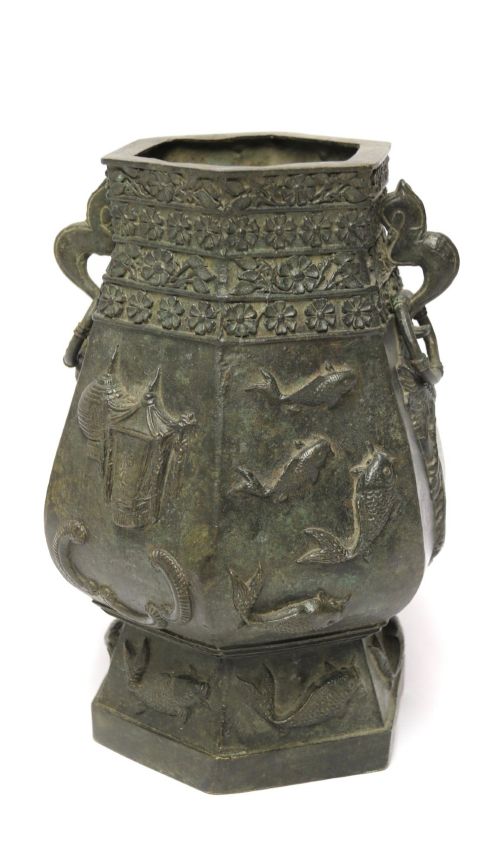
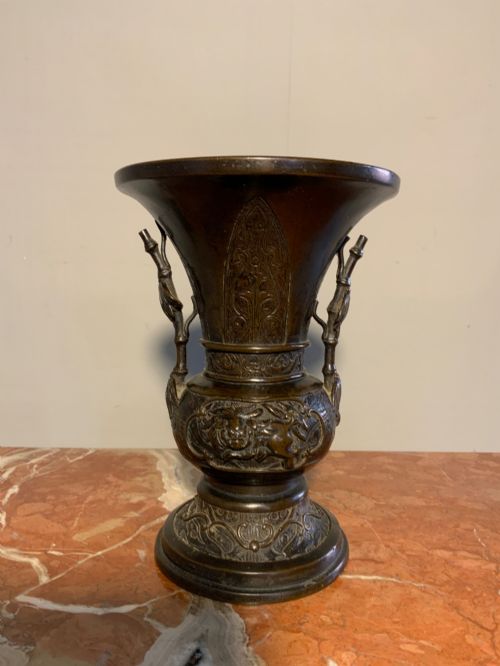
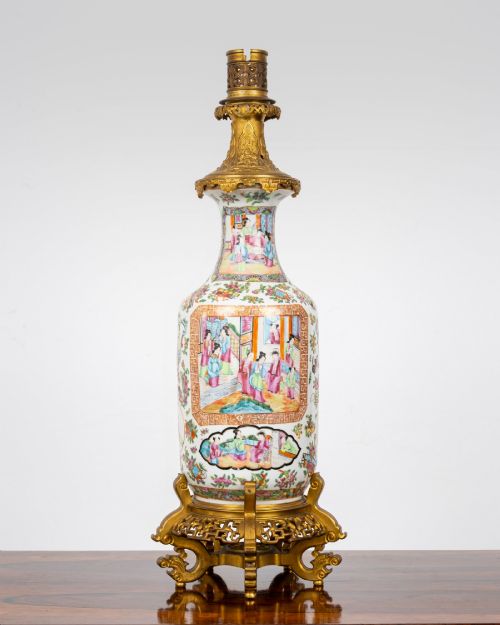
A chinese bronze vase represents centuries of metalworking tradition, appearing here primarily in nineteenth-century interpretations and Victorian imports. Buyers encounter baluster shapes, trumpet forms, and incense burners designed for display or ritual use.
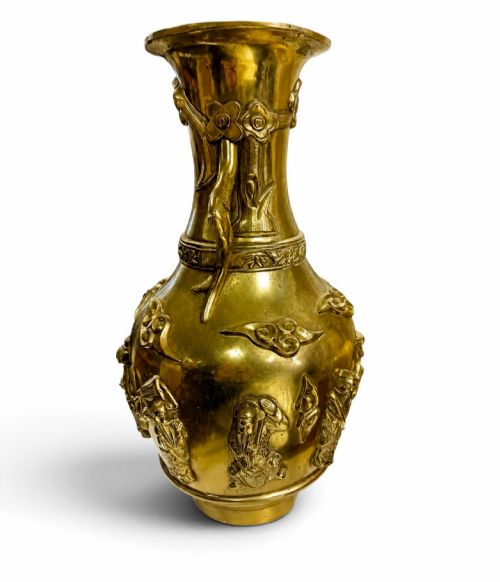
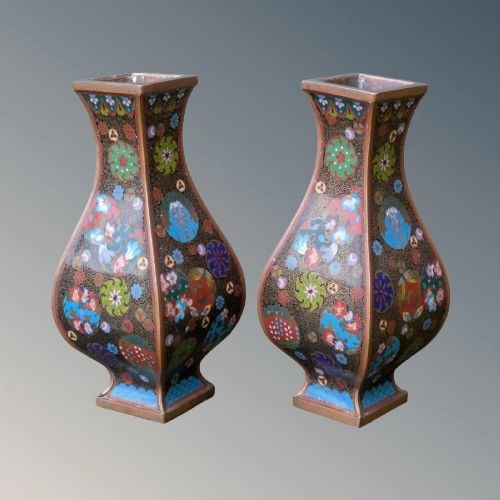
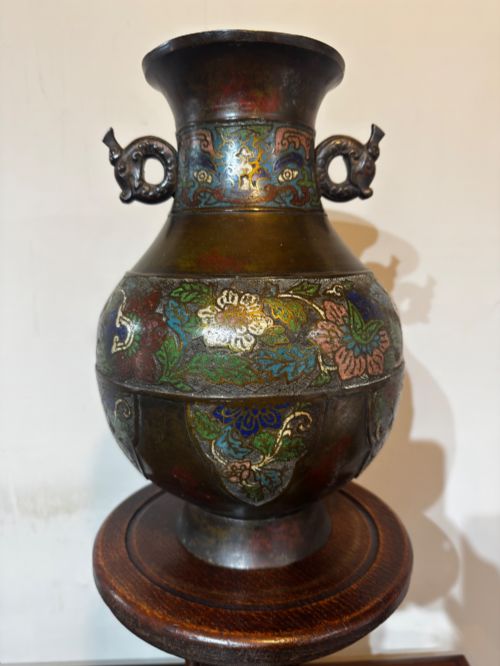
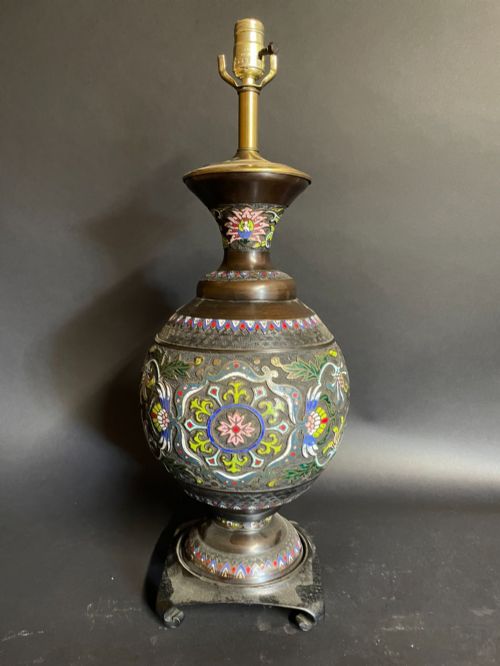
The evidence shows forms ranging from large high-relief vessels depicting immortals to champlevé enamelled display pieces. Most examples date from the Victorian era and the late nineteenth century, reflecting both Qing Dynasty aesthetics and export trade production.
Alongside traditional baluster vases and flower urns, the selection includes brush pots and twin-handled vessels. These objects combine substantial weight with intricate surface detail, making them focal points in domestic interiors.
Materials and Technique
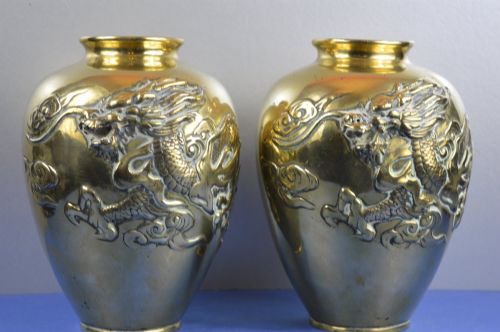
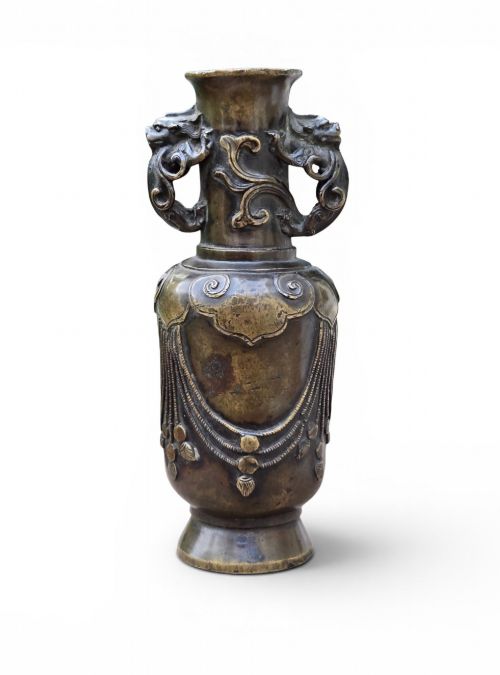
Foundry work relied on copper alloys, brass, and traditional bronze cast in moulds to achieve substantial weights and solid structures. Artisans used high-relief casting techniques to raise dragons, figures, and floral motifs directly from the body of the metal.
Surface decoration frequently incorporated champlevé and cloisonné enamel work, fusing coloured glass pastes into recessed metal channels. Completed pieces reveal patination developed through age, handling, and chemical treatment of the alloy surface.
Retail Price Guide 2026
Typical UK retail prices for chinese bronze vase, calculated from the Sellingantiques database of over a million retail prices indexed since 2003. This retail price guide relies exclusively on Sellingantiques data; no external sources or auction records are used, so the figures do not describe the wider market.
The inventory records heavy baluster forms and twin-handled urns alongside archaic revival shapes.
Distinguishing Quality
Superior vessels display crispness in the relief casting, where immortal figures, twin dragons, and archaic motifs remain sharp and deeply undercut. Lesser pieces exhibit softer surface details and shallower casting that obscures the finer elements of the design.
The integration of enamel work also dictates standing, with smooth, evenly fired champlevé cells outperforming hasty or pitted decoration. Weight and balance further separate standard production items from substantial architectural display pieces.
The Chinese Bronze Vase Glossary
- Baluster
- A tall vase form with a rounded body and a narrow neck resembling an architectural column. This profile provides stability and a generous surface for relief decoration.
- Champlevé
- An enamel technique where troughs or cells are hollowed out of the metal surface and filled with vitreous paste before firing. It creates vibrant coloured patterns bordered by thin metal lines.
- Gu shape
- A slender, trumpet-mouthed ceremonial beaker form originating in ancient ritual bronzes and revived in later dynasties. Its flared rim and foot offer distinct silhouette proportions.
- Patina
- The surface sheen and coloration developed on metal through oxidation, age, and handling over decades. Collectors prize untouched patination for its historical depth.
Frequently Asked Questions
How old are these vases?
Most pieces date from the nineteenth century, particularly the Victorian period and the late Qing Dynasty. Some incorporate styles referencing earlier eras like the Ming Dynasty.
Stylistic markers and construction methods help place them within this nineteenth-century bracket.
Were they used for flowers?
While some function as posy vases or flower urns, many served as decorative display items or incense burners. Their heavy construction and ritual shapes point towards ornamental rather than purely utilitarian purposes.
Handles and base marks further suggest they were designed for scholarly or formal settings.
What is champlevé enamel?
Champlevé is a technique where artisans carve recesses into the bronze body to hold coloured enamel pastes. Firing fuses this glass into the metal surface.
This method produces durable, colourful patterns that contrast with the dark bronze ground.
How should I clean bronze?
Dusting with a dry, soft cloth is generally sufficient to maintain the surface without disturbing the historic patina. Avoid harsh commercial polishes that strip away the aged finish.
Keeping the pieces away from moisture preserves both the metal and any enamel work.