


Enamel Decorative Plate
An enamel decorative plate brings intricate surface artistry and historic craftsmanship into a room.
Enamel Decorative Plate
An enamel decorative plate encompasses large chargers, shallow dishes, and wide trays created for display rather than dining. The examples found here span the nineteenth and early twentieth centuries, drawing heavily from Japanese Meiji period workshops and Chinese Qing traditions alongside European porcelain and faience production.
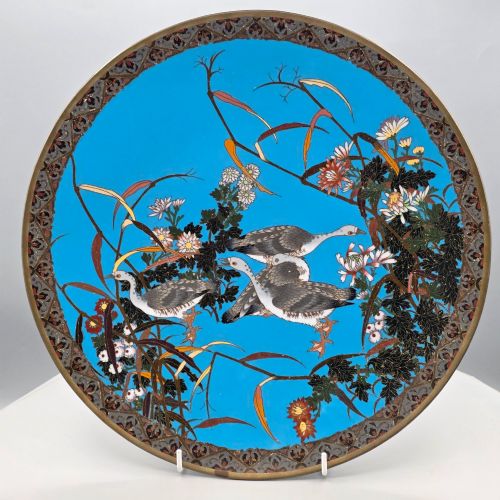
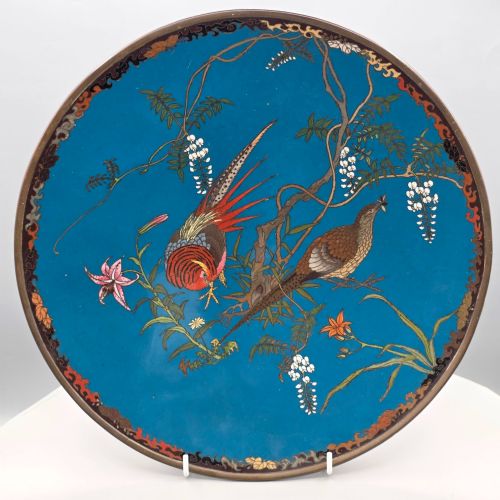
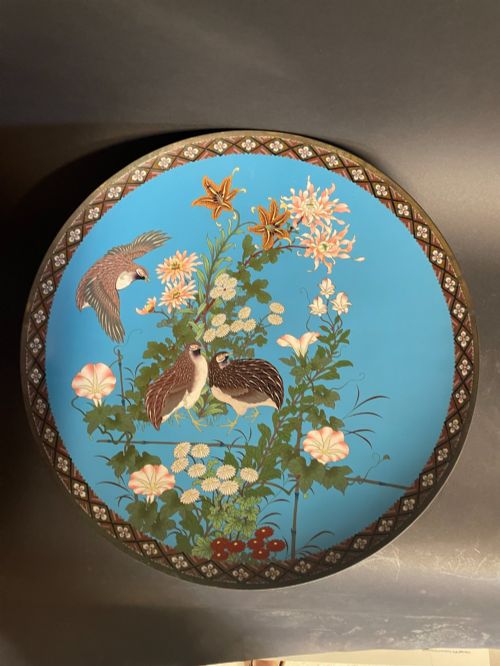
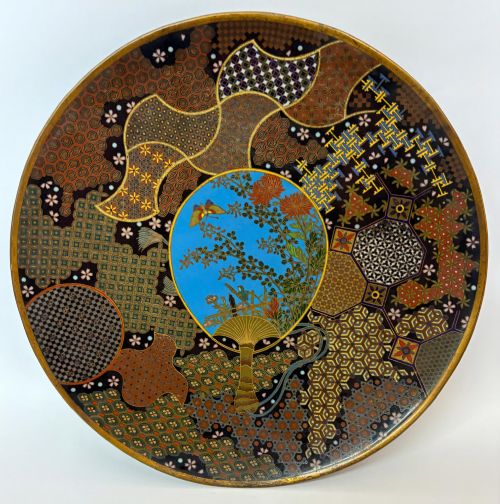
The version most commonly met on this page is the Japanese cloisonne charger, frequently measuring over thirty centimetres and decorated with detailed depictions of birds, dragons, and landscapes. These works often originate from the late nineteenth century, reflecting a period of exceptional technical output in metalwork and enamel.
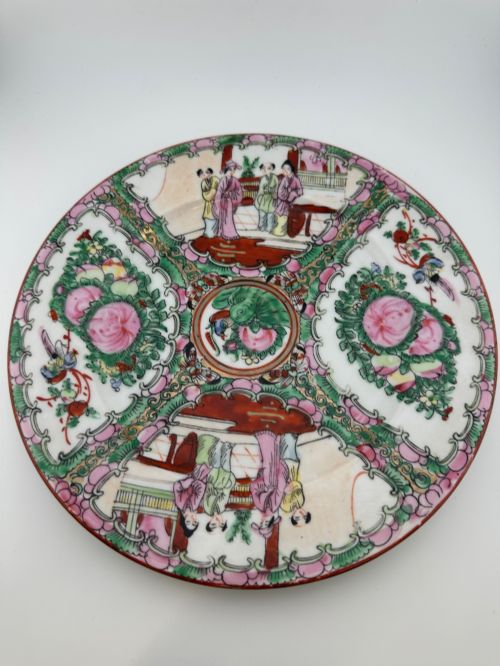
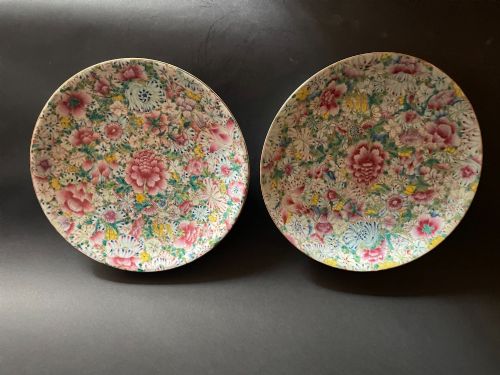
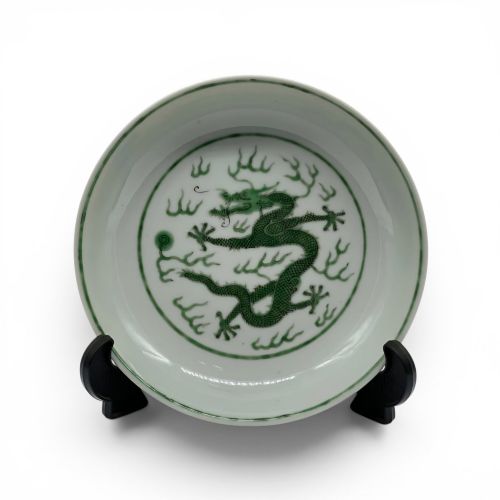
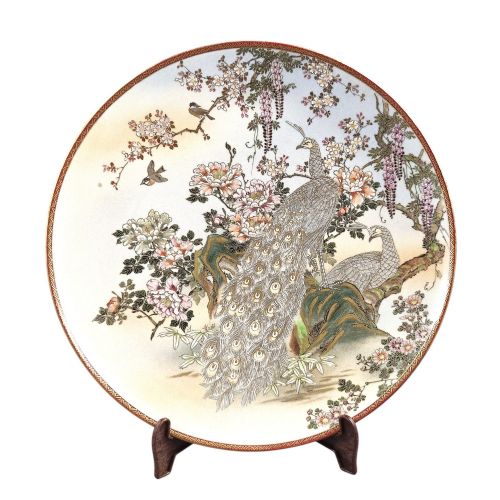
Beyond metal vessels, the selection includes porcelain and earthenware chargers employing painted enamels, moriage relief work, and underglaze pigments. These ceramic pieces share the same display-focused intent, offering broad surfaces for pictorial storytelling and geometric ornamentation.
How they were made
Metal cloisonne pieces rely on thin copper or brass wires soldered onto a metal base to form cells, which are then filled with coloured enamel pastes before firing and polishing. This method allows artisans to delineate complex botanical and animal subjects with sharp, clean boundaries.
Ceramic plates utilise porcelain or earthenware bodies painted with enamel colours, sometimes combined with gold leaf, gilt highlights, or raised moriage pastes. The decorated objects undergo multiple kiln firings to fix the glass-like pigments onto the glazed surface.
Materials recorded across the inventory include copper, porcelain, brass, and gold leaf.
What varies in quality
The precision and fineness of the wirework in metal vessels dictate the visual complexity achievable in the design, separating standard production from masterworks. Tightly spaced cells and smooth, evenly polished surfaces indicate superior workshop output.
The intricacy of the hand-painted motifs and the depth of the palette determine the distinction between ordinary ceramic plates and exceptional imperial-style dishes. Artisanal signatures and marks from renowned makers provide further indication of high-level production.
The Enamel Decorative Plate Glossary
- Cloisonne
- A decorative metalwork technique where thin wires form raised barriers on a body to contain coloured glass pastes. These compartments are filled and fired multiple times to achieve a smooth finish.
- Charger
- A large ornamental plate traditionally used for display rather than for serving food at a table. These substantial pieces offer a wide canvas for detailed pictorial scenes.
- Moriage
- A decorative ceramic technique utilising raised slip or clay applied to the surface to create textured, three-dimensional patterns. This ornamentation is often highlighted with enamels and gilding.
- Totai Shippo
- A specialised process where enamel is applied directly onto a porcelain body using cloisonne wires. This technique merges ceramic traditions with metalwork enamelling methods.
- Mon
- A Japanese heraldic badge or emblem used to denote family lineage or clan affiliation. These stylized crests frequently appear as decorative motifs within metalwork and ceramics.
Enamel Decorative Plate: Frequently Asked Questions
What is an enamel decorative plate used for?
These large plates and chargers were historically created as ornamental objects for display on walls, cabinets, or stands rather than for practical table service. Their expansive surfaces allowed master artisans to showcase elaborate pictorial scenes and intricate decorative patterns.
Today, collectors use these pieces as focal points in interior design, mounting them on walls or displaying them on sturdy plate stands. They bring historical depth and rich colour palettes into both traditional and contemporary spaces.
How do I identify a Meiji period piece?
Items from the Meiji period often display exceptional technical precision in metalwork cloisonne or ceramic painting, reflecting the rapid artistic developments in late nineteenth-century Japan. Look for characteristic motifs such as native flora, fauna, dragons, and auspicious symbols.
Many higher-quality examples from this era bear workshop signatures or artist stamps on the base or reverse edge. Comparing the wiring density and the subtlety of the colour shading also helps determine the period of manufacture.
Are these plates meant for food use?
Historical display plates and chargers are generally unsuitable for modern dining due to their antique nature and delicate surface materials. Metal cloisonne and heavily gilt ceramics can be damaged by cutlery, acidic foods, or frequent washing.
Maintenance should be limited to gentle dusting with a soft dry cloth to protect the historic enamel and metal components. Preserving the original surface condition ensures the longevity of the decorative details.
What is the difference between cloisonne and porcelain plates?
Cloisonne plates feature a metal base, usually copper or brass, decorated with wire cells filled with coloured glass pastes. Porcelain plates utilise a fired ceramic body painted directly with enamel pigments and glazes.
While both offer vibrant surfaces for artistic expression, they involve entirely different manufacturing traditions originating from metalworking smiths versus ceramic kilns.