




Large Japanese Charger Plate
A large japanese charger plate brings robust colour and intricate pattern to an interior, dominating a wall or sideboard with historic presence.
Large Japanese Charger Plate
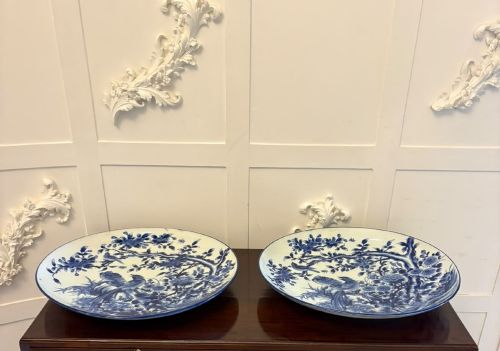
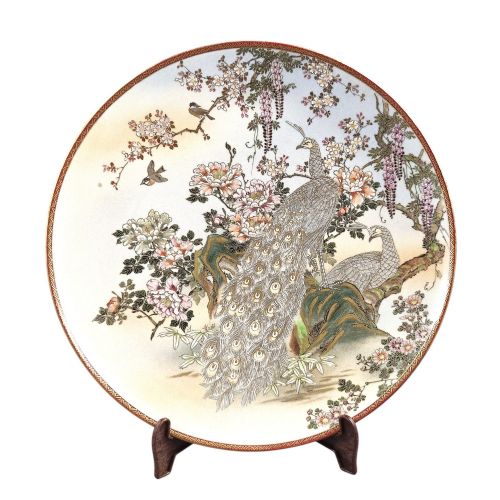
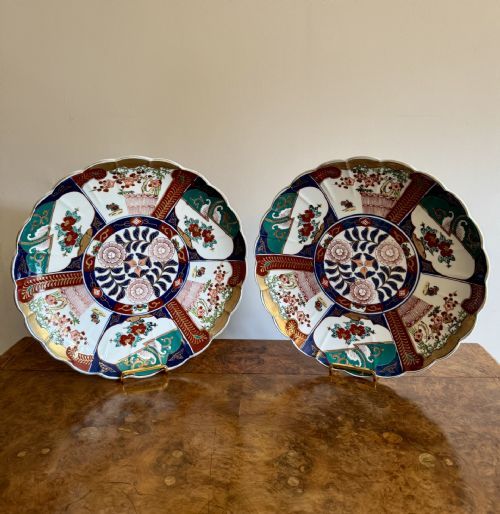
A large japanese charger plate is a wide ceramic or metal disc made for display rather than dining. The examples seen here belong largely to the late nineteenth century, spanning the Meiji period and Victorian eras, alongside occasional Edo period pieces.
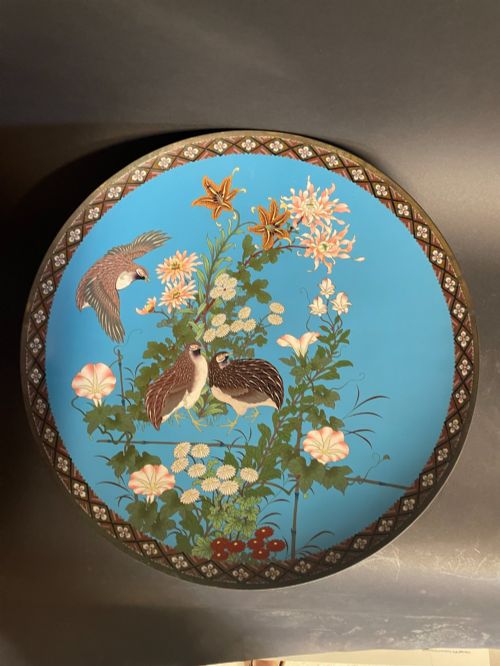
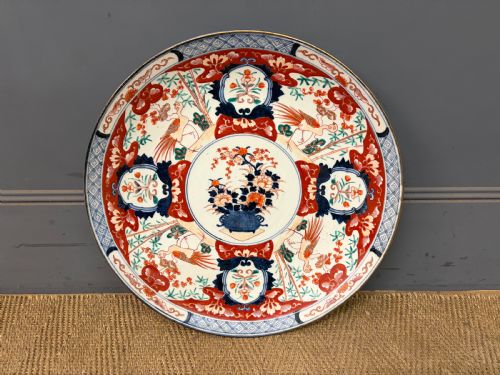
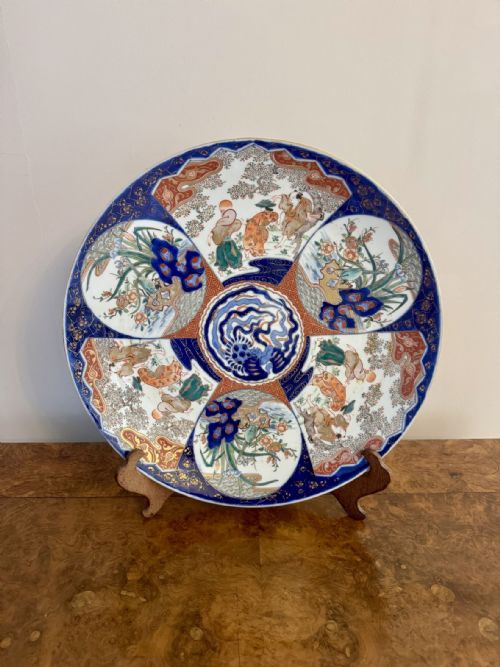
Most entries on this page consist of Imari porcelain in blue and white or rich iron-red and gilt, alongside copper-based cloisonne enamel trays depicting birds, dragons, and landscapes. These pieces take the form of broad round chargers, square plates, and octagonal trays.
Originating as decorative centrepieces or export wares for Western markets, these large plates offer substantial diameters that showcase the meticulous brushwork and metalwork of their makers.
Materials and construction
Porcelain serves as the primary ceramic base, shaped and fired before receiving underglaze blue and overglaze enamel decoration, often enriched with gold leaf. These ceramic chargers rely on high-temperature kilns to fuse glaze and body into durable surfaces.
Metal vessels utilise a copper foundation combined with brass wire partitions for cloisonne enamel, or incorporate totai shippo technique featuring wireless enamel over tree bark textures. Artisans layered coloured glass pastes into these metallic cells before firing and polishing.
Several chargers feature owls gazing toward Mount Fuji while dragons coil nearby.
Distinctions in quality
Quality rests in the precision of the hand-painted brushwork or the exactness of the cloisonne wirework, where finer lines and more intricate motifs denote superior craftsmanship. The depth of the glaze and the richness of the gilding further separate standard export items from exceptional workshop examples.
Pieces bearing signatures from identifiable makers or depicting complex narrative scenes, such as the Seven Lucky Gods or detailed dragons, command greater attention than simple repetitive patterns. The crispness of the firing and the balance of the composition govern the overall impact.
The Large Japanese Charger Plate Glossary
- Imari
- A style of Japanese porcelain featuring a palette of underglaze blue, iron-red, and gold. This ware was widely exported to Europe during the 19th century.
- Cloisonne
- A metalwork technique where thin wires form small compartments on a copper surface, which are then filled with enamel paste and fired.
- Meiji Period
- The era of Japanese history lasting from 1868 to 1912, characterised by opening trade with the West and high-relief decorative arts.
- Totai Shippo
- A variation of cloisonne enamel where the metal base is etched or carved to resemble tree bark beneath translucent glazes.
- Charger
- A large ornamental plate traditionally displayed on a wall or sideboard rather than used at the dining table.
- Moriage
- A ceramic decorating technique using piped slip to build up raised designs before glazing and firing.
Large Japanese Charger Plate: Frequently Asked Questions
How were these large plates displayed historically?
Large plates were predominantly positioned on sideboards, tables, or hung directly on walls using wire brackets to showcase their vibrant designs.
In Western homes of the late nineteenth century, these prominent pieces acted as focal points in drawing rooms and dining parlours.
Are these plates suitable for everyday dining?
These historic chargers are intended strictly for decorative display rather than serving food. Their delicate glazes and metallic elements require careful preservation away from active use.
Placing them on secure plate stands or wall mounts protects their surfaces from accidental knocks and wear.
How do I identify a Meiji period piece?
Meiji period items typically date between 1868 and 1912, aligning with increased export trade to Europe and Britain. They often display complex motifs like dragons, Mount Fuji, or Satsuma moriage work.
Many examples from this era also feature artisan signatures on the reverse or base.
What is the difference between Imari and cloisonne?
Imari describes porcelain painted with underglaze blue, iron-red, and gold, focusing on ceramic artistry. Cloisonne involves enamel fired within wire cells on a copper or brass metal body.
Both styles were produced in large quantities during the late nineteenth century for international buyers.