



Asian Art Wall Charger
An asian art wall charger brings intense colour and meticulous craftsmanship into a room, spanning the Meiji and Taisho periods.
Asian Art Wall Charger
When you search for an asian art wall charger, you encounter large decorative plates, chargers, and plaques designed specifically for display. These pieces originate predominantly from Japan, encompassing periods such as the Edo, Meiji, and Taisho eras.
The selections available here showcase a variety of forms including decorative chargers, plates, and wall plaques. These items function as focal points in a room, traditionally hung on walls or exhibited on heavy stands.
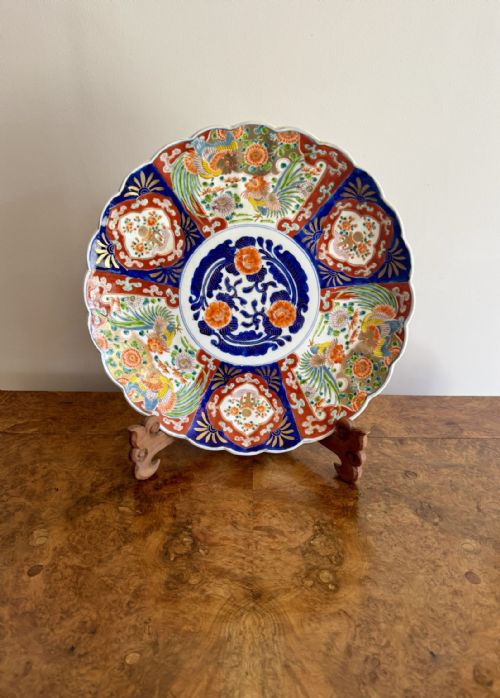
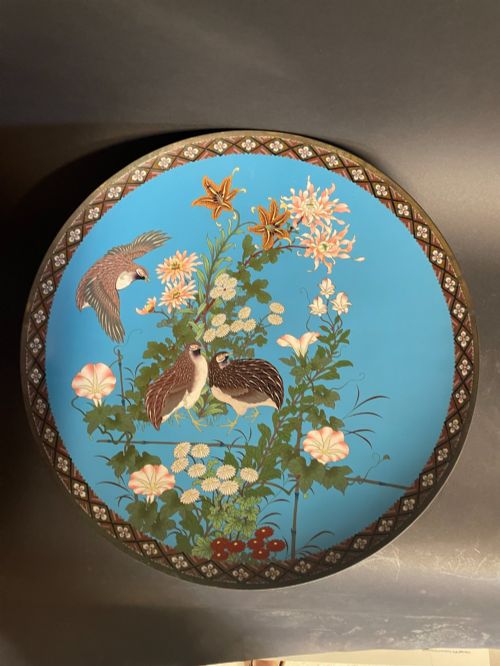
You are most likely to meet enamelled cloisonne chargers and Imari porcelain plates on this page. The designs frequently incorporate motifs of birds, dragons, koi, and traditional figures.
Materials and construction methods
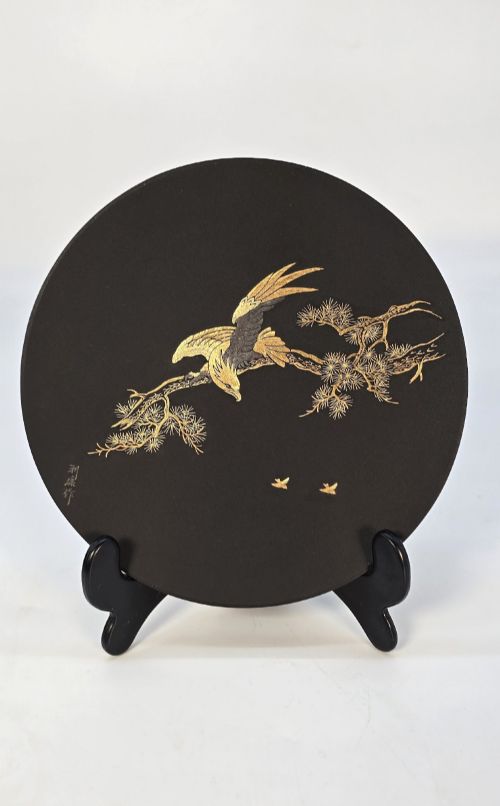
Metalwork plaques utilise intricate techniques including gold and silver inlay upon patinated iron. Porcelain examples employ traditional painting methods, seen clearly in the Japanese Imari styles.
Lacquer is also utilised for specialised plaques, providing a deep, polished surface. Artisans combine these varied media with precise wirework and glazing to achieve detailed pictorial scenes.
Listings feature items spanning the 19th century, Meiji period, and Taisho period, utilising enamel, porcelain, iron, and gold.
Evaluating quality and execution
Quality in an asian art wall charger rests upon the precision of the workmanship and the complexity of the design. Finer cloisonne works demonstrate tighter wire cells and smoother enamel surfaces without pitting.
Metal inlay demands exacting skill, where gold and silver sit flush and secure within the iron ground. Porcelain pieces are judged by the clarity of the underglaze blue and iron-red enamels, alongside the crispness of the moulding.
Scale and ambition separate standard decorative items from masterworks, particularly in large chargers featuring complex figural or natural subjects. Signatures on metalwork or lacquer often indicate a higher tier of workshop production.
The Asian Art Wall Charger Glossary
- Cloisonne
- A decorative metalwork technique where fine wires form compartments on a surface to hold coloured enamel paste before firing.
- Imari
- A traditional Japanese style of porcelain featuring distinct palettes of underglaze blue, iron-red, and gold.
- Patinated
- An aged or chemically treated surface appearance on metals such as iron, bronze, or copper that deepens colour and tone.
- Mon
- A Japanese emblem or crest used to decorate garments, furnishings, and artistic objects.
- Charger
- A large decorative plate traditionally used for ceremonial display rather than dining.
Asian Art Wall Charger: Frequently Asked Questions
How do I hang a wall charger safely?
Heavy chargers and plaques require specialised wall brackets designed to distribute weight evenly across the rim or base without causing structural stress.
Ensure the fixing is anchored securely into wall studs or uses appropriate cavity fixings suited to the weight of the metal or porcelain piece.
What is the difference between Imari and cloisonne?
Imari refers to Japanese porcelain painted with specific mineral colours, typically cobalt blue and iron red, often highlighted with gilt.
Cloisonne is a metalwork technique utilising wire boundaries to hold glass enamels, creating a textured and colourful surface design.
How do I clean antique enamel chargers?
Dust enamel surfaces gently with a soft, dry cloth to remove surface particles. Avoid liquid cleaners, abrasives, or soaking.
Moisture can damage exposed metal wires or compromise older body materials, so dry maintenance remains the safest approach.
What periods do these pieces come from?
The listings span from the nineteenth century through the Meiji and Taisho periods into the early twentieth century.
Edo period pieces also appear, reflecting traditional Japanese craftsmanship from earlier foundational eras.
Are these plates meant for dining?
These items function purely as decorative wall plates, chargers, and plaques rather than functional tableware.
Their delicate enamels, metal inlays, and heavy forms are engineered solely for visual display and aesthetic appreciation.