
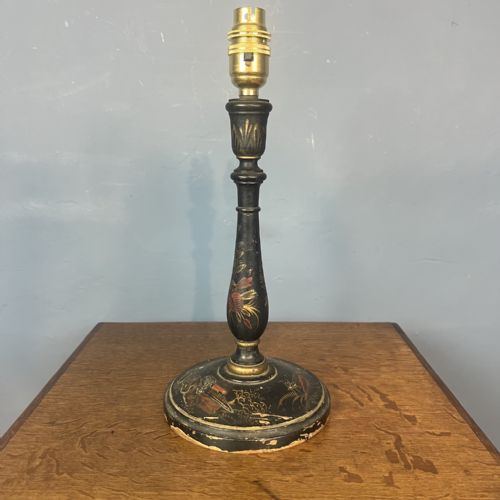
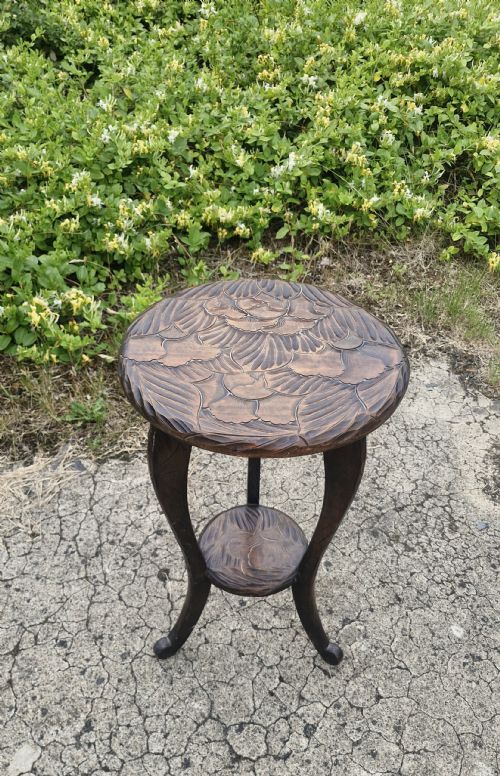


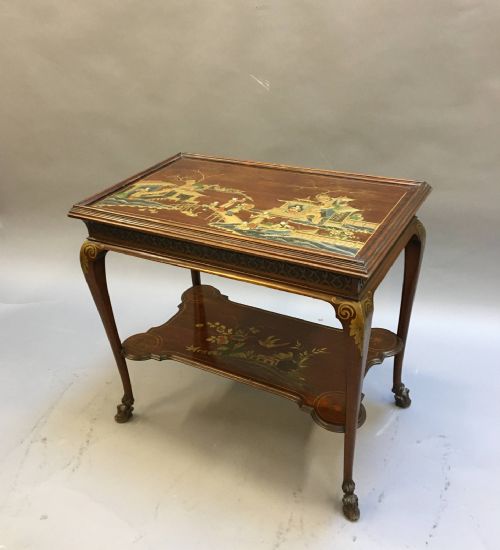


Edwardian Oriental Table
An edwardian oriental table brings painted lacquer and carved timber together to anchor a room with layered cultural motifs.
Edwardian Oriental Table
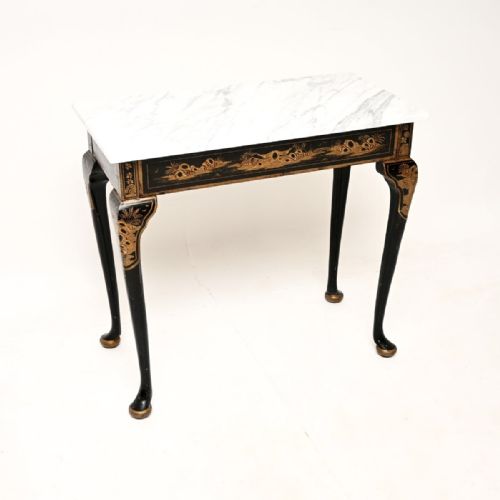
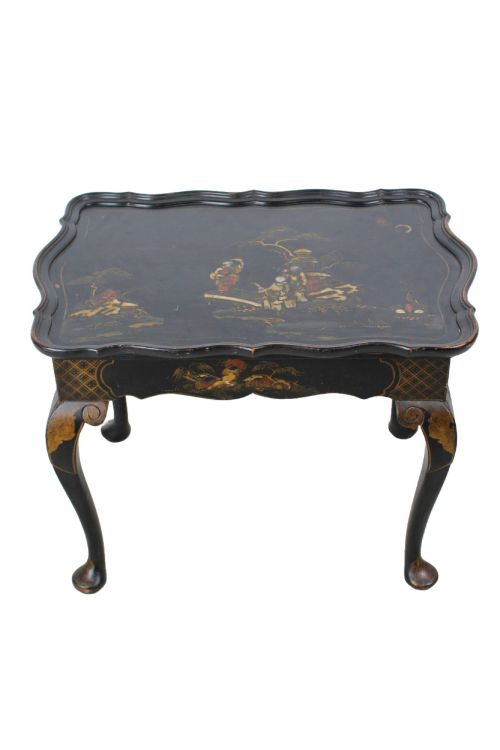
When you search for an edwardian oriental table, you encounter an array of occasional, coffee, and lamp tables influenced by Eastern design vocabularies. These pieces span from the late nineteenth century into the 1930s, reflecting a sustained fascination with Chinoiserie, Anglo-Indian, and Japanese forms.
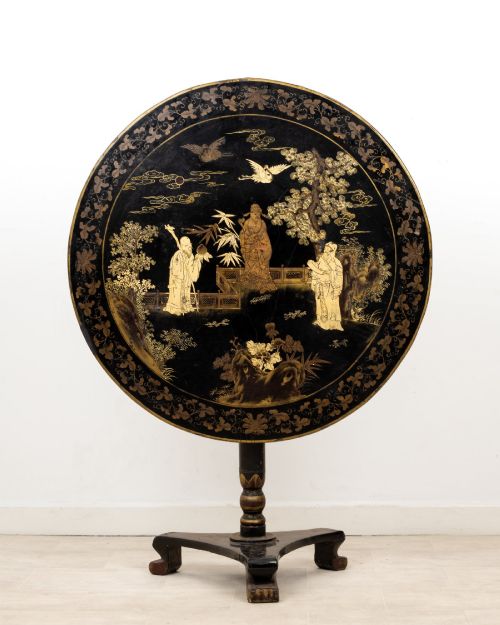
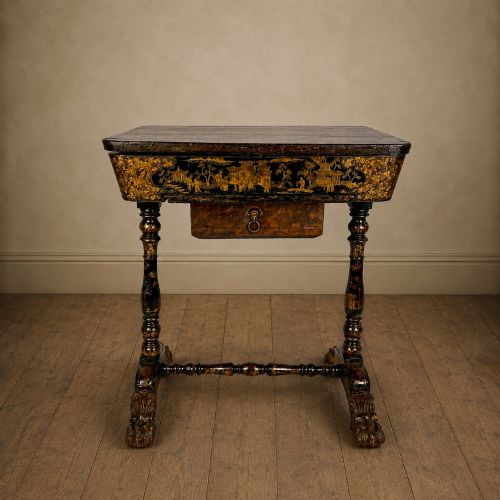
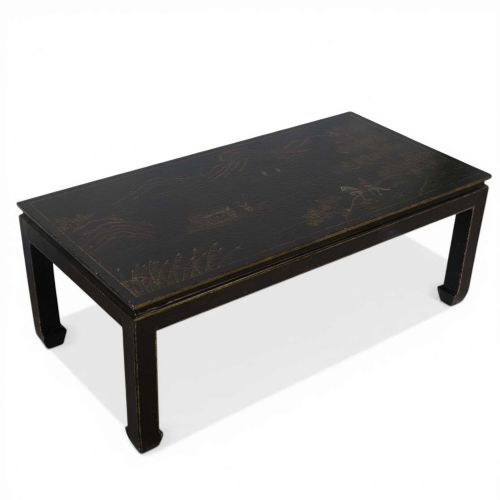
The most common versions on this page are coffee tables, occasional tables, and nests of tables finished in black or coloured lacquer with painted scenes. Alongside these, you find carved hardwood plant stands, bamboo frames, and inlaid surfaces reflecting early twentieth-century tastes.
Makers ranged from major retailers like Liberty to anonymous workshops producing export pieces and domestic adaptations. The forms serve practical roles as low coffee tables, lamp surfaces, or plant pedestals while displaying distinct decorative painting.
Materials and Construction
Construction relies heavily on timbers such as hardwood, walnut, teak, and bamboo, forming sturdy frames for tabletops and plant stands. Wood is frequently turned, carved, or assembled into tiered nests and drop-leaf formats.
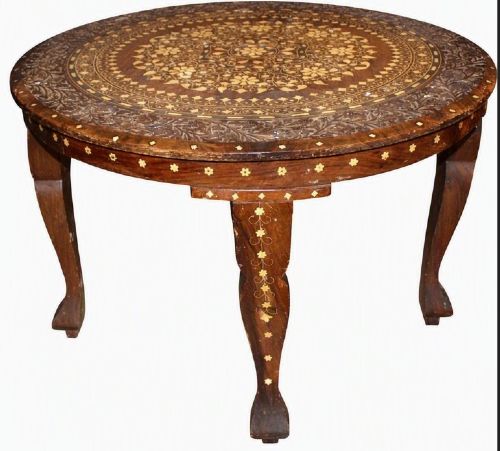
Surfaces receive elaborate treatments including lacquer, gold leaf, and painted scenes depicting figures, landscapes, or floral motifs. Some Anglo-Indian examples incorporate bone inlay into dense carved wood, while others utilise pressed brass or gilt details.
Elephant side tables carved from solid rosewood bring an unexpected safari presence to the parlour.
Assessing the Standard
Quality separates through the depth of the carving and the execution of the painted or lacquered scenes on the surface. Finer pieces display crisp hand-painted details and secure joinery in timbers like rosewood or teak.
The integrity of the lacquer finish and the stability of nested tables or drop-leaf hinges dictate the longevity and refinement of the piece. Better examples maintain crisp details in their giltwork and decorative motifs without excessive surface fading.
Liberty & Co·Liberty of London
The Edwardian Oriental Table Glossary
- Chinoiserie
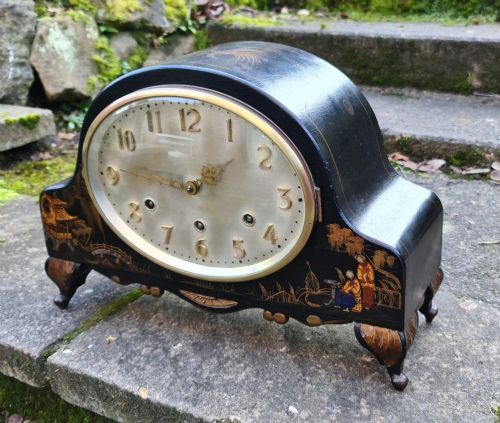
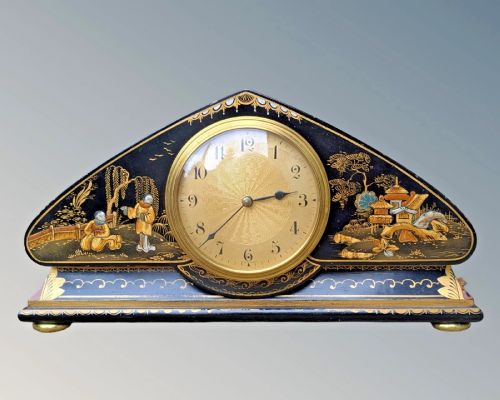
- European interpretation of Chinese and East Asian artistic traditions, expressed through decorative painting and lacquerwork. This style dominated much of the furniture and clock decoration seen in this period.
- Jappaned
- European imitation of Japanese lacquerwork, created by applying layers of varnish and dark finishes to wood. It forms the glossy black backdrop for many painted scenes.
- Nest of tables
- A set of graduated tables designed to slide beneath one another for compact storage. They appear frequently in lacquer and bamboo constructions.
- Tray top
- A tabletop featuring a raised edge or gallery, designed to prevent items from sliding off. This form is common on coffee and occasional tables.
- Anglo-Indian
- Furniture produced in India during the British colonial period, often combining traditional local carving techniques with British furniture forms. Rosewood and bone inlay are typical of this tradition.
Edwardian Oriental Table: Frequently Asked Questions
What is an edwardian oriental table?
An edwardian oriental table is a small occasional, coffee, or lamp table produced around the early twentieth century featuring Eastern design influences. These items incorporate Chinoiserie lacquer, carved teak, bamboo, or inlaid surfaces.
They function as decorative and practical surfaces in domestic spaces, often featuring hand-painted scenes or carved plant stand pedestals.
How do I style an oriental table?
These tables work well as accent pieces next to sofas or as stands for lamps and plants. Their dark lacquer or carved wood surfaces provide contrast against neutral interiors.
Pairing a nest of tables or a low coffee table with simpler modern furnishings allows the painted scenes and carved details to stand out.
Are these tables solid wood?
Construction varies by type, with many pieces utilising hardwoods like teak, rosewood, and walnut for frames and structural elements. Other examples employ bamboo or softer woods as a base for heavy lacquer and painted finishes.
Inlaid pieces incorporate materials like bone alongside carved timber, while simpler occasional tables rely on turned wooden legs.
How do I distinguish Edwardian from Victorian pieces?
Distinguishing the periods involves looking at stylistic shifts, as Victorian pieces often lean towards heavier ebonised finishes and Victorian Chinoiserie. Edwardian examples frequently lighten the form with slender legs and refined lacquerwork.
However, overlap exists as production styles continued across the turn of the century into the 1910s and 1920s.