

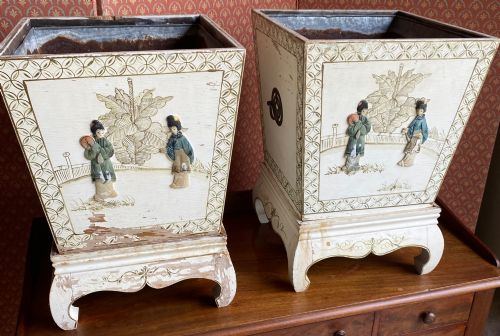

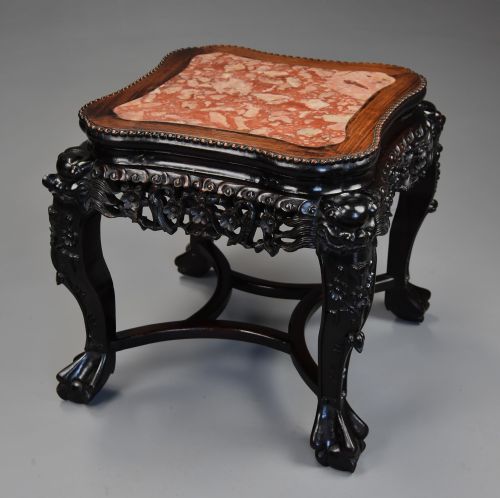
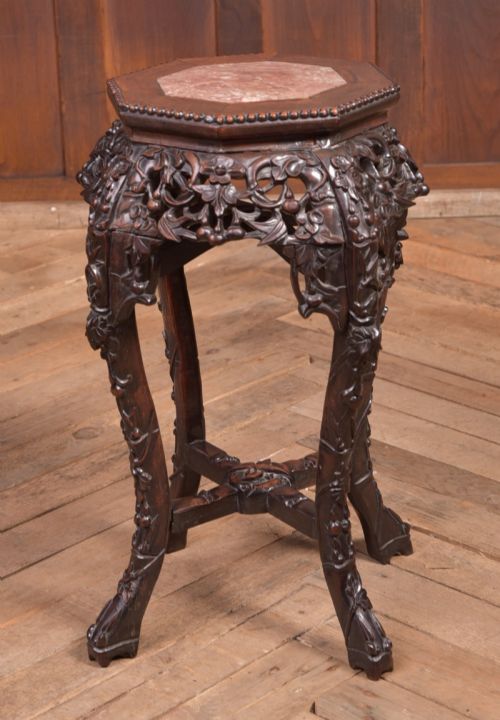
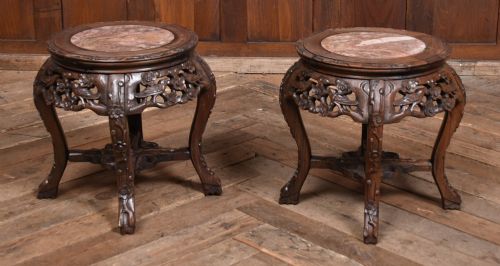




Oriental Jardiniere Stand
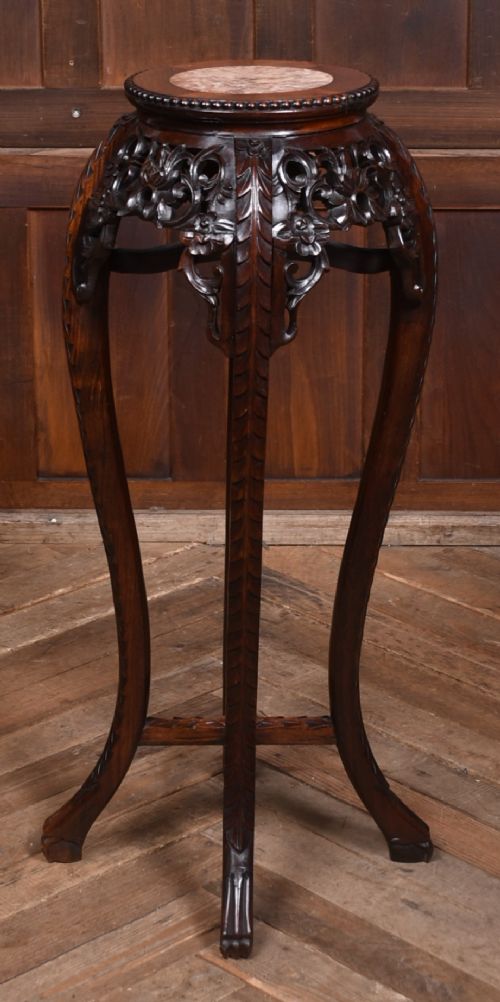
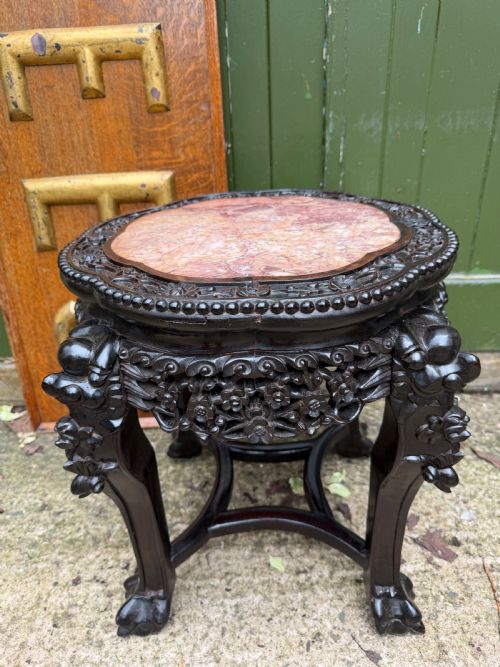
An oriental jardiniere stand holds heavy ceramic planters and vases, combining dense tropical timbers with inset stone surfaces.
Oriental Jardiniere Stand
An oriental jardiniere stand is a low or tall pedestal designed to elevate heavy ceramic planters, urns, and vases within a room. Buyers searching this phrase will find pieces spanning the nineteenth and early twentieth centuries, drawing heavily from Chinese Qing Dynasty workshops and Japanese Meiji period design.
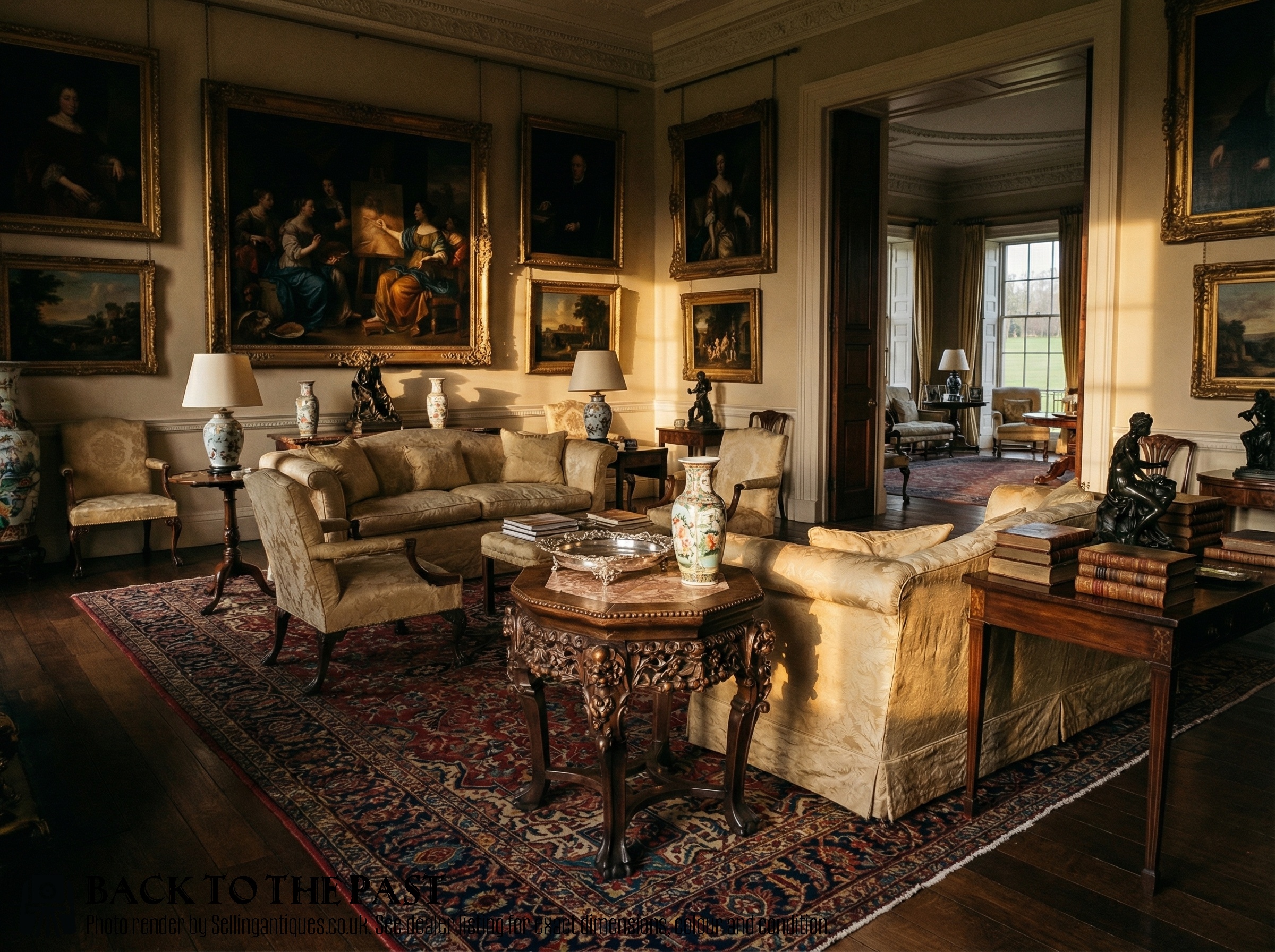
The most common formats on this page are sturdy hardwood tables featuring inset marble tops, alongside occasional low planter bases and side tables. These items served both domestic utility and decorative display in Victorian and Edwardian interiors influenced by Asian aesthetics.
Materials and Technique
Cabinetmakers utilised dense exotic timbers such as padouk, rosewood, and ebonised wood to support the weight of stone and ceramic vessels. These heavy woods allowed for deep, intricate hand carving along the aprons and cabriole legs without compromising structural integrity.
Many tables incorporate a smooth marble inset into the wooden top to provide a cool, water-resistant surface for wet plant pots. Lacquer finishes and joinery traditions typical of Chinese export and Arts and Crafts production complete the construction.
Oriental Jardiniere Stand Retail Price Guide 2026
Typical asking prices for oriental jardiniere stand among the pieces listed under this phrase on Sellingantiques today, from the lower quarter to the upper quarter. They describe what is for sale here now, not the wider market.
The listings show pieces constructed from padouk, rosewood, and ebonised wood, frequently paired with inset marble surfaces for practical use.
Judging the Standard
Quality depends upon the depth and crispness of the hand carving, where sharper floral or geometric motifs distinguish finer workshop output from simpler commercial production. The density and grain of the chosen hardwood also dictate the overall weight and durability of the piece.
The integration of the marble insert influences the standard, noting whether the stone sits flush within the timber frame and displays attractive natural veining. Additionally, the crispness of traditional joinery without excessive modern restoration marks the distinction between ordinary and superior examples.
Liberty of London
The Oriental Jardiniere Stand Glossary
- Jardiniere
- A large ornamental pot or planter, usually made of ceramic or porcelain, designed to hold growing plants. These vessels sit atop dedicated stands to protect interior flooring and display foliage at height.
- Hongmu
- A generic Chinese term translating to red wood, used to describe dense tropical hardwoods like padouk and rosewood. Craftsmen favoured these heavy timbers for their rich natural colour and strength.
- Padouk
- A heavy, durable tropical hardwood with a reddish-orange hue that darkens with age. It provides the dense structure required for intricately carved plant pedestals.
- Ebonised
- Wood treated with a chemical stain or finish to imitate the dense black appearance of ebony. This technique appeared frequently on nineteenth-century aesthetic and Victorian interpretation pieces.
- Cloisonne
- An ancient metalwork technique employing wire soldered to a base to create compartments filled with enamel paste. Pieces featuring this finish often require sturdy associated stands to support their weight.
Oriental Jardiniere Stand: Frequently Asked Questions
What is an oriental jardiniere stand?
An oriental jardiniere stand is a sturdy wooden table or pedestal specifically built to elevate heavy ceramic planters, urns, and vases. These pieces feature robust timber construction to support significant weight.
Most examples incorporate a flat surface, frequently inlaid with marble to manage moisture from potted plants. They originated in Asian export workshops and became popular additions to European interiors during the Victorian and Edwardian periods.
How were these stands used originally?
These pieces functioned primarily as elevated platforms for large indoor plants, ferns, and decorative ceramic vases. Placing heavy pots on stands protected wooden floors from dampness and water damage.
Beyond practical horticulture, households utilised them as display tables for sculptures, lamps, and decorative art objects. They occupied corners, hallways, and drawing rooms as key elements of aesthetic interior design.
How do I care for a marble top stand?
Maintain the polished stone surface by wiping it gently with a soft, damp cloth and avoiding acidic cleaners. Marble is porous and susceptible to staining from standing water or plant fertilisers.
Treat the surrounding hardwood frame with appropriate natural wax to preserve the grain and finish. Ensure heavy pots use protective pads underneath to prevent scratching the stone or timber.
How can I tell the period of a stand?
Examine the timber species, joinery methods, and surface wear to determine the age of a piece. Nineteenth-century examples often feature dense padouk or rosewood with hand-carved details characteristic of Qing Dynasty production.
Later Victorian and Edwardian interpretations frequently employ ebonised wood or softer mahogany aligned with aesthetic and Arts and Crafts styles. Tool marks and construction consistency provide further clues regarding the manufacturing era.