



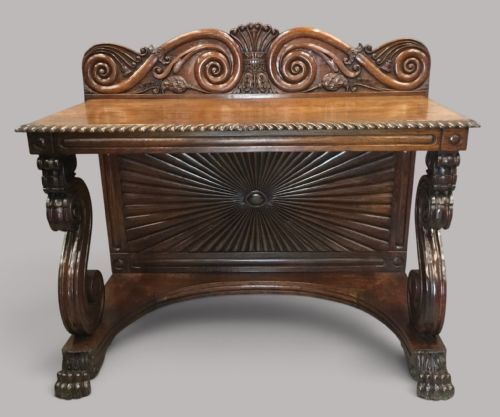


Carved Padouk Table
A carved padouk table brings dense tropical hardwood and intricate floral or figural carving into a room, favoured for deep reddish-brown colour.
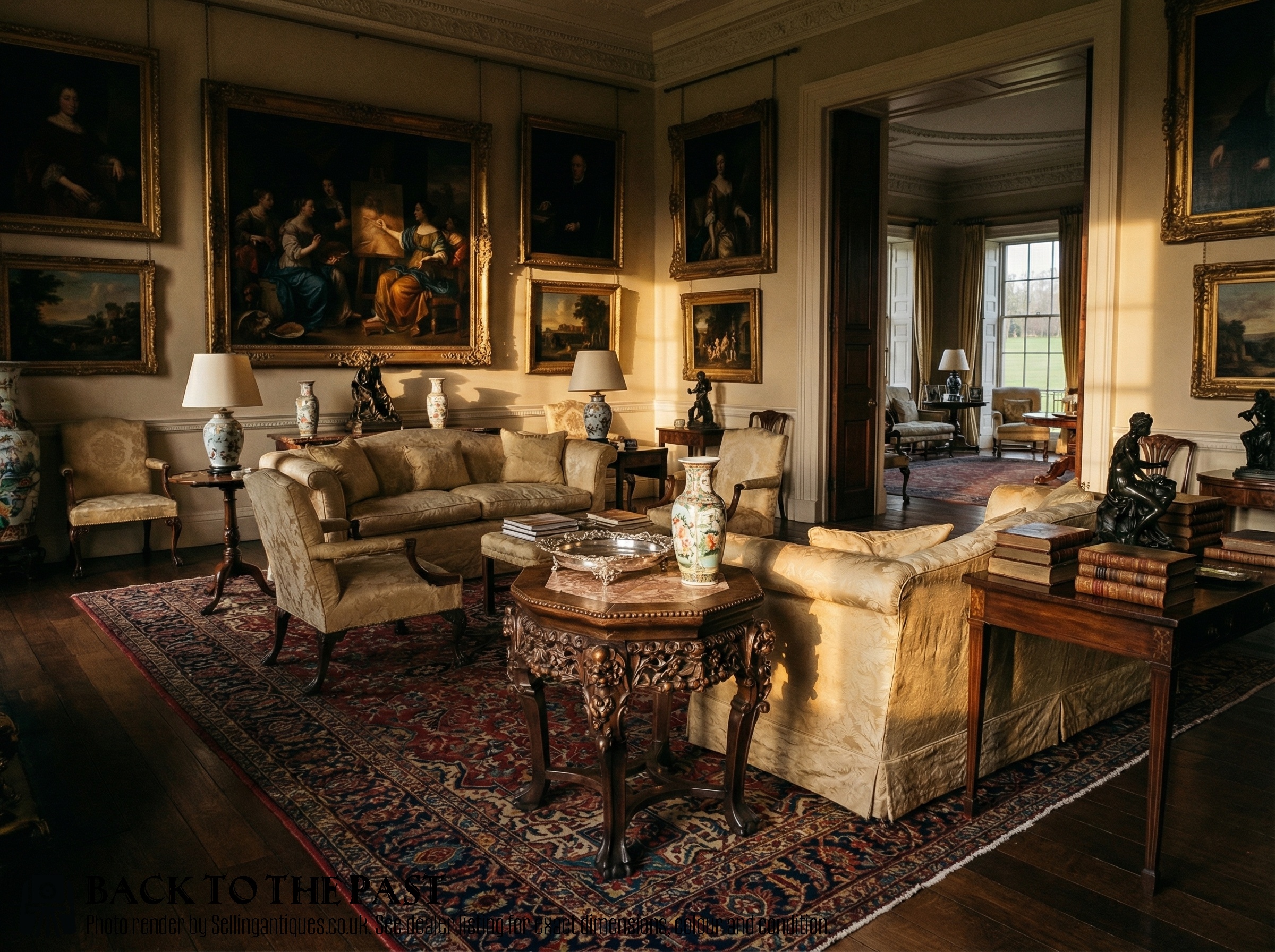
Carved Padouk Table
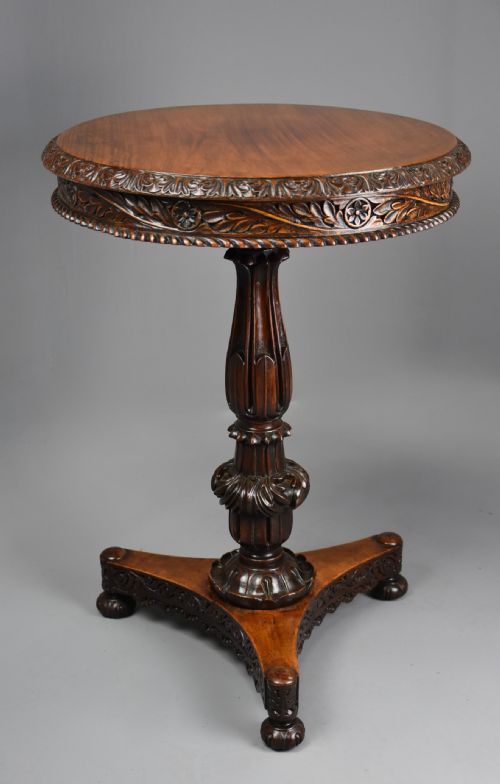
When you search for a carved padouk table, you are looking at heavy tropical timber pieces shaped into side tables, plant stands, coffee tables, and occasional tables. These examples span the nineteenth century, including Regency, Victorian, and late Qing periods.
The regional origins divide principally between Anglo-Indian colonial workshops and Chinese Qing or Republic traditions. You will encounter circular tilt-top tables, console tables, and distinctive elephant-form stands.
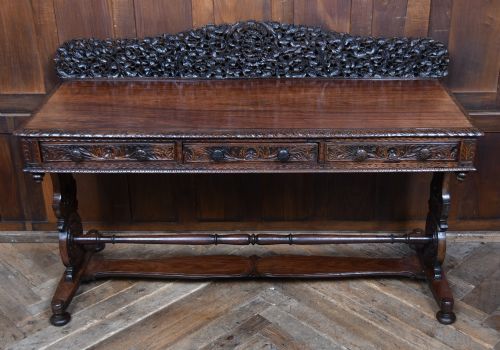
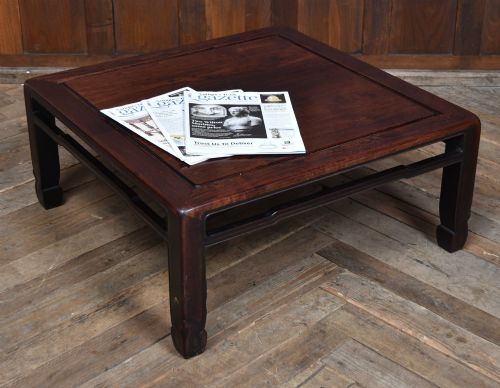
Anglo-Indian designs often feature dense foliate relief carving associated with regions like Bombay and Ceylon, whilst Chinese pieces utilise hardwood stands and low tables with refined panel work.
How they were made
Maker-craftsmen constructed these pieces using dense padouk wood, sometimes supplemented by teak, rosewood, or secondary hardwoods. Surfaces received deep hand-carved relief work, fretwork, and joinery without modern adhesives.
Many tables incorporate circular tilt-top mechanisms, turned pedestals, or carved figural supports such as elephants. Finishes rely on wax or polish applied over the natural dark grain to develop a deep patina.
Carved Padouk Table Retail Price Guide 2026
Typical asking prices for carved padouk table among the pieces listed under this phrase on Sellingantiques today, from the lower quarter to the upper quarter. They describe what is for sale here now, not the wider market.
Several nineteenth-century tables take the physical form of carved wooden elephants holding up the top with their trunks.
What varies in quality
Depth and crispness of the hand-carving separate standard utility items from superior workshop output. Crisp undercut foliage and sharply defined animal or floral motifs demonstrate skilled labour.
The choice and matching of the padouk timber dictate visual weight, with well-selected grain patterns and consistent dark red tones holding greater presence. Structural stability in tilt-top mechanisms and joints also distinguishes finer examples.
The Carved Padouk Table Glossary
- Padouk
- A heavy, durable tropical hardwood with a natural reddish-brown hue. It darkens gracefully with age and exposure to light.
- Tilt-top
- A table top hinged to a pedestal base so it can pivot vertically when not in use. This mechanism allowed tables to be stored against walls in smaller spaces.
- Teapoy
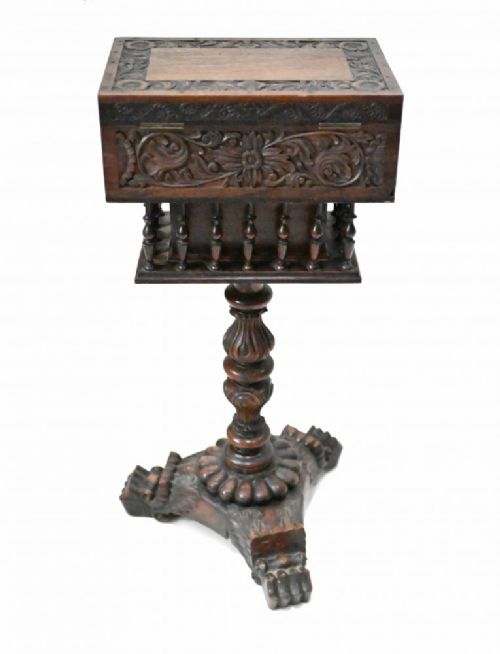
- A small occasional table or stand historically used for holding tea caddies or serving tea. Nineteenth-century examples often feature elaborate carved decoration.
- Anglo-Indian
- A style of furniture produced in India during British rule, combining European furniture forms with traditional Indian carving techniques and tropical hardwoods.
- Patina
- The surface sheen and soft lustre developed on wood over decades through handling, waxing, and ageing. A good patina shows depth rather than a flat modern lacquer.
Carved Padouk Table: Frequently Asked Questions
How do I clean a carved padouk table?
Dust the deep recesses of the carving regularly using a soft natural-bristle brush to prevent particle buildup. Avoid silicone sprays or wet cloths that can damage the historical polish.
Apply a traditional beeswax sparingly once or twice a year to nourish the dense tropical timber. Buff gently with a soft cloth to maintain the natural dark lustre without creating artificial gloss.
Where were carved padouk tables made?
These tables originated primarily in two distinct regions during the nineteenth century. Many emerged from colonial workshops in India, particularly around Bombay and Ceylon, featuring dense British-influenced or local Anglo-Indian designs.
Others were produced in China during the Qing Dynasty and Republic periods, utilising dense padouk wood for stands, low tables, and nests. Both regions utilised local artisan carving traditions adapted to imported or native tropical hardwoods.
How can I tell an Anglo-Indian table from a Chinese one?
Anglo-Indian pieces typically display profuse, deep-relief foliate carving, acanthus leaves, or figural motifs such as elephants. They frequently take the form of occasional tables, sideboards, or tilt-top centre tables with turned pedestals.
Chinese pieces generally focus on structured stands, low rectangular tables, or nested sets with cleaner geometric lines. The carving on Chinese examples often incorporates traditional Asian key patterns, prunus blossoms, or subtle panel borders.
Can I use a padouk table as a coffee table?
Lower rectangular and circular variants function well as coffee tables in contemporary seating arrangements. Their solid construction handles everyday placement of books and decorative objects.
Ensure placement avoids direct heat sources or strong sunlight to protect the dense hardwood and historical finish. Using coasters protects the waxed wooden surface from moisture rings.