






Chinese Export Hardwood Table
A chinese export hardwood table brings dense grain and intricate carving into a room, serving practical ends through forms shaped by centuries of workshop tradition.

Chinese Export Hardwood Table
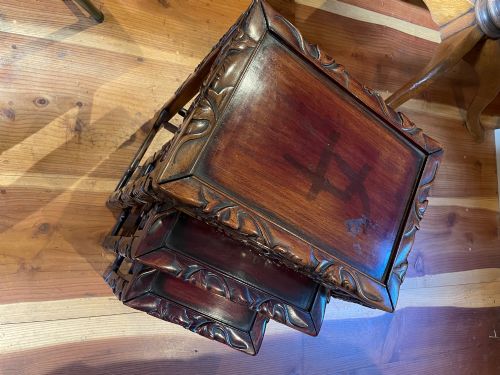
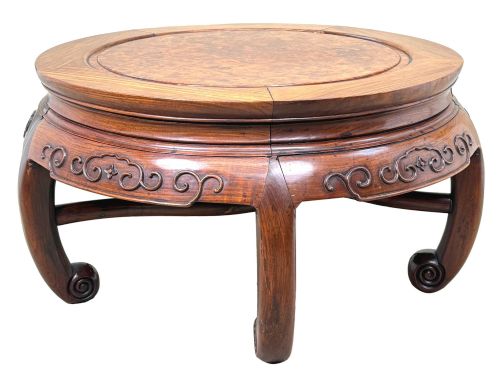
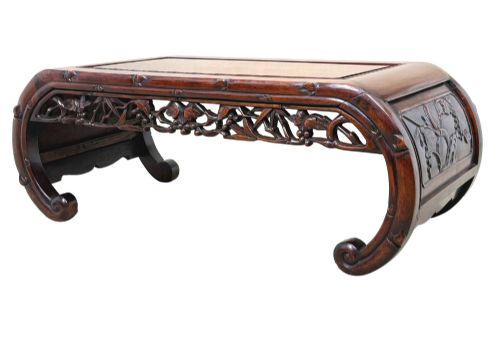
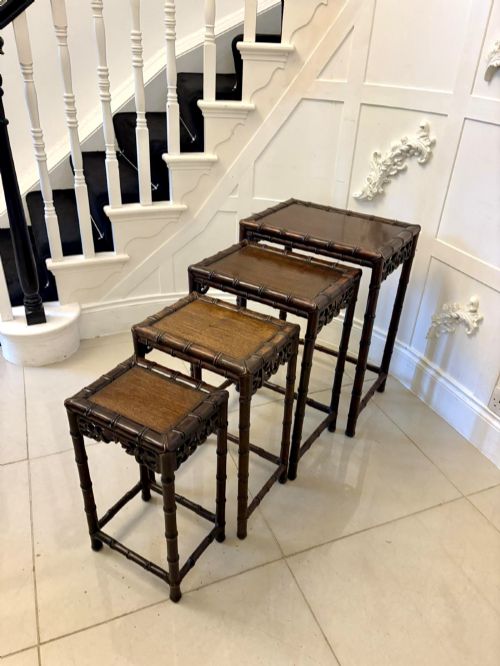
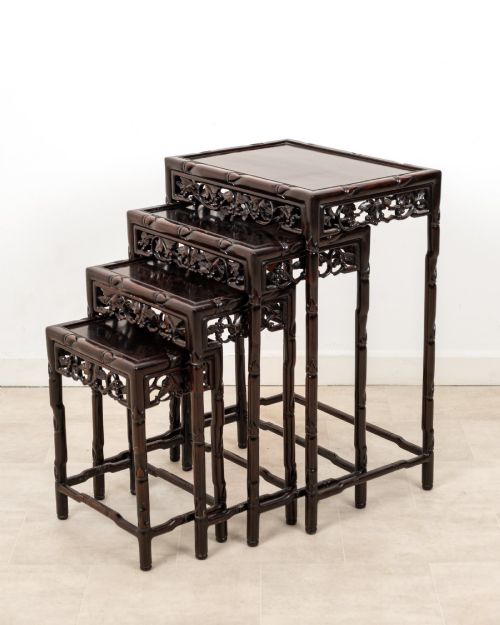
A chinese export hardwood table encompasses forms made for Western markets during the nineteenth and early twentieth centuries, spanning periods from the Victorian era to the late Qing dynasty. These pieces arrive in varied configurations, from nests of four graduated tables and plant stands to occasional tables, desks, and console tables.
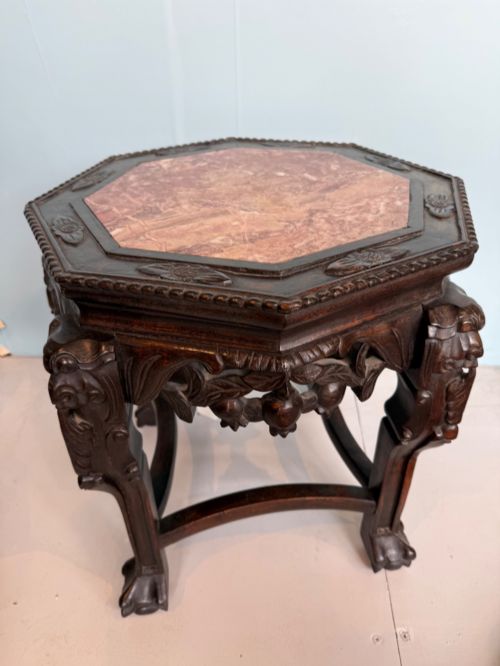
The buyer frequently encounters nesting tables and marble-topped jardiniere stands on this page. These functional forms reflect both traditional Chinese joinery and the specific utility demanded by European and American interiors of the period.
Originating across workshops producing goods for export, these items display stylistic overlaps between Chinese Qing dynasty traditions and Anglo-Indian or Chinoiserie tastes. Such crossover pieces demonstrate how local materials met international demand.
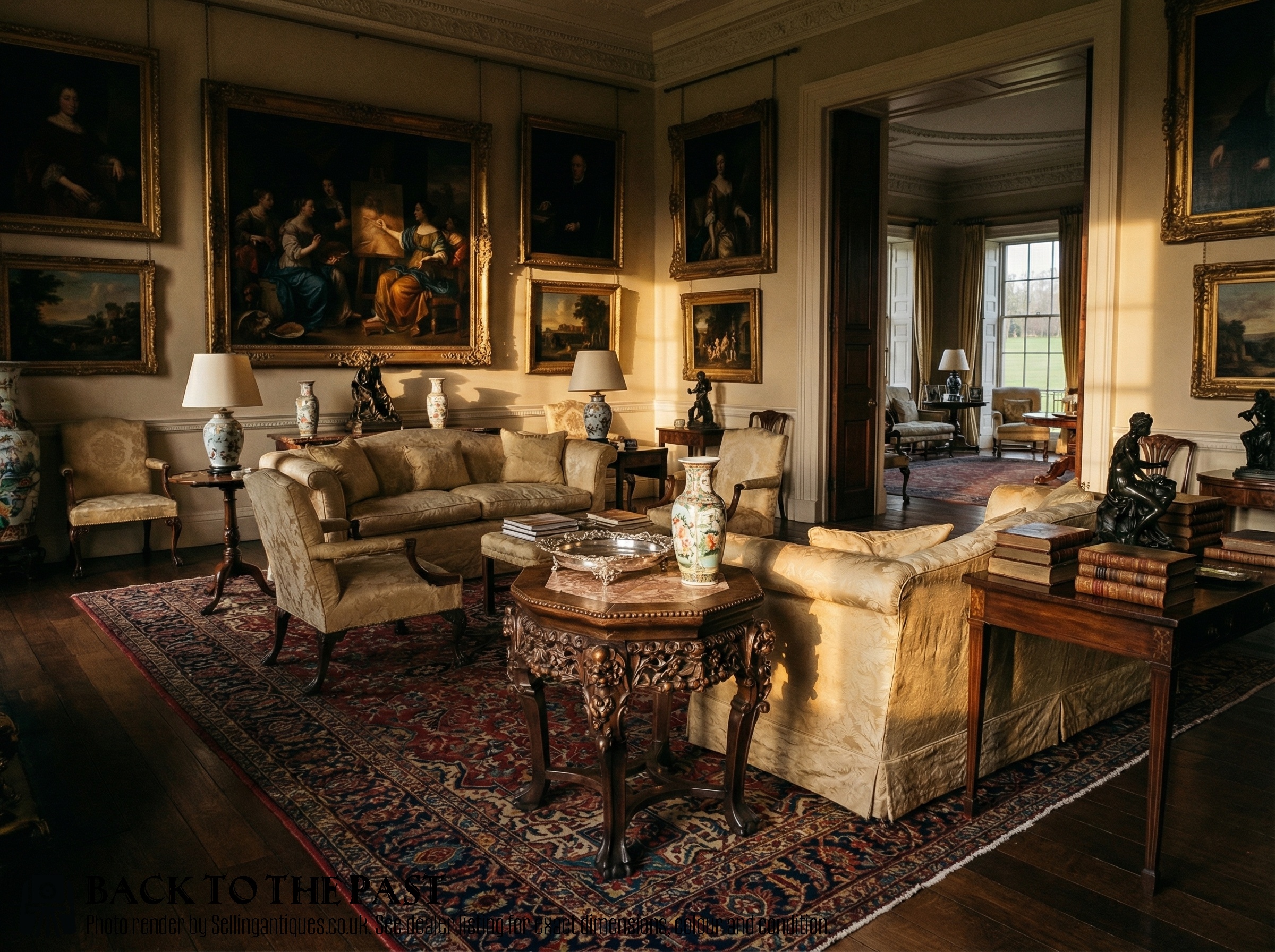
Materials and construction methods
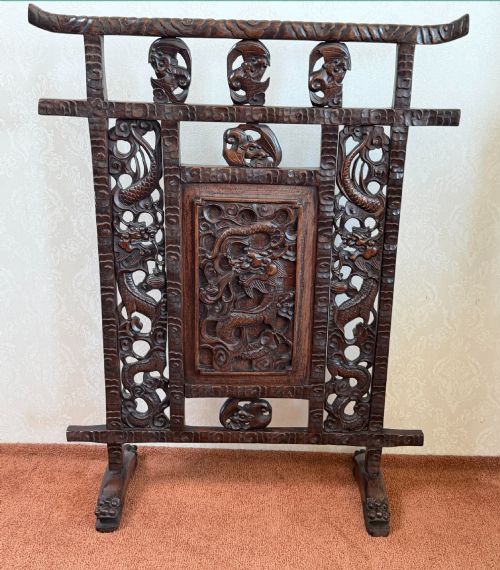
Craftsmen utilised dense timbers such as rosewood, padouk, hongmu, and general hardwoods, selected for their weight and stability. These woods often received deep carving depicting dragons, foliage, and geometric motifs directly into the solid material.
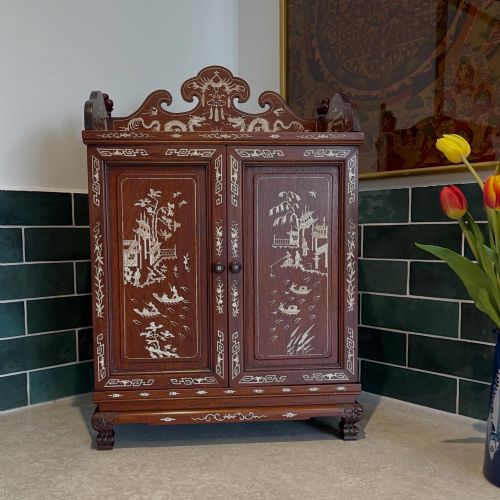
Inlay work incorporated mother-of-pearl and burrwood to create contrasting surfaces against the dark ground of the timber. Marble inserts appeared frequently on the tops of stands and tables, providing a cool, smooth surface resistant to heat and moisture.
Chinese Export Hardwood Table Retail Price Guide 2026
Typical asking prices for chinese export hardwood table among the pieces listed under this phrase on Sellingantiques today, from the lower quarter to the upper quarter. They describe what is for sale here now, not the wider market.
Listings feature hardwood, rosewood, padouk, and hongmu, often paired with inset marble or mother-of-pearl.
Discerning quality in export tables
The depth and clarity of the hand carving separate standard production from superior examples. Master carvers achieved crisp undercut details on dragons and floral elements, whereas lesser pieces show shallow, mechanical tooling with blurred edges.
The selection and matching of the timber grain dictate the visual harmony of the surface. Premium tables utilise dense rosewood or hongmu with consistent natural figure, while simpler items rely on heavier dark stains to mask inferior wood selection.
The Chinese Export Hardwood Table Glossary
- Hongmu
- A traditional Chinese term denoting dense, heavy hardwoods prized for furniture production. It translates literally as red wood and covers several distinct botanical species.
- Padouk
- A durable tropical timber exhibiting a rich reddish-brown colour that darkens with age. It provides a stable foundation for intricate hand-carved panels.
- Jardiniere stand
- A tall, slender table designed specifically to elevate plant pots or ceramic jardiniere bowls. These pieces often feature inset marble tops to protect the wood from water.
- Nest of tables
- A set of graduated tables designed to fit neatly beneath one another when not in use. They appeared frequently in nineteenth-century drawing rooms for serving tea or holding lamps.
- Chinoiserie
- European decorative style reflecting Chinese artistic motifs and techniques. It heavily influenced the design language of export pieces made for Western households.
Chinese Export Hardwood Table: Frequently Asked Questions
How were nesting tables used?
Nesting tables provided flexible surface space in nineteenth-century reception rooms. Servants deployed the smaller tables individually for tea or writing, then stored them compactly beneath the largest table when the room needed to be cleared.
This tiered design maximised floor space in crowded Victorian and Edwardian interiors without sacrificing utility during social gatherings.
What is a jardiniere stand?
A jardiniere stand served as an elevated pedestal for displaying heavy ceramic plant pots indoors. The inset marble top protected the wooden frame from moisture and soil spills.
These tall stands placed greenery at eye level near windows, fitting narrow corners where standard tables could not reach.
What defines Qing dynasty export pieces?
Qing dynasty export pieces combine traditional Chinese joinery techniques with stylistic concessions made for Western buyers. Carved motifs like dragons and prunus blossoms appeared alongside forms familiar to European homes, such as console tables and desks.
Workshops produced these items specifically for international trade routes operating through treaty ports during the nineteenth century.