
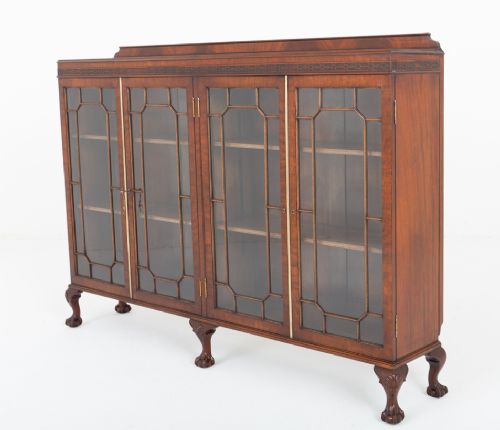
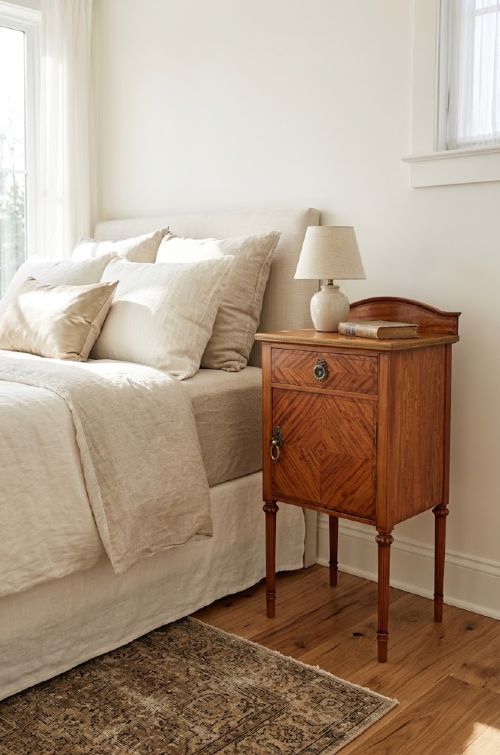
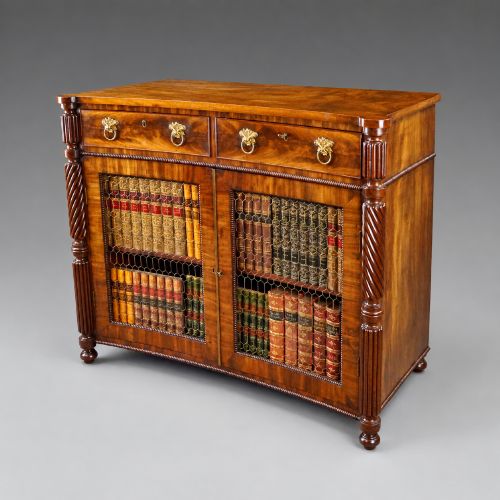
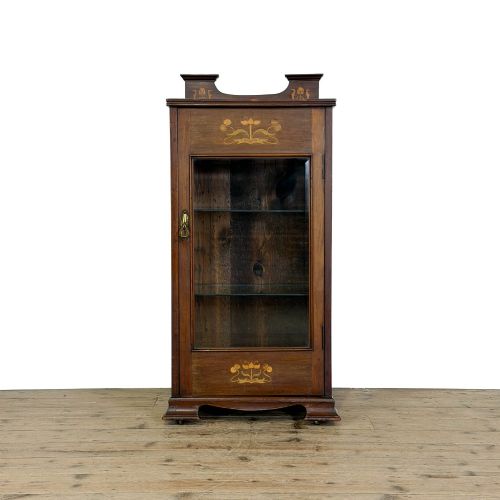
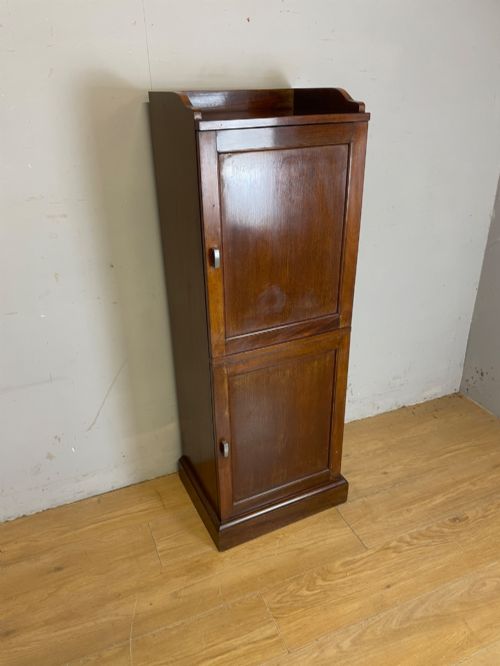
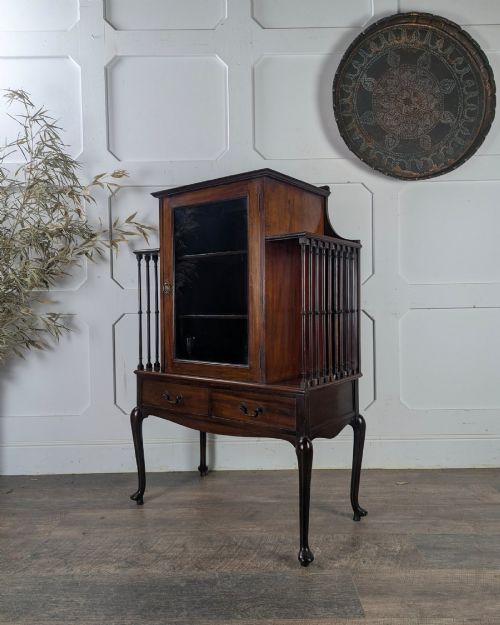
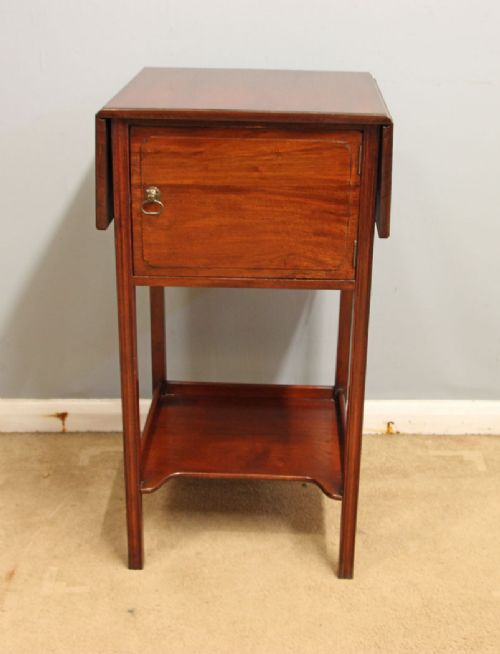
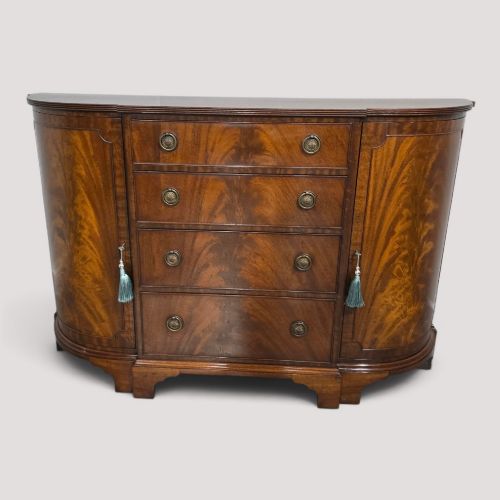
Edwardian Mahogany Side Cabinet
When you search for an edwardian mahogany side cabinet, you seek a refined piece of domestic furniture combining functional storage with delicate period craftsmanship.
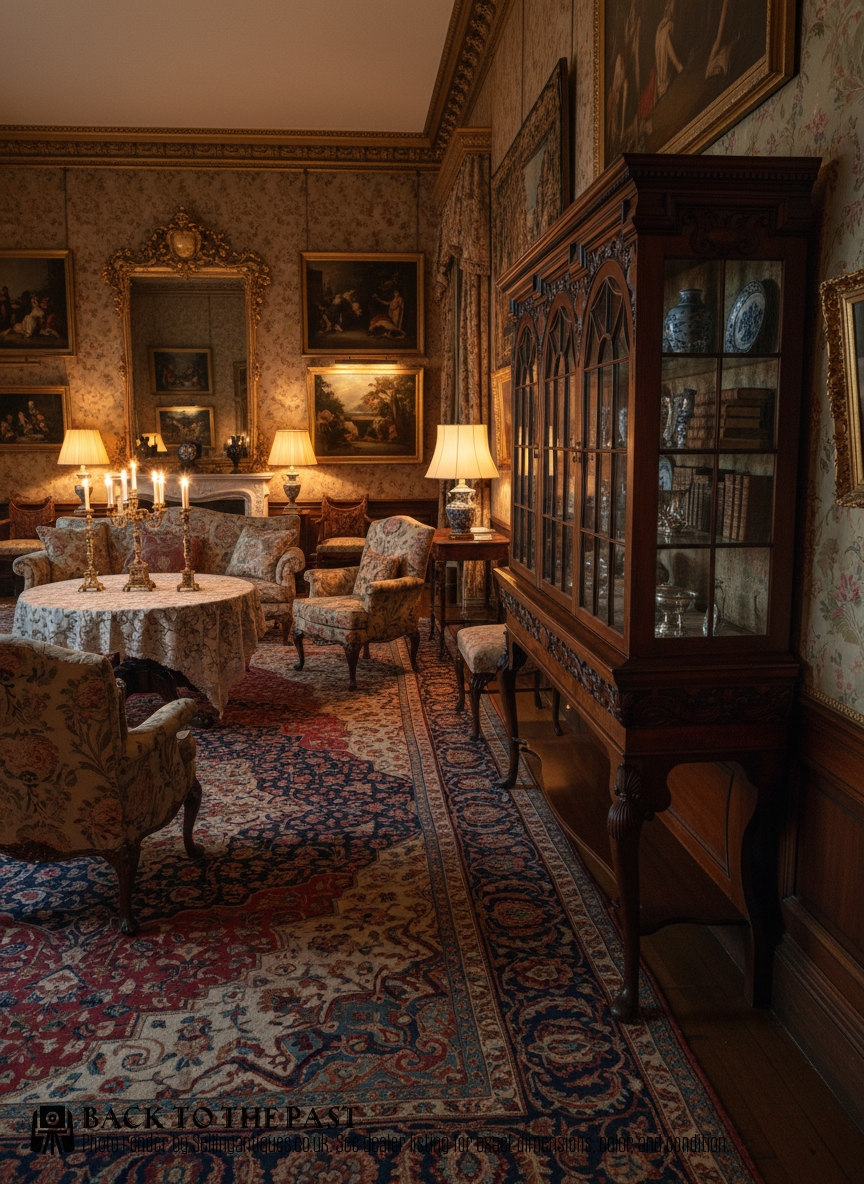
Edwardian Mahogany Side Cabinet
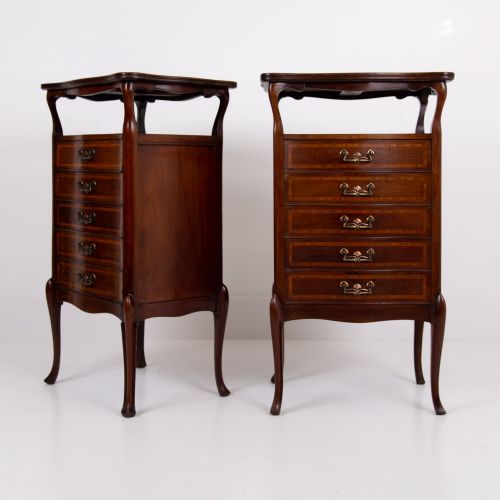
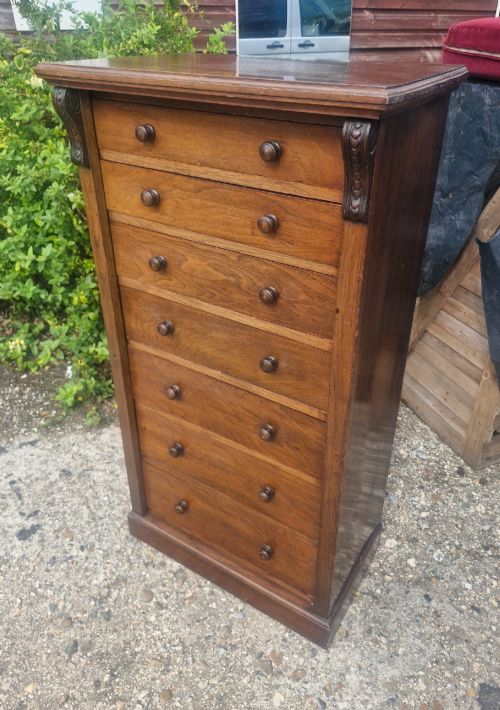
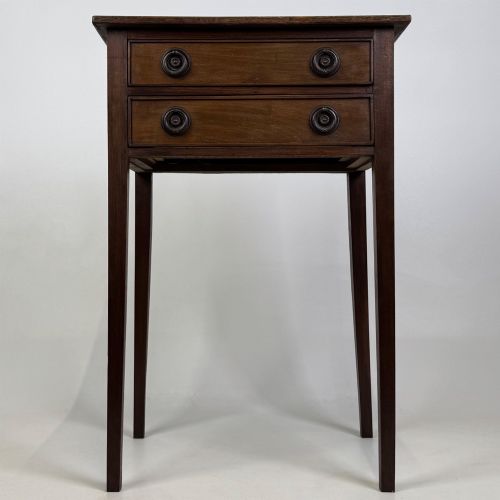
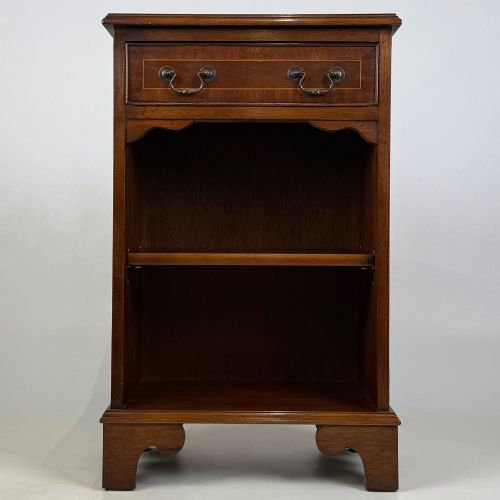
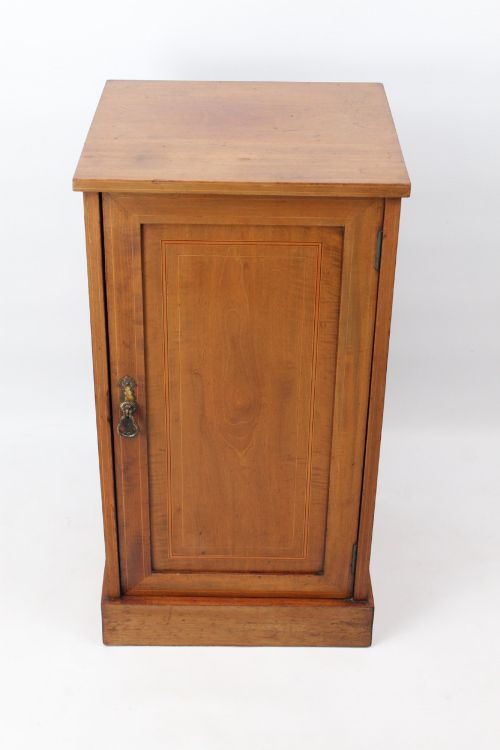
The search phrase edwardian mahogany side cabinet brings together compact cupboards, display units, and bedside tables produced around the turn of the twentieth century. These items served practical purposes in bedrooms, drawing rooms, and halls, often incorporating shelving, doors, and drawers into tidy footprints.
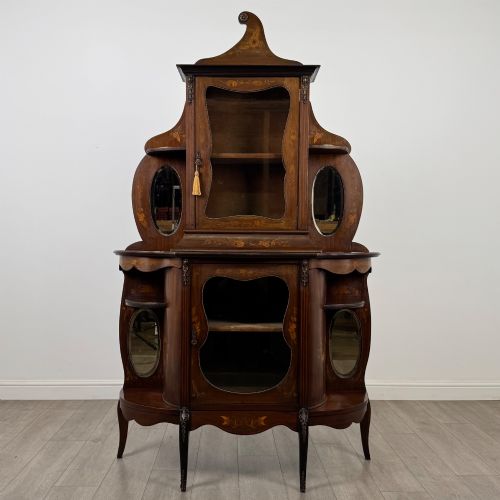
You are most likely to encounter smaller bedside cupboards and bedside tables sharing this designation, alongside glazed display cases and serpentine-fronted sideboards. Their forms range from simple rectangular boxes to curved bow-front and demi-lune shapes.
While Edwardian examples dominate the selection, related pieces stretch from late Victorian decades into the early twentieth century. Makers of the period drew upon earlier Georgian, Regency, and Sheraton Revival idioms to shape these utilitarian items.
How They Were Made
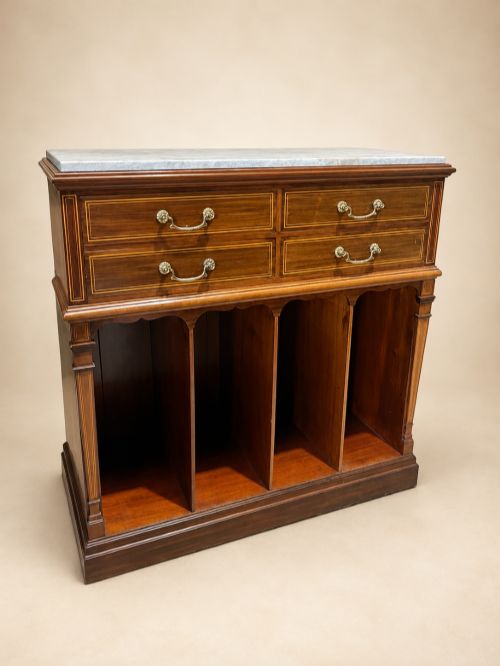
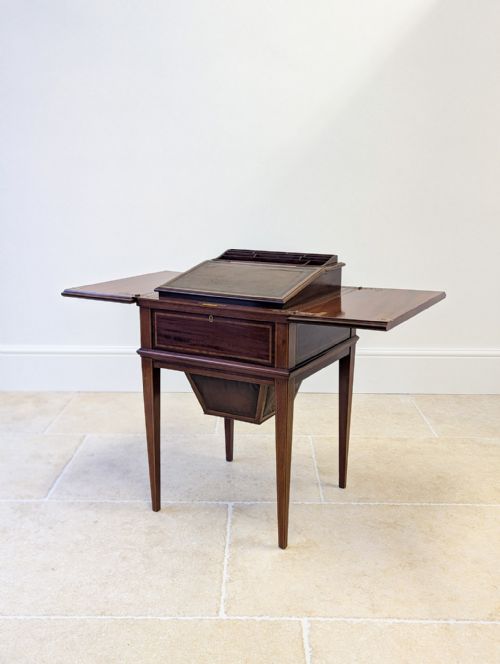
Makers utilised solid mahogany and applied mahogany veneers over secondary timbers, frequently enhancing surfaces with contrasting satinwood and boxwood stringing or marquetry. These lightwood inlays create geometric borders and floral motifs that stand out sharply against the deep reddish-brown grain of the mahogany.
Many cabinets incorporate brass hardware such as key escutcheons and drop handles, while more elaborate iterations feature bevelled mirror-backs and glass panels for display. Structural integrity relies on traditional joinery methods adapted to smaller domestic scales.
Object forms include bedside cupboards, music cabinets, washstands, display cases, and metamorphic writing tables.
What Varies in Quality
The refinement of the timber selection dictates much of the distinction between standard and superior pieces, with figured mahogany grains and crisp crossbanding marking out the better examples. Plain timber surfaces rely entirely on proportion and joinery, whereas higher-end commissions display intricate hand-painted details or complex serpentine shapes.
The delicacy and precision of the inlaid stringing and marquetry further separate ordinary production from workshop pieces of greater ambition. Finer cabinets maintain balanced proportions across curved profiles and ensure that internal fittings, drawers, and doors operate smoothly.
Ackland Hodge·Maple and Co
The Edwardian Mahogany Side Cabinet Glossary
- Crossbanding
- A border veneer applied to the edges of a surface so that the grain runs perpendicular to the centre panel. This technique frames the top of a cabinet with a contrasting decorative band.
- Satinwood
- A durable, yellowish timber native to India and Ceylon used widely for contrasting inlay and stringing on dark woods. It provides the bright golden highlights seen on many Edwardian pieces.
- Serpentine
- A furniture front characterised by a concave central section flanked by two convex curves, or the reverse. This undulating shape requires skilled carpentry to execute cleanly.
- Marquetry
- The art of forming decorative patterns using fitted pieces of various coloured veneers. Craftsmen employ this technique to create floral or geometric table tops and cabinet doors.
- Stringing
- Very narrow strips of contrasting wood inlaid into grooves on a surface to form delicate borders. It outlines the drawers and panels of Edwardian case pieces.
Edwardian Mahogany Side Cabinet: Frequently Asked Questions
What is an edwardian mahogany side cabinet used for?
These cabinets provided enclosed storage for books, washstand accessories, or personal items within bedrooms and reception rooms. Their compact surfaces also served to hold lamps, clocks, or decorative objects.
Today, they function well as bedside tables, hall stands, or small accent pieces in living spaces where floor space is limited.
How do I date an edwardian mahogany side cabinet?
Edwardian pieces generally date from the period between 1901 and 1910, though the broader Edwardian aesthetic spans from the late Victorian era up to the First World War. Look for characteristic lighter satinwood inlays and Sheraton Revival influences.
Construction methods also help determine age, as machine-sawn timber and factory production methods became more prevalent during the early twentieth century compared to earlier Victorian work.
Are these cabinets made of solid mahogany?
Many examples utilise a combination of solid mahogany frames and structural timbers alongside mahogany veneers applied to secondary woods. Veneering allowed craftsmen to display highly figured grain patterns that might be unstable if used as solid boards.
Internal elements such as drawer linings and carcase backs often employ secondary timbers like pine or oak while the visible exterior surfaces remain mahogany.
How do I care for mahogany furniture?
Keep wooden furniture away from direct sunlight and heat sources to prevent the mahogany and its delicate satinwood veneers from drying out or splitting. Dust regularly with a dry, soft cloth and avoid using silicone-based polishes.
Occasional application of traditional beeswax helps nourish the grain and maintains the natural lustre of the polished surface without building up a heavy residue.