


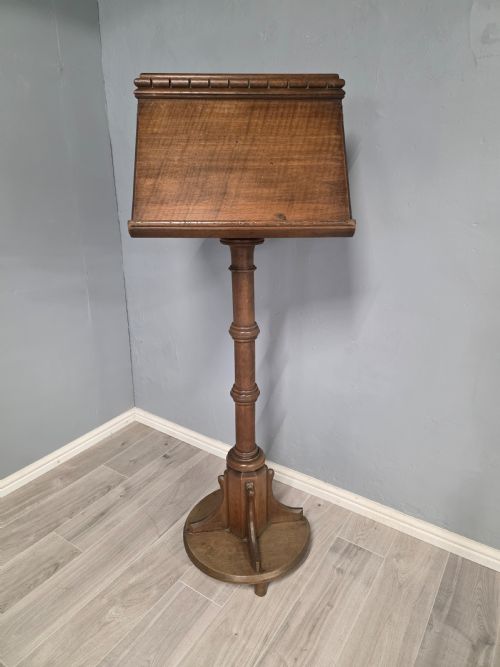


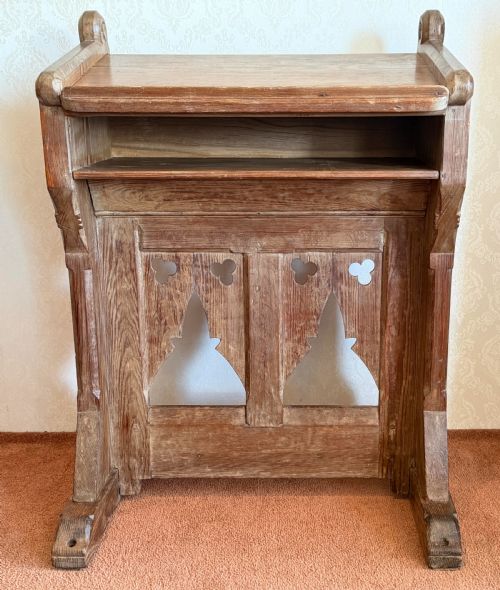


Ecclesiastical Carved Furniture
Ecclesiastical carved furniture brings ritual gravitas into domestic and public spaces through robust timber and solemn ornamentation.
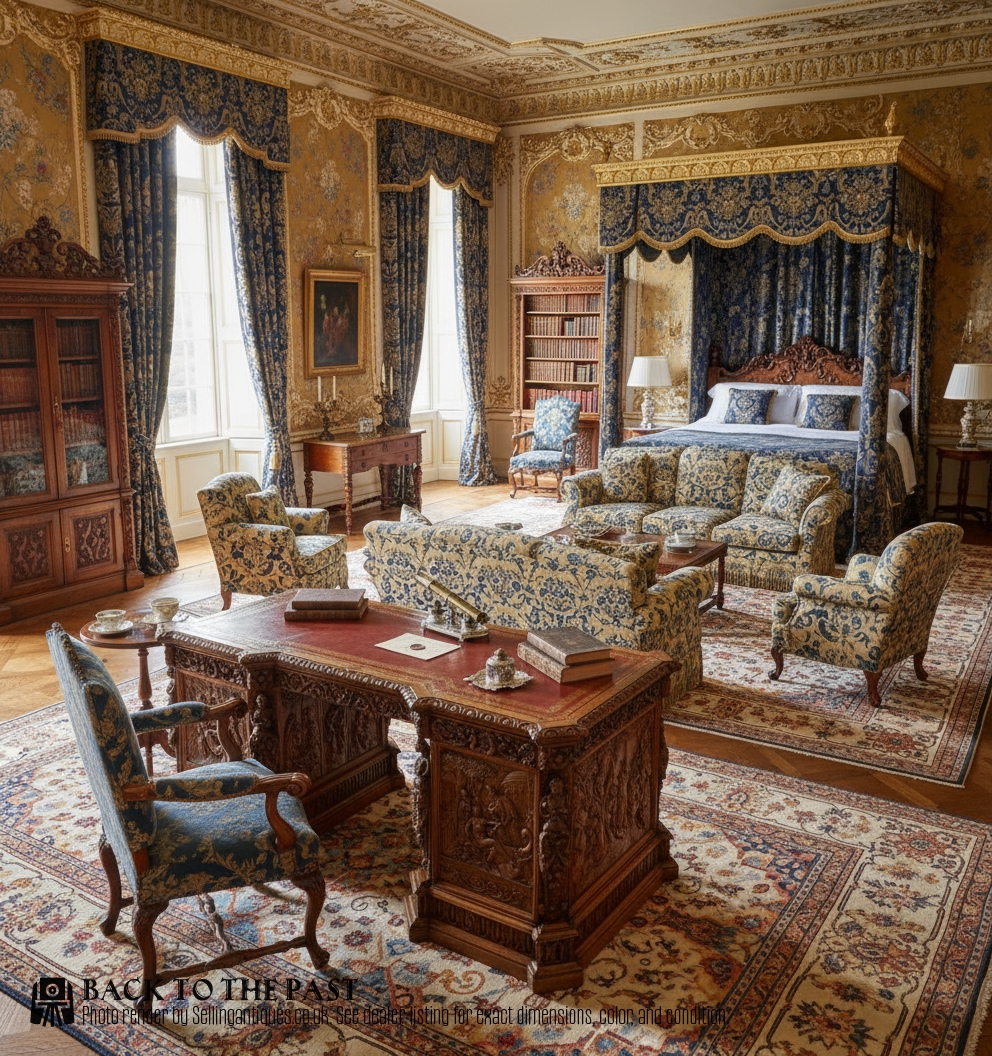
Ecclesiastical Carved Furniture
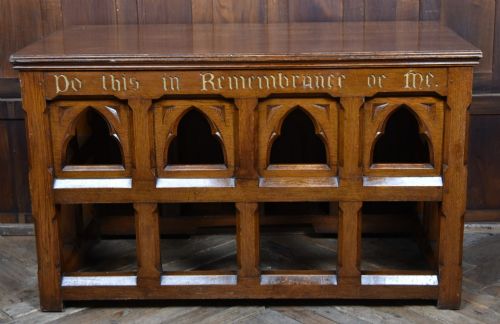
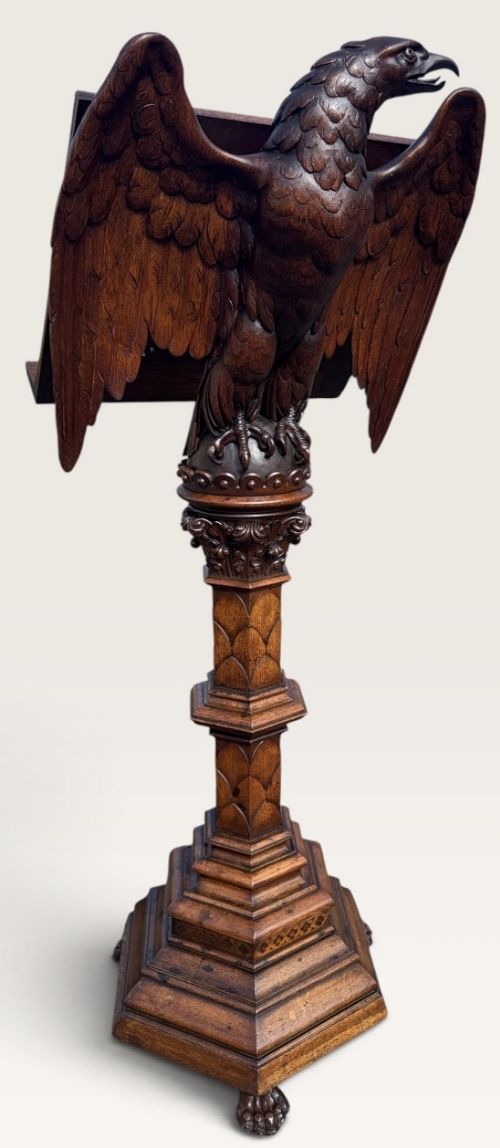
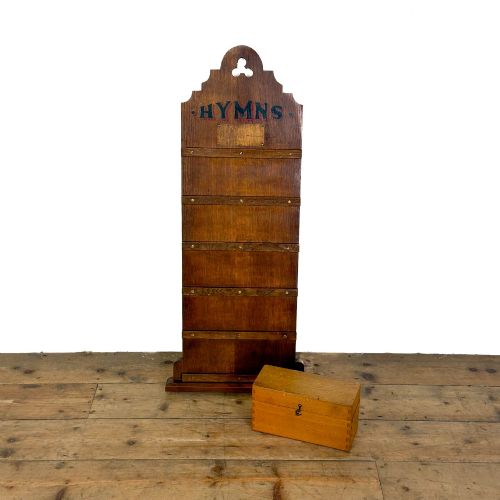
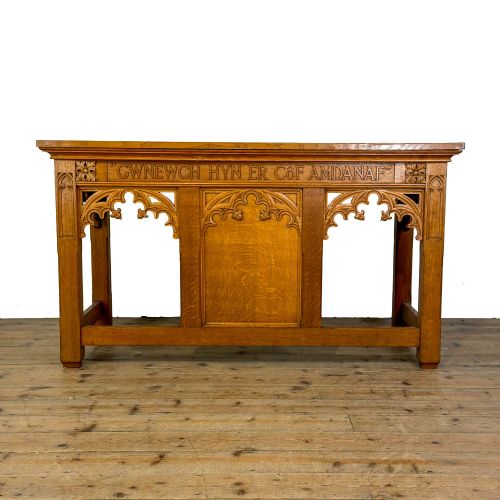
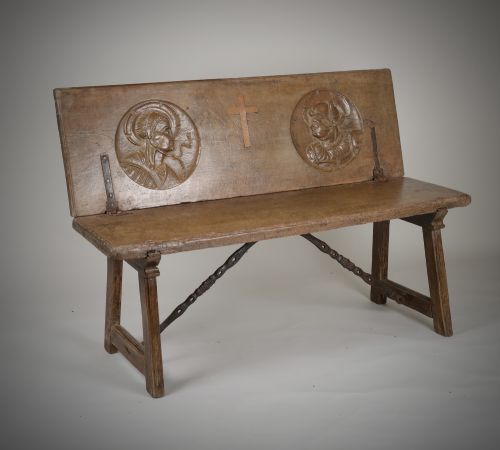
Ecclesiastical carved furniture encompasses seating, desks and architectural fittings originally made for chapel, church and devotional use. Buyers seeking these pieces encounter items built for solemnity, ranging from seating to liturgical furnishings.
The selections span distinct eras, dominated by Victorian Gothic Revival interpretations alongside earlier 16th century forms and later 1930 altar tables. These pieces translate sacred architecture into tangible domestic objects.
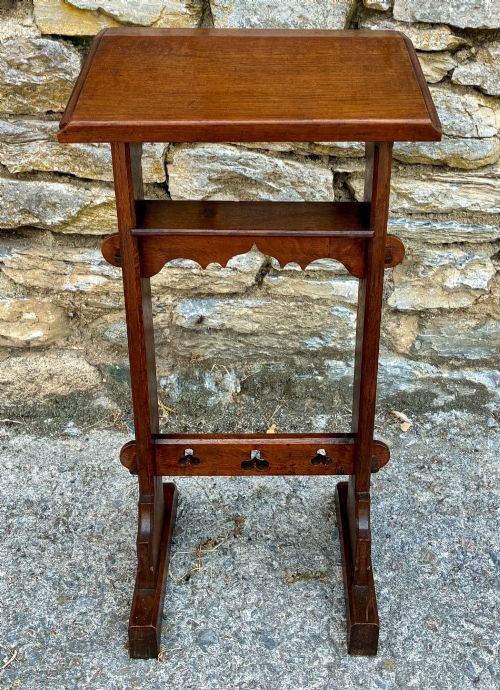
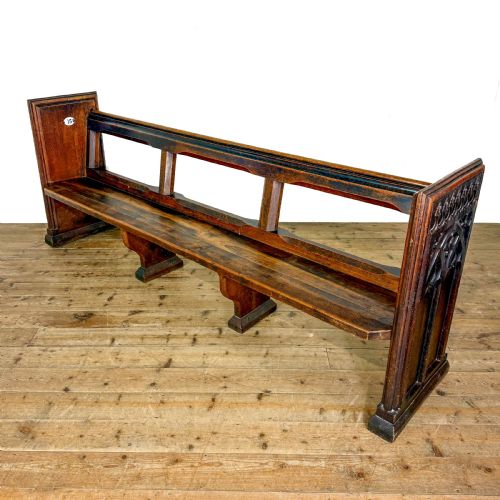
Common utilitarian forms include pews, benches, and prayer desks alongside grander thrones and pulpits. Domestic adaptations like home bars also emerge from repurposed ecclesiastical timber.
Materials and construction
Oak remains the primary timber across the periods, supplemented by pitch pine, deal pine, and occasional wrought iron or brass hardware. Joinery relies on heavy framing and pegged joints to withstand rigorous communal use.
Carving technique defines the decorative language, utilising deep relief work in Gothic Revival, Renaissance, and 17th century styles. Gold leaf and glass occasionally accent the predominantly wooden surfaces.
Ecclesiastical Carved Furniture Retail Price Guide 2026
Typical asking prices for ecclesiastical carved furniture among the pieces listed under this phrase on Sellingantiques today, from the lower quarter to the upper quarter. They describe what is for sale here now, not the wider market.
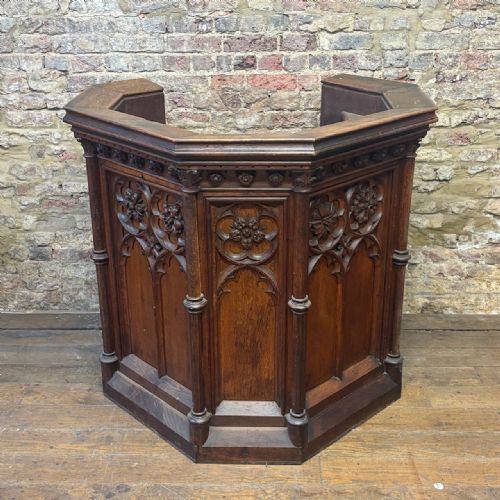
Some solid oak pulpits find entirely new vocations as domestic home bars.
Judging quality in church furnishings
Quality rests upon the depth and precision of the hand carving, where crisp architectural tracery and figurative relief distinguish superior pieces from mechanical reproduction. Timber selection also dictates worth, with dense quarter-sawn oak outlasting softer pine alternatives.
Integrity of form marks the finest examples, such as untouched pre-reformation thrones or documented pews from named parishes. Alterations made during later conversions can diminish historical cohesion.
The Ecclesiastical Carved Furniture Glossary
- Prie-Dieu
- A devotional desk designed for kneeling while praying, equipped with a slanted shelf for books. These pieces often feature storage compartments for scripture.
- Glastonbury Chair
- A distinct type of wooden armchair with a cruciform frame and sloping arms, popularised during the Gothic Revival. They derive their form from medieval prototypes.
- Gothic Revival
- An architectural and decorative style drawing inspiration from medieval design, featuring pointed arches and trefoils. This aesthetic dominated Victorian ecclesiastical production.
- Altar Table
- A raised surface positioned at the liturgical centre of a chapel or church for the administration of sacraments. Domestic variants adapt this solemn form for secular interiors.
- Settle
- A high-backed wooden bench with solid arms and a storage box beneath the seat. These communal seats shielded occupants from draughts in large halls.
Ecclesiastical Carved Furniture: Frequently Asked Questions
What is ecclesiastical carved furniture?
Ecclesiastical carved furniture comprises wooden items originally constructed for religious ceremonies and church administration. This category includes seating such as pews and chairs, alongside liturgical desks and altars.
These items draw heavily on Gothic Revival, Renaissance, and medieval styles. They serve today as functional antiques with distinct architectural presence.
How were church pews used?
Church pews provided fixed communal seating for congregants during long services and sermons. Their solid high backs offered protection from cold stone drafts in unheated parish churches.
Over time, many of these pews were removed during church re-orderings and adapted for domestic hallways or dining rooms.
What is a prie-dieu?
A prie-dieu is a dedicated devotional kneeler designed for private prayer within a chapel or home setting. It typically combines a lower padded kneeling platform with an upper sloped shelf for holding prayer books.
Victorian makers frequently produced these in carved oak to satisfy the demands of the Oxford Movement.
How do I date Gothic Revival furniture?
Dating Gothic Revival pieces relies on examining timber patination, construction methods, and stylistic cues from the Victorian era. Earlier 19th century interpretations often display meticulous hand carving compared to later mass-produced items.
Reference to specific movements like the Oxford Movement helps narrow down the decade of production.