
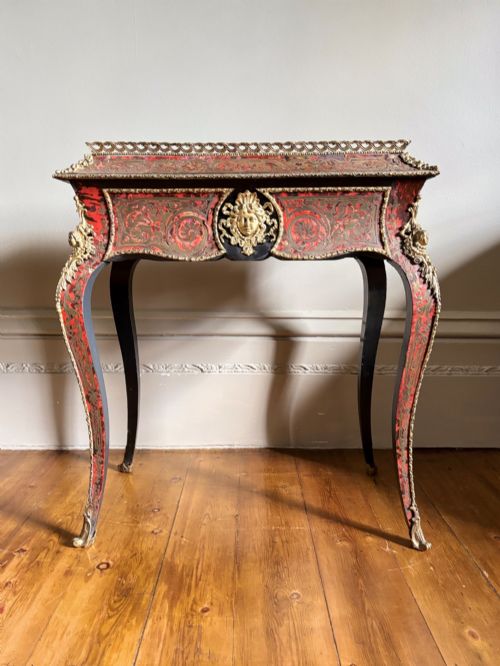


Ebonised Marquetry Table
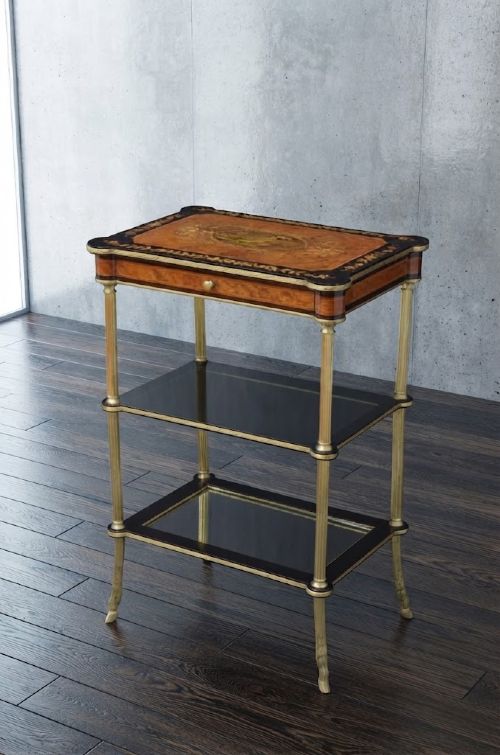
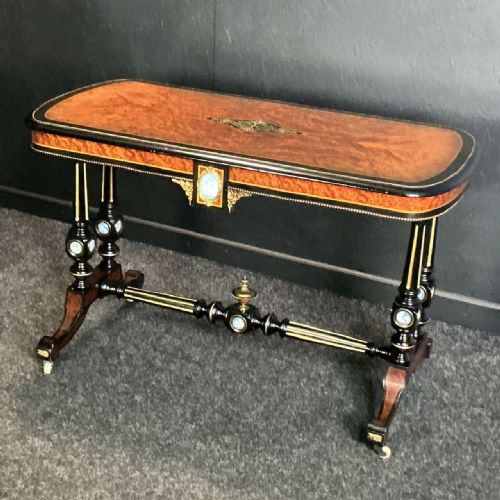
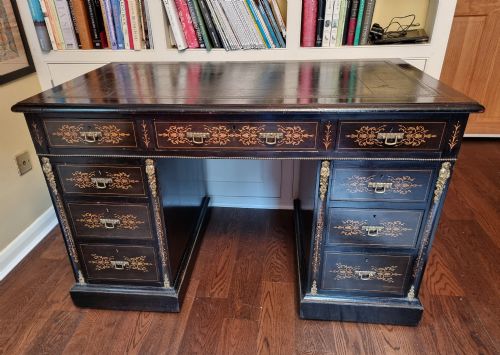
An ebonised marquetry table combines dark, polished timber with intricate, contrasting wood and metal inlay.
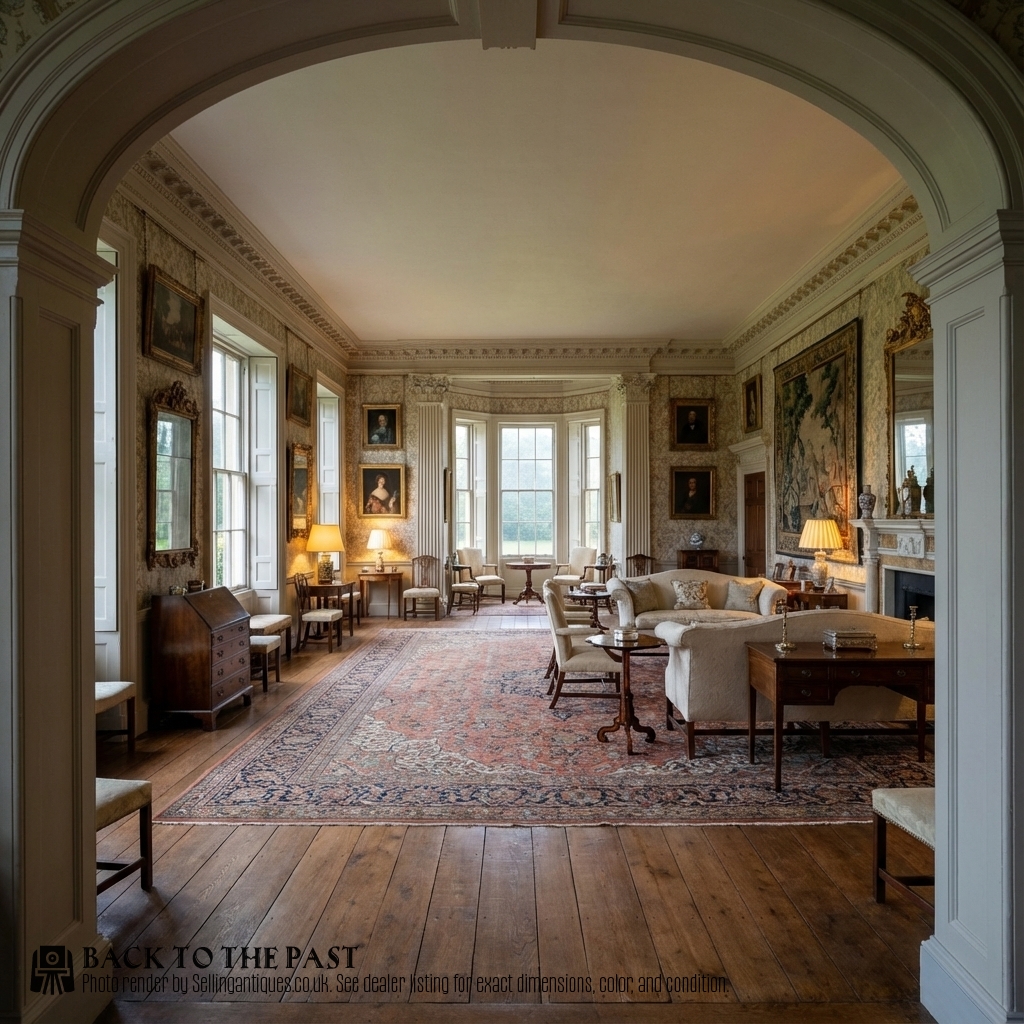
Ebonised Marquetry Table
The search for an ebonised marquetry table brings up nineteenth century Victorian and French Napoleon III designs intended for reception rooms and salons.
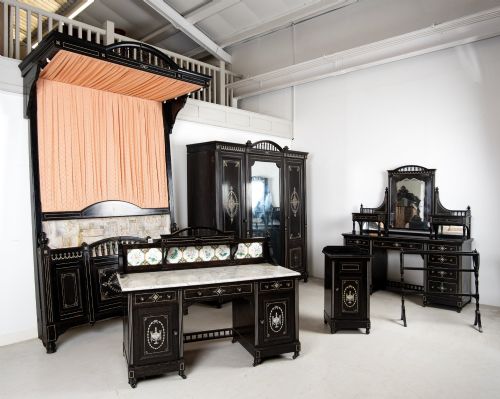
Most examples function as centre tables, card tables, side tables, or occasional tables, frequently drawing on Louis XV Revival and Aesthetic Movement styles.
Makers such as Edwards and Roberts and Maison Millet produced high-status pieces, while other items originate from Italian, Dutch, and Indian workshops.
Materials and construction
Craftsmen applied a dense black finish to woods such as beech or fruitwood to imitate ebony, creating a dark ground for detailed decoration.
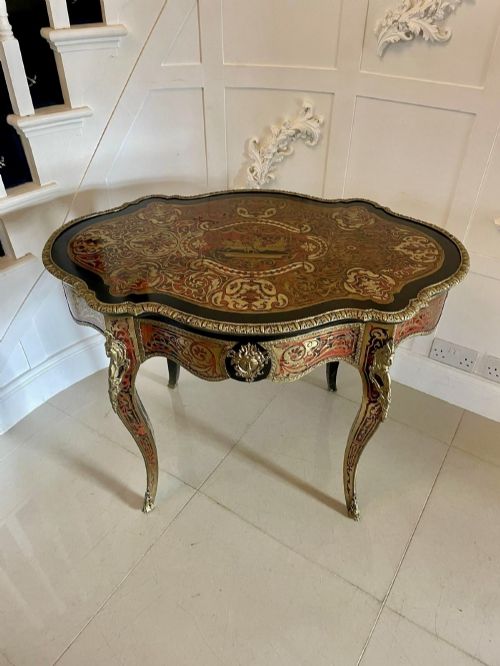
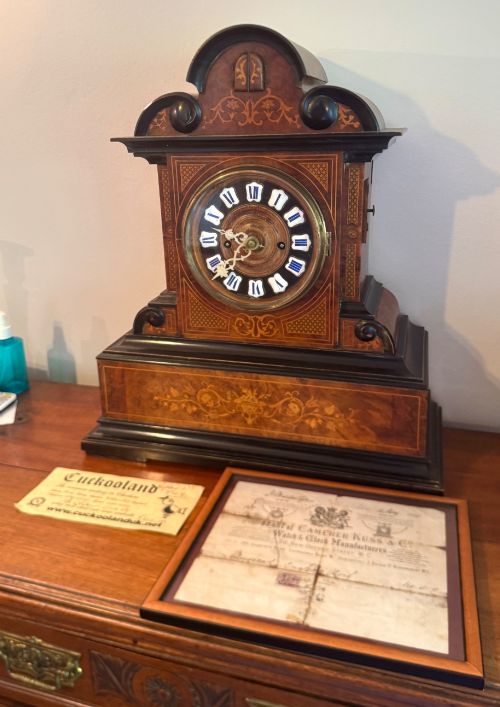
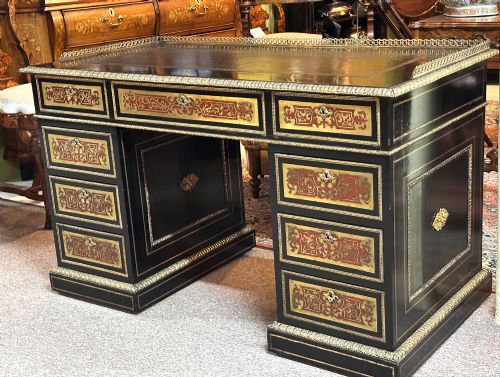
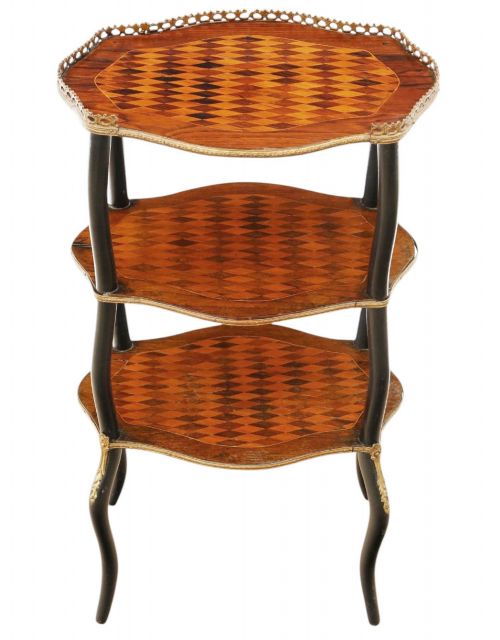
Surfaces feature marquetry inlay, parquetry, and Boulle work using brass, tortoiseshell, mother-of-pearl, and bone alongside walnut, rosewood, and kingwood.
Gilt bronze or ormolu mounts, frames, and feet complete the construction, often paired with mirrored tiers or intricate pedestals.
Ebonised Marquetry Table Retail Price Guide 2026
Typical asking prices for ebonised marquetry table among the pieces listed under this phrase on Sellingantiques today, from the lower quarter to the upper quarter. They describe what is for sale here now, not the wider market.
Listings feature nineteenth-century pieces incorporating brass, tortoiseshell, and bone alongside ebonised walnut and rosewood.
Judging execution
Quality rests upon the crispness of the marquetry cutting and the precision of the fit between the contrasting woods and metals.
The depth and consistency of the ebonised finish and the richness of the secondary timbers, such as burr walnut or amboyna, elevate certain pieces.
Superior examples exhibit finely chased ormolu mounts and robust structural joinery rather than purely decorative surface embellishment.
Edwards And Roberts·Maison Millet·Thomas A Paris·Gillows·Liberty And Co
The Ebonised Marquetry Table Glossary
- Ebonised
- Wood treated with stain or paint to achieve the deep, dark appearance of ebony. This finish became especially popular during the Victorian and Aesthetic periods.
- Marquetry
- Decorative patterns formed by fitting together thin veneers of various woods, metals, or shells onto a carcase. Master craftsmen used this technique to create floral and geometric tabletop scenes.
- Boulle
- A form of marquetry developed in France utilising tortoiseshell and brass inlay. It is named after the cabinetmaker André-Charles Boulle.
- Ormolu
- Gilt bronze mounts applied to furniture edges and legs. The technique involves coating cast bronze in gold amalgam.
- Parquetry
- Geometric mosaic woodwork forming repeating patterns like cubes or chequers. Unlike marquetry, it relies strictly on geometric lines rather than pictorial motifs.
Ebonised Marquetry Table: Frequently Asked Questions
What is an ebonised marquetry table?
These pieces combine a dark, blackened wooden surface with intricate decorative veneers made from contrasting woods, metals, or shell.
They span various nineteenth-century styles, functioning primarily as display, card, or centre tables in formal rooms.
How do I identify French revival pieces?
French revival examples often display curved cabriole legs, elaborate ormolu mounts, and Boulle work.
They reflect mid-nineteenth-century revivals of earlier royal tastes, particularly Louis XV designs.
Where should I place an occasional table?
These smaller tables work well as lamp stands, beside armchairs, or as freestanding decorative items in living spaces.
Their detailed tabletops benefit from placement in well-lit areas where the marquetry remains visible.
How do I care for ebonised wood?
Keep the timber away from direct sunlight and excessive heat fluctuations to protect the dark finish and prevent veneer lifting.
Dust gently with a soft dry cloth and avoid harsh chemical polishes.