


Ebonised Floor Stand
An ebonised floor stand brings dark, dramatic presence to a room, offering a functional stage for lighting, art, and display.
Ebonised Floor Stand
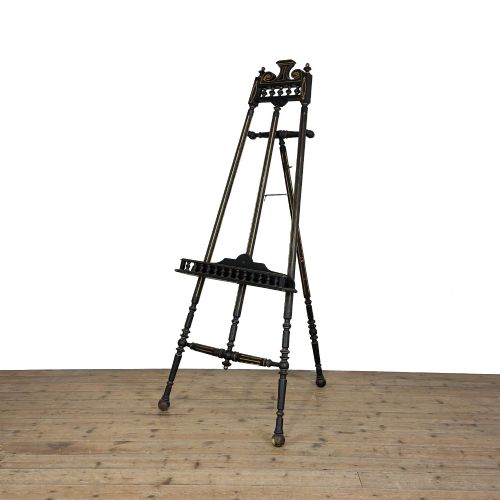
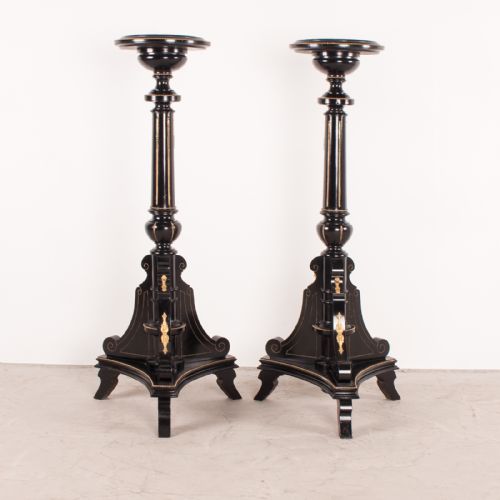
When you search for an ebonised floor stand, you are looking at tall vertical furnishings finished with a dark, blackened surface that mimics ebony wood. These pieces serve practical roles as torchères, standard lamps, easels, and pedestals across various historical periods.
On this page, you are most likely to meet torcheres, standard lamps, and pedestals hailing from the Victorian era, the nineteenth century, and the early twentieth century. These vertical forms elevate objects or illuminate corners through substantial height and dark finishes.
How they were made
The primary technique relies on coating timber such as fruitwood or beech with a dark stain or paint to achieve the dense, ebonised appearance characteristic of expensive exotic woods. Artisans frequently enhanced these dark surfaces with parcel gilt, gold leaf, or contrasting brass and ormolu mounts.
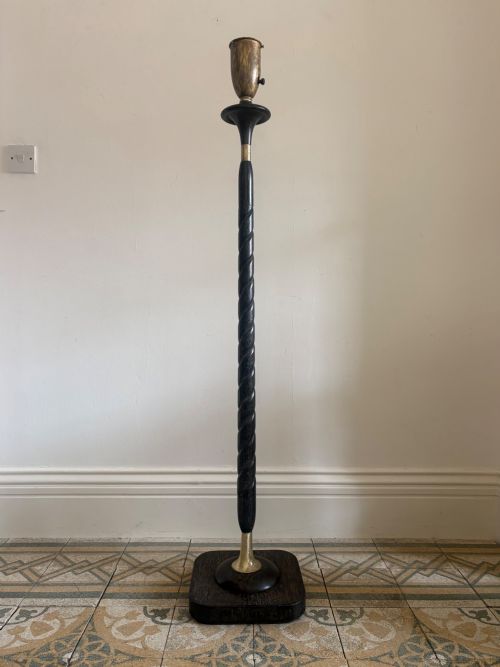
Construction methods range from turned barley twist shafts on floor lamps to sturdy joinery on multi-rail towel stands and heavy display pedestals. Materials like glass, fabric, and inlaid wood occasionally complement the core ebonised structure.
Listings feature ebonised floor stands spanning from the eighteenth century to the 1930s, incorporating brass, gold leaf, and rosewood.
What varies in quality
Quality rests in the crispness of the turning, the depth of the ebonised finish, and the integration of decorative details like parcel gilt or brass accents. Superior examples display balanced proportions and refined carving rather than heavy, untidy execution.
The integrity of the structural joints and the weight of the base dictate how well a tall vertical piece stands over time. Finer items show careful attention to material selection and surface preservation across periods ranging from the eighteenth century onwards.
Humphrey Hopper
The Ebonised Floor Stand Glossary
- Ebonised
- Wood treated with stain, paint, or chemical processes to imitate costly ebony. This dark finish was especially popular during the Victorian and Aesthetic periods.
- Torchere
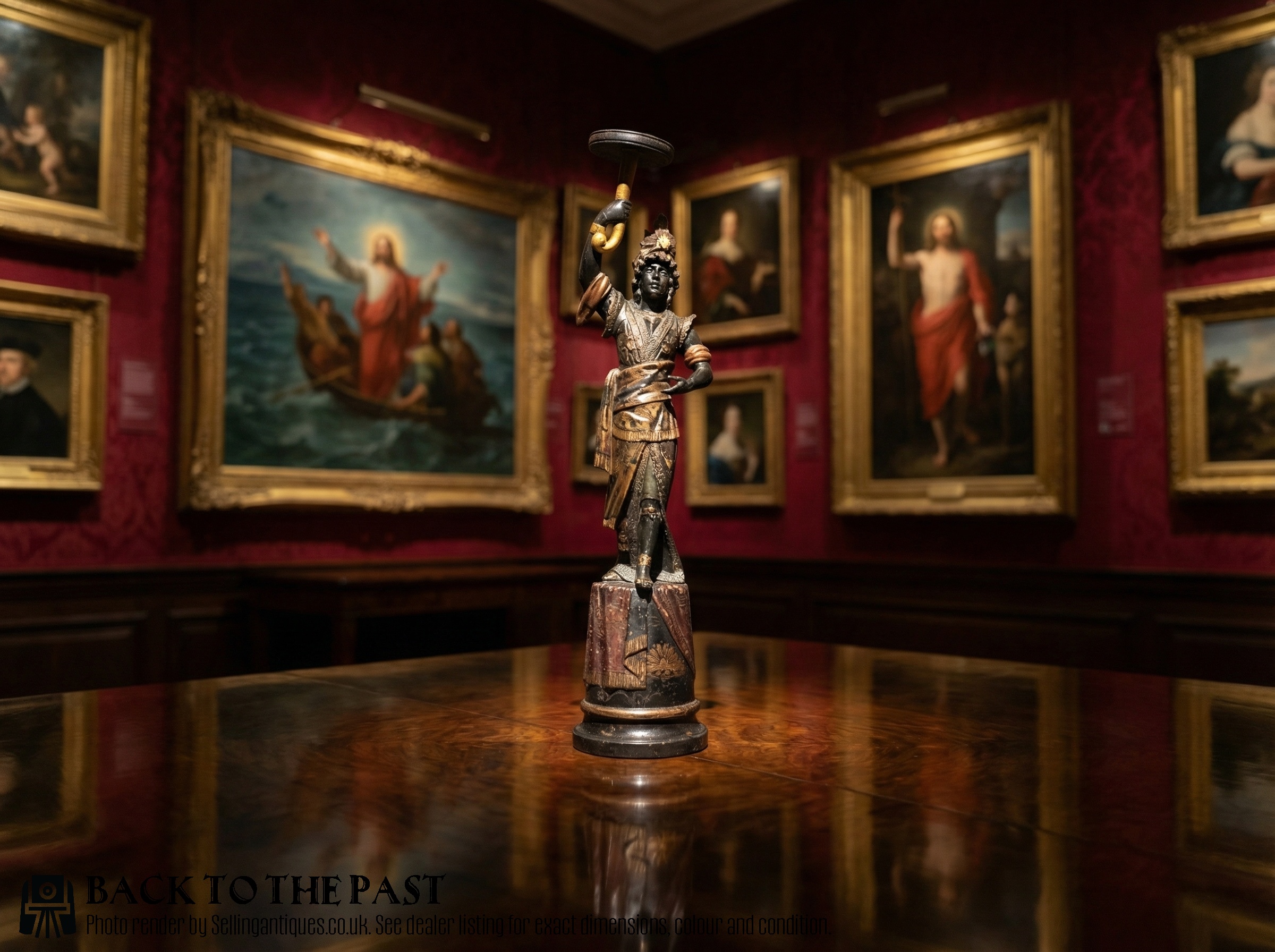
- A tall stand designed to hold a light source or display an ornament. These pieces often feature slender columns and decorative bases.
- Standard lamp
- A freestanding floor lamp designed to provide ambient illumination. They frequently incorporate adjustable reading arms or telescopic brass elements.
- Parcel gilt
- Wood or metal partially gilded with gold leaf. This technique highlights carved details against a dark ebonised background.
Ebonised Floor Stand: Frequently Asked Questions
What is an ebonised floor stand used for?
These tall stands support lighting, display decorative urns or sculptures, hold reading materials, or exhibit fine art easels. Their vertical presence draws the eye upward and makes efficient use of corner spaces.
Historically, they brought illumination and ornamental display into grand reception rooms and parlours. Today, they serve similar functional and decorative roles in traditional and eclectic interiors.
How do I date an ebonised floor stand?
Dating relies on observing the turning styles, construction methods, and auxiliary materials used in the piece. Victorian examples often display heavier ornamentation, while earlier Georgian or Regency pieces lean towards classical proportions.
Matching the finish and hardware against known period manufacturing techniques helps narrow down the decade. Examining secondary woods inside joints provides further clues to age.
Where should I place a torchere stand?
Torchere stands suit dark corners, flanking doorways, or framing large pieces of furniture where height adds balance to a room. Their narrow footprints allow them to fit into tight spaces without blocking movement.
Pairing a torchere with appropriate lighting or a compatible sculptural object enhances its vertical line. Ensure the base sits firmly on level flooring to maintain stability.
How do I care for ebonised wood?
Dust the surface regularly with a soft, dry cloth to prevent particulate buildup on the dark finish. Avoid modern chemical sprays that can degrade historic surface treatments over time.
Keep the stand away from direct sunlight and severe humidity fluctuations to protect the wood and any gilt or brass accents. Gentle waxing helps maintain the lustre of the blackened surface.