


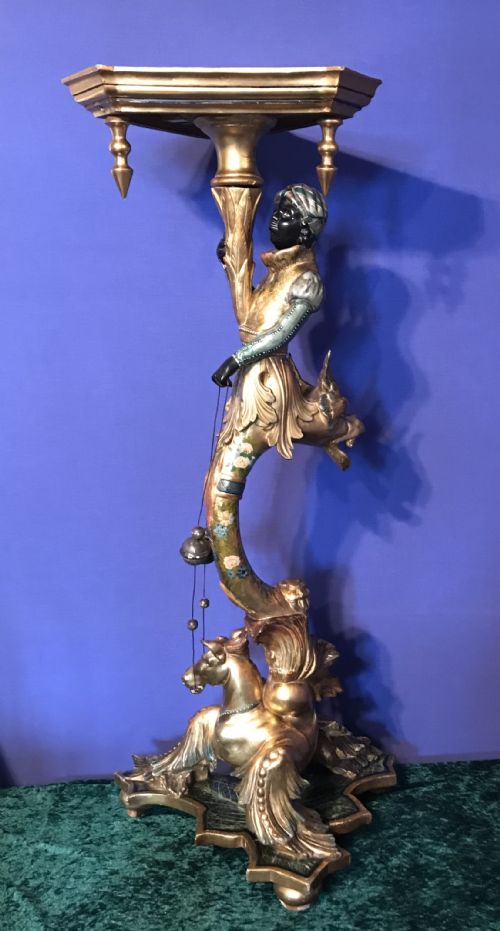

Carved Blackamoor Figure
A carved blackamoor figure brings dramatic Venetian theatre into a room, serving as a functional stand, torchere or sculptural statement.
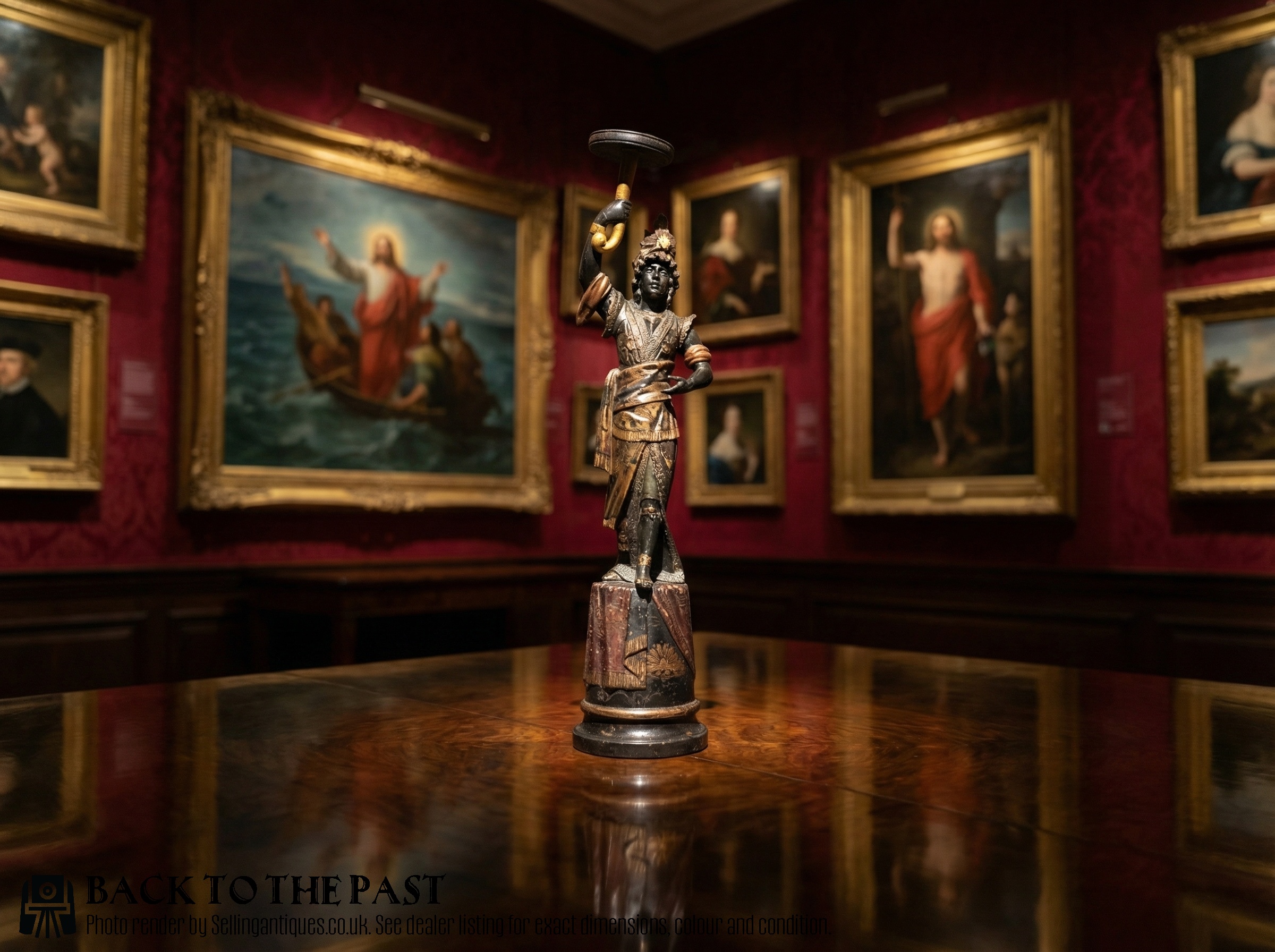
Carved Blackamoor Figure
A carved blackamoor figure represents an ornate sculptural form originating primarily from Venetian traditions, spanning the nineteenth century and into the early twentieth century. These pieces function as stands, torcheres, tables, and candelabras, often depicting figures in elaborate historical attire.
Buyers will most frequently encounter nineteenth-century Venetian examples on this page, executed in carved wood with polychrome paint and gilt highlights. They range from small tabletop figures to large floor-standing torcheres and plant stands.
How they were made
Giltwood and gold leaf accents were meticulously applied to highlight drapery, trim, and accessories, creating the rich contrasting textures characteristic of Venetian baroque and rococo revival styles.
What varies in quality
The refinement of the carving dictates the distinction between standard production and exceptional artistry, particularly in the rendering of facial expressions, hands, and intricate costume details. Sculptural depth and anatomical precision elevate certain figures above simpler decorative pieces.
The preservation of the original polychrome paint and gold leaf surface determines the desirability of a piece. Intact historic finishes with authentic patination command greater appreciation than later overpainting or heavy restoration.
The Carved Blackamoor Figure Glossary
- Torchere
- A tall ornamental stand designed to hold a light, candle, or decorative object. In these listings, they frequently take the form of carved figures holding platforms.
- Gesso
- A plaster-like mixture applied to wood as a base for paint and gilding. It provides a smooth surface for intricate detailing.
- Parcel-gilt
- Partially gilded with gold leaf, leaving portions of the underlying painted wood or natural timber exposed. This technique emphasises specific decorative elements.
Carved Blackamoor Figure: Frequently Asked Questions
What is a blackamoor figure used for?
These pieces function primarily as decorative stands, torcheres, tables, and candelabras to hold lighting or display items in a room.
Historically designed as dramatic furnishings, they serve today as striking focal points within traditional or eclectic interior schemes.
How do I date a carved figure?
Dating relies on stylistic clues, timber types, and the method of surface decoration, with nineteenth-century Venetian pieces showing distinct baroque revival influences.
Examining the wear patterns on the gesso and polychrome paint helps distinguish nineteenth-century examples from later twentieth-century interpretations.
Are these figures made of solid wood?
The listings show pieces carved from solid woods such as walnut and oak, providing a sturdy foundation for the heavy gesso and paint layers.
Some smaller components or additions may utilise simpler timbers beneath the decorated surface.
Where were these pieces made?
The vast majority originate from Venice and Italy, reflecting local woodworking and decorative arts traditions from the nineteenth century.
Venetian workshops specialised in these ornate, polychrome-decorated figures for both domestic and export markets.