
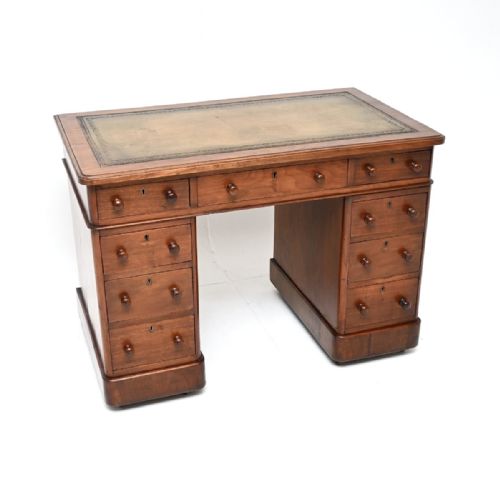


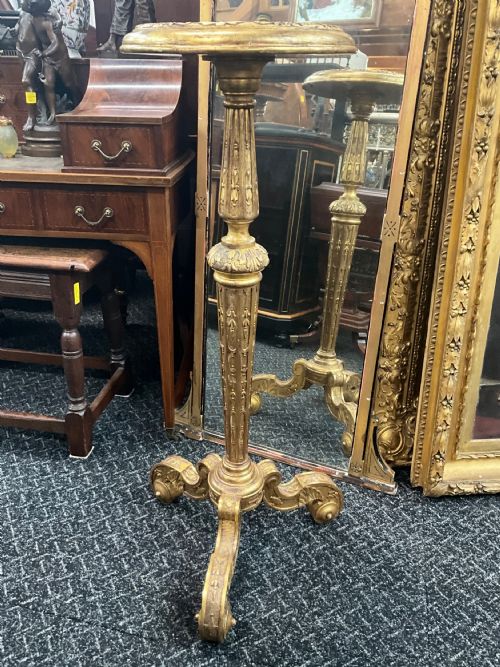


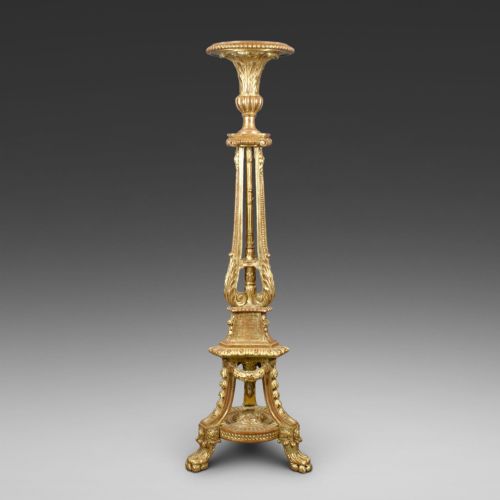


Gilded Wooden Pedestal
A gilded wooden pedestal brings height and rich metallic reflection to a room, carrying urns, figures or lamps with effortless dignity.
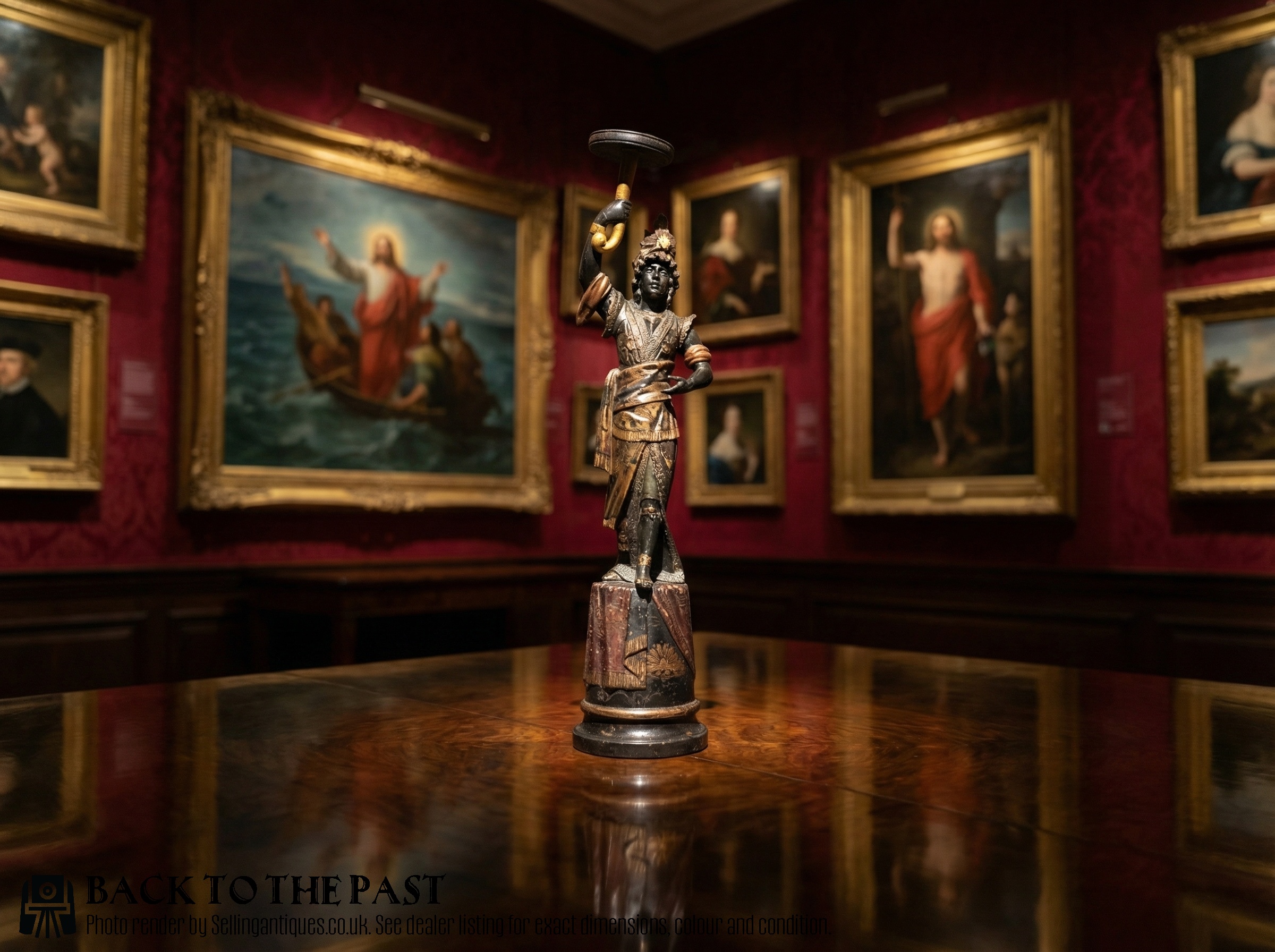
Gilded Wooden Pedestal
A gilded wooden pedestal acts as a raised platform or stand for display, appearing in forms such as torcheres, urn stands, columns and sculptural figures holding supports. These pieces emerge from periods spanning the eighteenth century through to the early twentieth century, carrying the decorative weight of styles like Venetian Baroque, Neoclassical and French Chateau.
The selections encountered here range from tall torchere stands with gesso decoration to carved wooden figures, occasional side tables and grand scale columns. Many examples reflect European craftsmanship, particularly Italian and Venetian workshops, alongside Asian folk art forms and carved wooden figures on stands.
Buyers seek these objects to elevate specific display items or to introduce dramatic architectural presence into an interior space. The combination of carved wood and reflective surfaces creates a distinct focal point that grounds the surrounding decor.
Materials and construction methods
Makers built these supports primarily from carved wood, applying layers of gesso to smooth the surface before laying down gold leaf or gilt finish. This traditional gesso layer allowed artisans to achieve crisp relief details and sharp edges in the carving beneath the metal leaf.
Carved wooden swans and exotic figures stand ready to hold your afternoon reading.
Distinctions in craftsmanship and preservation
The nuance of the wood carving dictates much of the visual success of the piece, separating deep, undercut hand-carved relief from simpler, flatter decoration. Crisp detailing in the gesso layer ensures that the gilded surfaces catch the light evenly across complex curves and acanthus leaves.
Survival of original surface finishes defines the desirability of older examples, with untouched gold leaf, gesso and polychrome paint holding greater interest than later repainting. Structural integrity in slender shafts and weight-bearing columns ensures the stand remains stable under display objects.
The Gilded Wooden Pedestal Glossary
- Giltwood
- Wood that has been coated with gold leaf or gold paint for a decorative metallic finish. This surface treatment gives furniture and stands a brilliant reflective quality.
- Torchere
- A tall stand designed to hold a light, candle or decorative object such as an urn. These slender pieces introduce vertical emphasis into a room layout.
- Gesso
- A plaster mix applied to wood surfaces to prepare them for gilding or painting. It provides a smooth base that can be moulded and carved in fine detail.
- Polychrome
- Painted in several colours, often used to describe decorative figures or carved elements with naturalistic flesh tones and tinted garments. This technique adds vivid character to sculptural stands.
- Neoclassical
- A style drawing inspiration from the classical art and architecture of ancient Greece and Rome. Pieces in this aesthetic often feature clean architectural proportions and restrained ornamentation.
Gilded Wooden Pedestal: Frequently Asked Questions
What were pedestals used for originally?
These tall stands and torcheres originally elevated lighting devices, large candles or decorative urns to illuminate dark corners of grand rooms. They also served to display sculpture and important decorative objects at eye level.
Over time, their role shifted towards pure interior decoration, acting as architectural statements within domestic spaces while maintaining their traditional function as display platforms.
How do I identify the period of a gilded stand?
Dating relies on observing the combination of carving styles, the preparation layers beneath the gold leaf, and the specific timber used in construction. Neoclassical examples show restrained classical motifs, whereas Venetian Baroque pieces display exuberant curves and figural elements.
Examining the wear patterns on the gold leaf and gesso also helps establish age, as genuine historic surfaces age with a soft, matte patina distinct from modern reproductions.
How should I place a pedestal in a room?
These vertical stands work best in corners, empty wall spaces or flanking doorways where they can draw the eye upward without obstructing movement. Pairing them with a complementary urn, bowl or sculpture completes the traditional display arrangement.
Ensure the stand rests on a level surface, as tall torcheres and columns require stability, particularly when supporting heavier decorative items.
Are painted and gilded pieces fragile?
The historic gesso and gold leaf layers require gentle handling and protection from knocks, excessive moisture and direct heat sources. Dusting should be done lightly with a soft, dry brush to preserve the delicate metallic surfaces.
Maintaining a stable indoor climate prevents the underlying timber from expanding or contracting, which protects the gesso layer from cracking over time.