



Venetian Torchere Stand
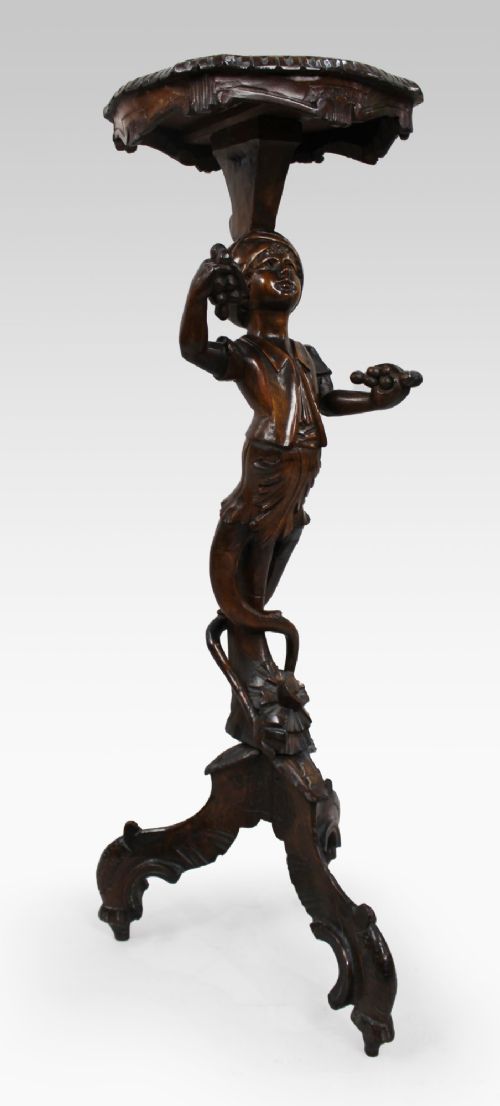
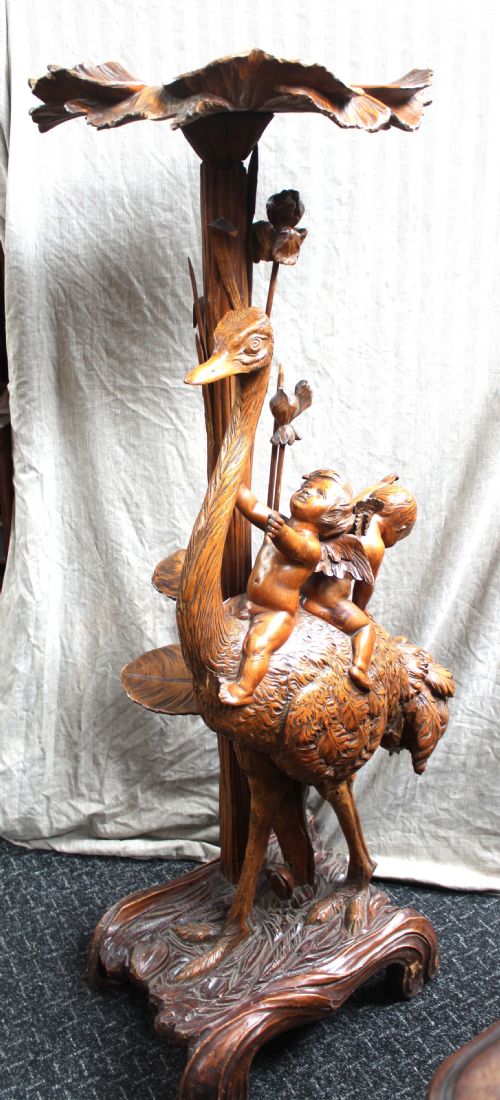
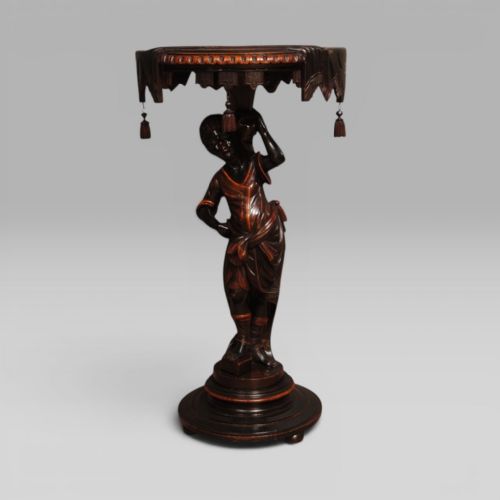
These carved Venetian torchere stand pieces bring dramatic Italian figure carving and grand display height into a room.
Venetian Torchere Stand
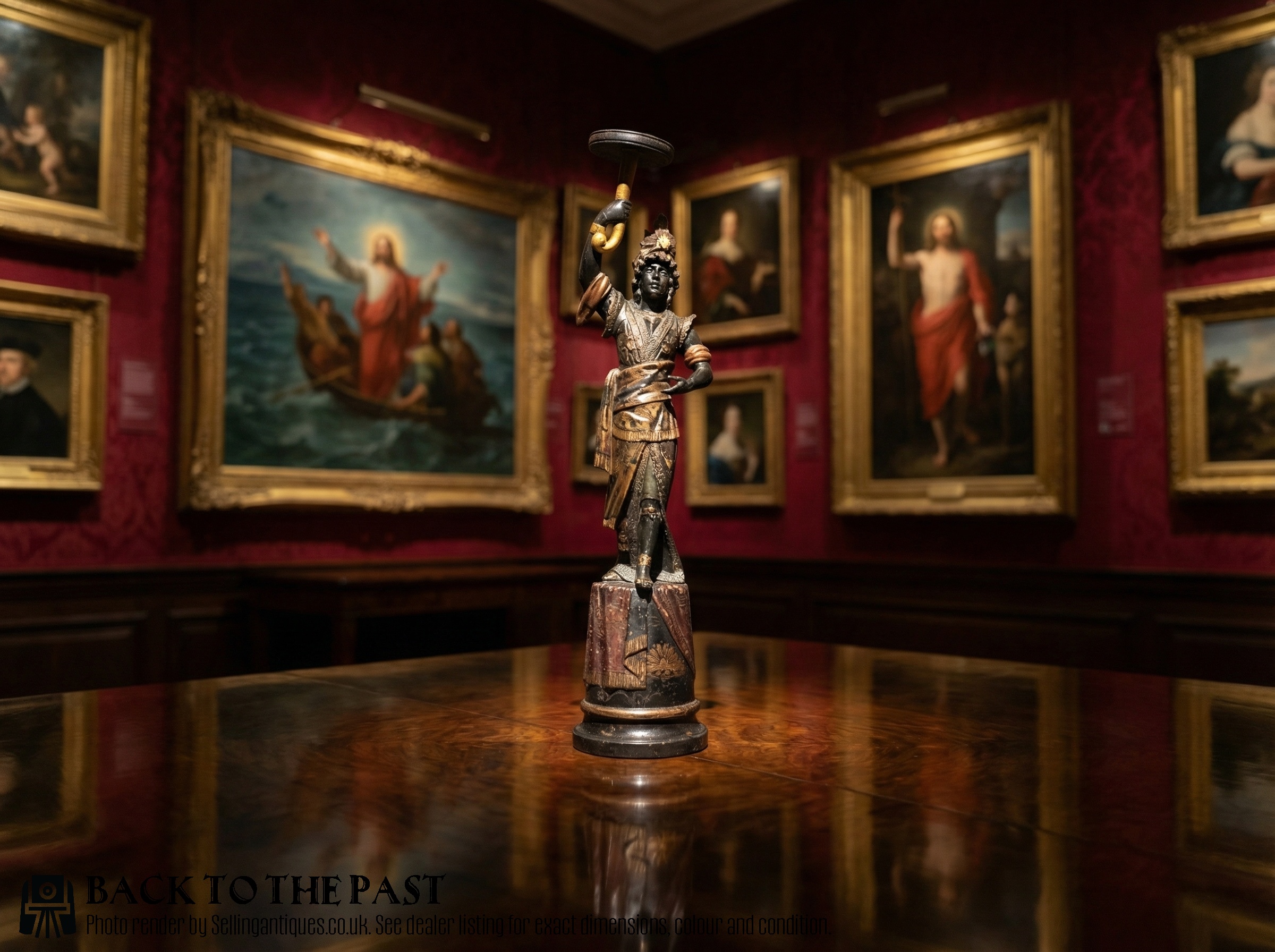
A Venetian torchere stand combines sculptural figural art with functional display furniture, typically taking the form of a standing figure holding a tray, light fitting, or pedestal top. When you search for this phrase, you encounter elaborately carved wooden forms designed to illuminate or display objects in high-status interiors.
The pieces appearing on this page span from the early nineteenth century through the Edwardian era and the nineteen-twenties, demonstrating remarkable continuity in Venetian craftsmanship. Most examples adopt identifiable forms such as Blackamoor figures, gondoliers, or young women, serving simultaneously as statues and tables.
Makers drew heavily upon Venetian Baroque, Venetian Rococo, and Italian Renaissance Revival vocabularies to produce these striking objects. Buyers select them to anchor a corner, support a lamp, or provide an exotic sculptural focal point within a period room.
Materials and Technique
Carved wood forms the structural core of these stands, frequently utilising walnut alongside various softer timbers that accepted intricate chisel work. Artisans shaped these woods into dynamic figures with detailed drapery, musculature, and facial expressions.
Surfaces received elaborate treatments of gesso, gold leaf, parcel-gilt, and polychrome paint to achieve rich, multi-coloured decorative schemes. This combination of carved timber and vibrant pigment defines the visual impact typical of nineteenth-century Venetian workshops.
Listings feature items spanning the early nineteenth century through the Edwardian period, executed in carved wood, gesso, and polychrome paint.
Quality Variations
Surface preservation dictates the upper tier of the market, with original gilt and polychrome paint holding superior merit over later overpainting. The complexity of the supporting structure, from simple columns to elaborate figural gondoliers and waiters, also elevates the standing of individual examples.
The Venetian Torchere Stand Glossary
- Torchere
- A tall ornamental stand originally designed to hold a torch or candle, later adapted for lamps and floral displays. These pieces elevate lighting to a sculptural element within the room.
- Polychrome
- Decorated in multiple colours. This traditional paint application gives the carved figures their lifelike garments and realistic skin tones.
- Gesso
- A plaster-like mixture applied to wood surfaces to provide a smooth base for gilding and painting. It allows intricate relief ornament to be modelled before the final metallic or colour finish is applied.
- Parcel-gilt
- Partially gilded with gold leaf, leaving areas of the underlying wood or paint exposed. This technique highlights specific details like garment trims or hair.
- Blackamoor
- A traditional European decorative art motif depicting figures from North or Sub-Saharan Africa, often dressed in elaborate exotic costume. In Venetian furniture, these figures frequently function as torchere stands, tables, or torch bearers.
Venetian Torchere Stand: Frequently Asked Questions
What is a Venetian torchere stand used for?
These pieces serve primarily as decorative display furniture, holding lamps, plants, or small vessels upon their raised platforms. They combine sculpture with utility, functioning as striking focal points in hallways or reception rooms.
Historically, they provided ambient illumination by carrying candles or torches, a role later translated to electric standard lamps and tabletop lighting.
How do I date a nineteenth-century torchere?
Dating relies on stylistic clues, cabinetmaking techniques, and the specific material composition of the gesso and paint layers. Pieces from the early nineteenth century often reflect heavier neoclassical proportions, while late nineteenth-century examples lean towards elaborate Venetian Baroque revivals.
Examining the underlying timber and the wear patterns on the polychrome surface helps distinguish period execution from later twentieth-century interpretations.
Are original painted surfaces important?
Original gilt and polychrome paint layers significantly define the authenticity and visual character of these stands. Untouched pigment retains the intended palette and tonal depth applied by nineteenth-century artisans.
While some pieces underwent historical touch-ups or later redecoration, collectors prioritize surfaces that display age-appropriate craquelure and genuine wear.