
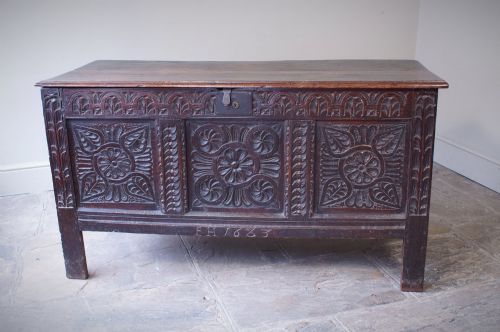


Dated Oak Coffer
A dated oak coffer carries the exact year of its creation carved, burnt, or inlaid into the timber, marking a specific moment in domestic history.
Dated Oak Coffer
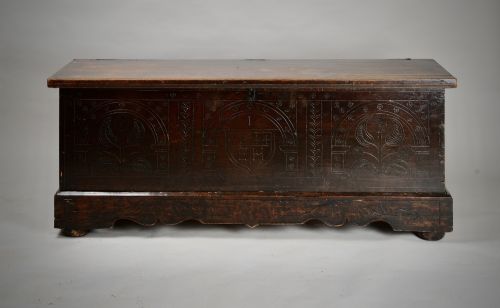
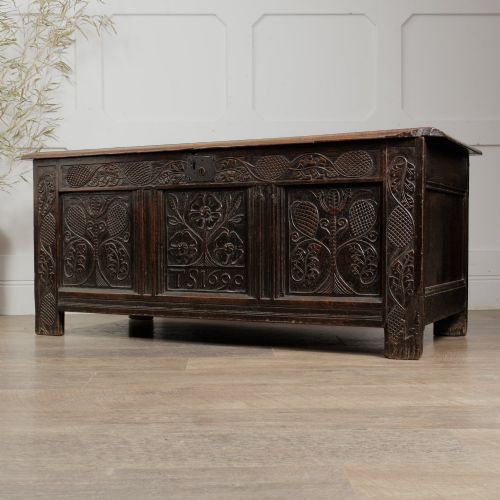
A dated oak coffer is a heavy storage chest inscribed with the year it was made, often accompanied by the initials of the original owner or maker. These pieces serve as durable containers for household valuables, linens, and documents, spanning periods from the sixteenth century through the eighteenth century.
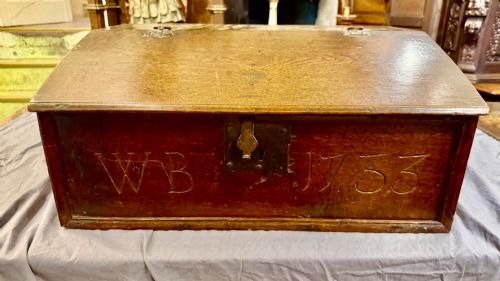
The versions most commonly met on this page originate from seventeenth-century English, Welsh, and northern regional workshops. Alongside full-sized chests, the selection includes smaller bible boxes, document boxes, and writing desks bearing dates.
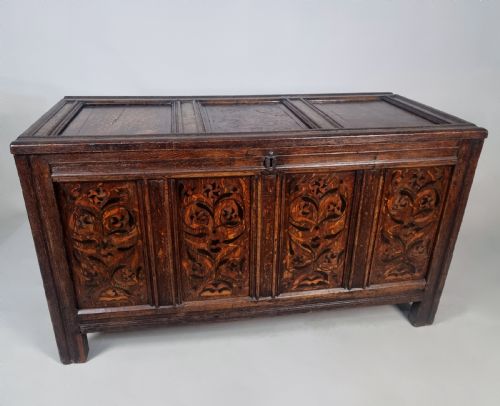
Regional variations emerge clearly across the inventory, with Lakeland, Lancashire, Welsh, and Yorkshire examples showing distinct construction methods and decorativecarving. Some pieces incorporate marquetry or mixed inlay woods alongside the primary timber.
Materials and construction
Makers built these pieces primarily using solid oak, often quarter-sawn to reveal the distinctive medullary rays in the timber. Construction relied on heavy panel-and-frame techniques or sturdy planking, designed to withstand centuries of domestic use.
Hardware played a crucial functional and decorative role, with wrought iron hinges, latches, and strapwork securing the lids and corners. Occasional brass elements and mixed inlay woods added contrast to the dark grain of the oak.
Listings feature oak as the dominant material, supported by iron, brass, and mixed inlay woods across seventeenth and eighteenth-century forms.
Assessing quality and authenticity
Quality rests in the crispness of the original date and initial carvings, and whether the inscription remains untouched by later alterations. The integrity of the timber, particularly the survival of the original floorboards and lid boards, dictates the standing of the piece.
Proportion and regional character separate standard utility boxes from exceptional regional examples. Strong joinery, authentic surface patination accumulated over centuries, and original wrought ironwork elevate a chest within its period.
The Dated Oak Coffer Glossary
- Panel-and-frame
- A method of construction where a grooved frame holds a floating central panel, allowing the oak to expand and contract safely with humidity changes.
- Bible box
- A small, sloped-lid desk or box designed to hold sacred texts and writing materials, frequently bearing carved owner initials and dates.
- Mule chest
- A storage chest featuring one or more drawers beneath the main internal compartment, combining the functions of a coffer and a chest of drawers.
- Marquetry
- The art of applying decorative veneer pieces in various woods to create pictorial designs on the surface of the coffer.
- Quarter-sawn oak
- Timber cut radially from the log, producing a durable board with a decorative figuration known as silver grain.
Dated Oak Coffer: Frequently Asked Questions
How can I verify the date on a coffer?
The authenticity of a date depends on how it integrates with the surrounding wood grain and tool marks. Genuine inscriptions show natural wear and patination matching the rest of the piece.
Carved numbers should display the same oxidation and age as the adjacent panels. Avoid pieces where the wood around the numbers appears noticeably fresher or worked with modern tools.
What were these chests originally used for?
These chests served primarily to store valuable household goods, heavy woollen blankets, and important family documents. In times before built-in wardrobes, they acted as secure, movable storage.
Smaller boxes with sloped lids functioned as desk spaces for reading or writing. Owners often marked them with initials to record a marriage or a household establishment.
How do I care for antique oak timber?
Antique oak requires a stable environment away from direct heat sources and rapid humidity fluctuations. Extreme dryness causes the old timber to split and shrink.
Apply a traditional beeswax polish occasionally to nourish the surface and maintain the natural lustre. Avoid modern silicone-based sprays, which damage the historic finish.
What is the difference between a coffer and a chest?
The terms are often used interchangeably, though a coffer traditionally implies a more heavily constructed box with a flat lid used for storage and sometimes seating. Chests can encompass a broader range of lidded trunk forms.
In early inventories, a coffer frequently held valuables and money, while a chest stored clothing. Both share the robust oak construction seen in this period.