

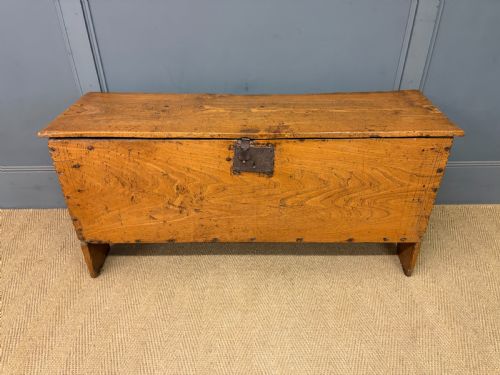
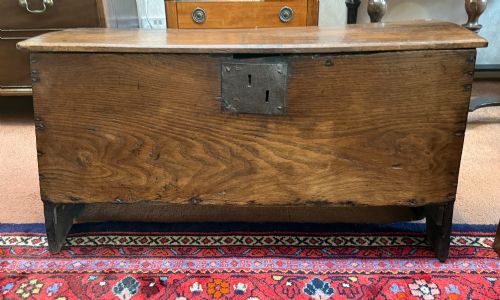
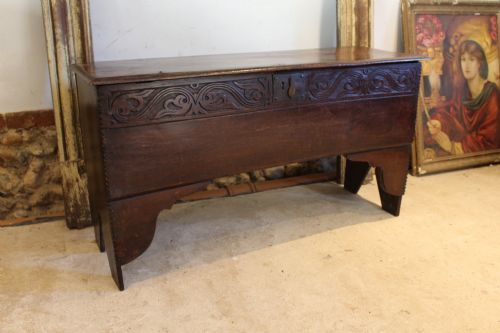
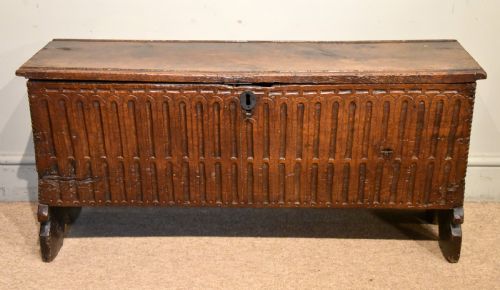
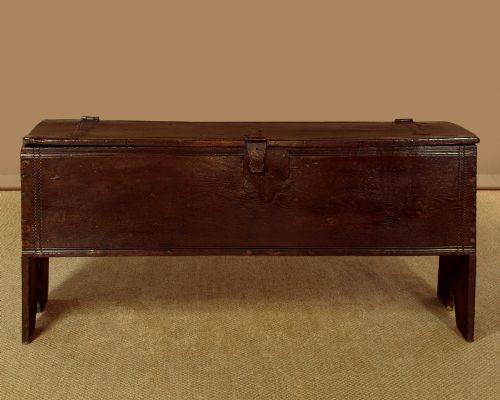


Six Plank Coffer
A six plank coffer is the most direct form of vernacular storage, built from single boards of timber joined simply at the edges.
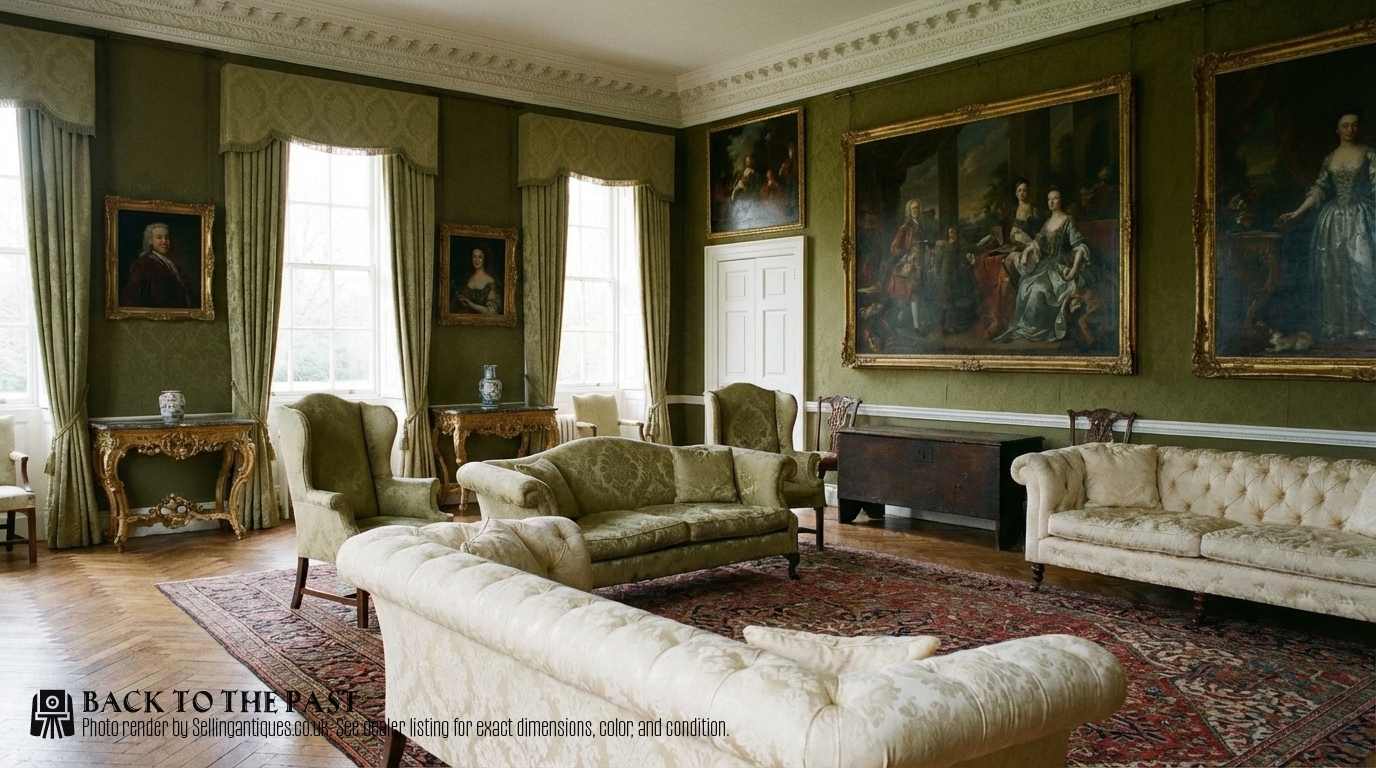
Six Plank Coffer
A six plank coffer consists simply of a base, a lid, two ends, a front, and a back, forming the absolute minimum architecture for domestic storage. When searching this phrase, buyers encounter pieces primarily from the sixteenth, seventeenth, and eighteenth centuries, alongside occasional later country examples.
Oak and elm dominate the surviving examples, often associated with vernacular country workshops and vernacular traditions spanning the Welsh regions, West Country, and broader English counties. These utilitarian items served everyday domestic and security needs, frequently housing valuables or documents in early homes.
Forms extend from standard proportions to long sword chests and small table-height boxes designed for specific domestic roles. The construction relies entirely on edge-joined boards rather than complex internal framing, keeping the silhouette stark and honest.
Materials and construction
Makers utilised native hardwoods, predominantly oak and elm, split or sawn directly from the log to yield wide, stable boards. These heavy planks were joined at the vertical corners using simple butt joints, dovetails, or through-trenches, then secured with handmade iron nails or wooden pegs.
Wrought iron strap hinges, bracket feet, and robust lock plates provide the functional hardware, hammered out by local blacksmiths to reinforce the vulnerable corners. Decoration remains restrained, occasionally appearing as carved fluting, inlaid wood, or simple folk art painted motifs on the primary surfaces.
Six Plank Coffer Retail Price Guide 2026
Typical asking prices for six plank coffer among the pieces listed under this phrase on Sellingantiques today, from the lower quarter to the upper quarter. They describe what is for sale here now, not the wider market.
Some country makers thoughtfully carved modest fluting into the front board just to give the family silver a slightly grander backdrop.
Judging quality in early boarded chests
Quality rests on the thickness of the surviving timber boards and the survival of the original floorboards and lid. Thinner boards warp significantly over the centuries, whereas heavy, straight-grained oak retains its structural integrity and honest proportions.
The degree of original hardware and untouched surface patination dictates the integrity of the piece. Replacements to the lid, hinges, or feet shift a survivor away from its original domestic context, while undisturbed surface wear signals genuine age.
Jack Grimble
The Six Plank Coffer Glossary
- Six plank construction
- A method of building a chest using precisely six individual boards for the front, back, ends, bottom, and lid. This represents the simplest form of boarded furniture.
- Sword chest
- A long, narrow variant of the coffer designed specifically to accommodate armaments. These pieces feature extended horizontal proportions.
- Vernacular
- Furniture made by local country craftsmen for everyday domestic use, following regional traditions rather than court styles. These pieces prioritize utility over academic ornamentation.
- Pollard oak
- Timber harvested from trees that have been pollarded, producing dense wood with highly figured growth patterns. This material appears on select decorative country pieces.
Six Plank Coffer: Frequently Asked Questions
What were six plank coffers used for?
These chests served primarily for storing household textiles, valuables, and personal documents securely in domestic interiors. Their robust boarded construction offered protection against dampness and theft in early homes.
Over time, specific regional variations also functioned to store weaponry like swords or served as small tables when positioned against cottage walls.
How do I date an antique coffer?
Dating relies heavily on observing the tool marks left by pit saws, the method of corner joinery, and the wear patterns on the timber. Early sixteenth and seventeenth-century pieces display heavy hand- cleft boards and wrought iron hardware.
Later eighteenth-century examples tend to show more regular machine sawing or lighter board thicknesses, while nineteenth-century revivals copy earlier vernacular styles.
Are elm coffers different from oak ones?
Elm timber tends to possess a wild, interlocking grain pattern that resists splitting, making it a favourite for country makers building utilitarian storage. Oak offers greater rigidity and was the standard choice for formal sixteenth and seventeenth-century joinery.
Both timbers develop a deep, dark patination over centuries of exposure, but elm often presents a more undulating surface texture.
How do I care for a boarded chest?
Keep these pieces away from direct heat sources and sudden humidity shifts to prevent the wide planks from cracking or warping. Occasional application of traditional beeswax helps nourish the dry historic timber without sealing the pores.
Avoid placing heavy objects on the lids of long sword chests if the historic boards show signs of bowing in the centre.