



Country House Coffer
A country house coffer is a robust domestic storage piece built for heavy daily use, offering enduring character and practical utility.
Country House Coffer
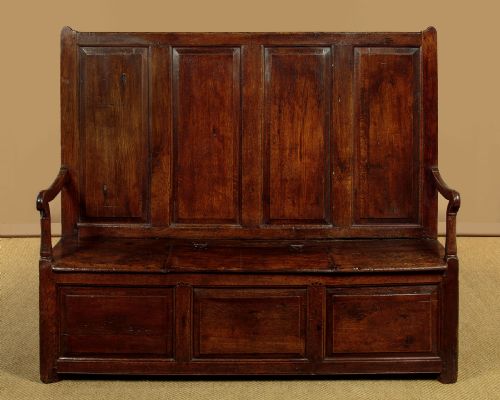
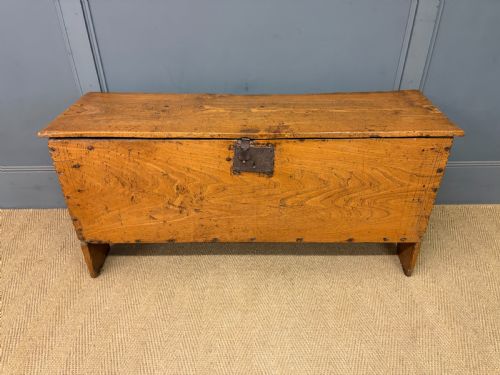
When you search for a country house coffer, you encounter sturdy storage solutions originating across the eighteenth and nineteenth centuries. These pieces encompass utilitarian trunks, mule chests, and box settles fashioned for rural domestic life.
The versions most frequently met on this page span Georgian and Victorian periods, often constructed from honest native timbers like oak, elm, and pine. They serve equally well as blanket storage, hallway seating, or distinctive coffee tables in contemporary rooms.
Vernacular regional styles predominate, reflecting the practical needs of estate houses and farmhouses alike. Each piece carries the marks of its working history, distinguishing it from formal urban cabinet-making.
Materials and construction
Makers utilised solid native hardwoods and softwoods, principally oak, elm, and pine, selected for local availability and durability. Boards were joined using traditional pegged framing or robust dovetailed corners to withstand heavy domestic demands.
Iron and brass hardware such as strap hinges, carrying handles, and occasionally locking plates provided essential reinforcement. Surface treatments ranged from bare scrubbed timber to historic painted finishes or applied leather and fabric.
Listings feature robust nineteenth-century oak, elm, and pine country house coffers alongside Georgian mule chests and box settles.
Distinctions in quality
The standard of a country house coffer rests primarily on the integrity of its timber and the retention of original surfaces. Pieces retaining honest patination, early hardware, and untouched interior compartments stand apart from heavily restored examples.
Construction methods also define the tier of a piece, with finely dovetailed joints, hand-carved details, or estate-made joinery marking superior craftsmanship. Proportion and balance within vernacular styles further separate standard utility boxes from exceptional regional items.
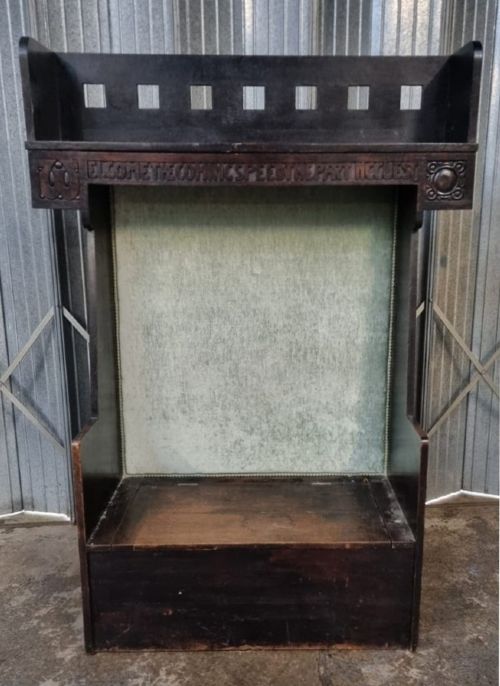
Shapland and Petter·Liberty
The Country House Coffer Glossary
- Coffer
- A large wooden chest used historically for storing valuables, linen, or documents. They often feature hinged lids and robust timber construction.
- Mule chest
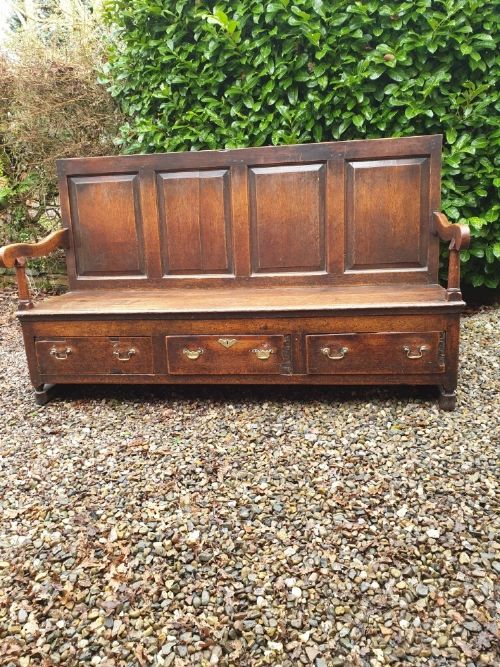
- A storage chest featuring one or more drawers at the base beneath the main lift-top compartment. This form developed during the Georgian period to improve accessibility.
- Box settle
- A high-backed wooden bench with a enclosed box seat beneath the cushion or timber top. It provided draught-proof seating near the hearth in large country rooms.
- Dough bin
- A specialised domestic trough used for mixing and proving bread dough, typically raised on legs and fitted with a lid. They are frequently constructed from elm or pine.
Country House Coffer: Frequently Asked Questions
How were country house coffers used?
These pieces functioned primarily for storing bulky household textiles, blankets, and winter clothing before fitted wardrobes became common. In domestic spaces, they also served as impromptu benches, tables, or secure repositories for silver and valuables.
Their substantial construction allowed them to double as luggage stands or seating in hallways and bedrooms. Over generations, their versatile utility ensured they migrated from estate service rooms into main living areas.
How do I care for antique timber?
Maintain stable room temperatures and keep wooden coffers away from direct heat sources and strong sunlight to prevent timber shrinkage and splitting. Dust regularly with a dry cloth and apply a quality beeswax sparingly to nourish the grain.
Avoid modern liquid polishes that can build up silicones and degrade the historic patina. Allowing the timber to breathe preserves the authentic surface character built up over centuries.
How do I date a coffer?
Examine the construction marks, tool traces, and joint types visible on the interior and underside of the piece. Hand-riven boards, rosehead iron nails, and pegged mortise and tenon joints typically point to eighteenth-century origins or earlier.
Machine-sawn timber, standard brass screws, and factory-made hinges generally indicate nineteenth-century production. Comparing the style of mouldings and feet to known vernacular regional periods also helps narrow the manufacturing era.
What is the difference between a coffer and a mule chest?
A standard coffer consists of a simple chest with a lid opening directly into one large interior storage cavity. In contrast, a mule chest incorporates one or more functional drawers beneath the main lift-up lid.
This drawer addition represents an evolution in furniture design, allowing access to stored items without lifting the heavy top lid. Mule chests became particularly popular during the Georgian period in country houses.